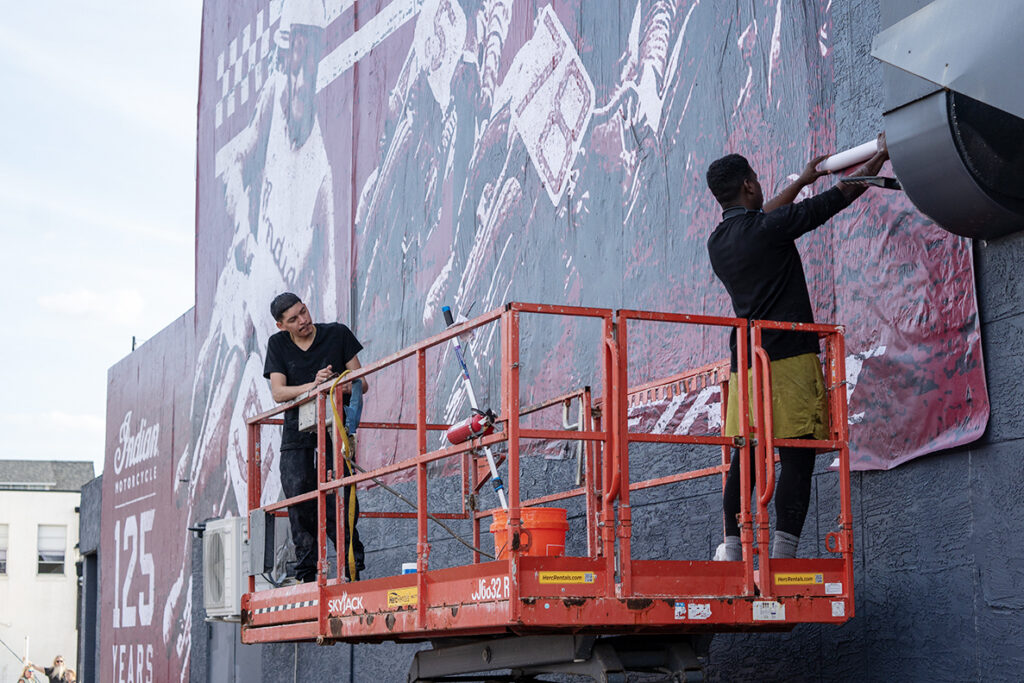
Wheatpasting has a history that predates the street art movement by more than a century. Commercial advertisers used paste-and-paper techniques to cover urban walls with product announcements long before street artists adopted the same method for self-expression and political commentary. The contemporary overlap between these two traditions — where brand campaigns and artistic practice share the same technique, the same walls, and often the same neighborhoods — creates a question worth examining directly: where exactly is the line between wheatpaste street art and wheatpaste advertising, and does that distinction matter for how brands should approach the format?
The answer matters both for creative quality and for brand reception. Brands that understand the distinction and approach wheatpaste advertising with respect for the form’s artistic tradition execute stronger campaigns and generate less community resistance than brands that treat paste-up as generic outdoor advertising with a lower price point.
The Shared History of Wheatpaste
Understanding the relationship between commercial and artistic wheatpaste requires a brief look at how the technique has been used across different eras and contexts.
Commercial Origins
Paste-and-paper advertising has been used since at least the mid-19th century. “Bill stickers” — commercial workers who pasted advertising bills on walls, fences, and public surfaces — were a recognized urban profession in Victorian London and American cities. The “post no bills” warnings that appear on urban walls are a remnant of regulations aimed at these commercial paste-up operations. The technique was the dominant form of street advertising before printing and media technologies created more efficient mass-market advertising channels.
Artistic Adoption
Street artists began using wheatpaste extensively in the 1970s and 1980s as an accessible alternative to spray paint that produced different visual qualities and installation characteristics. The technique allowed artists to produce work in studios, then deploy it quickly in the street without the time pressure of on-site creation. Shepard Fairey’s “Obey Giant” campaign, which began in 1989, was one of the most significant examples of wheatpaste achieving widespread cultural recognition as an artistic medium.
The Contemporary Overlap
Today, street art and commercial advertising coexist in the same wheatpaste tradition. Major brands run sophisticated wheatpasting and poster campaigns in urban neighborhoods that also have active street art communities. The technique is identical; the intent, authorization, and creative standards are what differ.
The Core Distinction: Intent and Authorization
The most meaningful distinction between street art and commercial advertising wheatpaste is not technical — it is intentional and legal.
Artistic Intent vs. Commercial Intent
Street art is created for expression, aesthetic contribution, humor, political commentary, or community. The motivation is primarily to add something to the visual environment or to communicate an idea outside of commercial frameworks. Commercial wheatpaste advertising serves a brand’s marketing objectives — awareness building, product promotion, event announcement. This difference in intent affects how both audiences and community members perceive the same technique applied to similar surfaces.
Authorization Status
Traditional street art is frequently unauthorized — placed without property owner permission as a deliberate act of claiming visual space outside of commercial and institutional frameworks. Unauthorized placement is often explicitly part of the statement that certain street art is making. Commercial wheatpaste advertising, in contrast, requires property owner authorization to be legally executed. This authorization difference is significant: commercial advertising cannot ethically claim the cultural position of artistic expression while simultaneously operating through formal property agreements that street art’s unauthorized tradition explicitly rejects.
Accountability and Responsibility
Commercial advertisers are legally and reputationally identifiable. A brand campaign can be criticized, held accountable, or demanded to be removed in ways that anonymous street art cannot. This accountability is appropriate — commercial speech carries different responsibilities than artistic expression. Brands that run wheatpaste campaigns must be prepared to stand behind their placement decisions in ways that individual street artists often do not need to be.
Where the Traditions Genuinely Overlap
Despite the distinctions, the overlap between street art and commercial wheatpaste is real and produces some of the strongest brand campaign work in the format.
Visual Quality as the Common Standard
The strongest commercial wheatpaste campaigns earn respect from street art communities because they match or exceed the visual quality standards that good street art establishes. When a brand campaign is visually sophisticated enough that it could credibly be street art — when the illustration, photography, or graphic design is genuinely strong — it is received differently than mass-produced commercial paste-up that is obviously corporate in its aesthetic. Visual quality is the primary bridge between the two traditions.
Artist Collaboration
Some of the most culturally resonant brand wheatpaste campaigns are created through direct collaboration with recognized street artists. When a brand commissions an established street artist to design campaign creative, the work carries the artist’s aesthetic credibility while serving the brand’s awareness objectives. This collaboration is authentic when the brand gives the artist genuine creative latitude rather than using an artist’s name to legitimize generic commercial creative.
Neighborhood and Community Alignment
Commercial wheatpaste campaigns placed in neighborhoods where the visual language of the campaign respects and aligns with the existing art and culture of the area are received better than campaigns that ignore their visual environment. A campaign that looks completely out of place in a neighborhood where it appears — visually incongruous with the surrounding street art, architecture, and community character — reads as intrusive regardless of its technical quality.
How Brands Can Respect the Wheatpaste Tradition
Brands that approach commercial wheatpaste with respect for its artistic tradition — not as a cynical appeal to cultural authenticity, but as a genuine commitment to quality and community — execute stronger campaigns and generate less resistance. Here is what that looks like in practice.
Invest in Visual Quality That Earns Its Place
The most important thing a brand can do to respect the wheatpaste tradition is produce creative that is genuinely good. Not “good for an advertisement” — good by the standards of the visual environment where it will appear. This requires investing in creative development at a level appropriate to the medium, which means working with designers, photographers, or illustrators who understand street-level visual culture.
Never Cover Existing Artwork Without Explicit Permission
Covering existing street art or murals without explicit permission from the original artists is the single action most likely to generate community backlash against a brand’s wheatpaste campaign. Street art communities are protective of their work and the walls it occupies. Brands that paste over existing artwork — particularly recognized artists’ work — are perceived as appropriating cultural space without acknowledgment. Our team’s location scouting process identifies surfaces that are available for commercial placement without covering existing artwork.
Work with Artists on Campaigns
Collaborating with artists who have established relationships with street art communities creates campaigns that are received as participatory rather than extractive. Brands that pay artists fairly, give them meaningful creative input, and present the collaboration transparently earn genuine cultural credibility that brands positioning themselves as street art adjacent without authentic connection do not.
Use Authorized Surfaces, Every Time
Commercial wheatpaste campaigns should only be placed on surfaces with documented property owner authorization. This is both a legal requirement and an ethical one — commercial advertisers should not claim the unauthorized placement tradition of street art as a creative position while avoiding the legal and community consequences that street artists accept as part of that tradition. Every guerrilla marketing service we provide operates on authorized surfaces with full property documentation.
What Separates Quality Brand Wheatpaste from Low-Quality Commercial Paste-Up
The wheatpaste technique is accessible and relatively inexpensive. That accessibility creates a wide range of execution quality — from campaigns that earn genuine respect and social sharing to campaigns that generate hostility and embarrassment for the brands behind them. Here is what distinguishes the two.
Print Quality and Material Selection
Quality brand wheatpaste is printed at resolution and color density appropriate for the viewing distances at which it will be encountered. Low-quality commercial paste-up uses office printer resolution or compressed image files that look pixelated or muddy on large format prints viewed at 10 feet. Print quality communicates brand quality — a visually degraded poster communicates a degraded brand.
Size and Scale Appropriateness
Campaigns that select poster sizes appropriate to the available wall space and viewing distance create visual impact without looking proportionally wrong in their environment. A small poster on a large wall looks timid and insignificant. A too-large poster that extends to the edges of a confined space looks aggressive and over-scaled. Experienced location scouting identifies wall inventory where the planned poster dimensions will read correctly in the physical context.
Paste Application Quality
Professional wheatpaste application creates a flat, smooth surface finish without bubbles, creases, or adhesive irregularities. Poor application technique leaves visible wrinkles, edge lifting at install, or bubbles that degrade the visual quality and the brand impression. The care and skill evident in installation quality communicates whether the brand respects the neighborhoods where it is working and the people who will encounter the campaign.
Placement That Respects the Visual Environment
Quality brand wheatpaste placement considers the visual environment of the surrounding wall and neighborhood. Placement that thoughtfully interacts with existing architectural elements, respects the visual character of the neighborhood, and avoids overwhelming the surrounding context with mass volume communicates brand awareness and cultural intelligence. Mass-volume commercial paste-up that ignores visual context communicates that the brand views the neighborhood only as an advertising surface, not as a community deserving of consideration.
Frequently Asked Questions: Wheatpaste Street Art vs. Advertising
What is the difference between wheatpaste street art and wheatpaste advertising?
Street art is created for self-expression, aesthetic contribution, or political commentary without commercial intent. Advertising wheatpasting uses the same technique to place commercial messages in street environments with property owner authorization. The production technique is identical; purpose and legal context differ.
Is wheatpaste advertising legal?
Wheatpaste advertising is legal on private property with documented property owner authorization. Wheatpasting on public property without authorization is illegal in most U.S. jurisdictions. All our campaigns operate with full property documentation.
Do street artists object to brands using wheatpaste for advertising?
Reactions vary based on execution quality and approach. Brands that work with artists, invest in visual quality, and place on authorized surfaces earn more acceptance. Brands that produce low-quality mass paste-up or cover existing artwork generate resistance.
Can brands collaborate with street artists for wheatpaste campaigns?
Yes. Artist collaboration is one of the strongest approaches for brands seeking authentic connection to the wheatpaste tradition. It produces higher-quality visual work and creates a collaboration story that adds genuine cultural credibility to the campaign.
How is the wheatpaste technique used in street art?
Artists produce work in studios, then paste it to wall surfaces using diluted wheat flour paste or commercial adhesive — first applying paste to the surface, positioning the paper, then sealing with additional paste. The technique allows studio-quality artwork to be deployed quickly in street environments.
What makes a brand wheatpaste campaign look like art rather than advertising?
Visual quality is the primary determinant. Campaigns with strong illustration, photography, or design at a level that stands alongside actual street art, combined with thoughtful placement that respects the visual environment, read as culturally engaged rather than simply commercial.
Frequently Asked Questions
What is wheatpaste street art 2?
American Guerrilla Marketing provides wheatpaste street art 2 services across 50+ U.S. markets. Every campaign is planned, scouted, executed, and GPS-documented by our field teams. We work with regional brands and Fortune 500 companies on campaigns that require real street-level execution and documented proof of performance.
How does AGM approach art 2?
Our process starts with a market consultation to understand your goals, target audience, and budget. We then scout locations, handle any required permissions or permits, coordinate production and installation with our local crews, and provide a full GPS-tagged photo report after the campaign runs.
What markets does American Guerrilla Marketing cover for art 2?
We operate in 50+ U.S. markets including New York, Los Angeles, Chicago, Miami, Houston, Atlanta, Seattle, Denver, Boston, and dozens of secondary markets. Contact us to confirm availability and pricing for your specific market.
How much does a art 2 campaign cost?
Campaign pricing depends on market, format, quantity, and duration. We work with budgets ranging from targeted single-market runs to national rollouts across multiple cities. Use our RFP Builder or contact us directly for a custom quote based on your specific campaign requirements.
How do I get started with art 2 through AGM?
The fastest way to get started is to submit your campaign details through our RFP Builder at americanguerrillamarketing.com, or contact us directly at [email protected] or (646) 776-2770. Our team typically responds within one business day with availability and initial pricing.