
November 23, 2026
LED Trucks & Mobile Billboards in Oakland, CA
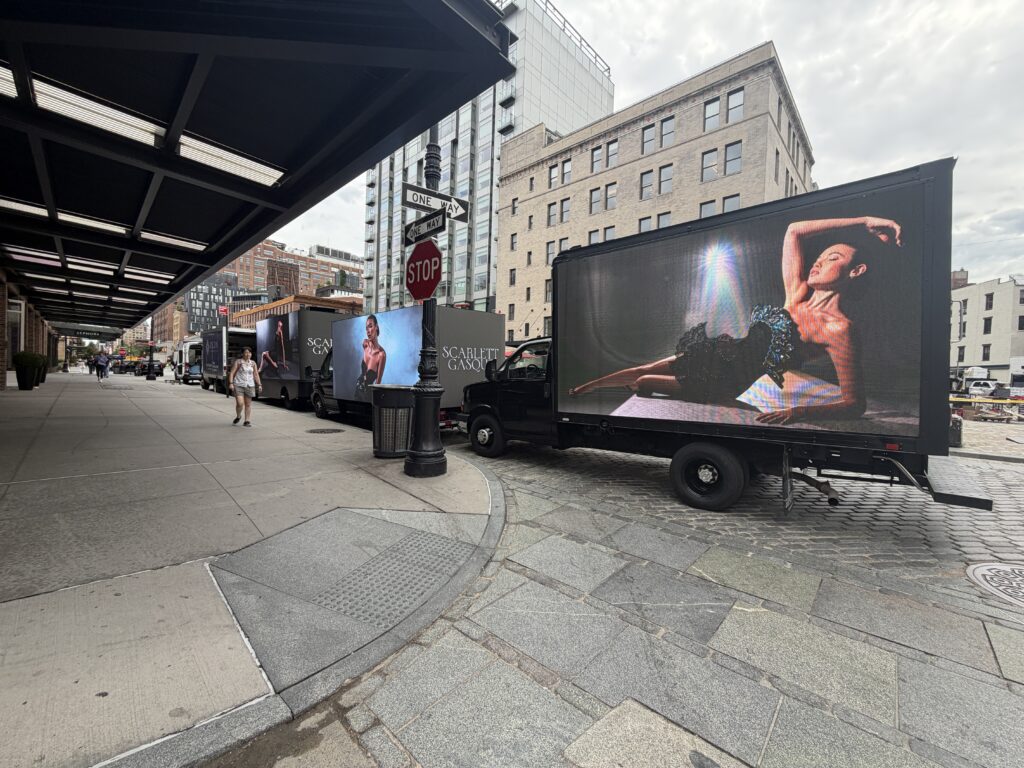
A mobile billboard is the only street format that goes to the audience instead of waiting for it. Everything else we run is a bet on a fixed surface and the hope that the right people walk past it. A truck is a route decision, and a route decision can be changed on the night.
In Oakland that flexibility is worth more than it is in most cities, and for a reason that sounds like a contradiction. Oakland’s pedestrian audience is unusually concentrated, which is exactly why the mobile format has a clear job here. The walkable core is small and well served by static media. The truck’s value is everything that core does not reach, and the specific nights when the core becomes physically inaccessible to everyone else.
I will be blunt about where this format is weak here too, because the briefs that arrive assuming a truck can solve downtown Oakland are the ones that need rebuilding.
Oakland is two different markets and the truck only serves one of them
The downtown and Uptown core is a compact, continuous walk. BART is the backbone, and the 12th Street/City Center and 19th Street stations put pedestrians directly into that core on foot. The audience arrives at fixed points and moves along predictable walking lines. The Telegraph Avenue spine between Grand and 27th runs through the middle of it and can be covered end to end on foot in one pass.
That is a static media environment. People are walking, slowly, past surfaces, repeatedly. A truck circulating through streets like those is competing with the pavement for attention, and losing, because a pedestrian five feet from a wall at walking pace is not the ideal viewer for a moving screen.
Where the mobile format earns is everything outside that funnel. Oakland’s audience is not only the people who got off BART downtown. It is spread across a city that is substantially car-dependent beyond the core, and no amount of pasted material in Uptown reaches somebody whose entire day happens on roads.
So the honest Oakland framing is this. If your audience is the downtown and Uptown pedestrian, static media on the walking lines out of those two stations is the efficient buy and a truck is an expensive way to reach the same people worse. If your audience is broader than that core, or if you need presence on a specific date at a specific gathering, the truck is doing something nothing else can.
Most campaigns need both, in different proportions. The planning work is deciding the proportion honestly rather than defaulting to one.
Event days are when the truck stops being an option and becomes the answer
This is the strongest argument for mobile media in Oakland and it comes directly from the city’s logistics.
Parking in Oakland is workable on ordinary nights and disappears on event days. Downtown parking is described as vanishing on Pride morning. Parking near the Hiero Day grounds is limited enough that organisers actively steer attendees onto BART.
Now think about what that means for every other format. A projection rig needs a vehicle position with power and access. A street team needs somewhere to stage. A decal install needs a kit close to hand. On an Oakland event day, all of those become difficult or impossible, and the honest advice on several of them is to plan it as a transit-and-handcart operation or not plan it.
A truck has a different relationship with that problem. It is not trying to park. It is working the approaches, the perimeter and the arrival and dispersal routes, which on these days are carrying the entire crowd because the crowd could not park either.
Oakland Pride in August runs a parade and festival downtown, with the 12th Street/City Center and 19th Street stations serving both the parade route and the festival gates. Hiero Day in September is an all-ages independent hip-hop festival and block party with limited parking and BART as the recommended approach. In both cases the attendance converges on a known area through known routes, over a known window.
That is a route plan, not a guess. And the truck is the only format that can work a route.
The constraint to understand is the closed street. On a First Friday the Telegraph stretch between Grand and 27th is closed to vehicles for the street festival. A truck cannot enter it and should not try. What a truck can do on a First Friday is work the surrounding grid and the approaches people use to get to the festival, which is a legitimate and quite good use of the night, as long as nobody has been promised a pass down the middle of the closed street.
We settle that expectation at the brief stage every time, because the picture in a client’s head of a lit truck gliding through a packed street festival is a picture that cannot happen.
Route building in a BART city
Route design in Oakland has a specific shape because of how people move.
In a car-dependent market, you build routes on traffic volume and dwell. In Oakland’s core, a meaningful share of the audience is not in a car at all, which changes what a good route looks like. The truck’s best viewers downtown are pedestrians at crossings and corners, people queuing, people standing outside venues at bar hours, and people walking the lines out of the two BART stations toward Uptown.
That means slow and repeated beats fast and wide. A tight loop through the core with multiple passes past the same corners, timed to when people are actually out, is worth more than a long circuit that covers more map and passes each point once.
Outside the core, the logic flips back to conventional. Arterial routes, commute timing, dwell at signals. That part of an Oakland plan looks like a plan anywhere, and I would not pretend otherwise.
Timing matters more here than mileage. Downtown Oakland quietens substantially outside event nights, and Uptown follows bar hours. A truck circulating a quiet downtown at 11pm on a Tuesday is burning a shift. The hours that pay are the ones where the core actually has people in it, which in Oakland means event evenings, First Fridays, and the bar-hours window in Uptown rather than a flat all-evening schedule.
What the Oakland sky does to a lit screen
A mobile LED display is a light source competing with ambient conditions, so the local atmosphere is part of what you are buying.
Oakland is mild in both directions, with coastal influence holding summer roughly in the mid-50s to mid-70s and winter in the 40s to 60s. The cold California current keeps summer unusually cool for the latitude. For a vehicle-based operation that means long shifts are comfortable year-round, equipment is not fighting extreme heat, and there is no deep-cold start-up problem. This is one of the easier American markets to run a long evening shift in.
Freeze-thaw is effectively absent, with winter lows in the 40s. For a wheeled format that matters less than it does for pasted media, but it has one real consequence: Oakland does not have the salting and plowing regime that chews up road surfaces and vehicles in northern cities.
What it does have is salt-bearing bay air, which over time attacks ferrous fixings the way coastal air does everywhere. On vehicle-mounted structures that is a maintenance point rather than a campaign point, and we specify non-ferrous or coated fixings on mounting hardware accordingly.
Rain is seasonal and moderate, around 20 inches a year concentrated in the winter months. Rain does not stop a truck the way it stops a projection or a paste install, which is a genuine advantage of this format in the Oakland winter. The screen still reads in wet conditions. What rain does is remove the pedestrian audience, and since a large part of the truck’s value in the core is pedestrian viewers at corners and crossings, a wet winter evening downtown is a weak shift even though the equipment is perfectly happy.
The marine layer appears in summer, bringing fog and cooler temperatures. Oakland is less exposed to summer-morning ocean fog than the city across the bay. For evening work, the layer tends to arrive as low cloud rather than ground-level murk, and summer and early-autumn evenings are typically clear. I will not put a measured brightness figure on that because I have not seen one for this market, and I am not going to invent one.
Then the detail that inverts most national media calendars: September is Oakland’s warmest month. The hottest, driest, clearest stretch of the year lands in late summer and early autumn, not midsummer. For an evening format that depends on people being outside and willing to stand around, that is the best window of the year, and it is also when Hiero Day lands. A plan that treats September as the end of the outdoor season has the Oakland year backwards by about two months.
Permissions, routes and the grey area
Mobile advertising regulation varies by municipality and enforcement is inconsistent. What applies to a vehicle-mounted display depends on local ordinance, on where the vehicle stops and for how long, and on the rules governing the specific streets it uses. I am not going to tell you that a particular route is permitted or that it is not, and I am not going to cite a provision I have not read.
What I can describe is how we reduce exposure.
The core principle is that a truck in motion on a public road is doing something ordinary, and a truck parked and dwelling is doing something that invites a different conversation. So we build Oakland routes around circulation rather than static positioning, and where a campaign genuinely needs a stationary presence, we look for private ground with the owner’s permission rather than a kerb.
For event work, the approach is to work public approach routes in motion and to arrange any staging, dwell or activation position on private property in advance. On Oakland event days, with parking as constrained as it is, that advance arrangement is not a refinement. It is the difference between a shift that works and a vehicle circling.
We keep route documentation, timings and driver logs, which is partly operational discipline and partly so that there is a record if anyone asks.
One Oakland-specific point on tone. The city’s central cultural corridor is administered through a Community Benefit District. Oakland First Fridays is described as a Community Benefit District and community volunteer-run partnership, a property-owner-funded body with stewardship responsibility over a defined set of blocks. A truck does not leave material behind, so it does not create the cleanup problem that pasted media can create in a district like that. But a district running a street festival has an operational interest in the vehicle environment around it, and on a First Friday the sensible posture is to work the surrounding grid cooperatively rather than to press against the closure.
Oakland reads a campaign, and that applies to trucks too
Oakland has a monthly gallery-and-street festival on its main avenue and an audience fluent in street-level visual work. That fluency raises the standard on everything, including a format that arrives on wheels.
A mobile display that turns up at a cultural event with generic national creative is read exactly as what it is. The same truck carrying work that is made for that audience and that night is received completely differently. I am not going to pretend that is a measurable effect, but it is a consistent one, and in a market where the best nights are cultural events rather than commute windows it changes what the creative brief should be.
The practical version: if the plan is to work Oakland’s event calendar, the creative needs to be made for those evenings specifically. Running a national asset through a Hiero Day crowd is a wasted shift with a lit screen on it.
Crew and vehicle reality on an Oakland shift
The crew on a straightforward mobile shift is small. A driver and an operator, with content and timing managed to the route plan. Where a truck is working an event perimeter, we usually want a third person who is not in the vehicle, because the vehicle cannot answer questions, cannot hand anything to anybody, and cannot react to where the crowd has actually gathered.
Oakland’s compact core is a mixed blessing for driving. The grid is navigable and the distances are short, which makes repeated passes cheap. The flip side is that short distances mean a loop comes round fast, and a loop that comes round too fast reads as the same truck going past again rather than as presence. We pace Oakland core loops deliberately wider than the geography would allow, for that reason.
Event days need the route walked or driven in advance, because closures, staging and barriers change the grid in ways no map shows. For Pride and for Hiero Day in particular, where attendance arrives largely by transit, the productive route is the one that intersects the walk between the stations and the gates, and that is something you confirm on the ground.
Winter shifts get planned with the forecast in view. Not because the equipment minds, but because the pedestrian component of the audience does.
What we talk Oakland clients out of
Using a truck to cover downtown and Uptown. The core is a compact pedestrian environment fed by two BART stations. Static media on those walking lines reaches the same people more efficiently. We will say so, even though it means a smaller mobile booking.
Expecting access to a closed street. On a First Friday, Telegraph between Grand and 27th is closed to vehicles. The truck works the surrounding grid and the approaches. It does not go down the middle of the festival, and nobody should be promised that it will.
Flat-rate evening scheduling. Downtown Oakland quietens substantially outside event nights. Hours are not interchangeable here. We concentrate shifts into the windows when the core actually has people in it rather than spreading them evenly for a neater schedule.
Loops that are too tight. Short distances in a compact core tempt you into fast repetition, which reads as one truck passing repeatedly rather than as a campaign. We widen the loop deliberately.
National creative on a local event night. Oakland’s best mobile nights are cultural events with an audience fluent in visual work. Generic assets underperform badly in front of that crowd, and that is the one variable the client fully controls.
Treating September as the shoulder season. September is Oakland’s warmest month and late summer into early autumn gives the clearest evenings of the year. For an evening format, that is peak season here, not the wind-down.
Where the truck needs people beside it
A mobile display delivers reach and movement. What it cannot do is interact. It passes, it is seen, and it leaves, and on a night where the whole point is a gathered crowd, that is a real limitation.
The pairing that works in Oakland is Street Teams & Experiential. The city’s event logistics almost design it for you. On Pride and Hiero Day the audience arrives by transit and walks from stations to gates, through a defined corridor, over a defined window. The truck works the approach routes and holds the perimeter visible. A team works the walk itself, where people are moving slowly, already in a social mood, and reachable.
Same crowd, same window, two different ranges. The truck handles the people you can only reach at distance and in motion. The team handles the ones you can actually talk to. On the one kind of night when Oakland’s audience is both large and concentrated, running only one of those is leaving the other half of the crowd alone.
Frequently asked questions
Are mobile billboards worth it in downtown Oakland?
Often not on their own. The downtown and Uptown core is a compact walk fed by the 12th Street/City Center and 19th Street BART stations, so a largely pedestrian audience is reached more efficiently by static media on those walking lines. The truck earns outside that core and on event days, when the city’s parking constraints make every fixed format difficult.
Can a truck work a First Friday?
Around it, not through it. The Telegraph stretch between Grand and 27th is closed to vehicles for the street festival, so the truck works the surrounding grid and the approaches people use to reach the event. That is a legitimate use of the night, provided nobody has been promised a pass down the middle of a closed, crowded street.
Are mobile billboards permitted in Oakland?
Regulation of vehicle-mounted advertising varies by municipality and enforcement is inconsistent, and what applies depends on local ordinance, the streets used and how long the vehicle stops. We reduce exposure by building routes around circulation rather than kerbside dwell, arranging any stationary position on private ground with permission, and keeping route and timing documentation. We do not give legal advice.
What time of year works best?
Late summer and early autumn. September is Oakland’s warmest month and that stretch brings the clearest, driest evenings of the year, with people still willing to be outside after dark. Winter does not stop the format, since rain does not disable a screen, but it does thin the pedestrian share of the audience in the core.
How do Oakland event days change the plan?
They make the truck more valuable and the route harder. Downtown parking is described as vanishing on Pride morning, and parking near the Hiero Day grounds is limited enough that organisers steer attendees onto BART. The productive route intersects the walk between the stations and the gates, and it needs confirming on the ground because closures and barriers reshape the grid.
Does the Bay climate affect the equipment?
Mild temperatures in both directions make long evening shifts straightforward, with no extreme heat and no deep-cold start-up problem, and the absence of freeze-thaw means Oakland has no salting or plowing regime. The one standing issue is salt-bearing bay air, which attacks ferrous fixings over time, so mounting hardware gets specified as non-ferrous or coated.
Request a campaign quote
If you are planning mobile media in Oakland, the first questions I will ask are who the audience actually is, whether they are the downtown pedestrian the static formats already reach, and which dates on the city’s calendar the campaign is really built around.
Tell us the dates, the audience and what the creative needs to do, and we will come back with a route plan timed to when Oakland is genuinely out, an honest view of where static media would serve you better, and a crew and content schedule for the nights that matter.
Request a campaign quote and we will start with the route.

Ready to Run Your Campaign?
Call us or email us. We’ll tell you exactly what we can do in your market and what it costs.
Related Services
Explore similar advertising solutions offered by American Guerrilla Marketing.
American Guerrilla Marketing — Los Angeles
Street-level campaigns in Los Angeles and nationwide. Wheatpasting, LED trucks, street teams, and more.
(646) 776-2770
Related Articles
-
Truck billboard advertising: How It Actually Works
November 24, 2026
-
Billboard companies near me: How It Actually Works
November 23, 2026
-
LED Trucks & Mobile Billboards in Boston, MA
November 23, 2026
-
Planning LED Trucks & Mobile Billboards in Savannah, Georgia
November 23, 2026
-
LED Trucks & Mobile Billboards in Madison, Wisconsin
November 23, 2026