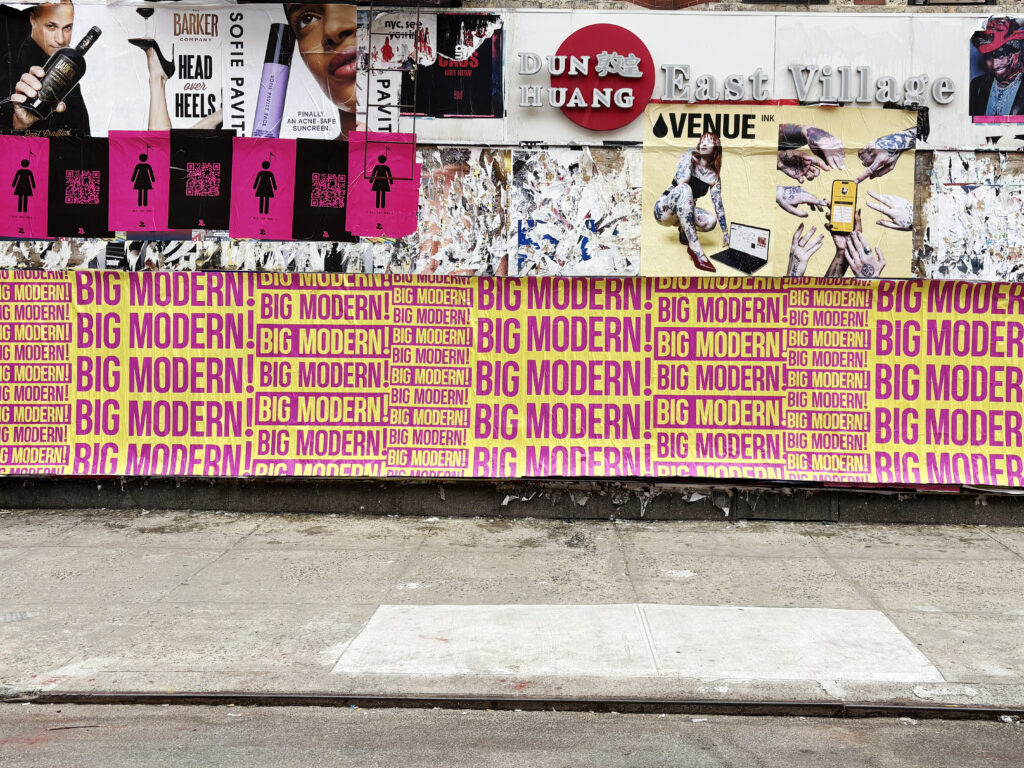
The terms street marketing and guerrilla marketing are used interchangeably in most marketing conversations, and in practice, the overlap between them is significant enough that the distinction rarely creates confusion for campaigns that execute well. But when it does matter, it matters for a specific and important reason: guerrilla marketing implies a creative standard that street marketing does not require, and confusing the two can lead brands to plan ordinary outdoor campaigns under the assumption that placement alone will generate the attention that only genuinely unexpected creative actually earns.
Here is a clear breakdown of what the two terms mean, where they overlap, and what the distinction implies for campaign strategy.
Defining Street Marketing
Street marketing, at its broadest, means any brand marketing activity conducted in outdoor public spaces. The category is defined by its environment — the street, the sidewalk, public plazas, transit spaces, outdoor event venues — rather than by any particular tactic or creative approach. Street marketing includes everything from a person handing out flyers at a subway entrance to a complex multi-neighborhood poster installation campaign.
What Street Marketing Includes
Street marketing tactics include poster and wheatpaste placements, flyer and handbill distribution, brand ambassador programs on public sidewalks, sidewalk stencil activations, mobile advertising vehicles, event street team programs, product sampling in high-foot-traffic locations, and any other brand activity that takes place in outdoor public environments. The common element is the physical outdoor environment, not a particular creative character.
The Characteristics of Standard Street Marketing
Standard street marketing is repeatable, scalable, and predictable in its effects. A well-executed wheatpasting and poster campaign in the right neighborhoods with the right creative will build brand awareness at a predictable rate over the campaign run. A well-briefed brand ambassador program at a high-foot-traffic event will generate a predictable number of direct consumer contacts per hour. The scalability and predictability of street marketing are its primary commercial advantages.
Defining Guerrilla Marketing
Guerrilla marketing is a subset of street marketing (and other marketing categories) characterized by the application of unconventional, unexpected creative approaches that generate attention through surprise, novelty, humor, or conceptual boldness rather than through paid media access or scale.
Where the Guerrilla Concept Comes From
The term was popularized by Jay Conrad Levinson in his 1984 book “Guerrilla Marketing,” which argued that small businesses could achieve major brand impact by being creative and unexpected rather than by spending large media budgets. The guerrilla analogy refers to asymmetric tactics — achieving outsized results relative to resources by using unconventional approaches that larger, more established competitors are not using.
What Makes Marketing Guerrilla
Marketing becomes guerrilla when it introduces an element that audiences did not expect, that surprises or delights them in a specific context, and that generates attention beyond what standard outdoor placement produces. A wheatpaste poster on a Wicker Park wall is street marketing. A wheatpaste campaign that fills an entire block-long construction hoarding with an optical illusion that only makes sense when viewed from the correct position on the sidewalk is guerrilla marketing — the creative concept earns attention that the placement alone would not have generated.
The Earned Media Dimension of Guerrilla Marketing
The defining commercial advantage of genuinely guerrilla campaigns over standard street marketing is the potential for earned media. A surprising, clever, or visually extraordinary street activation generates photographs, social sharing, press coverage, and word-of-mouth that multiply the campaign’s reach far beyond the physical placement footprint. Standard street marketing placements — regardless of execution quality — do not inherently generate earned media. This is the meaningful performance difference between guerrilla and routine outdoor advertising.
Where Street Marketing and Guerrilla Marketing Overlap
The overlap between the two categories is substantial in practice. Most guerrilla marketing campaigns use street marketing tactics as their execution medium. Most ambitious street marketing campaigns incorporate elements of creative surprise that push them toward guerrilla character. The two terms describe different aspects of the same activity — environment versus creative character — rather than fundamentally separate campaign categories.
The Execution Methods Are Shared
Both street marketing and guerrilla marketing use the same physical execution methods: posters, stencils, ambassador programs, flyer distribution, LED billboard trucks, and ambient installations. A guerrilla campaign does not use different tools than a street marketing campaign — it uses the same tools to achieve a different creative effect. The distinction is in the creative concept and the quality of surprise, not in the physical mechanics of execution.
Both Require Compliance
The legal compliance requirements are identical for both categories. Whether a campaign is routine street marketing or a groundbreaking guerrilla concept, it requires property authorization for every private property placement, municipal permit compliance for public space activations, and documentation of every placement. Creative ambition does not exempt any campaign from compliance requirements. Our guerrilla marketing services incorporate compliance management as a standard element of every campaign.
Both Are Measured the Same Way
Campaign measurement uses the same framework for both: GPS-documented placement reports, impression estimates based on foot traffic data, earned media tracking for campaigns that generate social sharing, and attribution through geo-targeted digital pairing or direct response mechanisms. The measurement tools do not change based on whether the campaign is guerrilla or standard street marketing — what changes is the expected earned media multiplier for campaigns with genuine guerrilla creative character.
When the Distinction Actually Matters for Campaign Planning
The street marketing vs. guerrilla marketing distinction matters most at two specific points in campaign planning: when setting creative expectations and when estimating total campaign reach.
Setting Creative Expectations
If a brand commissions a “guerrilla campaign” expecting earned media, social sharing, and press coverage, but the creative delivered is a standard poster campaign with competent execution and nothing distinctive, the campaign will underperform those expectations. The guerrilla label should not be applied to campaigns that lack the creative element that generates surprise and earned attention. Being precise about what type of campaign is being planned aligns creative investment with realistic outcomes.
Estimating Total Reach
Reach estimates for standard street marketing campaigns are based primarily on foot traffic volume in placement areas. Reach estimates for genuinely guerrilla campaigns should include an earned media multiplier that accounts for expected social sharing, press coverage, and word-of-mouth amplification. A campaign with strong guerrilla creative can achieve three to ten times the reach of its paid placement footprint through earned channels. Failing to account for this multiplier in planning means underestimating the true return on investment of a genuinely guerrilla campaign.
Practical Campaign Planning: Choosing Your Approach
Most brands benefit from campaigns that combine reliable street marketing execution with as much guerrilla creative ambition as the brief and budget support. Here is how to think about the combination.
Reliable Street Marketing as the Foundation
Every campaign needs reliable execution that generates predictable awareness regardless of whether the creative concept breaks through as guerrilla or performs as standard outdoor advertising. Poster placements, stencil work, and ambassador programs deliver this reliable base regardless of creative ambition level. Build the campaign to work even if the creative concept does not generate earned media — any earned media is then pure upside.
Guerrilla Creative as the Multiplier
The guerrilla creative element — the concept that could generate sharing and press — is built on top of the reliable execution foundation. If the guerrilla concept lands, total campaign reach multiplies. If it does not generate earned media beyond the placements, the campaign still works through its reliable street marketing base. This risk-managed approach captures the potential upside of guerrilla creative without building a campaign that depends on viral success to justify the investment.
Integration with Broader Campaign Strategy
Whether the campaign is street marketing, guerrilla, or a combination, it performs best when integrated with digital and social strategies that reinforce the same brand message in the same geographies. Our full range of campaign services supports integrated planning that coordinates physical execution with digital amplification for maximum total awareness impact.
Frequently Asked Questions: Street Marketing vs Guerrilla Marketing
What is the difference between street marketing and guerrilla marketing?
Street marketing refers broadly to marketing in public outdoor spaces — posters, flyers, ambassadors, stencils. Guerrilla marketing refers to unconventional, unexpected brand experiences that generate attention through creative novelty. All guerrilla marketing can be street marketing, but not all street marketing is guerrilla in character.
Can the terms be used interchangeably?
In practice, many agencies use the terms interchangeably and the overlap is real. The distinction matters most when setting creative expectations and estimating earned media potential — guerrilla implies a creativity standard that street marketing alone does not require.
What are examples of street marketing tactics?
Street marketing tactics include poster and wheatpaste campaigns, flyer distribution, brand ambassador programs, sidewalk stencil activations, event street team programs, product sampling, and mobile advertising vehicles — any brand activity in outdoor public or semi-public environments.
What makes a street marketing campaign guerrilla?
A campaign becomes guerrilla when it introduces creative surprise, visual disruption, or conceptual boldness that earns attention beyond what standard outdoor advertising placement produces — and ideally generates earned sharing or press coverage that multiplies total campaign reach.
Is guerrilla marketing more expensive than street marketing?
Not necessarily. The guerrilla element is creative and conceptual — about boldness of idea, not budget required. Some highly effective guerrilla campaigns use simple tactics at low cost. Creative ambition and budget are separate variables.
Which produces better results?
Guerrilla campaigns with genuine surprise and earned sharing produce higher total return per dollar than standard street marketing at equivalent scale. Standard street marketing produces predictable, reliable awareness building without the earned media upside. The right choice depends on campaign objectives and creative capability.
Frequently Asked Questions
What is street marketing vs guerrilla marketing?
American Guerrilla Marketing provides street marketing vs guerrilla marketing services across 50+ U.S. markets. Every campaign is planned, scouted, executed, and GPS-documented by our field teams. We work with regional brands and Fortune 500 companies on campaigns that require real street-level execution and documented proof of performance.
How does AGM approach guerrilla marketing?
Our process starts with a market consultation to understand your goals, target audience, and budget. We then scout locations, handle any required permissions or permits, coordinate production and installation with our local crews, and provide a full GPS-tagged photo report after the campaign runs.
What markets does American Guerrilla Marketing cover for guerrilla marketing?
We operate in 50+ U.S. markets including New York, Los Angeles, Chicago, Miami, Houston, Atlanta, Seattle, Denver, Boston, and dozens of secondary markets. Contact us to confirm availability and pricing for your specific market.
How much does a guerrilla marketing campaign cost?
Campaign pricing depends on market, format, quantity, and duration. We work with budgets ranging from targeted single-market runs to national rollouts across multiple cities. Use our RFP Builder or contact us directly for a custom quote based on your specific campaign requirements.
How do I get started with guerrilla marketing through AGM?
The fastest way to get started is to submit your campaign details through our RFP Builder at americanguerrillamarketing.com, or contact us directly at [email protected] or (646) 776-2770. Our team typically responds within one business day with availability and initial pricing.