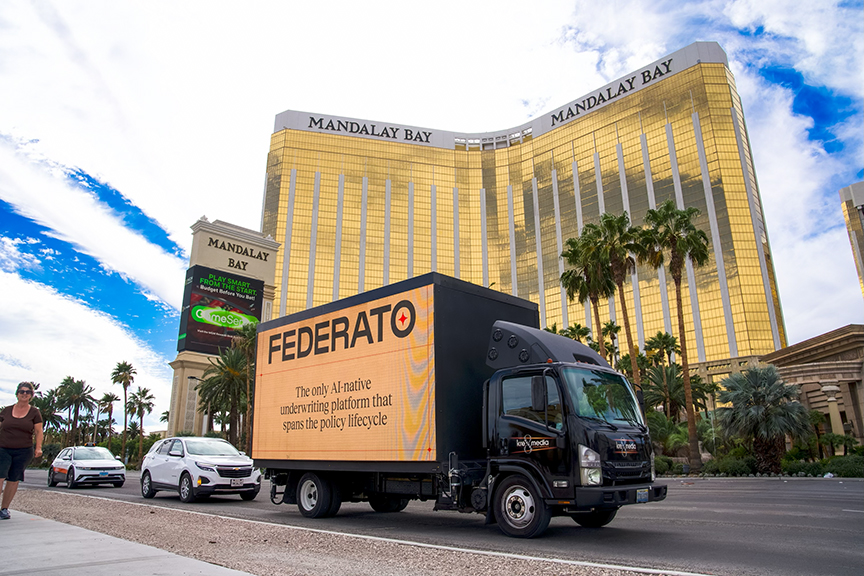
Every other format in the trade show outdoor advertising toolkit is fixed. Posters stay on walls. Stencils stay on sidewalks. Static billboards stay on their structures. Only a mobile billboard can follow the audience , and at a trade show, where a crowd of tens of thousands of people moves predictably through a defined geographic space at predictable times, the ability to follow the audience is extraordinarily valuable.
American Guerrilla Marketing deploys LED mobile billboard trucks at trade shows and conventions across the United States. Our routing strategy, refined across dozens of convention markets and event types, puts your brand in front of the right audience at the right moments throughout each show day. We do not just park a truck near the venue and call it done , we work the route, follow the audience, and adjust in real time to maximize qualified exposures.
Why Mobile Billboards Outperform Fixed OOH at Trade Shows
Fixed outdoor advertising , traditional billboards, building wraps, static posters , is valuable but limited by geography. A billboard can only reach the people who walk or drive past its fixed location. At a trade show, where the audience is dense but constantly moving between venues, hotels, restaurants, and transit hubs, a fixed placement captures only a fraction of the potential audience.
A mobile billboard captures the audience wherever it is. When the morning keynote ends and 10,000 attendees pour out of the main hall, the truck is there. When the lunch break creates a rush to the food corridor, the truck is there. When the after-party draws the networking crowd to a hotel across the district, the truck is there. This dynamic positioning is the core competitive advantage of mobile advertising at conventions.
The density effect at trade shows also makes mobile billboards particularly efficient. In a typical urban market, the audience a truck reaches is general , a broad demographic mix with relatively low relevance to any specific advertiser. At a technology trade show with 40,000 software buyers and developers, every person the truck reaches is a highly qualified prospect. The cost-per-qualified-impression is dramatically better than what you would find in general urban market deployments.
LED Display Specifications and Visual Impact
Our LED mobile billboard trucks carry high-resolution digital displays on both sides of the vehicle. The displays are typically 10 feet high and 20+ feet wide, providing large-format visibility from distances of several hundred feet in both directions. Display brightness is rated for full visibility in direct sunlight, ensuring the creative reads clearly even on bright day-lit streets.
LED displays can show static images, animated video, and rotating creative sequences. This flexibility allows us to vary the message across the day or across the campaign without printing new materials. Creative updates can be made remotely, so if your booth has a last-minute schedule change or a new messaging priority, the truck display can be updated quickly.
The visual impact of LED trucks in pedestrian-dense convention environments is strong. People notice large, bright, animated displays , particularly in areas where there is not a lot of ambient digital advertising competing for attention. In convention district environments outside major urban centers like Chicago or Las Vegas, a well-designed LED truck is often the most visually distinctive element in the environment.
Building the Routing Strategy
The routing strategy for a trade show mobile billboard campaign starts with venue scouting. We map the convention center location, the surrounding street grid, the hotel cluster, transit hubs, food corridors, and any other high-attendee-density locations within the campaign footprint. This map becomes the basis for the routing schedule.
Most effective routing schedules for trade shows follow the attendee movement pattern through the day. Morning routes focus on the hotel-to-venue corridor during the rush before the hall opens. Midday routes hit the food and lunch areas at peak hour. Late afternoon routes cover the main entrance as sessions end and people transition to evening activities. Evening routes target hotel districts and restaurant clusters during the networking hours after the hall closes.
For multi-day shows, we review performance daily and adjust routing based on what we observe about attendee movement. If a particular street carries much higher pedestrian traffic than the map suggested, we increase time there. If a rooftop event or unofficial party draws the crowd to a different location on day two, we reposition to cover it. This real-time flexibility is something you simply cannot get with fixed advertising placements.
Creative Best Practices for Trade Show Mobile Billboards
Trade show mobile billboard creative works differently than general audience advertising. The audience is highly targeted and highly knowledgeable. Generic brand awareness creative that might work well in a broad consumer market often falls flat when the viewer is a professional specifically attending an industry event to evaluate vendors.
The best trade show LED truck creative is context-specific and action-oriented. It references the show directly (“At CES this week?”), speaks to a specific professional pain point or interest (“Payments infrastructure that doesn’t slow you down”), and gives a clear reason to act (“Find us at Booth 4208”). This combination of context, relevance, and specificity converts exposure into intent at a much higher rate than generic brand advertising.
Animation and motion on LED displays capture attention more effectively than static images. A subtle animation , a moving element, a rotating message, a brief video clip , draws the eye in ways that static images do not. We work with clients on creative that uses motion appropriately without creating visual complexity that makes the message harder to read at a glance from a moving truck.
Combining Mobile Billboards with Street Teams
Mobile billboards and street teams are natural complements. The truck creates broad visual awareness across a wide geographic area. The street team creates direct human contact at specific high-density positions. Together, they create a surround-sound brand presence in the convention district that neither format achieves alone.
We commonly coordinate truck routing to pass through positions where street teams are deployed, creating a two-touch moment: the attendee sees the truck and then immediately encounters a team member who can follow up with a personal interaction. This coordinated approach creates a much stronger impression than either format working independently.
Truck routing and street team scheduling are developed as a single integrated plan, not as separate efforts. The campaign manager who oversees the street team is in communication with the truck driver and can coordinate positions and timing throughout each show day.
Mobile Billboards at Major Trade Show Markets
We have deployed mobile billboard campaigns at trade shows in Las Vegas, Chicago, New York, Orlando, San Francisco, Los Angeles, Atlanta, and other major convention markets. Each city has its own street grid, site-approval planning environment, and traffic patterns that require local knowledge to navigate effectively.
Las Vegas, with its concentrated convention district around the Las Vegas Convention Center and the Strip, offers some of the most efficient mobile billboard routing we manage , the attendee density and the compact geography make the format exceptionally productive. Chicago’s McCormick Place has a different challenge , the venue is large and partially isolated, requiring careful routing to reach attendees on the streets that connect the venue to surrounding hotels and transit.
We bring market-specific knowledge to each deployment, informed by prior campaigns in each convention city. This knowledge base is part of what we provide beyond simply showing up with a truck.
How We Build Convention Campaigns That Actually Work
Our team at American Guerrilla Marketing has executed convention marketing programs at major trade shows across the country. We have deployed teams at shows in Las Vegas, New York, Chicago, Orlando, Atlanta, and every other major convention market. That field experience informs how we plan every new campaign: we know what works in the Javits Center neighborhood, how to navigate the hotel district around the Las Vegas Convention Center, and where to position teams for maximum impact at McCormick Place.
Every program we run is documented from start to finish. Before the show opens, we confirm every outdoor placement with geo-tagged photos. During the show, field supervisors submit timestamped shift logs that include deployment position, team size, and conversation or sample counts for each shift. After the show closes, we compile the full campaign documentation into a post-show report that gives clients proof of what was executed and the data they need to evaluate the program.
The documentation also creates the performance record that informs optimization of the next campaign. Which deployment locations generated the most qualified conversations? Which outdoor placements received the most engagement? Which shift timing produced the highest-quality audience encounters? These questions get answered over multiple campaigns, and the answers compound into a progressively more effective convention marketing program year over year.
Planning Your Convention Campaign Timeline
Convention marketing campaigns work best when they are planned against the full timeline: 8 to 12 weeks before the show for the most complex programs, 4 to 6 weeks for ambassador-only or outdoor-only programs. The earlier the planning begins, the more options are available for every element of the campaign.
The pre-show window (6 to 8 weeks out) is when pre-show meeting outreach campaigns should launch. Personalized outreach to registered attendees using the specific conference or show context achieves significantly higher response rates than generic outreach because the timing is immediately relevant to the recipient’s known upcoming plans. We build pre-show outreach sequences for clients as part of convention marketing engagements, segmenting by target buyer persona and show registration data where available.
Production of printed materials for wheatpaste campaigns and stencil programs requires 3 to 4 weeks from design approval to installation. LED truck route planning and driver coordination requires 1 to 2 weeks. Ambassador team recruitment and briefing requires 3 to 4 weeks for shows with specific professional audience requirements. Running all of these in parallel against the show date requires a planning timeline that starts at least 6 weeks before the first deployment day.
We provide campaign timeline planning as part of the proposal process: every proposal includes a production and deployment timeline that shows exactly what happens when, what deliverables are required from the client, and what our team is responsible for executing at each stage. This timeline planning prevents the last-minute scrambles that degrade campaign quality and limit creative options.
What are mobile billboards at trade shows?
Mobile billboards at trade shows are large-format advertising displays mounted on trucks that circulate through the streets surrounding a convention venue during show hours. LED mobile billboards use high-resolution digital displays that can show animated video and rotating creative, reaching convention attendees on the streets, at hotel entrances, and at transit hubs around the trade show venue.
How many exposures can a mobile billboard generate at a trade show?
A mobile billboard truck circulating through a convention district during peak show hours can generate 10,000 to 50,000 or more daily exposures depending on the size of the event, the density of pedestrian traffic, and the routing schedule.
Can mobile billboards show different creative at different times?
Yes. LED mobile billboards can display multiple creative versions on a rotating cycle. We commonly show different messages based on time of day , awareness messaging in the morning, booth location details at midday, urgency messaging on the final show day.
How do you route mobile billboards around trade show venues?
We scout the convention venue in advance, mapping attendee movement patterns, hotel locations, transit hubs, and food corridors. Routing schedules are built based on this map, with real-time flexibility to reposition trucks based on where the highest attendee concentrations are at each time of day.
Are there restrictions on mobile billboards at trade shows?
Mobile billboard trucks operate on public streets and are subject to local traffic and advertising site rules. AGM researches and navigates these restrictions for each market, ensuring we route trucks where they can with proper approval and safely operate.
What size display do mobile billboard trucks have?
Our LED truck displays are typically 10 feet tall and 20+ feet wide on each side of the vehicle, visible from distances of several hundred feet. Side and rear displays provide coverage across multiple sight lines simultaneously.
How early should I book mobile billboard trucks for a trade show?
Truck availability in major convention markets during peak show periods can be limited. We recommend booking 6-8 weeks in advance. For shows in Las Vegas or other markets with very high convention traffic, even earlier booking is advisable.
Frequently Asked Questions
What are mobile billboards at trade shows?
Mobile billboards at trade shows are large-format advertising displays mounted on trucks that circulate through the streets surrounding a convention venue during show hours. LED mobile billboards use high-resolution digital displays that can show animated video and rotating creative, reaching convention attendees on the streets, at hotel entrances, and at transit hubs around the trade show venue.
How many exposures can a mobile billboard generate at a trade show?
A mobile billboard truck circulating through a convention district during peak show hours can generate 10,000 to 50,000 or more daily exposures depending on the size of the event, the density of pedestrian traffic, and the routing schedule.
Can mobile billboards show different creative at different times?
Yes. LED mobile billboards can display multiple creative versions on a rotating cycle. We commonly show different messages based on time of day , awareness messaging in the morning, booth location details at midday, urgency messaging on the final show day.
How do you route mobile billboards around trade show venues?
We scout the convention venue in advance, mapping attendee movement patterns, hotel locations, transit hubs, and food corridors. Routing schedules are built based on this map, with real-time flexibility to reposition trucks based on where the highest attendee concentrations are at each time of day.
Are there restrictions on mobile billboards at trade shows?
Mobile billboard trucks operate on public streets and are subject to local traffic and advertising site rules. AGM researches and navigates these restrictions for each market, ensuring we route trucks where they can with proper approval and safely operate.
What size display do mobile billboard trucks have?
Our LED truck displays are typically 10 feet tall and 20+ feet wide on each side of the vehicle, visible from distances of several hundred feet. Side and rear displays provide coverage across multiple sight lines simultaneously.
How early should I book mobile billboard trucks for a trade show?
Truck availability in major convention markets during peak show periods can be limited. We recommend booking 6-8 weeks in advance. For shows in Las Vegas or other markets with very high convention traffic, even earlier booking is advisable.
How early should a brand start planning?
For most campaigns, the smart move is to start planning at least two to four weeks before the launch window so production, routing, staffing, and reporting are all lined up.
What makes one market perform better than another?
Market fit depends on audience density, neighborhood behavior, route efficiency, and whether the creative belongs in that setting. The busiest city is not always the best city.
Can AGM bundle this with other services?
Yes. AGM often combines this work with supporting formats so the campaign has stronger repetition and cleaner reporting across the whole run.
How does AGM quote pages like this?
For more on this topic, see our guide to car wrap advertising.
For more on this topic, see our guide to product sampling campaigns.
We quote from official rate cards where they apply, then scope the remaining production, staffing, and routing details to the actual job.