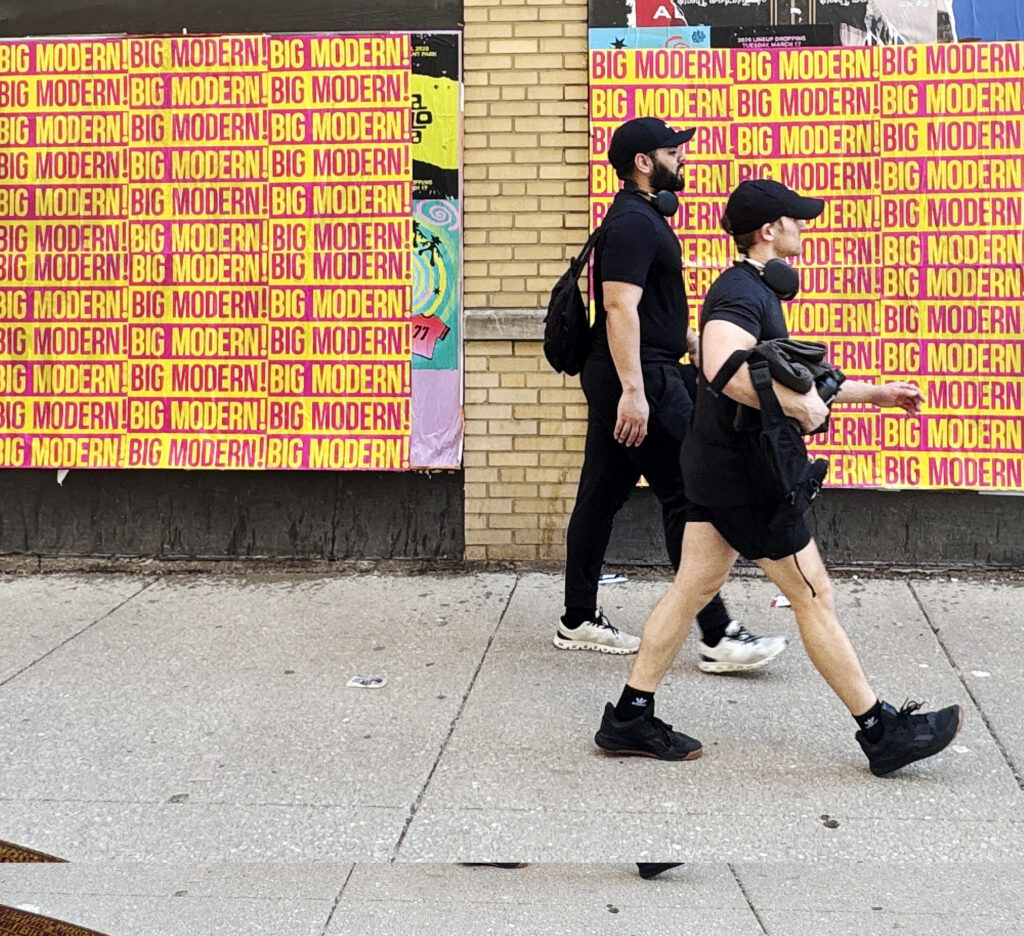
A guerrilla marketing campaign that is not planned properly does not fail randomly. It fails in completely predictable ways: creative that cannot be read at outdoor scale, placements chosen by convenience instead of audience concentration, response paths that do not exist, and measurement frameworks that have no baseline to compare against. Every one of those failures is the result of a planning gap, and every one of them is preventable.
Planning a guerrilla marketing campaign well requires working through a specific sequence of decisions in the right order. The sequence matters because each step constrains and informs the next one. The campaign objective determines the market. The market determines the format. The format determines the location scouting requirements. The location determines the creative brief. The creative brief determines the production timeline. Getting any step wrong creates compounding problems downstream.
Our team at American Guerrilla Marketing plans campaigns from our home at Industry City in Brooklyn, NY, through markets across the country. The process below is the one we follow for every campaign brief we receive, regardless of format, category, or scale.
Step 1: Define the Specific Business Goal
Guerrilla marketing plans break when they begin with a concept rather than a goal. “We want to do something bold” is not a plan. “We want to drive 500 QR scans and 200 landing page completions in the Williamsburg and Greenpoint neighborhoods of Brooklyn during our launch week” is a plan. The difference is specificity, and specificity is what makes every subsequent decision answerable rather than subjective.
The goal should name a specific outcome, a specific geography, and a specific time window. Everything else in the plan is designed to make that specific outcome more likely. Without the goal, the plan is just a collection of tactics looking for a purpose.
Translating Business Goals Into Campaign Goals
Business goals and campaign goals are not always the same statement. A business goal of “increase Q3 revenue by 15%” translates into a campaign goal of “drive first purchase conversion from the target customer segment in two primary markets during the six weeks before Q3 closes.” The campaign goal is the specific contribution the street activation is designed to make toward the larger business objective. Naming that contribution clearly is what makes the campaign accountable.
Step 2: Define the Target Audience With Behavioral Detail
Audience definition for guerrilla marketing needs to go beyond demographics. Knowing that the target audience is “25-34 year old urban consumers” is not sufficient to plan a street campaign. Knowing that they commute through Williamsburg on weekday mornings, shop the North 4th Street retail corridor on weekends, and attend events at specific venues in the campaign territory is actionable. The behavioral layer is what makes location selection possible.
The most useful audience questions for campaign planning are: Where does this audience move on a typical weekday? Where do they move on weekends? What events, venues, or gathering points concentrate them in the campaign territory? At what time of day are they most likely to encounter street media and have a moment to respond? That behavioral map is the foundation of route design.
Step 3: Choose the Market
Market selection is one of the most consequential decisions in the planning process because it determines every downstream choice. The right market is not the most impressive market or the market with the most foot traffic. It is the market where the target audience is most concentrated and most accessible through the formats the campaign intends to use.
Dense walking cities produce better results for fixed-placement formats like posters, stencils, and decals because foot traffic creates impression volume without requiring the audience to drive past a placement at distance. Markets where the target audience concentrates around specific events, neighborhoods, or venues are strong candidates even if they are smaller in total population. Concentration beats size for guerrilla marketing in virtually every scenario.
Step 4: Select the Right Formats
Format selection should follow the campaign goal and audience behavior, not personal preference or category convention. The question is not “what guerrilla formats do we like?” It is “which formats reach this specific audience in this specific market during this specific window in a way that produces the response the campaign needs?”
Format-to-Goal Matching
Different formats serve different goals. Wheatpaste poster campaigns are best for repeated visual presence and brand familiarity building over a multi-day window. Street teams are best for direct interaction, sampling, and response capture. Sidewalk stencils are best for ground-level directional presence and neighborhood saturation. LED trucks are best for mobile market coverage and launch-day visibility. Pop-up activations are best for creating a physical destination and controlled brand experience. Most campaigns use two or three formats that complement each other rather than doing everything at once.
Step 5: Scout Locations
Location scouting is a physical activity. It cannot be done accurately from a map, a photo, or a satellite image alone. Effective scouting requires walking the proposed campaign geography at the same time of day the campaign will run to assess actual foot traffic, surface condition, sight lines, and competitive context at each proposed placement location.
The scouting visit should assess: foot traffic volume and type at each proposed location, surface condition for any format requiring adhesion or stenciling, sight line distance and angle from the direction of audience approach, any physical barriers between the placement and the audience path, and any existing visual competition (other posters, signage, graffiti) that would reduce the campaign’s visual prominence.
Building the Confirmed Location List
The output of the scouting process is a confirmed location list with addresses, GPS coordinates, surface assessments, and recommended format assignments for each location. That list becomes the operational document the install crew uses during deployment. A scouted, confirmed location list eliminates day-of decision-making that leads to inconsistent results and missed placements.
Step 6: Build the Creative Brief
Outdoor creative briefs have one requirement that indoor or digital briefs do not share: the work has to communicate in two seconds at a distance of ten to twenty feet. Everything else, tone, brand standards, messaging hierarchy, visual style, operates within that constraint. Creative that fails the two-second test at outdoor scale fails regardless of how well it works in other contexts.
The creative brief should specify the two-second read (what is the single most important thing the audience must understand immediately), the format and size for each placement type, any outdoor legibility constraints the design team needs to observe (minimum type size, contrast requirements, color restrictions), and the response element that the creative must include (QR code, URL, offer code, or address).
Step 7: Design the Response Path
The response path connects the physical campaign to a measurable next action. It should be designed before creative production begins so the QR code, URL, offer code, or address can be built into the creative from the start rather than added as an afterthought. Every format in the campaign should carry at least one response element, even if the primary format goal is awareness rather than direct conversion.
Response path design includes: creating campaign-specific QR codes or short URLs, setting up the landing page or digital destination, establishing UTM parameters for traffic attribution, setting up any offer codes the street team or handout materials will use, and confirming that all digital destinations are live and functional before the campaign deploys.
Step 8: Build the Operations Plan
The operations plan covers everything that happens between creative approval and campaign completion. It includes the production timeline for all materials, crew assignments for installation, deployment schedule with specific start times and location sequences, permit documentation for any formats requiring them, contingency plans for weather delays or location access issues, and removal scheduling at the end of the campaign window.
Permit Research and Compliance
Permit requirements vary significantly by city, by neighborhood, and by format type. Our team conducts permit research as part of the planning process for every campaign and handles permit applications where required. Brands that deploy without understanding the permit landscape in their target markets risk enforcement actions that can disrupt the campaign and create additional costs. This is a planning step, not a logistics afterthought.
Step 9: Establish the Measurement Baseline
All measurement baselines need to be established before the campaign launches. That means pulling current branded search volume data for the target markets, noting current direct traffic levels from the campaign geography, and setting a pre-campaign baseline for any conversion metrics the campaign is designed to move. Without a baseline, post-campaign data has no comparison point and ROI calculation becomes speculative rather than evidenced.
Street Team Planning as a Separate Sub-Process
When a campaign includes street team components, the team planning process requires its own structured approach separate from the static format planning. Street team performance depends on briefing quality, team selection, territory assignment, interaction targets, and documentation standards, all of which need to be planned before the team deploys.
A street team brief for a guerrilla campaign should include the specific interaction goal per team member per hour, the talking points for each expected conversation type, the response path the team is directing people toward (QR code, handout card, specific URL), the documentation requirements for each interaction, and the territory each team member or team unit is responsible for. Teams that receive specific interaction targets perform significantly better than teams given vague goals like “engage with as many people as possible.” The specificity of the goal focuses team behavior and creates a clear metric for post-campaign team performance review.
Team Selection Criteria
Street team members for product launches and brand activations should be selected for their ability to have genuine conversations about the product rather than just for their physical energy or appearance. A team member who understands the product well enough to answer questions, handle objections, and maintain enthusiasm through a full day of interactions produces substantially more value per interaction than a team member who can only deliver a scripted pitch before deflecting real questions. Invest in briefing depth before the activation rather than trying to compensate for shallow briefing with team size.
Creative Production Timeline and Outdoor Testing
Creative production for guerrilla marketing campaigns requires more lead time than many marketing teams expect because outdoor production involves physical materials that need to be printed, shipped, and in some cases pre-tested before the full run is produced. A typical production timeline for a poster or stencil campaign runs two to three weeks from final file approval to materials on-site, including print production, quality review, and shipping. Compressed timelines increase cost and reduce the opportunity to catch production problems before the full run is complete.
Outdoor testing of creative materials before the full production run is a practice that experienced guerrilla marketing teams build into their standard process. Testing means producing one or two prints of each creative at actual deployment scale and reviewing them in conditions similar to the deployment environment: standing at the actual viewing distance, in similar lighting, with similar surface conditions. The two-second test at actual scale reveals legibility and visual impact issues that are invisible in desktop or mockup review. Catching those issues in the test stage rather than after full production is the difference between a correctable problem and an expensive mistake.
Campaign Contingency Planning
Every guerrilla marketing campaign should have contingency plans for the most common execution disruptions: weather delays for outdoor installations, access issues at specific location addresses, material damage during transit, permit complications that prevent deployment at specific locations, and street team no-shows on the day of activation. None of these events are unusual in street-level campaign execution. They are predictable variables that experienced teams plan for rather than react to.
For weather-sensitive installations, a delay protocol specifying what conditions trigger a postponement and what the revised deployment date would be should be established before the campaign launches. For location access issues, a backup location list covering replacement addresses at comparable quality levels should be prepared during the scouting process so the install crew has immediate alternatives rather than improvising on the day. For material issues, ordering a 15 to 20 percent production overage ensures replacement stock is available without requiring an emergency reorder.
Step 10: Execute, Document, and Report
Campaign execution is where the plan either works or reveals its gaps. Our team deploys with GPS-tracked documentation at every installation, timestamped photography organized by location, and crew accountability for each placement on the confirmed location list. Documentation happens during deployment, not after, because after-the-fact documentation produces inconsistent coverage and is impossible to verify.
Campaign reporting combines the installation documentation package with the digital response data: QR scan totals by day and location, landing page completion rates, offer redemption counts, any measurable market lift in the campaign territory, and business outcome metrics connected to the campaign goal. The report tells an honest story about what the campaign was designed to do and what it produced.
Agency vs. In-House Planning: Where Each Approach Works
Brands that run guerrilla campaigns regularly face a recurring question about how much of the planning process to handle in-house versus through an agency partner. In-house teams can build institutional knowledge about specific markets and formats over time, which reduces planning time and improves placement quality as the team accumulates campaign experience. The limitation is that in-house teams often lack the established vendor relationships, permit infrastructure, and multi-market operational capacity that an experienced agency brings to complex campaigns.
Agency partners add the most value on first-market campaigns where the brand has no field experience, on multi-market simultaneous deployments where operational coordination is complex, and on campaigns requiring formats the in-house team has not executed before. They add less value on repeat campaigns in markets where the in-house team already has established relationships and tested location lists. The most effective arrangements often combine in-house strategic direction with agency operational execution, particularly for markets where the agency has established infrastructure.
Building Institutional Campaign Knowledge
Regardless of whether planning is handled in-house or through an agency, the brand should own the accumulated campaign knowledge: the confirmed location lists from past campaigns, the performance data by market and format, the measurement baselines for each recurring campaign market, and the creative performance history across multiple executions. This knowledge base belongs to the brand’s marketing team, not to any vendor. Agencies that retain location and performance data without sharing it with the client are creating dependency rather than building the client’s capabilities. Require full data handoff as part of any agency engagement.
Post-Campaign Debrief as a Planning Tool
Every campaign should end with a structured debrief that captures what was planned, what was actually executed, what the measurement data showed, and what the team would do differently next time. The debrief is not a performance review. It is a planning input for the next campaign. Questions worth addressing in every debrief include: Which placements performed above expectation and why? Which placements underperformed and what would we change? Did the timeline hold or were there compression points that caused quality issues? Was the creative effective at outdoor scale? Was the response path generating the expected conversion rate?
A brief, structured debrief document that addresses those questions after each campaign creates a compounding planning resource. The tenth campaign in a given market benefits from the accumulated debriefs of the prior nine. That accumulated knowledge is one of the most practical advantages of running guerrilla marketing as a regular channel rather than as a one-off experiment.
Legal and Compliance Considerations in Campaign Planning
Permit requirements, surface legality, and municipal code compliance are not afterthoughts in guerrilla campaign planning. They are planning inputs that affect format selection, location decisions, and campaign timing. A campaign that deploys without understanding the regulatory environment in its target market risks enforcement actions that disrupt the campaign mid-flight and create costs that outweigh the media value generated.
Our team researches permit requirements in every market as part of the standard planning process. Different cities have different regulations for different format types. Street team activations on public sidewalks require permits in some cities and not others. Sidewalk chalk and stencils are legal on certain surface types in some municipalities and prohibited in others. Wheatpaste has specific surface and location rules that vary by neighborhood within a single city. Building a compliance layer into the planning process protects the campaign from the preventable enforcement problems that come from assuming the rules are the same everywhere.
Common Planning Mistakes and How to Avoid Them
The most common planning mistake is starting with the concept rather than the objective. A campaign designed around a creative idea that has no connection to a specific business goal produces interesting-looking media that cannot be evaluated or improved because there is no standard to measure against.
The second most common mistake is skipping the scouting step. Placements chosen from maps and photos consistently underperform placements chosen from physical scouting because the critical variables, actual foot traffic, surface condition, and sight lines, are invisible in remote assessment.
The third mistake is treating the response path as optional. Every campaign should have a measurable response element, even if the primary goal is awareness. Without a response path, the campaign produces no data, and campaigns without data cannot improve.
Frequently Asked Questions
What is the first step in planning a guerrilla marketing campaign?
The first step is defining the specific business goal the campaign is designed to advance. Not a general goal like “increase awareness” but a specific, measurable outcome: drive foot traffic to a specific location, generate sign-ups for a product launch, create visibility at a specific event. The entire plan flows from that specific goal.
How far in advance should a guerrilla marketing campaign be planned?
Most campaigns require four to eight weeks of planning time from initial brief to execution day. That window covers objective setting, market selection, format choice, location scouting, permit research, creative production, and logistics coordination. Campaigns involving multiple markets or large street team deployments may require ten to twelve weeks.
How do you choose the right market for a guerrilla marketing campaign?
Market selection should follow the customer, not the budget. Choose the market where the target customer is most concentrated and most accessible through street-level formats. Dense walking cities with active pedestrian culture produce stronger results than sprawling auto-dependent markets for most fixed-placement formats.
What should every guerrilla marketing plan include?
A complete plan should include: a specific campaign objective with measurable success criteria, a defined target audience with behavioral context, format selection with rationale, a specific scouted location list, a creative brief with outdoor legibility requirements, response path design, campaign timeline, operations plan, and a measurement framework with pre-campaign baselines.
What are the most common guerrilla marketing planning mistakes?
Starting with the idea rather than the objective, choosing placements by convenience rather than audience concentration, creating street creative at desktop scale that fails at deployment size, failing to build a response path before the campaign launches, and underestimating operational logistics of multi-location deployments. All are preventable with a structured planning process.
How should a campaign brief be structured for a guerrilla marketing agency?
A guerrilla marketing agency brief should specify: the campaign objective and success metrics, target audience with behavioral and geographic context, the campaign market or markets, budget range, campaign timeline including deployment date and any tied events, format preferences, and any constraints (permit requirements, brand standards, venue restrictions, removal deadlines).