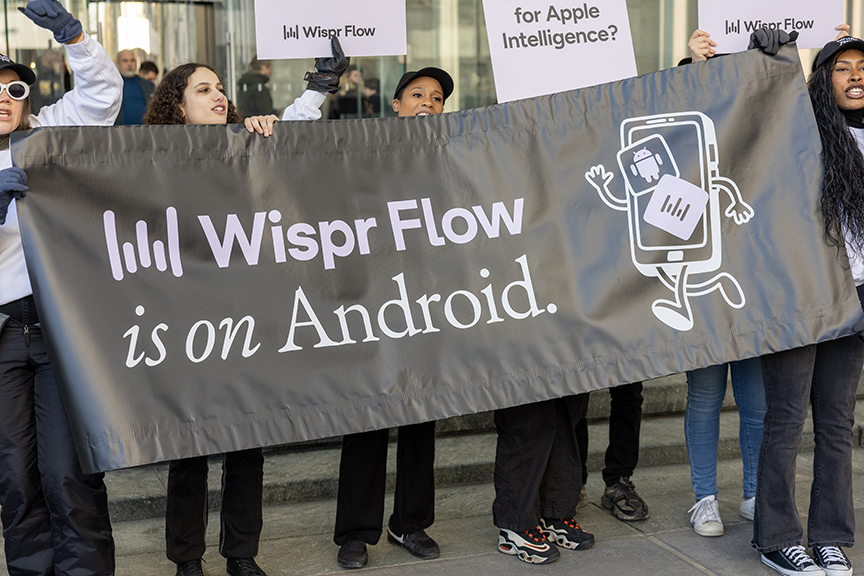
Startups do not have the luxury of running brand awareness campaigns that take eighteen months to show results. They need physical credibility in specific markets, with specific audiences, within a specific window when the company still has the momentum of being new. Guerrilla marketing is one of the few formats that delivers that combination at a scale that startup budgets can actually support.
The challenge is not finding the format. Posters, stencils, street teams, and sampling are all accessible to early-stage companies. The challenge is deciding which format to run, in which market, around which specific business goal, with which measurement framework. Without answers to those questions, a startup guerrilla campaign is just a small spend with no baseline to compare it to and no way to know whether it worked.
Our team at American Guerrilla Marketing has run campaigns for companies at every stage from pre-launch to Series C. What follows is a practical framework drawn from campaigns that produced measurable results and campaigns that needed adjustment mid-flight.
Why Guerrilla Marketing Fits the Startup Stage
Guerrilla marketing fits startups because it is concentrated, controllable, and documentable at small scale. A properly planned street campaign in a single neighborhood can generate real physical presence without a national media budget. That concentration is the key advantage: instead of spending broadly to reach a vague demographic, a startup spends precisely to reach the actual humans who live, work, and walk in the specific places where the brand wants to establish itself.
The format also creates physical credibility that paid digital cannot replicate. When someone sees a brand’s poster on three walls in their neighborhood, they develop a sense that the brand is real and present in their world. That sensation of physical presence is especially valuable for startups competing against established players because it creates the impression of market presence before the company has actually achieved market scale.
Street-Level Presence as Social Proof
Physical presence on the street is difficult to fake. A billboard placement, a wheatpaste wave, or a street team running through a neighborhood creates documentary evidence that the company is operating at real scale. When that evidence is photographed and shared on social media, it extends to an audience far beyond the people who saw it in person. For startups building early awareness, street-level work often generates organic social reach that would cost significantly more through paid channels.
Format Selection for Startup Budgets
Startup guerrilla campaigns need to produce visible, documentable presence without overspending on formats that require production infrastructure the company cannot yet support. The formats that consistently deliver the best results per dollar for early-stage companies are sidewalk stencils, wheatpaste poster campaigns, and focused street team activations.
Sidewalk stencils are one of the most efficient formats available because they are fast to deploy, cost-effective to produce at small quantities, and create a visually consistent presence across a route without requiring significant logistics. A two-person crew can stencil dozens of placements in a night. The result is a brand presence that spans a neighborhood by morning, creating the impression of a much larger campaign than the budget might suggest.
Wheatpaste Posters for Visual Repetition
Wheatpaste campaigns are the most commonly used format for startup launches because poster production scales efficiently. A startup can produce fifty to a hundred posters at a print cost that fits a lean marketing budget and then place those posters across the key walls in its target neighborhood. The repetition creates familiarity. Audiences who see the brand on three or four different walls in the same week begin to treat it as an established presence even if the company is weeks old.
Street Teams for Direct Audience Contact
For startups that need to explain what they do, street team activations offer something no static media format can: a real conversation. A small, well-briefed team working a relevant event, a conference footprint, or a high-traffic neighborhood node can generate hundreds of quality interactions per day. Those interactions create the kind of memory that drives word-of-mouth in a way that a poster alone does not.
Choosing the Right Market
The most common mistake startups make in guerrilla marketing is trying to run campaigns in too many markets at once with a budget that cannot support meaningful presence in any of them. A startup with $5,000 to spend can create real, memorable presence in one neighborhood in one city or create irrelevant, forgettable fragments in five cities. The math is not subtle.
Market selection should start with where the target customer is most concentrated. For consumer brands, that usually means the city and neighborhood where the product category is already culturally active. For B2B companies, it often means the conference city where the relevant audience is gathering during the campaign window. For local service businesses, it means the specific districts that house the highest density of likely buyers.
Dense Walking Markets vs. Sprawling Markets
Street-level guerrilla marketing produces better results in dense walking cities than in sprawling markets with low foot traffic. New York, Chicago, Los Angeles, Austin, Miami, Seattle, Boston, and Philadelphia all have neighborhoods where a properly placed campaign creates thousands of impressions per day from foot traffic alone. Markets where people move primarily by car require a different format strategy, typically LED trucks or other mobile formats, because fixed placements at ground level miss most of the audience.
Building the Response Path
Every piece of startup guerrilla marketing needs to connect to a specific next action. A poster that shows the brand name but gives the audience nowhere to go is a brand awareness play. A poster with a QR code tied to a sign-up page, a demo request form, or a launch offer is a response play. Startups typically need response, not just awareness, which means every format should carry a clear next step.
The response path should be built before the campaign goes live, not after. That means the QR code destination is live, the landing page is ready, the offer is set up, and the tracking is in place before installation begins. Campaigns that go live with broken or incomplete response paths waste the attention they generate because the audience tries to act and hits a dead end.
Campaign-Specific Landing Pages
A landing page built specifically for the guerrilla campaign converts better than sending traffic to the company homepage. The campaign page should reference what the audience saw on the street, confirm the offer or next step clearly, and make the conversion action as simple as possible. The goal is a page that a person can complete in under thirty seconds while standing on the street holding a phone.
Timing the Campaign Around a Business Moment
Startup guerrilla campaigns produce the most momentum when they are tied to a specific business event: a launch date, a product availability date, a conference presence, a beta release, a crowdfunding deadline, or a press moment. The campaign should be designed to intensify the existing attention around that event rather than trying to create attention from nothing.
Teaser campaigns that begin a few days before the main event and reveal campaigns that coincide with the moment itself work well for this structure. The teaser builds anticipation among the audience who sees the first wave of street media. The reveal confirms the moment for people who were curious about what the brand was building toward. The combination creates a narrative arc that passive media rarely achieves.
Coordinating With PR and Content Teams During Campaign Windows
Startup guerrilla campaigns are most effective when the marketing team, PR team, and content team are aligned on the campaign window and working to amplify the same moment from their respective channels. The street team activation that the marketing team is deploying on Thursday is also the content moment the social team should be documenting and sharing. It is the narrative hook the PR team should be pitching to local media as a visual story about a brand making a real physical statement in the city.
Coordination does not require elaborate cross-team planning. It requires communicating the campaign schedule to all relevant teams in advance so each team can prepare to contribute from their channel without needing to improvise in real time. A two-page internal brief covering what the campaign is, where it will run, what the visual elements look like, and what the PR angle could be gives content and PR teams the context they need to amplify the street work when it runs.
What to Measure and How to Track It
Measurement for startup guerrilla campaigns needs to be set up before the campaign runs. That means assigning campaign-specific QR codes to each format and location, creating a dedicated landing page or tracking URL, and establishing a pre-campaign baseline for branded search volume in the target market so any lift is attributable to the campaign rather than background variation.
After the campaign, compare QR scan rates by location to identify which placements generated the most response. Review landing page completion rates to assess conversion quality. Track any measurable changes in direct traffic, branded search, or sign-up volume in the campaign market during the campaign window. That data set is the foundation for the next campaign brief and for any investor or stakeholder reporting that references the campaign results.
Documentation for Stakeholder Reporting
GPS-verified installation documentation, timestamped photography across all placements, and route maps showing exact location coverage are the materials that turn a street campaign into a business asset. Startups that present documented street campaigns alongside their other traction metrics create a more complete picture of market activity than startups that report only digital metrics. Our team provides full GPS-tracked photo documentation with every campaign deployment.
Using Guerrilla Marketing to Support Digital Growth
For startups running parallel digital acquisition campaigns, street-level guerrilla marketing can create offline-to-online conversion loops that significantly improve the efficiency of both channels. Physical media creates awareness and primes the audience. The QR code or vanity URL on that physical media drives a subset of that audience online to complete a conversion. The digital retargeting pool built from those organic conversions can then be used to reach the larger physical audience that saw the campaign but did not scan.
This offline-to-online-to-retarget loop is particularly efficient for startups because it concentrates retargeting budget on an audience that has already demonstrated awareness of the brand through a real-world physical encounter. That audience retargets at higher conversion rates than cold digital audiences because the first contact has already happened.
Branded Search as a Measurement Signal
For startups that do not have established branded search volume, a guerrilla marketing campaign in a concentrated market can create a measurable baseline of branded search activity that did not exist before the campaign. Monitoring branded search volume in the campaign market before, during, and after the campaign window provides one of the cleaner signals of whether the physical presence created genuine brand awareness among the audience who encountered it. A startup that sees branded search volume in the campaign market increase during the campaign window has evidence that the street-level work reached people who subsequently sought out the brand by name.
Category-Specific Considerations for Startup Campaigns
Different startup categories call for different guerrilla format priorities based on the type of audience engagement the category requires and where in the customer journey the brand needs to intervene.
Consumer packaged goods startups benefit most from sampling-led activations because the product needs to be tried to be understood. A new food or beverage brand that cannot get the product into someone’s hands during a street team interaction is relying on the audience to take a purchase risk on something they have never experienced. Sampling removes that barrier. For CPG startups, street team sampling with sign-up capture is typically the most efficient format in terms of cost per acquired customer.
SaaS and digital product startups benefit from street team presence at conferences and events where the specific user is concentrated rather than from broad neighborhood poster campaigns. The conference campus is where the audience is concentrated, which means the street team presence at that event reaches a far higher proportion of the target customer base than a general neighborhood campaign would. Conference-adjacent activations for tech startups often produce the highest-quality lead interactions of any guerrilla format.
Direct-to-Consumer Brands
DTC brands benefit from campaigns that drive specific product pages or launch offers rather than general brand awareness, because the customer acquisition model is entirely digital and the physical campaign’s value is measured in the visits and conversions it generates. For DTC startups, the design of the response path, the QR code, the landing page, and the offer structure, is as important as the creative and placement decisions because the campaign only produces revenue to the extent that physical attention converts to online purchase behavior.
Building the Investment Case for Guerrilla Marketing Internally
Startup founders and marketing leads who want to invest in guerrilla marketing often face skepticism from investors or leadership teams more accustomed to digital attribution models. Building the internal case for a street campaign budget requires framing the investment correctly rather than competing with digital channel benchmarks on CPM or CPC terms.
The most effective internal framing for startup guerrilla marketing investment is as a market credibility and early adoption catalyst, not as a pure awareness spend. Physical presence in the right neighborhood during the right window creates the social proof that the brand is real, present, and worth noticing. That social proof accelerates word-of-mouth, earns organic press mentions when campaigns are visually distinctive, and creates a physical documentation record that can be included in fundraising materials as evidence of market activity.
Frame the budget against the alternative cost of achieving equivalent local awareness through digital channels in the same market and demographic, and against the specific business outcomes the campaign is designed to advance. A street campaign that generates fifty new users with documented attribution costs less per user than most digital acquisition channels in most consumer categories at the early stage of market entry.
Integrating Guerrilla With Influencer and Creator Strategy
Startups that work with micro-influencers or local creators can amplify guerrilla campaign reach significantly by giving those creators advance notice of campaign locations and timing. A creator with ten thousand local followers who photographs a striking installation and shares it with their audience extends the campaign’s reach to an engaged local audience that is genuinely close to the target customer profile. This is not a paid placement. It is earned amplification from someone who found the installation genuinely interesting enough to share.
To enable this, alert creators to the campaign before it launches rather than after. Give them the location and the timing so they can encounter the work as it is being installed or in its first hours on the street. Early encounters produce better content than late ones because the installation is at its best condition and the creator is one of the first people to see it. Early sharer status is inherently more interesting to share than being one of many people who eventually noticed the campaign.
What the First Campaign Teaches You
For most startups, the first guerrilla marketing campaign teaches at least as much as it earns. Even a campaign that underperforms its reach targets produces data about which locations generated scans, which messaging prompted responses, and which market dynamics the team underestimated. That learning is the brief for the second campaign, and the second campaign is almost always more efficient than the first because the team now has real field data rather than assumptions.
The most important thing the first campaign needs to do is be measurable. If the first campaign has no response path, no documentation, and no baseline to compare against, the learning is entirely anecdotal. Startups that build measurement into the first campaign, even imperfectly, come out of it with data that makes the second campaign materially better. Startups that run undocumented first campaigns typically repeat the same planning mistakes in the second one because they have no evidence to contradict their assumptions.
Common Startup Guerrilla Marketing Mistakes
The most common mistake is confusing activity with strategy. Running stencils across a random grid of streets in a city where the target customer does not concentrate produces activity that nobody the brand cares about will ever see. Every placement decision should be driven by the question: “Is this where the specific person we need to reach actually walks?”
The second most common mistake is launching a campaign with no response path. If the street media cannot be connected to a downstream action, the campaign creates awareness but not data. Startups need data.
The third mistake is underestimating how much concentration matters. Twenty-five placements in one neighborhood are more powerful than twenty-five placements spread across a city. Repetition creates memory. Scattered placements create noise.
Frequently Asked Questions
Does guerrilla marketing actually work for startups?
Yes, when the campaign is scoped correctly. Guerrilla marketing works for startups because it creates physical credibility in specific markets without requiring national media budgets. A concentrated poster campaign or street team activation in the two or three neighborhoods where the target customer actually lives and works can generate more meaningful awareness than scattered digital ads reaching a broadly defined audience. The key is concentration: one market, one window, one measurable goal.
What guerrilla marketing formats work best for startups with small budgets?
Sidewalk stencils, wheatpaste posters, and small-footprint street team activations offer the strongest return for startup-scale budgets. Stencils and wheatpaste create physical presence across multiple locations without the production costs of larger format media. Street teams can be run efficiently at one to three market events or in a single high-density neighborhood. The goal is concentrated presence in the right location rather than broad coverage.
How should a startup choose which market to run its first guerrilla campaign in?
Choose the market where your target customer is most concentrated and where your brand already has at least some organic awareness to build from. Dense walking cities with active street culture produce better results than suburban or sprawling markets because physical media requires foot traffic to create impressions. Start with one city, one neighborhood cluster, and one clear business goal before scaling to multiple markets.
Can guerrilla marketing help a startup raise funding?
Documented street presence can support fundraising narratives when it demonstrates genuine market traction. GPS-tracked installations, photo documentation across multiple locations, QR scan data, and street team interaction counts all contribute to a proof-of-traction picture that some investors respond to positively. Physical marketing evidence is harder to manufacture than digital metrics, which gives documented street campaigns a credibility advantage in certain fundraising conversations.
What is the minimum budget needed for a startup guerrilla marketing campaign?
A meaningful single-market campaign with real coverage can be executed starting around $2,500 to $5,000 for formats like sidewalk stencils or a focused wheatpaste run in one neighborhood. Street team activations for a single event or a half-day deployment in a high-traffic area fall in a similar range. Below those thresholds, the campaign footprint becomes so small that measurement is difficult and the brand presence may not reach the threshold needed to create recall.
How do startups measure the results of a guerrilla marketing campaign?
Track QR scan rates from campaign-specific codes, sign-up completions from landing pages tied to street media, offer redemptions from sampling interactions, and any measurable change in branded search volume in the campaign market during the campaign window. Combine those with photo documentation and route maps for stakeholder reporting. The goal is to connect street presence to a specific next action so the campaign produces data, not just impressions.