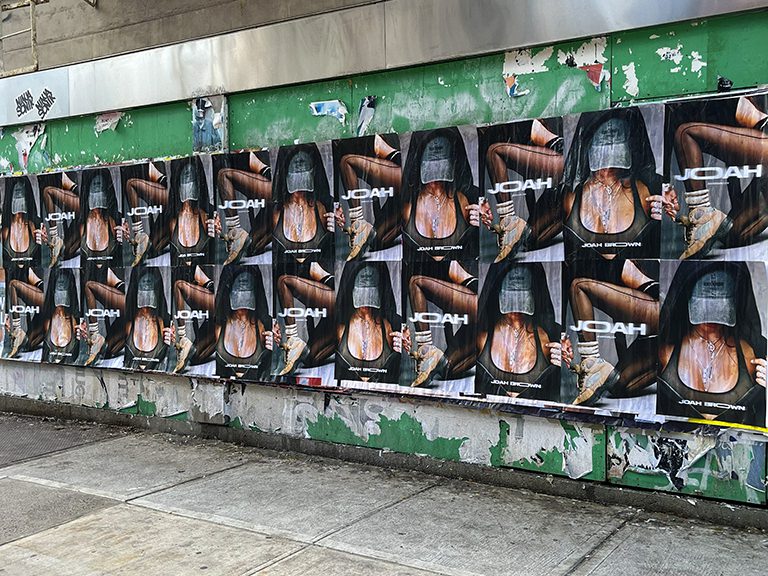
San Francisco is one of the most culturally sophisticated markets in the country for street poster campaigns — and one of the most environmentally demanding. The city’s dense, walkable neighborhood structure, its deep arts and music culture, and its physically concentrated geography make it an ideal environment for flyposting campaigns that want to build brand presence in a highly engaged, high-income urban audience. At the same time, the marine layer, fog, and moisture conditions that define the Bay’s microclimate require material specifications that most markets do not need. Getting the SF flyposting strategy right means understanding both the cultural opportunity and the physical environment.
Our team has managed poster campaigns across San Francisco’s major neighborhoods and understands the regulatory landscape, the private surface ecosystem, and the neighborhood-level audience dynamics well enough to place materials where they generate genuine impact. The Mission District’s murals and poster culture, SoMa’s tech-adjacent professional density, the Castro’s long-established arts community, and the Haight’s counterculture identity each represent distinct audience environments that call for different placement strategies within the same overall campaign framework.
This guide covers the specific neighborhoods, surfaces, climate considerations, and campaign logistics that define professional flyposting in San Francisco — with the practical field-level detail that brands need to plan and execute campaigns that actually work in this distinctive market.
San Francisco’s Neighborhood Poster Landscape
San Francisco’s 7×7 mile geography concentrates a diverse set of neighborhood environments within walking or short transit distance of each other. This compactness allows comprehensive city coverage in a single campaign, but the neighborhood-by-neighborhood audience differences require specific placement strategy for each zone.
Mission District: The Cultural Core
The Mission District is San Francisco’s highest-concentration arts, music, and Latino cultural neighborhood — a dense, flat grid of Victorian flats, commercial corridors, and arts spaces that generates more street-level cultural activity than any other neighborhood in the city. Valencia Street from 16th to 24th Street is the primary destination corridor: restaurants, bars, bookshops, boutiques, and music venues create constant foot traffic from both neighborhood residents and citywide visitors. 24th Street serves the neighborhood’s deeper Latino community with a more residential character and strong community cultural institutions.
The Mission has one of the most active mural and public art cultures in the country — over 200 murals in a relatively small geographic area — which creates a visual environment where street poster campaigns feel like participation in an established tradition rather than commercial intrusion. Surface availability in the Mission includes private wall agreements with building owners who have embraced the arts culture context, construction hoarding in the ongoing development along Valencia and 16th Street, and designated arts community posting surfaces maintained by neighborhood arts organizations.
SoMa: The Tech and Arts Mixed Zone
South of Market — SoMa — mixes tech office density, design studios, nightlife venues, and arts spaces in a grid of wide commercial streets and converted industrial buildings. Harrison Street and Folsom Street serve as the primary cultural corridors, anchored by nightclubs, creative studios, and the venue ecosystem around the Civic Center. During the day, SoMa’s audience is concentrated around office campuses and co-working spaces; evenings shift to the nightlife and arts audience that uses the neighborhood’s venue infrastructure.
SoMa’s building stock — large-panel industrial facades, construction hoarding on active development sites, and commercial property walls with creative-business tenants — provides strong large-format surface inventory that is less available in the Victorian-era residential neighborhoods to the west. For campaigns targeting tech-adjacent professionals, designers, and the creative class, SoMa complements Mission District coverage by reaching a different demographic concentration in the same campaign window.
The Castro: Established Arts Community and Community Pride
The Castro is San Francisco’s LGBTQ+ cultural epicenter — a compact neighborhood commercial strip anchored by the Castro Theatre and radiating outward through independent restaurants, bars, and shops. The Castro has a deep community identity and high engagement with neighborhood-scale cultural programming, making it a high-receptivity environment for campaigns that acknowledge and engage with the neighborhood’s character rather than treating it as generic consumer territory. Poster campaigns in the Castro work best when the creative acknowledges the neighborhood context — not through tokenism, but through genuine cultural awareness in the design and messaging.
Haight-Ashbury: Counterculture Identity and Independent Retail
Haight-Ashbury’s commercial corridor on Haight Street from Divisadero to Golden Gate Park maintains a genuine counterculture identity — vintage shops, independent music stores, smoke shops, and alternative culture establishments that have persisted through decades of San Francisco’s economic transformations. The neighborhood’s demographics include long-term bohemian residents, young creative newcomers, and the visitor traffic attracted by the neighborhood’s cultural mythology. For music, entertainment, and alternative culture brand campaigns, Haight-Ashbury remains one of San Francisco’s highest-resonance posting environments.
Hayes Valley: The Design and Food Destination
Hayes Valley has transformed from a highway-blighted neighborhood into one of SF’s premier boutique retail and dining destinations. The neighborhood’s compact commercial core on Hayes Street between Laguna and Gough Streets concentrates a high-income, design-aware, food-engaged consumer demographic in a small, walkable area. For lifestyle, food and beverage, and design-adjacent brand campaigns, Hayes Valley delivers premium audience access at relatively concentrated geographic scale.
San Francisco’s Climate and Material Requirements
San Francisco’s marine layer and fog create moisture conditions that differ significantly from most major outdoor advertising markets. Understanding the climate’s impact on outdoor print materials is not optional for campaigns that want to maintain brand-quality visual presentation through a full display window.
Marine Layer and Fog Effects
The marine layer that covers San Francisco — particularly the western neighborhoods (Sunset, Richmond, Outer Mission) and fog-prone corridors in the Mission and Castro — deposits persistent moisture on outdoor surfaces even when no rain is falling. This moisture causes standard paper stock to absorb water at the edges and face, leading to surface bubbling, edge lifting, and color dulling that degrades brand appearance within 1 to 2 weeks of installation without adequate material protection.
Standard SF Material Specification
Our standard San Francisco campaign material specification is 100# cover stock minimum with UV gloss aqueous coating applied during printing. Wheatpaste installation uses a higher-adhesion paste formulation than our standard mix and includes a full sealing overcoat applied over the installed poster. For campaigns in the foggiest micro-zones (outer Sunset, Richmond, Outer Mission), synthetic substrate (polypropylene media) with UV-cured printing provides the most reliable weather resistance and can maintain display quality for 8 to 12 weeks in conditions that would require two replacement cycles using paper-based materials.
SF’s Regulatory Framework for Flyposting
San Francisco’s Public Works Code Sections 184.50 through 184.77 govern the placement of posters and printed materials on public property in the city. The code prohibits affixing materials to utility poles, city-owned structures, public walls, and any surface within the public right-of-way without authorization from the Department of Public Works. Violations are subject to fines of $100 to $500 per incident and removal at the cost of the violator.
Private Surface Network in SF
San Francisco’s private surface network is driven by individual building owner relationships and the arts community-managed posting infrastructure in neighborhoods like the Mission and Haight. Unlike New York’s more formally organized network of managed surface operators, SF’s private posting ecosystem requires more direct outreach to property owners and ongoing relationship maintenance. Our team has developed these relationships over multiple campaign cycles in the SF market and maintains active surface agreements in all major campaign zones.
Construction Hoarding Opportunities
San Francisco’s ongoing development activity — concentrated in SoMa, Mission Bay, the Central SoMa Plan area, and parts of the Mission District — generates rotating hoarding panel inventory that represents premium legal posting surface in the market. Active construction sites along Folsom, Harrison, Mission Street, and in the Mission Bay development zone provide large-format surfaces at pedestrian eye level on high-traffic sidewalks. Our team tracks active construction projects and hoarding availability across the city to maintain current surface inventory for client campaigns.
Campaign Logistics in the San Francisco Market
San Francisco’s 7×7 mile footprint and walkable neighborhood structure make it one of the most efficiently manageable major markets for flyposting campaign execution. All major campaign neighborhoods are within 3 to 5 miles of each other, allowing a single crew to cover multiple districts in an overnight installation window.
Installation Timing
Our SF installation crews operate on late-night schedules — typically midnight to 5:00am — to avoid the foot traffic and bar-crowd activity that persists on corridors like Valencia, Haight, and the Castro until midnight or later on weekends. Overnight installation captures fresh materials for the morning commute and early brunch pedestrian traffic that defines weekend movement on SF’s major corridors.
Hill and Terrain Considerations
San Francisco’s topography — steep hills between neighborhoods — affects installation logistics in ways that flat cities do not require planning for. Our crew routing accounts for hill climbing as a factor in per-hour installation productivity, and campaign timelines in SF are calibrated for the slower crew movement speeds that hill transit requires compared to flat-city installation environments.
Integrating SF Poster Campaigns with Ground-Level Tactics
Flyposting in San Francisco generates ambient visual presence across the city’s high-traffic corridors. Combined with direct consumer engagement tactics in the same neighborhoods, the campaign creates multi-touchpoint brand encounters that compound recall beyond what either format achieves independently.
Street Teams on Valencia and in SoMa
Deploying our brand ambassador teams on Valencia Street during weekend afternoon hours and in SoMa during weekday lunch and evening windows — while a poster campaign runs in the same zones — creates the live brand interaction layer that poster awareness alone cannot deliver. For product launches and brand activations, this combination converts ambient poster awareness into direct consumer engagement that drives measurable trial and conversion.
Sidewalk Stencils on High-Traffic Blocks
Sidewalk stenciling on the busiest blocks in the Mission, Hayes Valley, and Castro adds ground-level brand presence that reinforces poster campaigns at the pedestrian level. On Valencia Street and 24th Street in the Mission — some of the most walked corridors in the city — stencil coverage combined with poster installation on adjacent surfaces creates surround-sound brand presence that drives significantly higher recall than single-tactic campaigns.
Frequently Asked Questions
Where are the best flyposting locations in San Francisco?
The best flyposting locations include the Mission District (Valencia, 16th, 24th Streets), SoMa’s Harrison and Folsom Street corridors, the Castro’s commercial strip, Haight-Ashbury, Hayes Valley, and the Tenderloin arts corridor. These neighborhoods combine high foot traffic with arts and poster cultures that make brand campaigns contextually appropriate.
Is flyposting legal in San Francisco?
Posting on private property with owner permission is legal in San Francisco. SF Public Works Code Sections 184.50 to 184.77 prohibit posting on public property without authorization. Fines of $100 to $500 per violation apply. Professional campaigns use documented private surface agreements.
How does San Francisco’s weather affect flyposting campaigns?
The marine layer creates persistent moisture conditions, particularly in western neighborhoods. Standard paper without coating will show moisture-related degradation within 1 to 2 weeks in fog-dense areas. 100# cover with UV gloss coating is the standard specification for SF campaigns. Synthetic substrate printing is used in the foggiest micro-zones for maximum weather resistance.
What is the cost of a flyposting campaign in San Francisco?
A professional campaign covering 50 to 100 surfaces across the Mission, SoMa, and Castro typically runs $4,000 to $9,000 including surface fees, installation labor, print, and documentation. SF’s higher labor costs and complex surface ecosystem make it somewhat more expensive than comparable campaigns in Portland or Philadelphia.
How does the Mission District compare to SoMa for flyposting effectiveness?
The Mission delivers a dense, diverse, arts-culture-heavy audience with strong community ties and high receptivity to independent brand campaigns. SoMa reaches a more tech-adjacent professional audience. The best SF campaigns use both districts to reach different audience segments within the same campaign window.
What brands do well with street poster campaigns in San Francisco?
For more on this topic, see our guide to Display Board Advertising.
For more on this topic, see our guide to Impactia Metairie LA: Street-Level Marketing in the New….
For more on this topic, see our guide to guerrilla marketing services.
For more on this topic, see our guide to college marketing campaigns.
Technology products with consumer-facing UX, food and beverage brands with premium or artisanal positioning, music and entertainment campaigns, fashion and lifestyle brands with sustainability or arts culture adjacency, and wellness and fitness brands all perform well. Brands that present as culturally aware and locally relevant consistently outperform those with generic national advertising visual language.