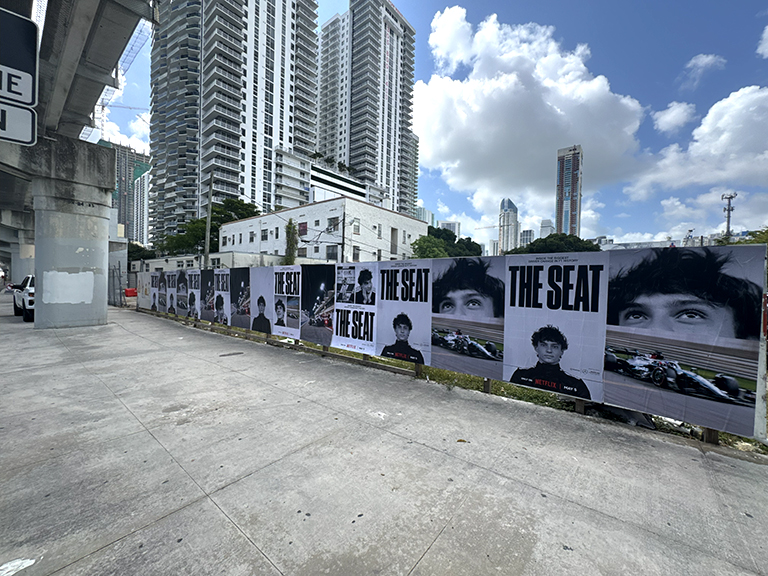
A flyposting campaign is only as good as the materials it uses. Brands that invest in professional surface placement and skilled installation crews then undermine the campaign with thin paper, standard indoor inks, and no consideration for how a poster survives two weeks of outdoor exposure are throwing money away. The materials that work on a studio wall do not work on a construction hoarding panel in November. The design that looks perfect on screen may not read correctly from 15 feet away in direct sunlight. Getting the print specifications right is the unglamorous foundation that every high-quality flyposting campaign depends on.
Our team has installed thousands of poster campaigns across markets with wildly different climate conditions — from the humidity of Miami in August to the rain of Portland in November to the direct sun of Phoenix in July. What we have learned about paper stock, ink type, coating, sizing, and file preparation shapes the specification standards we use across all of our campaigns. This guide shares that accumulated knowledge in practical, applicable terms that anyone planning a street poster campaign can use to make better material decisions.
This is not a theoretical discussion of print production. It is a practical field guide to what actually holds up on a wall over time — and what does not.
Paper Stock: The Foundation of Material Performance
Paper stock selection is the single most important material decision in flyposting print production. The wrong stock fails visually before the campaign’s mid-point. The right stock maintains brand-quality presentation through the full display window.
Understanding Paper Weight
Paper weight in U.S. printing is measured in pounds per 500-sheet ream of the parent sheet size for each paper category. This creates a slightly confusing comparison: 80# text paper is lighter than 80# cover paper because the parent sheet sizes for text and cover categories differ. For practical planning purposes, think in terms of the physical caliper (thickness) of the stock rather than the stated weight.
For outdoor flyposting, the minimum practical stock for a 2 to 4 week display window is 80# text (approximately 0.0038 inches caliper). At this weight, a standard-humidity outdoor environment with light rain exposure will see visible edge lifting and surface softening within 10 to 14 days. For campaigns requiring 4 to 8 weeks of outdoor display, 100# text (0.0045 inches) or 80# cover (0.0060 inches) is the professional standard.
Stock Categories for Outdoor Campaigns
Text-weight papers are standard for indoor promotional materials and work for short outdoor display windows in mild climates. Cover-weight papers are significantly thicker and more rigid, making them appropriate for outdoor campaigns in any climate and required for wet-weather markets. Poster papers — specialty products designed specifically for outdoor display — combine heavier weight with integrated moisture resistance and are the best option for long-duration outdoor campaigns where replacement is not planned.
Wet Climate Specifications
For markets with significant rainfall (Seattle, Portland, the Pacific Northwest, Miami in hurricane season, New England in fall), our standard specification is 100# cover stock minimum with a UV gloss aqueous coating. This combination provides moisture resistance at the paper surface level and UV protection that extends color integrity through multiple weeks of rain exposure. In the most demanding wet-climate conditions (exterior Seattle installation from October through February), we use synthetic substrates — polypropylene-based media — that are inherently waterproof and maintain structural integrity through sustained wet exposure that would destroy any paper stock.
Poster Sizes: Standard Formats and When to Use Each
Flyposting campaigns use a range of standard sizes tied to surface availability, viewing distance, and campaign objective. Choosing the wrong size for a surface or viewing context wastes printing and installation cost on materials that do not perform their visual function effectively.
11×17 Inches (Half Sheet)
The 11×17 half-sheet is the most versatile small-format for supplementary and community posting coverage. It is the standard size for music venue and bar bulletin board postings, community board placements, and supplementary coverage in locations where larger formats are not available. At standard reading distances of 3 to 8 feet, 11×17 inches allows adequate text legibility and brand recognition. It is not effective as a primary outdoor awareness format from a vehicle-speed viewing context.
18×24 Inches (Small Poster)
18×24 inches is the traditional “small concert poster” format — large enough to command wall presence in a low-density posting environment but printable at quantities and costs that fit mid-size campaign budgets. This format works well for boutique retail display, arts district postering in lower-density wall environments, and as a paired supplement to larger format primary placements on the same street.
24×36 Inches (Full Concert Poster)
24×36 inches is the workhorse format for professional flyposting campaigns. Large enough to command attention from 10 to 20 feet of pedestrian viewing distance, small enough to fit efficiently on most private surface arrangements, and available at competitive unit costs at quantities above 200 copies. For multi-poster installations on a single surface (wheatpaste panels using 4 to 9 individual sheets tiled to create a large-format display), 24×36 inches is the preferred building block.
4-Sheet (40×60 Inches) and Large Format
4-sheet (40×60 inch) and larger formats are appropriate for high-visibility single-panel placements on construction hoarding, building walls, and premium surface inventory where the campaign brief calls for large-format impact. These formats require professional large-format digital printing rather than offset production. At viewing distances above 20 feet — highway adjacencies, wide urban plazas, across-street commercial walls — large format is necessary for effective brand and message recognition. At pedestrian distances, the scale creates impact but wastes the detail capability of smaller formats.
Ink Types and Color Performance Outdoors
Ink type determines how well colors maintain their integrity through UV exposure, moisture, and physical contact during the campaign display window. Indoor printing inks fail faster outdoors than most brands expect when they first run street campaigns.
CMYK Offset and Digital Printing
Standard CMYK offset printing and commercial digital printing (using aqueous inkjet or dry toner processes) produce adequate results for outdoor campaigns with 2 to 4 week display windows in mild climates. Colors will begin showing UV-related fading after approximately 3 to 4 weeks in direct summer sun. For campaigns planned around longer display windows or in high-sun markets (LA, Phoenix, Miami), a UV-resistant coating is required to maintain color integrity to the campaign end date.
UV-Curable Inks
UV-curable inks, applied through UV inkjet printing equipment, are cross-linked at the surface level during the curing process, creating a bond that is significantly more resistant to moisture, abrasion, and UV degradation than standard aqueous or toner-based inks. For outdoor poster campaigns requiring 6 to 12 week display windows or for synthetic substrate printing in wet climates, UV-curable ink specification adds durability that standard printing cannot provide.
Color Mode and Profile
All outdoor poster artwork should be produced in CMYK color mode, not RGB. RGB files converted to CMYK at the printer’s discretion often produce color shifts that result in printed materials that look noticeably different from screen proofs. Our team requires client-supplied files to be supplied in CMYK with embedded color profiles, and we include a physical press proof approval step for any campaign where color accuracy is critical to brand standards.
Coatings and Finishing for Outdoor Durability
Coating selection is the most significant durability decision that does not involve the base stock itself. The right coating can extend outdoor material life by 30% to 100% relative to uncoated stock in the same environment.
Aqueous UV Gloss Coating
UV gloss aqueous coating is our standard outdoor specification for most markets. Applied inline during printing, UV gloss coating adds a hard, non-porous surface layer that repels moisture at the face of the poster and provides UV absorption that slows ink fading. The gloss finish also enhances color saturation and vibrancy at the point of production, making the printed piece visually richer than the same artwork on uncoated stock. UV gloss is the right call for approximately 80% of professional outdoor flyposting campaigns.
Aqueous Matte Coating
Matte aqueous coating provides the same moisture and UV protection as gloss coating with a non-reflective surface finish. For campaigns in direct sunlight environments where glare from a gloss surface would reduce legibility (facing south on a sunny urban wall), matte coating is preferable. Matte also photographs better for campaign documentation photos, producing cleaner records without light hotspots on the poster surface.
Wheatpaste Sealing Overcoat
For campaigns using wheatpaste installation, our field crews apply a sealing paste overcoat — a diluted wheat starch paste — over the installed poster as the final installation step. This overcoat layer bonds the surface of the paper to the face paste layer applied under the poster during installation and creates an additional moisture barrier that significantly extends material life in rainy conditions. The sealing overcoat is invisible when dried and does not affect the visual presentation of the printed material.
File Preparation Standards for Outdoor Poster Production
The most common print quality failure in flyposting campaigns is not a bad vendor — it is a badly prepared file. Poor file preparation results in printed materials that look amateurish at street scale, with pixelation, color inaccuracies, and layout issues that never appeared on screen.
Resolution Requirements
Final production files should be supplied at 300 DPI at the actual print size for all formats up to 18×24 inches. For 24×36 and larger formats, 150 to 200 DPI at actual size is acceptable because the added viewing distance at large format reduces the visible impact of lower resolution. Files supplied at 72 DPI (screen resolution) at actual size will print with visible pixelation at any professional printing standard. Our team reviews all client-supplied files for resolution adequacy before approving for print.
Bleed and Safe Zone Standards
All outdoor poster files should include 0.125 inch bleed on all four sides — artwork that extends beyond the trim line to accommodate slight variation in the cutting process. No important content (logos, text, critical design elements) should appear within 0.25 inches of the trim line, as this zone is at risk of being cut during production. Our team provides print-ready templates for all standard campaign sizes on request.
Font Legibility at Street Scale
Typography that is legible on a laptop screen at full zoom may be unreadable at street-level viewing distances. Our standard minimum body text size for outdoor posters is 24 point, with primary call-to-action elements (show title, brand name, key message) at 60 point or larger for standard viewing distances. QR codes should be no smaller than 1.5 inches square at print size to ensure reliable scanning from standard smartphone camera distances.
Print Quantity Planning and Cost Optimization
Print quantity decisions significantly affect per-unit cost and campaign flexibility. Understanding the cost structure of outdoor poster printing allows brands to plan quantities that optimize budget allocation.
Volume Price Breaks
Offset printing for standard 24×36 inch poster production typically has price break points at 100, 250, 500, and 1,000 copies. The per-unit cost reduction from 100 to 500 copies is typically 40% to 60%. For any campaign expecting to cover more than a single neighborhood, the economics almost always favor printing at the higher quantity tier even if excess copies are held for mid-campaign replacement rather than installation.
Replacement Stock Planning
Our campaigns typically plan print quantities at 120% to 130% of the anticipated installation count to maintain a replacement inventory for weather damage, overlay coverage, or vandalism that reduces the effective installation count during the campaign window. Replacement materials available in our warehouse allow mid-campaign reinstallation without a new print production cycle, maintaining campaign integrity through the full display window.
Frequently Asked Questions
What paper stock is best for outdoor flyposting?
80# text is the minimum for outdoor flyposting; 100# text or 80# cover stock is recommended for campaigns requiring 3+ weeks of outdoor exposure. For wet climates like Seattle and Portland, 100# cover with UV gloss coating is the professional standard. Synthetic substrates (polypropylene media) are used in the most demanding wet-climate conditions.
What are the standard sizes for flyposting campaigns?
The most common flyposting sizes are 11×17 inches (half-sheet), 18×24 inches (small concert poster), 24×36 inches (full concert poster), and 4-sheet (40×60 inches) for large-format placements. 24×36 is the most versatile for standard street campaigns.
What type of ink works best for outdoor posters?
Standard CMYK offset or digital printing with water-resistant inks is sufficient for 2 to 4 week display windows in mild climates. UV-curable inks provide superior outdoor resistance for longer campaigns or wet-climate markets. Always apply a UV gloss aqueous coating for any outdoor flyposting production.
Should flyposting posters be laminated?
A UV gloss or matte aqueous coating applied during printing provides most of the weather protection benefits of lamination without the installation complications. Full lamination adds rigidity that makes wheatpaste installation more difficult. For high-end premium campaigns, post-laminate with glossy finish is used for maximum aesthetic quality.
What file format and resolution should I use for flyposting artwork?
Supply files at 300 DPI at actual print size in CMYK color mode. PDF/X-1a is the safest format for print vendors. For large formats (24×36 and above), 150 DPI at actual size is acceptable. Always embed fonts and include 0.125 inch bleed on all sides.
How many posters do you need for a flyposting campaign?
For more on this topic, see our guide to Display Board Advertising: Street-Level Marketing That Gets….
For more on this topic, see our guide to wheatpaste poster campaigns in NYC.
A neighborhood-scale campaign covering one or two corridors typically requires 200 to 500 posters, including installation, weather-related replacement, and supervisor copies. Multi-market campaigns scale proportionally. Printing in quantities above 500 copies reduces per-unit cost by 40% to 60% compared to shorter run quantities.