Detroit is one of the most strategically underrated outdoor advertising markets in the country. A dense highway grid, a resurging downtown core, and some of the highest sustained freeway traffic in the Midwest create conditions where billboard advertising in Detroit punches well above average. Costs run from $1,500 per month for suburban static boards to $20,000 or more for premium digital bulletins on the Lodge (M-10) and I-75 — corridors that carry hundreds of thousands of daily impressions.
Our team at American Guerrilla Marketing has placed OOH campaigns across the Detroit metro for brands in automotive, healthcare, entertainment, and consumer categories. We know the corridors, we know the vendors, and we know how to layer street-level tactics on top of billboard buys to build the kind of frequency that actually moves the needle. This guide covers everything you need to execute a smart Detroit billboard strategy in 2026.
Whether you are a national brand looking to activate in a key Midwest market or a local business trying to break through in a city that demands authenticity, Detroit’s outdoor advertising landscape has options at every budget level — you just need to know where to look and how to negotiate.
Why Detroit Is a High-Value Outdoor Advertising Market
Detroit’s highway infrastructure is the backbone of its outdoor advertising value. The Lodge (M-10), I-75, I-94, and I-96 create a spoke-and-hub system that funnels traffic in and out of downtown from every direction. Unlike some Sun Belt cities where sprawl dilutes impressions, Detroit’s geography concentrates commuter traffic along predictable corridors — making it easier to buy billboards that actually reach your audience consistently over a four-week period.
The city’s ongoing revitalization has also added new advertising contexts. The Corktown, Midtown, and New Center neighborhoods now draw foot traffic that supports street-level activations alongside traditional billboard buys. Combined with a suburban ring that includes major retail and employment centers in Southfield, Troy, Dearborn, and Warren, the market offers coverage across income levels and demographics that few Midwest cities can match.
Market Size and Reach
The Detroit metropolitan statistical area covers roughly 4.4 million people. That audience includes not just city residents but the full orbit of suburban communities that commute through Detroit’s highway corridors daily. A well-positioned board on M-10 or I-75 reaches both downtown Detroit and suburban audiences in a single placement — a level of geographic efficiency that makes Detroit billboard costs look favorable compared to similarly-sized markets.
Automotive Industry Concentration
Detroit’s identity as the Motor City is not just history — it is a live advertising context. The concentration of automotive industry professionals, suppliers, dealers, and enthusiasts creates niche targeting opportunities that do not exist in other markets. Brands connected to automotive culture, performance, mobility, or manufacturing find Detroit audiences exceptionally receptive to relevant messaging.
Detroit Billboard Advertising Costs in 2026
Pricing across the Detroit metro follows a predictable pattern: highway-adjacent digital bulletins cost the most, followed by downtown static boards, then suburban and secondary road placements. Understanding the cost tiers helps you build a media plan that balances reach with efficiency.
Digital Bulletins on Major Corridors
Premium digital billboards on the Lodge Freeway, I-75 through downtown, and I-94 near Detroit Metropolitan Airport run $8,000 to $20,000 per four-week period depending on location, time of year, and inventory availability. Digital boards rotate ads on a loop, so your creative shares time with other advertisers — but you gain the flexibility to update messaging without reprinting vinyl.
Static Highway Bulletins
Traditional vinyl bulletins along major freeway corridors typically run $3,000 to $9,000 per four-week period. These boards display your creative exclusively for the full campaign flight, which can improve brand recognition compared to rotating digital inventory. Production costs for a standard 14×48 vinyl board average $500 to $800 depending on your design complexity.
Suburban and Secondary Road Boards
Suburban markets including Southfield, Troy, Dearborn, and the northern suburbs offer boards starting around $1,500 per month. These placements reach targeted local audiences and work well for businesses with a defined geographic service area or brands looking to reinforce messaging in specific zip codes.
Detroit’s Key Advertising Corridors
Not every billboard location is equal. In Detroit, a handful of corridors account for the majority of advertising value because of sustained daily traffic counts, audience quality, and geographic positioning relative to key commercial zones.
The Lodge Freeway (M-10)
The Lodge is Detroit’s most premium outdoor advertising corridor. Running from downtown northwest toward Southfield and beyond, it carries heavy commuter and commercial traffic through some of the city’s most densely developed zones. Boards on the Lodge command top rates but deliver some of the highest verified impression counts in the market. This is where you place a campaign when you need maximum Detroit coverage.
I-75 Through Downtown and the Airport Corridor
I-75 connects downtown Detroit to the northern suburbs and, heading south, to Detroit Metropolitan Airport. The airport corridor is particularly valuable for travel, hospitality, and automotive brands that want to reach business travelers and regional visitors. Downtown I-75 placements put your brand in front of the dense commercial activity in and around the city center.
I-96 West Corridor
I-96 heading west out of downtown passes through residential and commercial zones before connecting to Dearborn and the western suburbs. This corridor reaches a diverse audience that includes strong concentrations of healthcare workers, retail employees, and families — a different demographic profile than the Lodge’s more business-heavy commuter flow.
Woodward Avenue
Woodward Avenue is the cultural spine of Detroit — the street that connects downtown to the Midtown arts district, New Center, Ferndale, Royal Oak, and Birmingham. Billboards and outdoor placements along Woodward reach a younger, more culturally engaged demographic than highway boards. For lifestyle, entertainment, and consumer brands, Woodward visibility is often worth a premium that the square-footage pricing does not fully reflect.
Suburban Markets: Southfield, Troy, and the Northern Suburbs
The northern suburb corridor along I-75 and M-59 serves one of the most commercially active zones in Michigan. Southfield functions as a second downtown for professional services; Troy hosts major corporate campuses; and communities like Auburn Hills and Pontiac draw manufacturing and retail audiences. Outdoor placements here reach a commuter audience with above-average household incomes and strong brand awareness.
Street-Level and Guerrilla Advertising in Detroit
Billboards set the stage. Street-level tactics build the relationship. Our team deploys a range of ground-level activations in Detroit that extend a campaign’s footprint into neighborhoods, event zones, and high foot-traffic corridors that no single highway board can reach.
Detroit’s revitalized neighborhoods — Corktown, Midtown, Eastern Market, and the downtown core — offer rich environments for wheatpasting and poster campaigns that put your brand directly in front of engaged, walkable audiences. We coordinate with local regulations and deploy our crews to maximize legal placement opportunities while maintaining the aesthetic quality that these neighborhoods demand.
Sidewalk stencils work particularly well around Detroit event venues, sports facilities, and entertainment districts. When paired with a nearby billboard buy, they create a multi-touchpoint surround that builds frequency and reinforces messaging at both the macro and micro level. Our GPS-tracked installation process documents every placement for proof-of-performance reporting.
For campaigns that require human interaction, our brand ambassador teams activate in Detroit across events, retail environments, and public spaces. We train ambassadors to represent your brand authentically and capture engagement data that feeds back into campaign optimization.
How to Build a Detroit Billboard Campaign That Actually Works
A Detroit billboard campaign that produces results starts with audience mapping, not vendor negotiations. Before you pick a location, you need to know who you are trying to reach, where they travel, and what contextual cues matter to their purchase decision. Only then does location selection become straightforward.
Define Your Primary Audience Corridor
Match your audience profile to the Detroit corridors that serve them. Targeting automotive industry professionals? The Lodge and I-75 north are your primary corridors. Reaching young professionals and culturally engaged consumers? Woodward Avenue and Midtown adjacencies are more relevant than highway boards. Suburban family audiences? Secondary roads and suburban arterials in Troy, Macomb County, and Canton offer better targeting efficiency.
Set Your Frequency Goal First
Outdoor advertising research consistently shows that effective frequency — the number of exposures required to drive action — sits between 7 and 10 impressions per person over a four-week campaign. A single billboard on a major corridor may generate that frequency for a narrow geographic slice. Multiple boards across a market generate broader reach but may fall short of frequency thresholds without a longer campaign flight. Know which you need before you buy.
Layer Formats for Maximum Impact
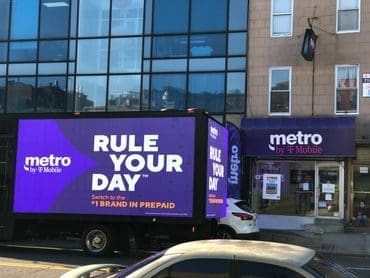
The most effective Detroit OOH campaigns combine traditional billboard placements with street-level tactics and, where budget allows, LED mobile billboard trucks that can target specific neighborhoods, events, or commercial zones on a flexible schedule. Our team designs multi-format campaigns that allocate budget across formats to hit both reach and frequency goals simultaneously.
Integrating Detroit Billboards with Your Full Marketing Mix
Billboard advertising does not exist in isolation. The most effective campaigns treat outdoor as one layer in a coordinated media mix that includes digital, social, and in some cases, experiential activations. Detroit’s market characteristics create specific integration opportunities worth understanding.
Major events — the Detroit Auto Show, Movement Electronic Music Festival, Red Wings and Tigers home schedules — create natural timing windows where outdoor amplification drives immediate response. Our team plans campaign flights around these calendar anchor points to capture audience attention when engagement with relevant topics is already elevated.
Digital retargeting layers on top of billboard exposure are increasingly standard practice. Geofencing technology allows you to serve digital ads to mobile devices that have been detected near your billboard placements, creating a seamless outdoor-to-digital sequence that improves attribution and conversion tracking. We build these integrated strategies as part of our full guerrilla marketing service offering.
For brands investing in brand activations in Detroit, coordinating activation dates with outdoor campaign flights creates a multiplier effect. The billboards prime the audience; the activation converts awareness into engagement; the post-activation content extends the story digitally. This sequencing is the foundation of how we approach integrated campaigns for major brand launches and market entries.
Working with American Guerrilla Marketing on Detroit Campaigns
We are based out of Industry City, Brooklyn, NY and operate campaigns across 50+ U.S. markets. Detroit is a market we know well — the vendors, the corridors, and the street-level opportunities that fall outside standard media plans. When a client engages us for a Detroit campaign, our process starts with a strategy session that clarifies objectives, audience priorities, and budget parameters before any media gets bought.
From there, our team scouts specific locations, negotiates vendor rates, coordinates creative production, and manages the installation and documentation process end to end. Every campaign produces GPS-tagged photos, time-stamped reports, and a post-campaign summary that gives you concrete proof of what ran, where, and when.
We also specialize in campaigns that need to move fast. Rush deployments, pop-up activations, and event-adjacent placements are core capabilities for our team. If you are trying to capitalize on a specific Detroit event window or competitive moment, reach out early — we can typically confirm availability and begin planning within 48 hours of initial contact.
Our out-of-home advertising services span the full spectrum from traditional static boards to digital bulletins, mobile billboards, and integrated street-level programs. Detroit campaigns often benefit from all of the above, particularly when the goal is to build brand presence in a market where automotive and entertainment brands compete aggressively for outdoor real estate.
Frequently Asked Questions About Detroit Billboards
How much does a billboard in Detroit cost?
Detroit billboard costs range from $1,500 per month for standard suburban placements to $20,000 or more for premium digital bulletins along I-75 and the Lodge Freeway (M-10). High-traffic downtown locations and digital boards command the highest rates. Production costs for vinyl creative typically add $500 to $800 to your total investment.
What are the best billboard locations in Detroit?
Top Detroit billboard corridors include the Lodge Freeway (M-10), I-75 through downtown and the airport corridor, I-96 West, Woodward Avenue, and suburban markets in Southfield, Troy, and Dearborn. The right location depends on your target audience profile and campaign objectives.
Does American Guerrilla Marketing run billboard campaigns in Detroit?
Yes. Our team scouts, negotiates, and manages billboard placements across the Detroit metro. We also layer in street-level tactics — stencils, posters, and brand activations — to extend campaign reach beyond static boards and build frequency in specific neighborhoods.
How long does it take to launch a Detroit billboard campaign?
Standard lead time is 2 to 3 weeks for static vinyl boards and 1 to 2 weeks for available digital inventory. Rush placements can sometimes be executed faster depending on vendor availability and whether creative is already production-ready.
Can I combine billboard advertising with guerrilla marketing in Detroit?
Absolutely. We frequently pair billboard buys with sidewalk stencils, poster campaigns, and street teams to build frequency and street-level presence that billboards alone cannot deliver. Multi-format campaigns consistently outperform single-format placements in terms of brand recall and engagement.
What documentation does AGM provide for Detroit campaigns?
Every campaign includes GPS-tagged installation photos, time-stamped proof-of-performance reports, and post-campaign documentation you can share with stakeholders or clients. We treat documentation as a standard deliverable, not an optional add-on.
What industries use billboards most effectively in Detroit?
Automotive brands, healthcare systems, entertainment venues, casinos, real estate developers, and consumer brands with broad Detroit-area audiences all see strong returns from strategic billboard placements. Detroit’s automotive industry concentration also creates niche targeting opportunities that are specific to this market.
Frequently Asked Questions
What is detroit billboards transforming your marketing strategy?
American Guerrilla Marketing provides detroit billboards transforming your marketing strategy services across 50+ U.S. markets. Every campaign is planned, scouted, executed, and GPS-documented by our field teams. We work with regional brands and Fortune 500 companies on campaigns that require real street-level execution and documented proof of performance.
How does AGM approach marketing strategy?
Our process starts with a market consultation to understand your goals, target audience, and budget. We then scout locations, handle any required permissions or permits, coordinate production and installation with our local crews, and provide a full GPS-tagged photo report after the campaign runs.
What markets does American Guerrilla Marketing cover for marketing strategy?
We operate in 50+ U.S. markets including New York, Los Angeles, Chicago, Miami, Houston, Atlanta, Seattle, Denver, Boston, and dozens of secondary markets. Contact us to confirm availability and pricing for your specific market.
How much does a marketing strategy campaign cost?
Campaign pricing depends on market, format, quantity, and duration. We work with budgets ranging from targeted single-market runs to national rollouts across multiple cities. Use our RFP Builder or contact us directly for a custom quote based on your specific campaign requirements.
How do I get started with marketing strategy through AGM?
The fastest way to get started is to submit your campaign details through our RFP Builder at americanguerrillamarketing.com, or contact us directly at [email protected] or (646) 776-2770. Our team typically responds within one business day with availability and initial pricing.