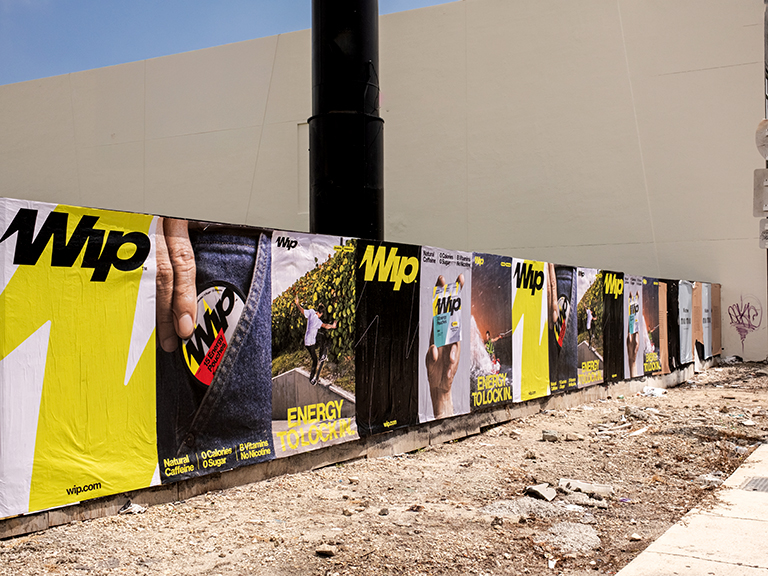
Chicago Advertising: Street-Level Campaigns From the Loop to the Neighborhoods
Chicagoadvertising isn’t one thing. It’s the Mag Mile, it’s the Milwaukee Avenue corridor, it’s Wrigleyville on a game day, and it’s the lakefront on a summer Sunday. Each one requires a different approach.
Chicago is the third-largest advertising market in the United States. It has the infrastructure to match: network agencies, major outdoor operators, a strong transit advertising system, local broadcast media, and a dense digital publisher network. The question for most brands trying to run an advertising campaign in Chicago is not whether the market can support them. It’s which part of the market’s advertising environment gives them the best return for their specific goal.
We’re American Guerrilla Marketing. We handle the physical, street-level side of Chicago advertising. That means poster campaigns, street teams, guerrilla installations, LED trucks, and experiential brand activations. We work directly in the neighborhoods, on the specific blocks and corridors that matter for the audiences our clients are trying to reach. We don’t buy TV spots or run digital media plans, we put campaigns on the streets of Chicago and deliver field results you can see and document.
This guide covers the Chicago advertising environment from the street-level perspective: how the city’s physical geography shapes advertising effectiveness, which formats work in which contexts, what realistic Chicago advertising budgets produce, and how to build a campaign plan that actually matches what you’re trying to accomplish.
Chicago’s Advertising Geography: How the City Shapes Campaign Performance
Chicago’s grid is flat, organized, and readable. Long, wide corridors run north-south and east-west with consistent sightlines. That makes certain advertising formats perform particularly well here. LED trucks can cover ground efficiently because the street grid has no significant navigation complexity. Poster campaigns build visual saturation quickly on corridor-based commercial strips because the pedestrian flow is directional and predictable. Street teams at L stops benefit from the train system’s predictable commuter timing.
The city’s neighborhood structure matters enormously. Chicago’s 77 officially recognized community areas have real cultural identities that shape how audiences within them respond to advertising. The Wicker Park audience responds to visual street culture. The Lincoln Park audience responds to aspirational lifestyle messaging. The Pilsen audience responds to community-connected brand presence. Generic campaigns that treat all of Chicago the same way miss the neighborhood variation that makes targeted advertising in this city significantly more effective than mass-market saturation.
Weather is the other geographic factor. Chicago’s climate runs from brutal winter conditions to excellent summer outdoor environment. Campaign timing has to account for this. Street-level outdoor advertising in February requires formats that don’t depend on pedestrians lingering. The same formats in July on the Riverwalk or the lakefront path produce dramatically different results because the audience has time to stop, notice, and engage.
The Chicago Advertising Format environment
Outdoor Advertising
Chicago’s outdoor advertising environment includes highway billboards on the expressway network (Kennedy, Dan Ryan, Eisenhower, Edens), large-format bulletins in downtown corridors along Michigan Avenue and State Street, transit shelter placements throughout the CTA bus network, and the specialty outdoor formats we run: poster campaigns, LED trucks, and street-level guerrilla installations.
Highway billboards deliver mass vehicular reach. Downtown bulletins combine reach with contextual relevance for the audiences who use the core. Transit shelters deliver pedestrian-level exposure at specific neighborhood transit nodes. Street-level formats deliver hyper-local presence with high frequency in targeted communities.
Transit Advertising
The CTA system handles 1.5 million daily trips across bus and rail. Transit advertising in Chicago reaches commuters, students, residents, and tourists on the platforms and in the cars of one of the largest transit systems in the country. Platform advertising at major L stops, Clark/Lake, Chicago/State, Belmont, Grand, and O’Hare, generates high dwell-time exposures. Interior car cards reach captive audiences during commute windows ranging from eight to forty minutes. For brands targeting urban Chicago residents who use transit regularly, CTA advertising often delivers better audience quality per dollar than highway billboard placements.
Radio Advertising
Chicago has a dense local radio environment. The major formats include iHeart stations, Cumulus properties, NPR affiliate WBEZ, and a number of independent stations covering specific formats and demographics. Radio reaches commuters and remote workers in a format that’s difficult to skip. It works particularly well for campaigns with a spoken call to action, for political advertising, and for direct-response campaigns where frequency of message repetition drives action. Radio is not our specialty, but it fits logically into comprehensive Chicago advertising plans that include street-level components.
Guerrilla and Street-Level Formats
This is our territory. Street-level advertising in Chicago covers poster and print campaigns in neighborhood corridors, sidewalk stencil and reverse graffiti installations near event venues and on high-foot-traffic approaches, street team deployments at transit hubs and in target neighborhoods, LED truck runs on the major commercial corridors, and experiential brand activations in park spaces, lakefront zones, and event-adjacent areas.
Format selection guidance: The campaigns that perform best in Chicago pair a mass-reach format (billboard, transit, or LED truck) for broad awareness with a neighborhood-level street format (poster campaign or street team) for community depth. The mass format gets you into the conversation. The neighborhood format gets you into the culture. Running only one of those two layers produces half the potential result.
Chicago Advertising by Neighborhood: A Practical Guide
Neighborhood
Audience Profile
Recommended Formats
Peak Campaign Period
The Loop
Business commuters, tourists, students
Transit shelters, LED truck, outdoor bulletins
Year-round, weekdays
North Michigan Avenue (Mag Mile)
Tourists, affluent shoppers, event-goers
LED truck, street team, outdoor placements
Year-round, peak in summer
Wicker Park / Bucktown
Young creative professionals, artists, music fans
Poster campaigns, street teams, stencil
Spring-Fall, weekends
Lincoln Park
Affluent residents, families, young professionals
Street teams, sampling, poster campaigns
Year-round, summer strongest
Wrigleyville
Sports fans, young adults, tourists
LED truck, street team, outdoor
Cubs season (April-October)
Pilsen
Latino community, artists, students
Mural/poster, street teams, sampling
Spring-Fall
River North
Dinner/nightlife crowd, professionals
Street teams, experiential, outdoor
Year-round evenings
Logan Square
Young adults, creative class, families
Poster campaigns, street teams, sampling
Year-round, weekends
The Chicago Lakefront: A Campaign Zone You Shouldn’t Ignore
Chicago’s lakefront is one of the city’s most powerful advertising environments from Memorial Day through Labor Day. The 18-mile lakefront trail carries cyclists, runners, walkers, and recreational users from Rogers Park on the north end to South Shore on the south end. The access points at Oak Street Beach, North Avenue Beach, and Montrose Harbor concentrate pedestrian traffic at specific geographic nodes that function as natural activation zones.
During Lollapalooza weekend in late July, the Grant Park lakefront area around the festival hosts 400,000 attendees. Taste of Chicago adds another 1 million visits over its five-day run in early July. The Chicago Jazz Festival and Blues Festival bring significant crowds to the same zone in August and September. Brands that plan campaigns around these lakefront events can reach enormous audience volumes in specific geographic windows that street-level tactics are perfectly suited for.
We run sampling campaigns and street team activations in the lakefront zone during summer event weekends. The combination of high pedestrian traffic, relaxed audience mindset, and favorable outdoor weather makes this one of the highest return-per-crew-day environments in the Chicago market.
Chicago Advertising Budget Guide
Understanding what different budget levels realistically produce in Chicago advertising helps you plan a campaign that matches resources to expectations.
Budget Range
What It Produces in Chicago
Under $5,000
Single-format, single-neighborhood campaign: poster campaign in one zone OR one street team day OR sidewalk stencil installation
$5,000 – $15,000
Single format across 2-3 neighborhoods, or two-format combination in one neighborhood over 1-2 weeks
$15,000 – $40,000
Multi-format, multi-neighborhood: street team + poster + LED truck over 2-4 weeks across 4-6 Chicago neighborhoods
Major market campaign with outdoor media buys, large-format experiential, street-level saturation, and full documentation suite
The Milwaukee Avenue Corridor: Chicago’s Best Poster Route
Milwaukee Avenue runs diagonally through some of Chicago’s most culturally active neighborhoods. From Noble Square through Wicker Park and Bucktown into Logan Square, Milwaukee is one of the city’s most concentrated stretches of foot traffic, independent retail, bars, music venues, and creative-class residents. It’s the single best poster campaign corridor in Chicago for brands targeting the 22-to-40 urban professional and creative audience.
What makes Milwaukee work is the mix. The street has enough independent businesses to make poster placements feel native rather than intrusive. The foot traffic is heavy enough to build frequency. The demographic skews young, culturally engaged, and socially active, meaning the people who see a well-placed poster on Milwaukee are exactly the people most likely to share it online and talk about it with friends. A poster campaign saturating Milwaukee Avenue from North to Logan Square creates brand awareness in a community of brand-forward consumers who influence purchase behavior well beyond their own neighborhood.
We run Milwaukee Avenue poster campaigns year-round. Summer and fall are peak seasons because outdoor dining and street activity add pedestrian hours to the corridor. But even in winter, the bar and restaurant density on Milwaukee keeps foot traffic moving through the evening hours. If you’re targeting the Chicago creative class and you have one corridor to own, Milwaukee Avenue is it.
Event-Adjacent Advertising in Chicago
Some of the most efficient Chicago advertising we run is timed to specific events. The principle is simple: when a large, defined audience is moving toward a specific venue at a predictable time, your advertising has a captive audience of exactly the people you want to reach. You don’t need to go looking for them. They’re coming to you.
We’ve run campaigns timed to concerts at the United Center, shows at the Chicago Theatre and the Riviera, and events at Wintrust Arena. We’ve worked the Lollapalooza approach routes on Columbus Drive and the lakefront path. We’ve run street team activations on Clark Street before Cubs games and on Madison Street before Blackhawks games at the United Center.
Event-adjacent advertising requires precise timing. The crew needs to be in place before the audience arrives and needs to sustain engagement through the peak approach period. That means we plan crew scheduling around event start times and confirmed our positions based on our knowledge of where the crowd approaches from, more than where the venue is.
Event timing note: For shows at the Chicago Theatre on North State Street, foot traffic peaks in the ninety minutes before showtime on the State Street corridor between Lake and Grand. For United Center events, peak approach traffic on Madison Street runs from sixty to ninety minutes before tip-off or puck drop. We time our crews to these windows and have them clear before the post-event crowd disperses in a different direction pattern.
What Chicago Advertising Gets Wrong Most Often
We see the same mistakes in Chicago advertising campaigns repeatedly. Knowing what they are saves you money and time.
The most common mistake is geographic spreading. Clients come in wanting to reach “all of Chicago” with a street-level campaign. We push back on that almost every time. Trying to cover 77 neighborhoods with a single budget produces thin coverage everywhere and real coverage nowhere. The best Chicago campaigns concentrate on two to five neighborhoods that contain the highest density of the target audience, saturate those zones, and let word-of-mouth and social sharing carry the campaign further. You build from concentration, not from spread.
The second mistake is wrong timing for the format. LED trucks running during a Tuesday morning in January on the Mag Mile produce very different results than the same truck running on a Friday evening in July during Lollapalooza weekend. The format hasn’t changed. The audience context has changed completely. Campaign timing has to match both the format’s optimal conditions and the target audience’s calendar. We build timing into every proposal we write, not as an afterthought but as a core strategic decision.
The third mistake is underinvesting in creative. We’ve seen campaigns with ideal locations, ideal timing, and strong crew execution fall flat because the creative was weak. Chicago street audiences, particularly in the cultural neighborhoods like Wicker Park and Pilsen, are visually literate. They can tell the difference between a brand that invested in real creative and a brand that repurposed a digital ad for a print format. The former gets noticed and talked about. The latter gets ignored. Invest in creative that fits the street context before investing in the field execution.
The fourth mistake is no documentation plan. Every street-level Chicago campaign generates content opportunities: poster installations in visually interesting environments, street team interactions with real people, stencil artwork on neighborhood sidewalks, LED truck footage in front of Chicago landmarks. Brands that don’t plan for documentation miss the secondary value of the campaign entirely. We build documentation into every campaign plan because the content has real value beyond the physical exposures the campaign delivers.
How to Start a Chicago Advertising Campaign With AGM
Every campaign we build starts with a conversation. We want to know your target audience, your campaign window, your creative assets, and what you’re trying to accomplish. From those inputs, we build a specific Chicago campaign plan: specific neighborhoods, specific formats, specific timing, specific budget breakdown.
We don’t offer one-size-fits-all packages because Chicago doesn’t work that way. A campaign for a music label with a tour date at the Riviera looks nothing like a campaign for a CPG brand launching a new product with a broad Chicago audience target. The city is specific. The campaigns have to be specific too.
From first call to campaign launch typically runs two to three weeks for standard formats. Rush timelines are possible for brands with print-ready files and flexible location preferences. The brief covers neighborhood targets, campaign window, creative assets, and objectives. We come back with a specific plan and a specific budget, not a range. Chicago clients work with one point of contact from brief to final recap report.
Street-Level Marketing in Chicago: The Neighborhood Intelligence Advantage
Every well-executed Chicago campaign starts with the same foundation: genuine knowledge of how specific neighborhoods function as marketing environments. This knowledge cannot be acquired from demographic data alone. It comes from actual field presence: knowing that the lunch window on North Michigan Avenue produces different foot traffic than the same window on South Michigan Avenue, knowing that Wicker Park’s weekend afternoon traffic peaks differently than its Thursday evening foot traffic, knowing which specific blocks in the West Loop produce the highest density of Amazon and tech worker engagement during the midday hours.
This is what separates Chicago marketing companies and agencies that have done real work in the city from those that plan Chicago campaigns the same way they plan campaigns in other markets: by applying generic foot traffic models and demographic averages to a city whose neighborhood-by-neighborhood reality does not match the averages. Chicago is a city of specific neighborhoods with specific cultures, and the brands that win in Chicago are the ones that respect that specificity in every format they run.
The intelligence advantage also applies to Chicago’s events calendar. The Taste of Chicago in Grant Park brings one million people over five days in July. Lollapalooza in August adds 100,000 per day to Grant Park and the surrounding neighborhoods for a four-day window. The Chicago Jazz Festival, the Chicago Blues Festival, and the Chicago Gospel Music Festival each concentrate specific demographic audiences at the lakefront in specific summer weekends. The Milwaukee Avenue Arts Festival, the Wicker Park Fest, and the Logan Square Farmers Market each create neighborhood-level concentration moments that savvy brands use as anchors for activation work. Knowing these calendar moments and having the operational capability to deploy into them is the difference between a reactive Chicago presence and a proactive one.
Physical marketing in Chicago also benefits from the city’s strong neighborhood identity culture. When a brand activates in Pilsen with a mural that references the neighborhood’s mural tradition, or runs a street team in Boystown with creative that acknowledges the neighborhood’s LGBTQ culture, or shows up in Hyde Park with an activation that engages the university community’s intellectual character, it is telling the neighborhood: we know you, specifically. That specific knowledge is received as respect, and it earns a quality of brand engagement that generic campaigns cannot achieve regardless of budget.
The practical implication for brands is that investing in physical marketing in Chicago is not just about the direct contact numbers a campaign generates. It is about building the kind of brand familiarity that makes Chicago consumers, who are sophisticated, locally loyal, and skeptical of brands that show up without understanding where they have landed, feel that the brand understands their city. That feeling is the foundation of brand trust in Chicago’s market, and it is built through consistent physical presence in the right places over time rather than through a single large campaign that appears and disappears.
Frequently Asked Questions
What types of advertising does AGM run in Chicago?
We run guerrilla marketing campaigns, street team programs, poster and print campaigns, sidewalk stencil and reverse graffiti installations, LED billboard truck campaigns, and experiential brand activations. These are street-level formats that create physical brand presence in specific Chicago neighborhoods.
What’s the best advertising format for reaching Chicago’s young adult audience?
For the 22-to-35 young adult creative audience in Chicago, poster campaigns in Wicker Park, Bucktown, and Logan Square combined with street team deployments in those neighborhoods consistently outperform mass-market formats. This audience notices and responds to visual street culture. They’re more likely to engage with physical advertising that feels integrated into the neighborhood.
How does Chicago outdoor advertising differ from other major markets?
Chicago’s flat grid makes outdoor campaigns geographically efficient in ways that aren’t possible in cities with more complex street layouts. The L system creates predictable audience concentration at transit stops that can be planned around precisely. Chicago’s strong neighborhood culture means neighborhood-specific planning is particularly important.
Can I run a Chicago advertising campaign if my company isn’t based in Chicago?
Yes. Most of our clients are not Chicago-based. We handle all local planning, location scouting, crew management, and logistics. You provide the creative direction and campaign goals; we handle everything on the ground in Chicago.