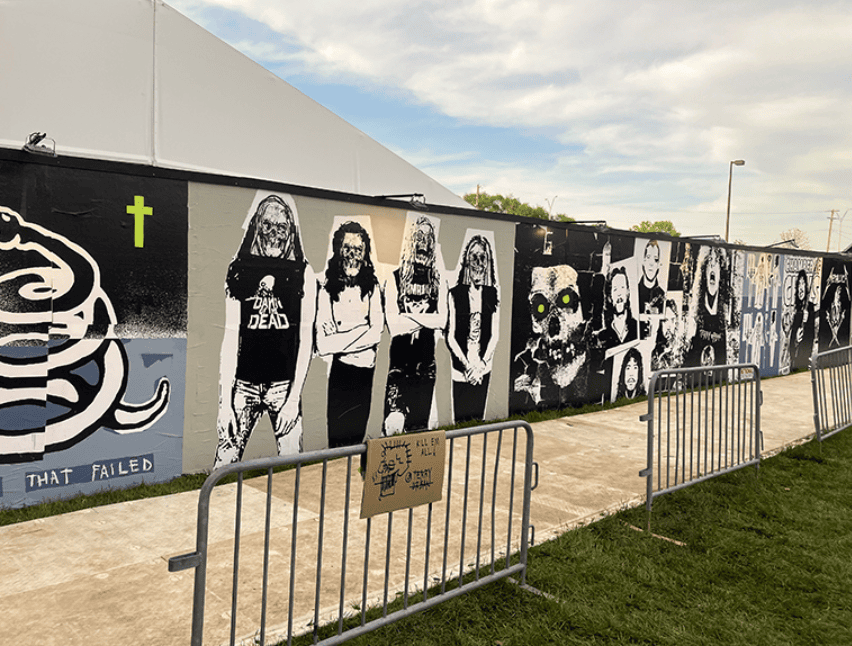
Music festivals are the most competitive brand activation environment that exists. Thousands of brands compete for attendee attention in a compressed time window, with a captive audience that is specifically primed to discover new things, photograph experiences, and share what they find. Done well, a festival activation delivers brand impressions, social content, and consumer relationships that no other format can achieve at the same cost-per-engagement. Done poorly, it is an expensive tent that no one visits.
American Guerrilla Marketing plans and executes brand activations at music festivals across the country. Our team has worked in festival environments from small regional events to major multi-day festivals, and we have built an operational understanding of what actually drives attendance, sharing, and post-event brand recall. This guide covers the activation formats that work, the planning process that gets you to a strong execution, and the most common mistakes brands make when they try to show up at a festival without a clear activation strategy.
The goal is not to have a presence at the festival. The goal is to create an experience that attendees seek out, participate in, and share. Everything else follows from that distinction.
Why Music Festivals Are High-Value Activation Environments
Music festival audiences are demographically concentrated and psychographically aligned in ways that are very difficult to replicate through any other marketing format. The audience at a major festival has self-selected into a shared cultural experience — they are open to discovery, socially engaged, and in a state of heightened emotional receptivity that makes brand experiences land differently than they do in everyday life.
The Social Content Machine
Festival attendees generate massive volumes of social content throughout the event. They are photographing constantly, sharing to Instagram and TikTok in real time, and seeking out experiences that make their feed look like they are living an interesting life. A brand activation that creates a genuinely photogenic experience — an installation that is beautiful, unusual, or interactive in a visually interesting way — becomes part of that social content machine. Hundreds or thousands of organic posts from real attendees reach their social networks at zero incremental media cost to the brand.
Compressed Discovery Window
In normal life, a consumer might take weeks or months to go from awareness to trial for a new product. At a festival, a consumer can see a brand’s presence, approach the activation, interact with a product, receive a sample, and make a purchase decision in a single afternoon. The compressed timeline and the positive emotional context of the festival environment accelerate the consumer decision cycle in ways that brand marketers value specifically.
Brand Activation Formats That Actually Work
Not all brand activation ideas are equal. Here are the formats that consistently generate strong participation, social sharing, and post-event recall — and the strategic logic behind why each works.
Interactive Experience Installations
Interactive installations that require attendee participation are the highest-engagement activation format in the festival environment. This means something attendees do, not just see: a wall they add to, a physical game they play, a photo experience they step into, a creation they take home. The participation requirement creates personal investment that passive billboard-style brand presence does not. Experiential marketing installations designed around this participation principle consistently generate longer dwell time and more social shares than passive display-focused activations.
Product Sampling Integrated into an Experience
Sampling at festivals is most effective when the sampling moment is integrated into a broader brand experience rather than executed as a standalone handout. A beverage brand that creates a shaded lounge with comfortable seating, a charging station, and cold product samples available to anyone who sits down has built an amenity that attendees seek out for comfort and receive the product in a positive context. The brand becomes associated with relief and comfort in an environment where relief is genuinely valuable. Our product demonstrations at festivals are structured around this integration principle.
Utility and Comfort Amenities
Festival environments are physically demanding. The most practical brand activations provide something attendees actually need: phone charging, sunscreen, water, seating in a shaded area, a photo opportunity that requires a comfortable standing position. Brands that solve a real festival problem — tired feet, dead phone battery, sun exposure, noise — create a positive brand association that is qualitatively different from awareness generated by advertising. This utility approach works particularly well for brands whose product category has a natural connection to the amenity being provided.
On-Site Exclusive Product Access
Limited availability product experiences work at festivals because the environment is already charged with the FOMO logic of limited access. A brand that offers a product variant, a merchandise item, or an experience available only at the festival creates urgency and social currency. Attendees who have access to something limited share that access with their social networks, creating organic word-of-mouth that extends the activation’s reach beyond the festival grounds.
Perimeter and Non-Official Festival Activations
Official festival sponsorship is expensive and not available to all brands. Non-official activation strategies that operate in the festival’s surrounding environment can achieve strong reach at a fraction of official sponsorship cost — if they are executed with the right tactical approach.
Near-Perimeter Activations
The areas immediately outside a festival site — the approach corridors, nearby parking lots, surrounding commercial streets — see enormous foot traffic during festival operating hours. Brands that activate in these perimeter zones reach the same audience as official festival sponsors, often at a lower cost per engagement, without the restrictions that official sponsorship agreements frequently impose on the on-site activation. A well-positioned perimeter activation with a compelling experience element can be as visible and impactful as an official booth inside the festival grounds.
Street-Level Campaign Surrounding the Festival
Deploying a wheatpaste poster campaign in the festival’s surrounding neighborhoods in the week before and during the event creates a brand presence that precedes and surrounds the festival experience. Attendees who travel to the festival encounter your campaign before they arrive. Local media and cultural influencers who cover the festival see your campaign in the streets of the surrounding neighborhood. Sidewalk decals in the approach corridors guide and greet attendees before they reach the main gate.
LED Truck Activation
An LED billboard truck routed through the festival neighborhood during peak arrival and departure times delivers high-visibility brand impressions to a concentrated audience. The truck creates impressions both on approach (when attendees are arriving and in a high-attention state) and on departure (when they are tired and in a reflective state that can be favorable for brand recall). Combined with a perimeter sampling or engagement activation, an LED truck creates a multi-touchpoint campaign experience that reaches the full festival audience without requiring official sponsorship.
Technology-Enabled Festival Activations
Technology integration in festival activations has evolved significantly over the past five years. Brands that use technology well can extend their activation’s reach beyond the physical footprint, generate measurable engagement data, and create experiences that would not be possible through purely analog means. Here is how to integrate technology into festival activations without making the technology feel like the point.
AR and Experiential Tech Integration
Augmented reality elements that activate when festival attendees point their phone at a branded surface or installation element have become more common in festival environments as mobile processing power has improved. AR activations work best when the digital layer enhances something that is already compelling in the physical world, rather than serving as a substitute for a weak physical installation. The festival audience will not stop to use an AR experience for a brand they are not already interested in — the physical activation needs to earn the attention first.
RFID and Contactless Engagement
Festivals that use RFID wristbands for access and cashless payment can provide data integration opportunities for brands with official sponsor access to the RFID system. Tapping your wristband at a brand activation kiosk to receive a digital coupon, content unlock, or competition entry creates a measurable engagement data point that passive impressions cannot provide. This technology integration requires official sponsorship arrangements that provide access to the festival’s RFID infrastructure.
Social Media Integration
Activations that build social media sharing directly into the experience — a hashtag prominently displayed, a content sharing prompt built into an interactive element, a photo opportunity designed specifically to generate compelling social content — extend the activation’s reach through attendees’ social networks. The most effective social integration is invisible: the activation is so good that people share without being asked. The least effective is a QR code linked to a social share prompt that no one uses because nothing about the experience made them want to share it.
Budgeting for Festival Brand Activations
Festival brand activation budgets vary enormously depending on scale, format, and official sponsorship requirements. Here is a realistic cost framework for different activation approaches.
Guerrilla Perimeter Activations
Non-official activations in the festival perimeter — street team programs, LED truck routing, sidewalk decal campaigns, and poster campaigns in surrounding neighborhoods — typically run from $8,000 to $35,000 for a multi-day program covering a major festival market. These programs deliver strong impression volume and genuine festival audience reach without official sponsorship costs. For brands with limited festival budgets, this approach often delivers better ROI than a small official sponsorship with inferior on-site placement.
Mid-Scale Official Activation Programs
Mid-scale official activations with a 10×10 to 20×20 foot footprint inside the festival grounds, branded furniture, sampling rights, and staff typically run from $25,000 to $80,000 including space fees, production, staffing, and logistics. This scale is appropriate for brands that need direct product interaction and sampling in the controlled on-site environment. Our experiential marketing team designs and executes these programs from concept through field delivery.
Large-Scale Headline Activations
Major festival activations with prominent placement, large-scale physical builds, and significant staffing programs represent the top of the budget range, often $100,000 to $500,000+ for major festivals with premium sponsorship tiers. These programs require the longest planning lead time and the most extensive production coordination. For brands with the budget to execute at this scale, festival sponsorships can deliver brand impact that few other marketing channels can match in a single program.
Common Mistakes in Festival Brand Activations
Festival activation mistakes are expensive because the environment is high-cost and the window for recovery is short. Here are the most common errors our team sees and how to avoid them.
Passive Presence Without Experience
A branded tent with staff handing out flyers is not an activation — it is a booth. Attendees will walk past it at exactly the rate they walk past every other tent in the festival zone. If your activation does not give people a reason to stop, engage, and interact with something that provides real value or genuine fun, you are paying for square footage without buying attention. Every activation should be designed around what it gives the attendee, not what it displays to them.
Ignoring the Social Content Opportunity
Festival activations that do not prioritize social content creation are missing the highest-ROI element of the format. Build your activation with the social share in mind: create a visually striking element that looks good in a vertical photo, include a branded visual cue that appears in the background of selfies, make the activation participation shareable by design. If attendees share photos that do not include your brand’s visual elements, you are generating word-of-mouth but not brand attribution.
Understaffing
Understaffed activations are among the most common and most damaging festival mistakes. An activation with a 60-second experience that draws a 10-minute line loses participants at the back of the line who decide the wait is not worth it. Staffing your activation to match expected peak demand is an operational calculation that should happen during planning, not on the day. Our brand ambassador programs include staffing plans built around foot traffic projections for each activation format and festival size.
Planning Timeline for Festival Brand Activations
Festival activations require more planning lead time than most other guerrilla marketing formats. Here is the timeline our team works from for major festival programs.
Three to Six Months Out
Official sponsorship negotiations, site selection, initial concept development, and budget finalization need to happen in this window. For non-official perimeter activations, site and permit research begins here. The earlier this phase starts, the better the options available on-site location, staffing vendors, and production lead time.
Four to Six Weeks Out
Activation design finalization, production kickoff, material fabrication, and staffing recruitment happen in this window. For poster and decal campaigns surrounding the festival, print production and logistics coordination begin here. Staff briefing materials are developed and approved.
One to Two Weeks Out
Site setup coordination, final permitting confirmation, crew briefings, and logistics final checks happen in this window. For street-level surrounding campaigns, poster and decal deployment begins in the week before the festival opens.
Activation Design Principles That Drive Results
Festival brand activations fail more often from design problems than from logistical ones. The most reliably successful activations are built around a small number of design principles that are consistently validated by audience engagement data and post-event feedback. Here is how to apply those principles in activation design.
Design around what the attendee gets, not what the brand says. This is the most fundamental distinction between activations that work and ones that do not. An activation centered on the brand’s message — a branded space that displays product information and brand imagery — is not compelling enough to earn the time of a festival attendee who has dozens of competing claims on their attention. An activation centered on something the attendee genuinely wants — a comfortable space, a game, a creative experience, a free thing of real value — earns attention because it delivers value rather than asking for it. The brand message can be delivered in the context of that value exchange without being the leading reason the attendee engages.
Make the participation mechanism obvious in under five seconds. Activations that require explanation before a participant can engage lose potential participants before the explanation is complete. The best festival activations are self-evidently participatory — what you do there is clear from the outside before you step into the space. A photo opportunity is immediately understood. A spinning wheel with prizes is immediately understood. A sampling station with clearly labeled product is immediately understood. Activations that require a staff member to explain the mechanic before anyone will engage have a design problem that staff quality cannot solve.
Create a visible participation loop. When other festival attendees can see people participating in an activation and visibly enjoying it, curiosity and social proof drive organic queue formation. Activations that are enclosed or that conceal the participation experience from outside observers cannot benefit from this social proof loop. Where possible, design activations so that the participation experience is visible from the pedestrian approach, creating a live demonstration of the experience that potential participants can evaluate before committing to engage.
Staffing Festival Brand Activations
Staffing is the most consistently underestimated element of festival brand activation planning. Brands that execute their on-site build correctly and then show up on the day with insufficient or underprepared staff deliver an activation experience that falls well short of its potential. Here is how our team approaches staffing for festival programs.
Staffing ratio planning starts with the activation experience format. An activation where one staff member can serve one participant at a time needs enough staff to maintain a queue time that does not cause interested participants to abandon. For a high-throughput experience at a major festival where peak attendance periods can deliver several hundred participants per hour, five to eight staff members is typically the minimum for maintaining acceptable service levels without long queue formation. For a lower-throughput experiential element that takes more time per participant, staff ratio calculations work differently — the limiting factor shifts from throughput to experience quality.
Staff training for festival activations covers brand messaging, product knowledge, interaction protocols, sampling procedures (including any regulatory requirements for food, beverage, or cannabis products), queue management, safety protocols, and escalation procedures for issues that require supervisor intervention. Activated staff who improvise their brand messaging in the field create inconsistent brand experiences that undermine the investment in the activation itself. Our brand ambassador programs at festivals include written briefing materials, pre-event training, and on-site supervision throughout activation hours.
Shift planning for multi-day festivals requires scheduling that accounts for the physical demands of outdoor event staffing — heat, noise, long hours, and sustained high-energy interaction with the public. Staff working in these conditions without adequate break schedules and shift rotation lose effectiveness by the second half of each day. We build shift plans that maintain staff energy and brand representation quality throughout the activation window, not just during the first few hours when everyone is fresh.
Frequently Asked Questions
What types of brand activations work at music festivals?
The most effective festival activations create experiences attendees want to participate in and photograph: interactive installations, product sampling integrated into a branded experience, comfort or utility amenities (charging stations, shade, seating), branded games, and on-site exclusive merchandise or product access.
How do you measure brand activation success at a music festival?
Key metrics include activation participation count, product samples distributed, social media impressions from on-site content (tracked through branded hashtags or geotags), post-event brand awareness lift in the festival market, and direct sales or leads generated through the activation.
What is the difference between a sponsored booth and a brand activation at a festival?
A sponsored booth is a static branded space. A brand activation is an experience that requires attendee participation — doing something, making something, experiencing something. Activations generate higher engagement, more social sharing, and stronger brand memory than passive booths.
How early should brands plan for a music festival activation?
Major festival activations require three to six months of planning. Sponsorship agreements, site design, production, permitting, and staffing all require significant lead time. Brands that start planning too late end up with inferior sites or incomplete activations.
Can brands activate at music festivals without official sponsorship?
Yes. Non-official activations near festival perimeters, in surrounding neighborhoods, or in the approach corridors from transit and parking are a viable strategy for brands that want festival proximity without the cost of official sponsorship. American Guerrilla Marketing plans these perimeter activations for brands across multiple festival markets.