🚀 NEW WHEATPASTING MARKETS Discover our wheatpasting campaigns in : 🇬🇧 London • 🇨🇦 Canada • 🇲🇽 Mexico City

American Guerrilla Marketing

Nationwide Service

Media planning, media buying, billboard advertising, & guerrilla marketing

Fly Posting in Boston, MA

Fly Posting in Boston, MA

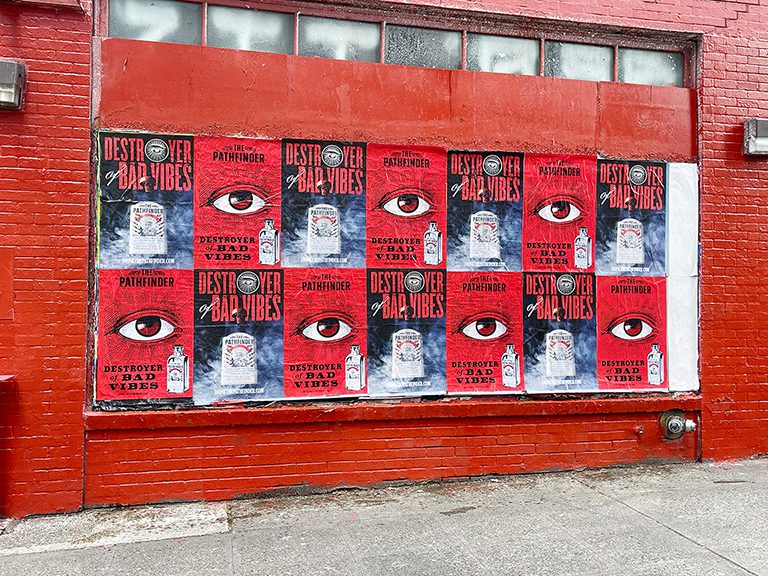
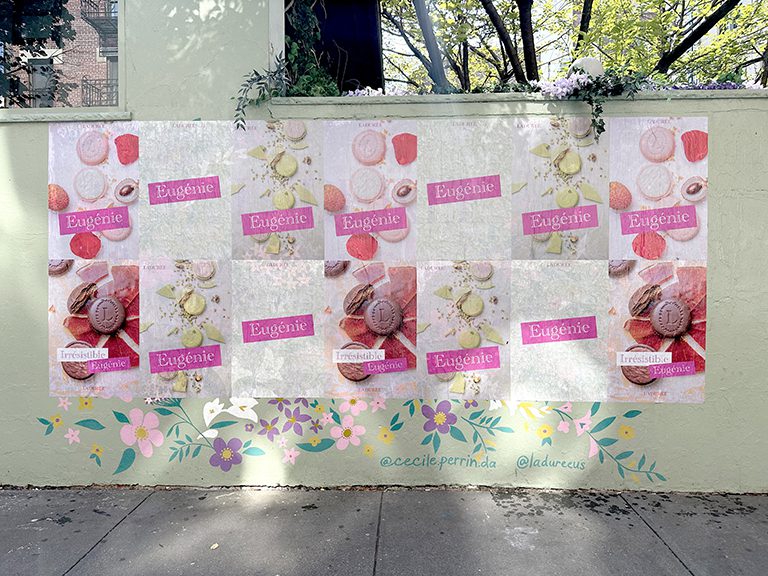
Wheat paste campaigns across Fenway, Seaport, Allston, South End, Back Bay, and Jamaica Plain. In-house installation crews. GPS-verified photo reporting. No subcontractors, ever.

Street-Level Marketing in One of America’s Great Walking Cities

Boston is a walking city in a way that very few American metros actually are. Its neighborhoods are distinct, navigable, and stacked with the kind of commercial blocks and residential streets that generate consistent pedestrian traffic across all hours. People move through Boston’s neighborhoods on foot — to work, to shows, to bars, to restaurants, to games — and they do it through corridors that are dense with visual stimuli and genuinely receptive to creative street-level presence. That is the foundational condition that makes fly posting in Boston so effective.

American Guerrilla Marketing has run wheat paste campaigns in Boston across a wide range of brand categories — entertainment, consumer goods, music releases, tech launches, and fashion. The city’s neighborhoods are varied enough that a single Boston campaign can speak to multiple distinct audience segments without feeling scattered: the Fenway game-day audience and the South End arts community are different people who respond to different things, and Boston is dense enough that you can reach both within the same campaign footprint.

Boston’s street advertising market is also genuinely competitive in terms of audience sophistication. This is a city where people have been consuming and evaluating street-level creative media for decades. A poorly executed campaign here lands with less credibility than in a less saturated market. A strong one — well-printed, smartly positioned, professionally installed — achieves the opposite effect: it signals that a brand has done its homework, that it shows up in the right places, and that it understands the city it’s talking to.

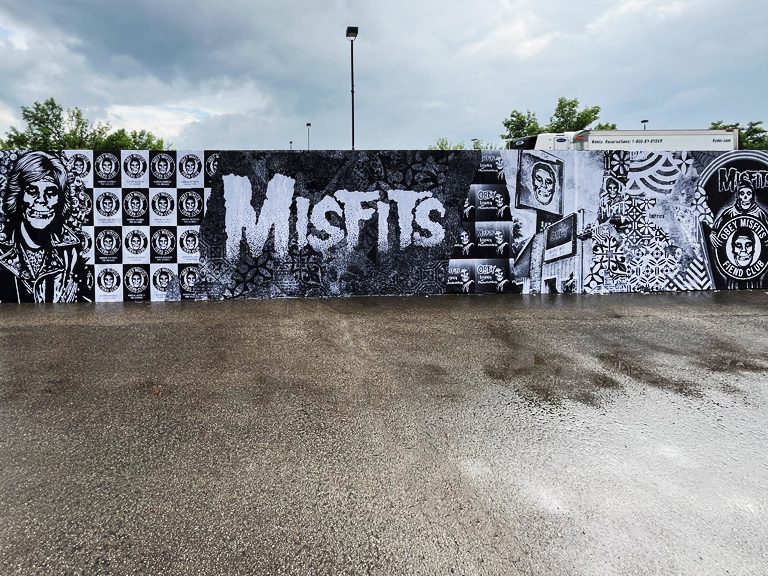
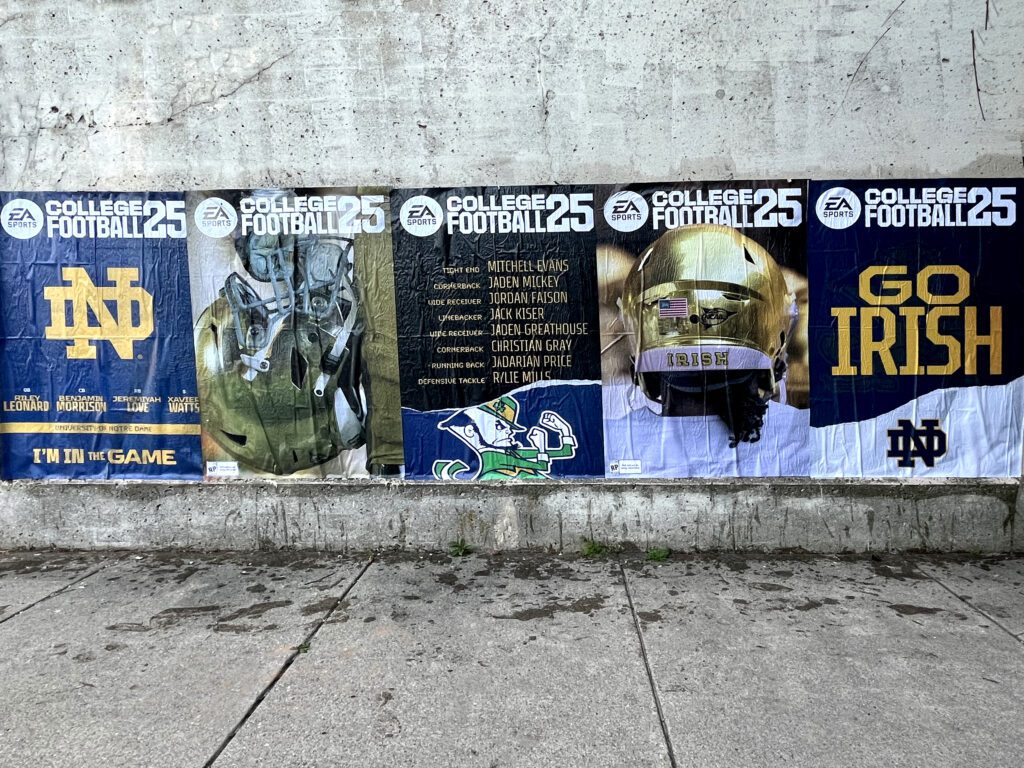
American Guerrilla Marketing is a Best of Brooklyn award-winning agency with campaigns completed for Netflix, The Onion, EA Sports, Biossance, and Shepard Fairey. Our Boston deployments are handled exclusively by in-house crews — no subcontractors, no exceptions — with full GPS photo documentation on every installation.

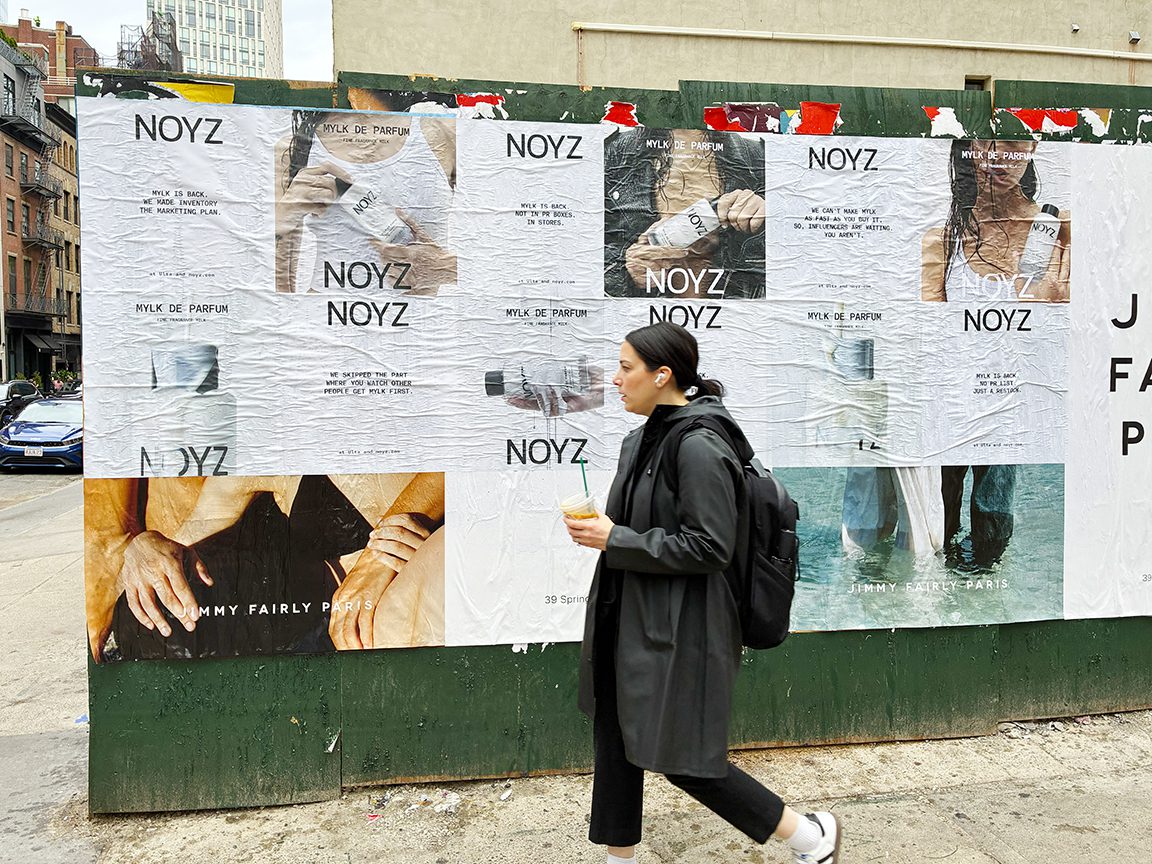
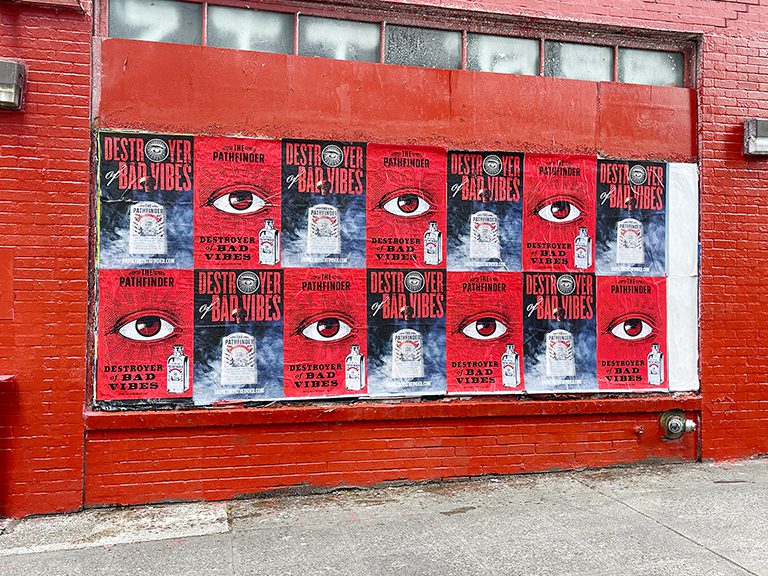
Launch Your Boston Fly Posting Campaign

American Guerrilla Marketing brings in-house crews, GPS photo documentation, and years of Boston neighborhood expertise to every campaign we run. From Fenway to the Seaport to Allston and beyond — we know where your audience is and how to reach them at street level.

Browse Cities in Massachusetts

Select a city to explore Fly Posting Advertising opportunities.

Fenway And Lansdowne: The Game-day Audience Advantage

The corridor around Fenway Park is unlike almost any other fly posting environment in the country. Lansdowne Street and Ipswich Street, the two blocks that run closest to the ballpark’s outfield and main entrance, convert on game days into a pedestrian river — a sustained, high-density flow of fans, tourists, and neighborhood visitors that persists for hours before the first pitch and continues well past the final out into the surrounding bars and restaurants.

For brands running event-adjacent campaigns, this density is the entire point. A poster on Lansdowne on a Saturday night with a night game against the Yankees isn’t getting a single pass from a casual pedestrian — it’s getting seen repeatedly, by the same people on multiple trips between venues, in the heightened state of engagement that comes with a major sports event. The emotional volume of game-day Boston amplifies everything in the visual environment, including your campaign.

The Fenway neighborhood extends well beyond game days, of course. The bars, restaurants, and music venues around Lansdowne operate year-round as one of Boston’s premier nightlife destinations. The House of Blues anchors Lansdowne Street as an entertainment corridor independent of the baseball season, generating consistent event-night foot traffic that makes this one of the most reliable sustained fly posting windows in the city. For campaigns timed to a music tour, a streaming release, or a cultural moment with a musical component, the Fenway/Lansdowne corridor is among the first locations our team evaluates.


Seaport District: Plywood, Progress, And A Premium Audience

The Seaport District has been Boston’s fastest-changing neighborhood for the better part of a decade. What was formerly an underutilized industrial waterfront has become one of the city’s most active commercial and residential corridors — and the pace of that transformation has left a consistent supply of plywood construction hoarding along blocks that are simultaneously being developed and drawing the professional, dining, and entertainment audience that new construction always follows.

Plywood hoarding is one of the best fly posting surfaces available in any urban market: clean, smooth, highly visible, typically positioned at street level in pedestrian corridors, and replaced on a development schedule that keeps surfaces fresh. The Seaport has more linear feet of this surface type than almost any other Boston neighborhood, and the audience walking past it skews young, professional, high-income, and actively seeking new restaurants, brands, and experiences. A wheat paste campaign along the Seaport’s development blocks doesn’t just accumulate impressions — it accumulates impressions from exactly the demographic that drives discretionary spending in Boston’s premium consumer market.

The Seaport’s identity as an innovation and startup hub further enriches the audience profile. The district hosts significant tech office concentration — Salesforce, PwC, and dozens of high-growth startups operate there — making it a productive location for technology brands, professional services campaigns, and consumer products targeting a sophisticated, digitally fluent audience. That audience is well-served by a format that meets them somewhere other than their crowded inboxes and oversaturated social feeds.

Build Your Fly Posting Campaign

    Award Winning Personalized Service

    You will get thoughtful, devoted, and individualized attention from our experienced, qualified, and professional personnel. Being one of the most illustrious agencies in Brooklyn, New York, American Guerrilla Marketing has been awarded the Best of Brooklyn title.

    Nationwide

    Industry City, Brooklyn, New York 11232

    American Guerrilla Marketing

    +1 (646) 776-2770

    [email protected]

    Telegram: @americanguerillamarketing

    Hours

    Mon - Fri: 9 AM - 5 PM

    Sat & Sun: Closed

    Automate your campaign with AGM’s Request for Proposal Builder.

    Automate your campaign with AGM’s Request for Proposal Builder. Simply answer a few quick questions about your campaign goals, markets, and timeline, and the system will generate a tailored presentation with recommended strategies, quantities, and pricing. Click the RFP Builder to instantly receive your customized proposal.

    Back Bay, Newbury Street, And The Luxury-adjacent Shopper Corridor

    Newbury Street is among the most consistently high-quality pedestrian retail environments in all of New England. Eight blocks of independent boutiques, established luxury brands, galleries, cafes, and restaurants running from Arlington Street to Massachusetts Avenue draw a foot traffic mix of high-income Boston residents, regional visitors, and international tourists — all of them in a deliberate, leisurely browsing mode that is among the most receptive states any consumer can be in when encountering your brand.

    Fly posting campaigns in the Back Bay zone work differently than campaigns in Allston or the Seaport. The audience here is slower-moving, more willing to stop and engage with something that catches their attention, and demographically skewed toward the upper end of the income spectrum. That makes this corridor valuable for luxury goods, premium beauty and wellness brands, fashion labels, and any campaign where quality of impression matters as much as quantity. The surrounding streets — Boylston, Marlborough, Commonwealth Avenue — extend the pedestrian coverage zone into a residential Back Bay environment where the same audience lives and commutes.

    The intersection of Newbury Street and the immediate surrounding blocks with the Prudential Center commercial district means a Back Bay fly posting placement operates within one of Boston’s most commercially active daytime zones. Foot traffic here is consistent across the week, not concentrated on evenings and weekends the way nightlife-corridor campaigns are, giving a Back Bay deployment a different kind of sustained daily impression pattern.

    South End, Allston-Brighton, and the Audiences That Shape Street Culture

    The South End is Boston’s most gallery-dense residential neighborhood — a place where art openings happen on the same blocks as high-end restaurants, where long-established community identity exists alongside recent urban investment, and where the residents are, broadly speaking, more attuned to creative quality than almost any other Boston neighborhood. A fly posting campaign in the South End lands in front of an audience that reads advertising critically and responds to brands that demonstrate genuine creative investment.

    The South End’s gallery concentration — centered on SoWa (South of Washington Street) and spreading through adjacent blocks — creates a cluster of foot traffic that spikes around First Friday gallery events and sustains a consistent arts-community presence through the week. Building exterior walls in the SoWa district and the adjacent Harrison Avenue corridor offer excellent fly posting surface inventory in a genuinely arts-native environment.

    Allston-Brighton operates at the opposite end of the Boston cultural spectrum — louder, younger, more provisional, more purely driven by the music scene and the student population that has made Harvard Avenue its commercial core for decades. Lower Allston’s industrial blocks between Cambridge Street and the commuter rail tracks offer the most abundant raw warehouse wall inventory in the Boston metro. The Harvard Avenue commercial strip from Brighton Avenue down to Commonwealth carries the highest density of music venues, dive bars, and late-night food spots that define Allston’s identity. A fly posting campaign here reaches the Boston audience that is most actively seeking new things to do, listen to, eat, and wear.

    Jamaica Plain — often overlooked in Boston fly posting planning — brings a community-oriented, independent-commerce-driven audience that is genuinely underserved by traditional out-of-home advertising. Centre Street’s dense independent retail and food scene makes it one of Boston’s most walkable neighborhood commercial corridors, and the audience it draws is loyal, local, and responsive to brands that show up in their neighborhood rather than just on their screens.

    Davis Square, Somerville: The Boston-adjacent Arts Corridor

    Davis Square sits just north of Cambridge in Somerville and represents one of the most flyposting-native environments in the entire Boston metro. The neighborhood is dense with independent music venues — Johnny D’s legacy, ONCE Ballroom, and a rotating roster of smaller spaces — alongside cafes, bookshops, and independent retail that collectively create the kind of commercial street environment where poster campaigns have always felt native rather than imposed.

    Holland Street and Highland Avenue form the pedestrian spine of Davis Square, and brick building walls along these blocks are excellent fly posting surfaces with strong paste retention on the textured masonry common throughout the neighborhood. The resident population is heavily skewed toward young professionals, artists, and Tufts University students and faculty — an audience segment that is highly receptive to street-level creative media and above-average in cultural influence within the broader Boston metro. Davis Square campaigns frequently generate organic social sharing when the creative is strong, extending campaign reach well beyond the physical poster footprint.

    Boston Fly Posting Locations and Districts

    Fenway / Lansdowne / Ipswich Corridor

    The Fenway neighborhood’s game-day and nightlife corridors produce some of the highest sustained foot traffic of any flyposting zone in Boston. Lansdowne and Ipswich streets are the primary installation targets — plywood surfaces along Ipswich, smooth-face building sides on Lansdowne, and the brick walls of the entertainment venues that line both blocks. Installation is timed for maximum visibility against Red Sox game schedules, major concert dates at the House of Blues, and other Fenway-area event windows. This is the most event-amplified fly posting environment in the Boston metro.

    Seaport Innovation District

    The Seaport’s development corridor between Congress Street and the waterfront delivers among the best plywood hoarding surface inventory in Boston — smooth, well-positioned, and in front of a high-income young professional and startup audience that is actively discovering new brands in a neighborhood still forming its commercial identity. Wheat paste posters hold well on the painted plywood surfaces throughout this district. Summer and spring campaigns here benefit from significantly elevated foot traffic as outdoor dining and waterfront activity amplify the pedestrian density along Seaport Boulevard and surrounding blocks.

    Allston-Brighton: Harvard Ave Strip and Lower Allston Industrial Blocks

    Harvard Avenue’s commercial corridor is Allston’s nightlife and music spine — bars, venues, late-night food, and independent retail from Brighton Avenue south to Commonwealth. The adjacent Lower Allston industrial zone, particularly along Cambridge Street and the side streets running toward the railroad, offers the largest concentration of blank warehouse wall surfaces in the Boston metro, ideal for oversized 48×72 poster placements that dominate the visual field. This zone delivers the city’s youngest and most event-driven audience with high surface availability and strong paste retention on the unpainted masonry and concrete walls that characterize the area.

    South End Arts District and Jamaica Plain Centre Street

    The South End’s SoWa cluster and adjacent Harrison Avenue corridor provide a gallery-native fly posting environment with a culturally sophisticated resident and visitor audience. Building exterior sides along Washington Street and the blocks approaching SoWa are the primary surface targets; the area’s gallery-opening event calendar creates reliable foot traffic spikes on Friday evenings. Jamaica Plain’s Centre Street extends the arts-community audience further south, with independent retail storefronts, community murals, and brick commercial building walls providing additional surface inventory in a neighborhood that is genuinely underrepresented in traditional Boston OOH campaigns.

    Format Options And Campaign Pricing

    All Boston fly posting campaigns include full-service printing, in-house installation by our dedicated crews, neighborhood targeting strategy specific to your objectives, and GPS photo documentation of every placement. Two format options are available based on your coverage goals and visual strategy.

    24″ × 36″ Street Posters

    The standard format for neighborhood density and market saturation. Best for building coverage across multiple Boston districts and generating the repeated-impression pattern that drives brand recall over the campaign’s live period.

    • 100 posters: contact us for pricing
    • 200 posters: contact us for pricing
    • Extra creative (additional design): contact us for pricing
    • 72-hour rush available up to 500 qty

    Duration: 1–2 weeks depending on weather and surface conditions.

    48″ × 72″ Oversized Posters

    High-impact format that commands attention at major intersections and key corridors. Ideal for anchoring your campaign at landmark locations — the Fenway corridor, Seaport hoarding, or Lower Allston warehouse walls — where scale drives memorability.

    • 100 posters: contact us for pricing
    • 200 posters: contact us for pricing
    • Extra creative (additional design): contact us for pricing

    Duration: 1–2 weeks depending on weather and surface conditions.

    How We Run a Boston Fly Posting Campaign

    • Discovery call: We learn your brand, campaign goal, target audience, and any event or launch timing relevant to your Boston deployment.
    • Neighborhood targeting: Based on your audience profile and objectives, we map the specific Boston districts, corridors, and surface types that will deliver the strongest results.
    • Creative review: We evaluate your artwork for print-format compatibility and provide feedback on what reads well in Boston’s specific street environment before production begins.
    • In-house print production: Your posters are printed by our team — no third-party vendors, no production handoffs that create quality gaps between print and install.
    • Crew scheduling: Boston installation is scheduled against your launch date, any event windows (game days, concert nights, opening weekends), and the weather forecast for optimal paste durability.
    • Installation: In-house crews execute every installation across your targeted Boston neighborhoods. No subcontractors touch your campaign at any point.
    • GPS photo capture: Each poster is photographed on-site immediately after installation, with GPS coordinates embedded in the image metadata at the moment of capture.
    • Post-campaign report delivery: You receive a complete documented photo record of every installation location across your Boston campaign footprint.

    Case Study: Netflix — Major Metro Coastal Market Wheat Paste

    Netflix has used American Guerrilla Marketing’s wheat paste campaigns in major metro coastal markets to generate street-level awareness for streaming releases and original content launches. The Miami deployment — a dense, walkable, culturally varied market where traditional advertising competes with a saturated outdoor media environment — demonstrated how fly posting cuts through in cities where audiences have high advertising literacy and genuine street-level cultural engagement.

    Boston parallels that Miami market in several key respects: high walkability, a culturally engaged population that is sophisticated about advertising, a mix of distinct neighborhood audiences (comparable to Miami’s Wynwood, Brickell, and Little Havana zones), and an events calendar that provides natural concentration points for campaign timing. The lesson from Netflix’s Miami deployment — that wheat paste campaigns work best when they arrive in the right neighborhoods at the right moment with creative that respects the audience’s intelligence — translates directly to how we approach Boston campaign planning.

    Frequently Asked Questions: Boston Fly Posting

    Boston combines the pedestrian density of a genuine walking city with a culturally literate, event-driven population that is highly receptive to street-level creative media. The city’s walkable neighborhood structure means posters accumulate impressions naturally as residents and visitors move through commercial corridors on foot. Unlike markets where people primarily experience their environment from inside a car, Boston’s street poster campaigns genuinely reach people at eye level and at pace — the optimal condition for fly posting impact.

    The Fenway Park game-day concentration of foot traffic along Lansdowne and Ipswich streets is among the most predictable high-impression fly posting windows in New England. Tens of thousands of fans, visitors, and neighborhood residents pass through the corridor on game nights, and the emotional state of sports attendance amplifies engagement with everything in the visual environment. Additionally, the Fenway neighborhood operates as a year-round nightlife and music corridor independent of the baseball season, providing sustained event-night impressions through venues like the House of Blues on Lansdowne.

    The Seaport’s plywood construction hoarding along development-active blocks is among the best legal fly posting surface available in Boston — smooth, well-positioned at pedestrian level, and directly in front of the young professional and startup audience the district has attracted. Our crew scouts the current hoarding inventory before each campaign, identifies the highest-traffic-facing placements, and integrates Seaport locations as either a primary zone or a complementary component of a broader Boston campaign depending on the brand’s audience profile.

    The Back Bay and Newbury Street environment draws high-income Boston residents, regional shoppers, and international tourists in a leisurely retail-browsing mode. It is among Boston’s best locations for brands targeting premium demographics — luxury goods, beauty, fashion, travel, and premium consumer products — because the audience is not just present but actively in a discovery and consideration mindset. The foot traffic on Newbury Street is consistent across the week rather than concentrated on evenings, giving campaigns here a different daily impression pattern than nightlife-driven districts.

    Allston-Brighton is one of the best music and entertainment fly posting zones on the East Coast. The combination of the Harvard Avenue nightlife strip — home to a dense concentration of music venues, dive bars, and late-night spots — with the expansive warehouse wall inventory in Lower Allston creates both a prime audience environment and excellent surface availability. The resident population is young, music-forward, and event-oriented, making this the go-to zone in Boston for album launches, tour announcements, streaming platform campaigns, and entertainment brand activations targeting 18–35 audiences.

    Plywood hoarding is a standard and excellent fly posting surface — our crews are experienced working with it across dozens of markets. The smooth, painted plywood typical of Boston’s Seaport and development corridors accepts wheat paste adhesive very effectively and produces clean poster adhesion with strong durability. Our crews scout specific hoarding panels before campaigns begin to identify the highest-visibility placements within the available inventory, factoring in pedestrian traffic flow direction and visual sightlines from the primary approach paths.

    From campaign confirmation to installation completion, Boston campaigns typically run on a seven-to-ten day production and deployment cycle, depending on volume and market scope. Rush campaigns on the 24×36 format are available up to 500 units within a 72-hour turnaround when timeline demands it. If your campaign needs to hit a specific launch date, game day, or event window, share those constraints during our initial consultation and we’ll structure the production schedule accordingly.

    Absolutely — Boston, Cambridge, and Somerville operate as a contiguous walkable metro where campaign footprints naturally cross municipal lines. Davis Square in Somerville and Central Square or Harvard Square in Cambridge are frequent extensions of Boston campaigns targeting the arts, music, or college-adjacent audience. We plan cross-municipality campaigns as a single unified deployment and handle the full geographic footprint with our in-house crews without any additional coordination overhead.

    The South End brings a more established, gallery-oriented, and higher-income arts community audience — people who have been engaged with creative culture for a long time and who evaluate brand presence with a discerning eye. It’s an excellent environment for premium creative brands, galleries, design-forward consumer products, and campaigns that benefit from association with established arts credibility. Allston is younger, louder, more music-driven, and more student-influenced — better suited for campaigns targeting the 18–30 entertainment-forward demographic. Both are productive; the right choice depends on your audience and message.

    The Seaport (active dining scene, young professional audience), Allston-Brighton (late-night food culture, college crowd), the South End (food-savvy, restaurant-going arts community), and Jamaica Plain (independent food scene, loyal neighborhood audience) are all productive zones for food and beverage campaigns in Boston. The specific neighborhood mix depends on the brand’s positioning — a fast-casual brand and a premium tasting-menu restaurant would reach their optimal audiences in different parts of the city, and our targeting strategy is built to reflect that.

    New England weather is a legitimate planning factor for wheat paste campaigns. Rain and sustained wet conditions are the primary durability challenge — paste that has fully cured on a dry surface holds well, but heavy rain shortly after installation can reduce campaign lifespan. Our crews monitor weather forecasts and schedule installations around predicted dry windows to maximize paste curing time before any significant precipitation. Surface selection also factors in weather resilience: smooth surfaces in sheltered or semi-sheltered positions outperform exposed rough surfaces under wet conditions.

    Yes — installation timing around specific event nights is something we plan for as a standard campaign element in Boston. Tell us the dates that matter most for your brand — opening night of a tour, a specific Red Sox series, a major release event — and we’ll schedule installation to ensure your campaign is live and fresh for those windows. For event-adjacent campaigns, we typically recommend installing 24 to 48 hours before the first targeted event to allow paste to fully cure before peak foot traffic begins.

    Browse All States

    Explore Fly Posting Advertising opportunities across the United States.

    No locations found

    American Guerrilla Marketing Blog Posts