American Guerrilla Marketing
Nationwide Service
Media planning, media buying, billboard advertising, & guerrilla marketing
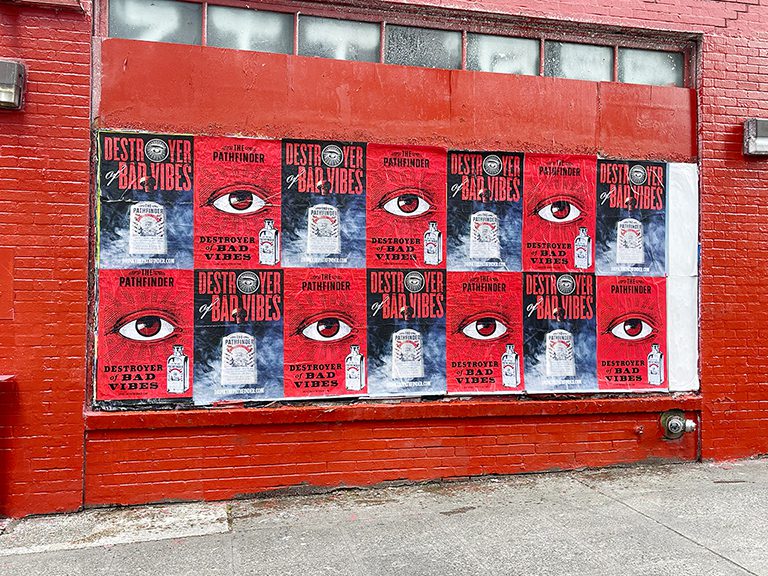
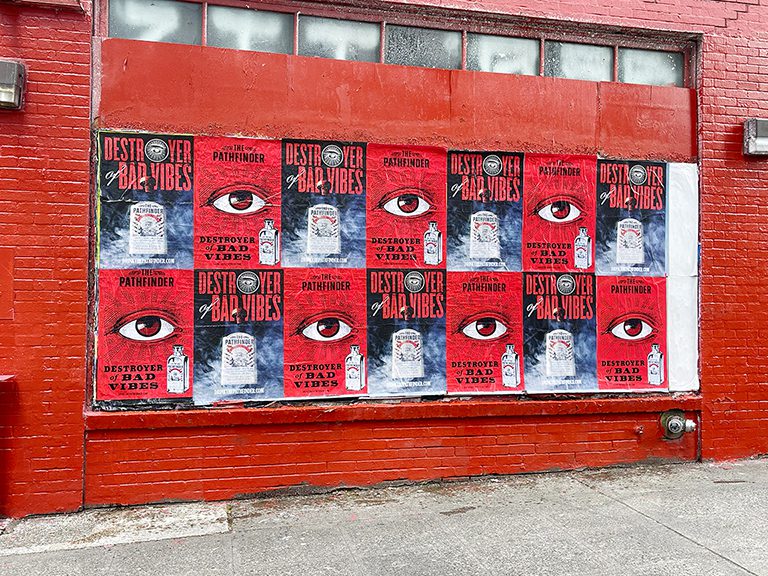
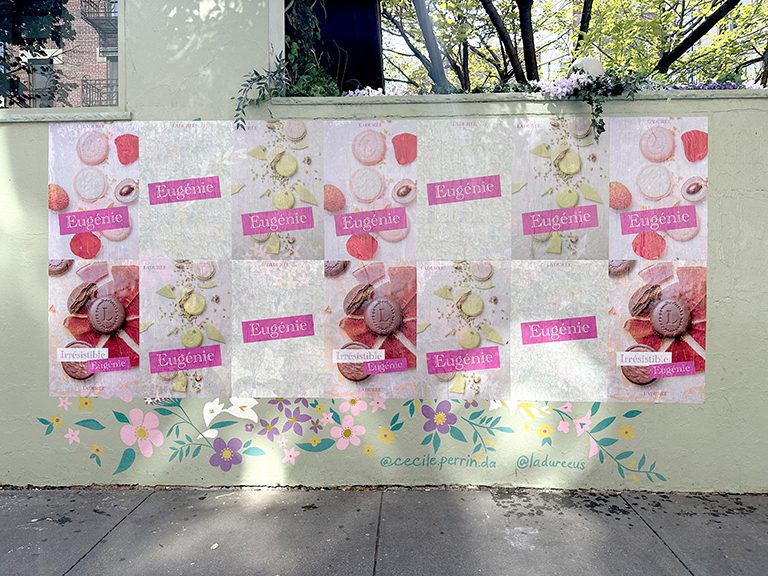
RiNo has more murals per block than nearly any American city outside New York — and in a neighborhood that treats blank walls as creative opportunities, wheat paste posters belong. AGM executes fly posting and wheatpasting campaigns across Denver’s arts districts, live music corridors, and creative professional neighborhoods.
Denver’s River North Arts District has built an identity entirely around the premise that walls are creative spaces — and that premise makes it the most natural fly posting environment in the Mountain West. Brighton Boulevard and Larimer Street form a visual corridor where internationally commissioned murals, painted warehouse facades, and rotating street art installations have created a neighborhood aesthetic that treats the built environment as an ongoing canvas. In this context, a wheat paste poster campaign doesn’t interrupt the visual culture of RiNo — it participates in it. The same creative permission that makes a six-story mural on a Brighton Boulevard warehouse feel indigenous to the neighborhood makes a well-executed wheatpasting campaign on the same block feel like part of the neighborhood’s ongoing visual conversation rather than an advertiser’s intrusion into someone else’s space.
Denver’s fly posting market is one of the most genuinely active in the Mountain West because multiple distinct industries have converged on the same target demographic and the same neighborhoods simultaneously. The live music ecosystem centered on Colfax Avenue — with Ogden Theatre at 935 E Colfax, Bluebird Theater at 3317 E Colfax, and Fillmore Auditorium at 1510 Clarkson Street forming a three-point venue constellation along Denver’s main east-west artery — drives music brand and tour promoter campaigns throughout the year. The outdoor apparel and gear industry, which has a significant Denver presence through brands competing for the ski, climbing, and trail running consumer, treats RiNo’s creative professional demographic as a primary authenticity market. The cannabis brand economy, constrained from digital advertising on major platforms, relies on street-level wheat paste campaigns in Denver’s creative neighborhoods as one of its primary brand-building channels. And the city’s growing tech and startup workforce, concentrated in RiNo’s converted warehouse offices and Capitol Hill’s residential streets, represents the young professional digital consumer that consumer apps and lifestyle brands treat as their highest-priority acquisition target.
What distinguishes Denver from other Mountain West markets isn’t any single industry or any single neighborhood — it’s the density of industry-demographic alignment that makes nearly every block in RiNo, Colfax, Five Points, Capitol Hill, and South Broadway a viable campaign position for brands across multiple categories simultaneously. A single well-placed poster on Brighton Boulevard in RiNo might reach a Red Rocks ticketholder, a craft beer brand’s target consumer, an outdoor gear shopper, and a cannabis dispensary customer in the same pedestrian hour. That convergence of target audiences in a single physical space is what makes fly posting in Denver, Colorado consistently one of AGM’s most requested markets.
The city’s Best of Brooklyn award-winning campaigns — recognition that reflects AGM’s track record in the most competitive street poster markets in the country — have direct application in Denver’s neighborhood structure. The same execution quality, crew discipline, and neighborhood targeting precision that earned that recognition in Brooklyn translates to RiNo’s warehouse district and Capitol Hill’s residential corridors with identical strategic rigor. Denver’s audiences are as sophisticated in their media consumption and as discerning in their brand evaluation as any coastal creative market, and AGM’s approach to the market reflects that sophistication rather than treating it as a simpler secondary market.
AGM executes wheat paste campaigns across Denver's RiNo arts district, Colfax Avenue, Five Points, Capitol Hill, and South Broadway — with in-house installation crews, GPS-documented reporting, and the neighborhood-specific targeting precision that Denver's distinct districts require. Best of Brooklyn award winner. Direct execution. No subcontractors.
Select a city to explore Fly Posting Advertising opportunities.
River North’s primary pedestrian corridor runs along Brighton Boulevard from 29th Street northward and Larimer Street from the 27th Street curves through the core of the arts district, with the two streets creating a bracketing geography that concentrates foot traffic from the neighborhood’s brewery cluster, creative offices, galleries, and First Friday art walk route. The brewery anchor — Crooked Stave at 3350 Brighton Blvd, Epic Brewing at 3001 Walnut St, Our Mutual Friend at 2810 Larimer St, Mockery Brewing at 3501 Larimer St, and a growing cluster of adjacent taprooms — generates daily evening foot traffic that peaks on Fridays and Saturdays and remains consistent on weekdays through the creative professional lunch and after-work window. First Friday art walks, which draw thousands of residents, visitors, and arts-adjacent professionals through Brighton Boulevard and Larimer Street on the first Friday of every month, create the highest single-event impression density of any recurring street-level event in Denver’s calendar. Wheat paste positions on the Brighton Boulevard warehouse walls and the Larimer Street building facades in RiNo’s core reach the 28-38 creative professional demographic during exactly the moments when they are most oriented toward cultural consumption and brand discovery — in a neighborhood they chose to inhabit specifically because it reflects their identity. The warehouse building stock on Brighton provides the ideal large-format surface inventory for 48×72 installations that become landmark visual anchors for the entire art walk circuit.
Colfax Avenue earned its reputation as one of America’s most storied urban streets through decades of being exactly what every effective fly posting corridor needs to be: a continuous commercial strip with persistent foot traffic, concentrated venue density, and the kind of unfiltered urban energy that makes street-level advertising feel contextually appropriate rather than intrusively corporate. The section from Cheesman Park west through Capitol Hill to the Lincoln Street intersection concentrates Denver’s live music audience in the specific blocks adjacent to Ogden Theatre at 935 E Colfax, Bluebird Theater at 3317 E Colfax, and the Fillmore Auditorium at 1510 Clarkson — three venues with combined annual attendance in the hundreds of thousands, representing an extraordinary concentration of the entertainment-consuming young adult demographic in a three-mile corridor. On show nights, Colfax Avenue between Ogden and Capitol Hill runs with pre-show and post-show pedestrian traffic from 7 PM through 2 AM, creating dwell time at bus stops along the RTD Route 15 corridor, at restaurant and bar queues on adjacent Capitol Hill side streets, and along the sidewalk stretches between the music venues themselves. Independent businesses throughout the Capitol Hill section of Colfax — coffee shops, record stores, bookshops, vintage retailers, and restaurants — generate consistent daytime and evening pedestrian traffic on the days when no concerts are scheduled, ensuring that the Colfax corridor never experiences the dead-window problem that affects venue-adjacent corridors in markets with thinner independent retail infrastructure.
Award Winning Personalized Service
You will get thoughtful, devoted, and individualized attention from our experienced, qualified, and professional personnel. Being one of the most illustrious agencies in Brooklyn, New York, American Guerrilla Marketing has been awarded the Best of Brooklyn title.
Nationwide
Industry City, Brooklyn, New York 11232
American Guerrilla Marketing
Hours
Mon - Fri: 9 AM - 5 PM
Sat & Sun: Closed
Automate your campaign with AGM’s Request for Proposal Builder. Simply answer a few quick questions about your campaign goals, markets, and timeline, and the system will generate a tailored presentation with recommended strategies, quantities, and pricing. Click the RFP Builder to instantly receive your customized proposal.
Five Points occupies a unique position in Denver’s fly posting landscape as a neighborhood with genuine historic cultural weight — the historic heart of Denver’s African American community, once known as the Harlem of the West for its jazz scene along Welton Street — that is now in active, arts-driven revival without having lost the authentic character that distinguishes it from purely gentrified districts. Welton Street is the primary commercial spine, running from downtown Denver’s eastern edge through the heart of the historic district with a mix of longtime community businesses, new arts-oriented retail, and the visual culture installations that accompany a neighborhood in creative transition. Mission Ballroom at 4242 Wynkoop Street — one of Denver’s premier large-capacity concert venues, handling shows from 1,000 to 3,800 capacity — sits on the western edge of Five Points and generates substantial post-show foot traffic that migrates east through the neighborhood’s bar and restaurant corridor on show nights. The Five Points neighborhood’s genuinely mixed demographic — longtime community residents, incoming creative professionals, concertgoers, and arts visitors — creates a social texture distinctly different from RiNo’s more uniform creative-professional character, and that mixture translates into a fly posting market that reaches a broader demographic band within the 22-40 age range than any single-character neighborhood can achieve on its own. For brands that have already saturated RiNo and Colfax and are looking to add authenticity without repetition to their Denver campaign, Five Points represents the most compelling expansion corridor in the market.
Capitol Hill functions as Denver’s highest-density urban residential neighborhood — a grid of apartment buildings, Victorian houses converted to multi-unit rentals, and mid-century walk-ups that houses an enormous concentration of 22-35 renters within walking distance of both Colfax Avenue’s entertainment corridor and the bar concentrations on 13th Avenue and 17th Avenue. The neighborhood’s residential density is what makes it particularly valuable for fly posting in Denver: unlike RiNo or Colfax, where the primary audience is people passing through, Capitol Hill’s audience includes a large population that walks the same blocks repeatedly as part of daily life — commuting to work, running errands on 13th Avenue, accessing Cheesman Park on weekends. This repeated-impression pattern means that a Capitol Hill wheat paste campaign builds recognition with the same individual over multiple encounters within a campaign’s run duration, creating a frequency effect that single-corridor campaigns rarely achieve. The 13th Avenue corridor between Logan Street and Pearl Street concentrates the neighborhood’s bar and restaurant density, and Cheesman Park’s perimeter on Franklin and Race Streets provides high-dwell positions for weekend foot traffic from the substantial park-going population that lives within walking radius.
South Broadway has evolved from a pure antiques and vintage furniture corridor into one of Denver’s most interesting and least-predictable nightlife destinations — a strip from Mississippi Avenue to Iowa Avenue on Broadway where independent bars, record shops, vintage dealers, tattoo studios, and neighborhood restaurants coexist with an authenticity that more self-consciously curated neighborhoods like RiNo can’t replicate because it emerged organically rather than through developer vision. The bar density on South Broadway — Historians Pub, Skylark Lounge, Irish Rover, Bar Standard, and the eclectic cluster of venues that populate the south end of Broadway — draws a 25-38 nightlife crowd that skews slightly older and more independent-minded than the RiNo brewery scene, with a corresponding openness to brands that demonstrate counter-cultural or authenticity credentials rather than aspirational lifestyle positioning. South Broadway’s distinct identity from RiNo makes it valuable for Denver campaigns that want to avoid the overexposure problem that affects brands running heavy RiNo campaigns: the SoBo audience sees fewer fly posting campaigns than the RiNo audience, which means a well-executed street poster campaign on South Broadway carries a novelty premium that translates into higher-quality impressions even at lower absolute volume.
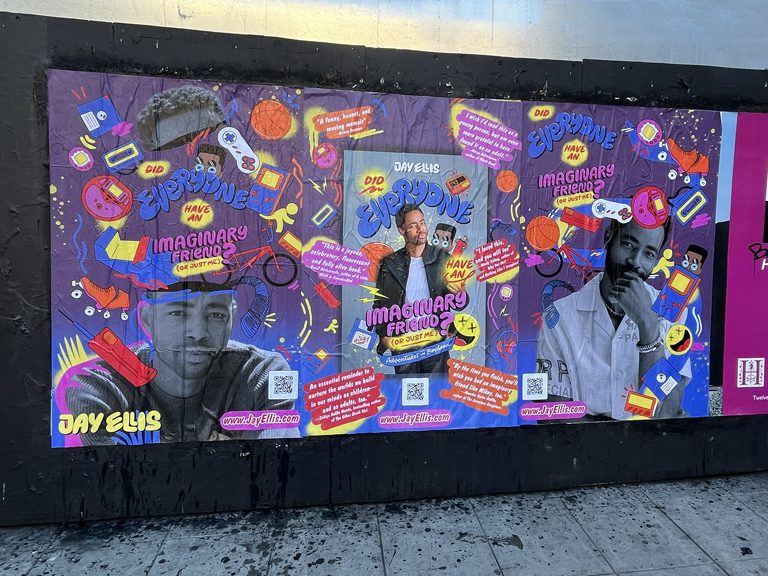
AGM’s wheatpasting work for the Jay Ellis entertainment release campaign in Manhattan — covering Williamsburg, the Lower East Side, and Hell’s Kitchen in a tightly coordinated window campaign — demonstrated the strategic value of aligning street poster timing with specific entertainment release moments in markets where the target audience concentrates in specific pedestrian environments. The Jay Ellis campaign didn’t spread posters across all of Manhattan indiscriminately — it identified the specific neighborhoods where the entertainment-consuming demographic most likely to respond to the campaign actually lived and moved, then placed posters in those environments at the exact moment when the release window made the campaign most actionable.
Denver’s venue corridor structure creates an identical strategic opportunity. The Colfax strip with its three major music venues functions exactly like the Hell’s Kitchen and Lower East Side entertainment corridors that the Jay Ellis campaign targeted — a physical environment where the entertainment-consuming demographic concentrates not just on the nights when shows happen but throughout the week, because the neighborhood’s identity as a live music destination shapes its ambient pedestrian population even on off-nights. RiNo approaching Mission Ballroom parallels the Jay Ellis campaign’s Williamsburg positioning: a creative-professional neighborhood adjacent to a major entertainment venue, where the audience for entertainment-release campaigns lives within walking distance of the campaign’s street poster positions and encounters those posters as part of their normal daily routes.
For music brands, tour promoters, streaming services, gaming companies, and film studios planning Denver activations, the Jay Ellis parallel means that the campaign planning question is not “where in Denver should we put posters?” but “at what specific moment in our release window should Denver’s venue corridors be activated, and which venue adjacency produces the highest contextual relevance for our specific title or announcement?” The answer is different for a gaming brand targeting Mission Ballroom’s post-show crowd than for a streaming service targeting the Bluebird Theater’s Colfax audience — and AGM’s neighborhood-specific positioning knowledge in Denver makes that distinction operational rather than theoretical.
Denver’s outdoor apparel industry adds a parallel campaign logic for brands outside the entertainment category. The same precision-timing approach that makes entertainment release window campaigns effective in Manhattan’s venue corridors applies to the pre-ski-season window in Denver’s creative professional neighborhoods: brands that place 48×72 installations on Brighton Boulevard in early October are reaching an audience that is already in active outdoor gear consideration mode, in the neighborhood they identify with most strongly, at the specific moment in the seasonal calendar when the campaign’s message is most immediately actionable. It’s the same campaign logic — right audience, right environment, right moment — executed against a different industry calendar than entertainment but with equal precision.
Denver’s neighborhood geography creates two distinct format strategies that serve different campaign objectives, and the choice between them is fundamentally a decision about whether a brand wants to own multiple touchpoints across a neighborhood’s pedestrian grid or own a single landmark position that defines the neighborhood’s visual memory for the campaign’s duration. The 24×36 format wins on coverage: 100 posters distributed across RiNo, Capitol Hill, and Colfax can achieve meaningful saturation across all three neighborhoods simultaneously, ensuring that the target demographic encounters the campaign on multiple approaches rather than just at a single high-traffic position. The distributed approach also builds frequency among the residential population of Capitol Hill and the repeat-visitor population of RiNo — people who encounter the poster on Monday at the brewery, again on Wednesday commuting to work, and again on Friday during the art walk have had three distinct encounters with the brand in a single week.
The 48×72 format wins on impact. A full-sheet installation on a Brighton Boulevard warehouse wall in RiNo is a neighborhood visual event — not a poster that blends into the street’s existing visual inventory, but a commanding statement that shifts the scale of the visual environment for a full block approach. In a neighborhood where international artists have painted entire building facades, a 48×72 wheat paste installation reads as belonging to the same tradition of large-scale visual intervention rather than as advertising that borrowed the space. For brands launching a new product, announcing a tour, or establishing market presence for the first time in Denver, the 48×72 format on a single landmark RiNo wall creates the kind of market-entering statement that 20 individual 24×36 posters distributed across Capitol Hill cannot produce at the same qualitative level.
For multi-neighborhood Denver campaigns, AGM typically recommends a hybrid approach: 48×72 installations at two or three landmark positions in RiNo and on Colfax Avenue, supplemented by 24×36 distributions through Capitol Hill’s residential approaches and South Broadway’s bar corridor. This combination achieves both the visual dominance of the larger format at the market’s highest-prestige positions and the frequency coverage of the smaller format across the broader neighborhood grid — maximizing both impact quality and impression quantity within a single campaign budget. Multiple creative designs at Contact us for pricing. 24×36 design or Contact us for pricing. 48×72 design allow distinct creative executions for each neighborhood’s audience character.
100 posters: contact us for pricing
200 posters: contact us for pricing
Extra creative: contact us for pricing
Maximum neighborhood coverage across Denver’s distinct districts. Ideal for building frequency with Capitol Hill’s residential population, saturating Colfax Avenue’s music venue approaches, and distributing across South Broadway’s nightlife corridor. The format for campaigns that win through repeated encounters. 72-hour rush available up to 500 qty.
100 posters: contact us for pricing
200 posters: contact us for pricing
Extra creative: contact us for pricing
The format that commands RiNo’s warehouse walls and stops the Colfax Avenue pedestrian mid-stride. Creates neighborhood visual landmarks that drive social sharing, organic amplification, and the kind of cultural credibility that smaller formats accumulate over time but this format establishes at installation. The choice for entertainment launches and major brand arrivals in Denver.
AGM’s Denver campaigns begin with a neighborhood mapping session that treats each of the city’s distinct districts as a separate targeting decision rather than as zones within a single undifferentiated “Denver” market. The creative professional in RiNo who commutes to a converted warehouse office and drinks at Crooked Stave on Friday evenings has different brand touchpoints, different receptivity patterns, and different campaign objectives than the Capitol Hill renter who walks the 13th Avenue bar corridor on weekends or the South Broadway regular who navigates the vintage and bar district on Saturday afternoons. Targeting decisions that treat these audiences as interchangeable produce campaigns with lower per-impression quality than targeting decisions that treat each neighborhood’s character as a meaningful variable in the positioning equation.
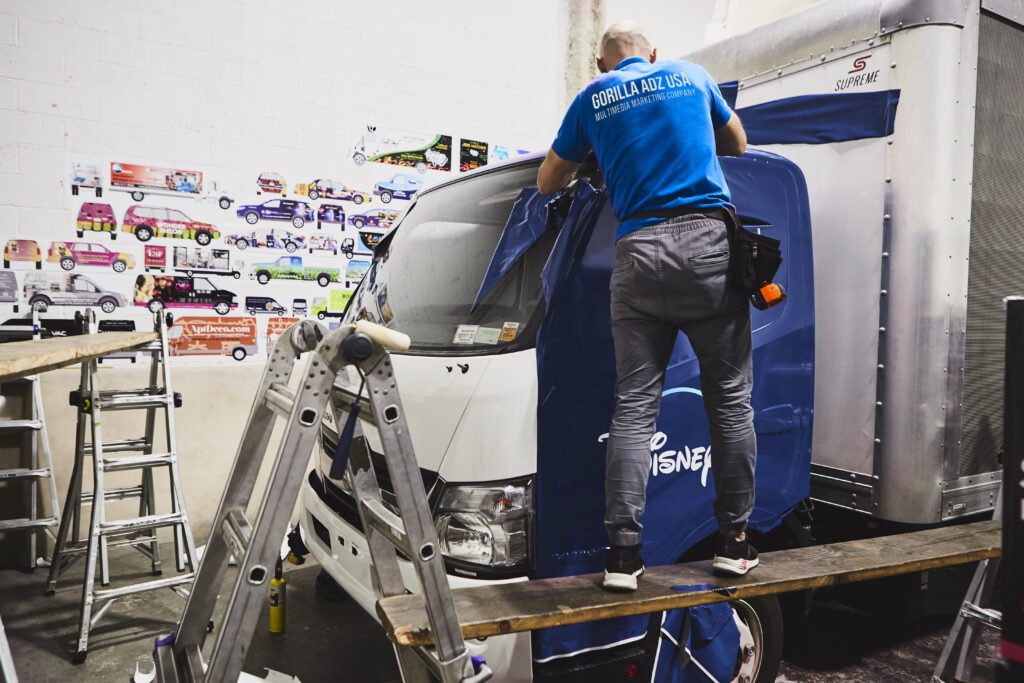
Installation in Denver is executed by AGM’s in-house crews who know the specific block-level characteristics of RiNo, Capitol Hill, Colfax, Five Points, and South Broadway from direct campaign experience in each neighborhood. Position selection accounts for both pedestrian volume and surface quality — a lower-traffic position on a pristine Brighton Boulevard warehouse wall that holds poster adhesion cleanly for three weeks outperforms a higher-traffic position on a surface that degrades the poster within days. AGM’s Denver crews assess surface conditions on-site during installation rather than working from pre-approved surface lists, which produces campaigns with better physical retention and better visual quality throughout the campaign’s run duration.
GPS-tagged photo documentation follows every Denver installation, with a comprehensive report delivered to the client after installation is complete. The documentation covers each position’s geographic coordinates, pedestrian approach angle, and surrounding street context — allowing clients to verify placement precision, share campaign documentation with agency partners, and collect location photography that frequently serves as organic social content. Denver’s visually rich neighborhood environments — RiNo’s mural-covered warehouse walls, Colfax Avenue’s neon-lit entertainment corridor, Capitol Hill’s Victorian residential streetscape — produce campaign location photographs that look like editorial content rather than documentation, and brands consistently find this secondary content value meaningful alongside the campaign’s primary impression value.
Denver’s fly posting market is genuinely multi-industry in a way that few cities outside New York, Los Angeles, and Chicago can claim. Music brands and tour promoters are the most consistent category — every major and mid-tier act routing through Denver’s concert circuit considers street poster advertising on the Colfax venue corridor a standard component of the market activation, and many acts playing Red Rocks in Morrison extend their Denver fly posting to cover RiNo and Capitol Hill in the weeks approaching their mountain show. The Red Rocks calendar runs from May through October and generates one of the country’s most valuable entertainment demographic concentrations in Denver’s immediate market during the summer months.
Outdoor apparel and gear brands represent the second most consistent fly posting category in Denver, driven by the city’s self-selecting outdoor enthusiast population and the ski season timing window that creates specific campaign urgency in September through November. Brands competing for the hiking boot, ski jacket, climbing harness, and trail running shoe consumer treat RiNo as their primary authenticity market in the Mountain West — the neighborhood’s creative professional demographic is not just an outdoor gear consumer but an outdoor gear early adopter and influencer whose buying decisions affect the broader regional market’s brand preferences.
Cannabis brands represent a category unique in scale to Denver’s market. Colorado’s legal cannabis industry, one of the oldest and most established in the country, generates brand competition that is intense by any industry standard but constrained in its marketing options by federal advertising platform restrictions. Fly posting in Denver is one of the few outdoor channels that cannabis brands can use without navigating complex regulatory approvals or risking platform enforcement actions — and the creative professional neighborhoods of RiNo, Capitol Hill, and South Broadway are exactly the environments where cannabis brand positioning resonates most authentically with the target consumer. AGM has executed cannabis brand wheatpasting campaigns in Denver that used the same neighborhood targeting logic and execution precision as major entertainment and consumer goods campaigns, reflecting the category’s maturity and marketing sophistication in the Colorado market.
Technology startups, consumer apps, and direct-to-consumer brands rounding out their Denver market presence with street-level advertising find the Capitol Hill residential grid and the RiNo creative office district the most efficient neighborhoods for reaching their core acquisition demographic. For brands that can’t out-spend established competitors in paid digital, the physical presence of a fly posting campaign in the neighborhoods where target users live and work creates a brand-familiarity effect that compounds with other touchpoints — every subsequent digital ad impression lands differently when the brand has already established physical presence in the neighborhood the consumer actually inhabits.
RiNo combines the three conditions that make any neighborhood the strongest fly posting market in its region: a visually sophisticated audience that engages with street-level art as part of neighborhood identity rather than filtering it as advertising; a built environment — warehouse walls, blank masonry facades, plywood construction barriers — that provides abundant high-quality surface inventory; and a demographic concentration of the 28-38 creative professional and outdoor-active consumer that outdoor apparel, music, cannabis, and tech brands collectively compete for. The First Friday art walk amplifies this by concentrating thousands of the target demographic on the same streets on the first Friday of every month, creating a recurring high-impression-density event that no other Denver neighborhood’s calendar replicates.
Red Rocks Amphitheatre’s season running from May through October creates a sustained live-music consumer concentration in Denver that influences fly posting campaign timing for music brands, streaming services, and entertainment companies throughout the summer. Artists playing Red Rocks regularly use Denver wheat paste campaigns in the two to four weeks before their show, targeting RiNo and Capitol Hill where the overlapping live music and creative professional demographic concentrates. The Colfax Avenue venue corridor — Ogden, Bluebird, Fillmore — sustains year-round entertainment campaign windows independent of Red Rocks, ensuring Denver’s music-oriented fly posting market operates continuously rather than only during the outdoor concert season.
First Friday in RiNo draws thousands of arts-adjacent Denver residents and visitors to Brighton Boulevard and Larimer Street on the first Friday of every month, year-round — creating the single highest foot traffic density event that RiNo’s pedestrian corridors experience outside of major outdoor festivals. Wheat paste posters installed in the week before First Friday catch the neighborhood’s regular population during the approach week, then experience a significant impression surge as First Friday brings thousands of additional visitors through the same corridors. The art walk’s audience is also the most compositionally aligned with fly posting brand objectives of any recurring Denver event: arts-adjacent, 25-40, brand-curious, and visually engaged by the street environment they’re specifically there to experience.
RiNo’s mural-dominated visual environment is actually more favorable for outdoor apparel brand wheat paste campaigns than a neutral urban environment, because the neighborhood’s visual culture already signals a specific creative-professional outdoor-active identity that outdoor brand positioning reinforces rather than contradicts. A trail running shoe brand’s poster on a Brighton Boulevard warehouse wall adjacent to an internationally commissioned mural reads as part of the same cultural vocabulary — adventurous, visually intentional, invested in the same neighborhood identity — rather than as an advertiser borrowing cultural space it doesn’t belong to. The key is creative quality: wheat paste in RiNo rewards design sophistication in the same way the neighborhood’s mural commissions do.
RiNo positioning prioritizes the highest-quality surface positions on Brighton Boulevard and Larimer Street warehouse walls, timed to First Friday and brewery peak hours. Five Points positioning focuses on Welton Street approaches and the Mission Ballroom pedestrian flow zone on Wynkoop Street, targeting post-show traffic and the neighborhood’s arts revival foot traffic. South Broadway positioning emphasizes the bar corridor from Mississippi to Iowa Avenue, targeting Thursday through Saturday evening pedestrian flow with an older, more independent-skewing demographic than RiNo. Each neighborhood receives a position brief specific to its character — AGM doesn’t apply a single position template across Denver’s distinct districts.
A multi-neighborhood Denver campaign covering RiNo, Capitol Hill, and Colfax Avenue in the 24×36 format at 200 positions costs contact us for pricing — enough to achieve meaningful saturation across all three neighborhoods without requiring the full 100-position-per-neighborhood depth that single-neighborhood campaigns achieve. For brands wanting landmark impact in RiNo combined with grid coverage in Capitol Hill and Colfax, a hybrid using 48×72 format at key RiNo positions supplemented by 24×36 distributions through the other neighborhoods can be scoped within the contact us for pricing range depending on the position split.
Colorado’s cannabis regulatory framework governs dispensary advertising in ways that affect signage and point-of-sale materials but generally treat wheat paste street advertising as subject to the same local ordinance framework as any other outdoor advertising format. AGM’s surface selection for cannabis brand campaigns in Denver focuses on properties with owner permission, avoids proximity to schools and recreational centers per Colorado’s cannabis advertising distance requirements, and uses the same legally compliant wheat paste positioning approach that AGM applies to all categories. The result is a campaign that achieves strong street presence in Denver’s creative professional neighborhoods while staying within the regulatory parameters that Colorado’s cannabis brands navigate in all their advertising activity.
Denver’s creative professional class — concentrated in RiNo’s converted warehouse offices, Capitol Hill’s residential streets, and the corridors around Colorado Creative Industries and the city’s growing design and tech sector — actively engages with street visual culture as part of how they experience their neighborhoods. Unlike suburban or car-centric demographics that filter street-level advertising as background noise, this population walks, bikes, and uses transit in the specific neighborhoods where they’ve chosen to live based in part on the visual and cultural environment those neighborhoods offer. Wheat paste campaigns in those neighborhoods reach an audience that is physically present in the street environment, visually attentive to the street’s cultural outputs, and psychologically receptive to brand messaging that arrives through the same channels as the neighborhood’s street art and visual culture.
AGM’s Denver installations use surfaces that comply with local ordinances — prioritizing positions on privately owned properties where owner permission has been established, on plywood construction barriers in permitted construction zones, and on other exterior surfaces that fall within legally compliant wheat paste advertising parameters. AGM does not install on publicly owned structures or in positions that require city permits not already in place. The surface inventory that AGM uses in Denver’s campaign neighborhoods has been developed through direct relationships and market experience, providing clients with compliant positioning without the permit complexity that formal outdoor advertising purchases require.
Every Denver installation receives GPS-tagged photo documentation immediately following placement, with coordinates logged for each individual poster position. On Colfax Avenue, AGM’s crews photograph each venue-adjacent position from the pedestrian approach angle, capturing the poster’s context within the entertainment corridor at street level. In RiNo, installation photos capture poster positions against the neighborhood’s distinctive visual backdrop — warehouse walls, brewery facades, mural-adjacent building surfaces — producing location photographs that clearly document both precise geographic placement and the environmental context that makes each position strategically valuable. Clients receive the complete photo report within 24-48 hours of installation completion.
Music promoters and touring artists generate the most consistent repeat business in Denver, because the concert and event calendar creates recurring campaign windows throughout the year — every major act routing through Mission Ballroom, Ogden, Bluebird, Fillmore, or Red Rocks is a potential fly posting client, and many return for each Denver tour date. Outdoor apparel brands return annually around the ski season timing window. Cannabis brands run campaigns at brand launch, product expansion, and seasonal promotion intervals throughout the year. Consumer apps and tech companies in growth mode use Denver fly posting campaigns quarterly during user acquisition cycles, treating the RiNo creative professional neighborhood as a consistent early-adopter market worth maintaining street presence in continuously rather than activating only for major launches.