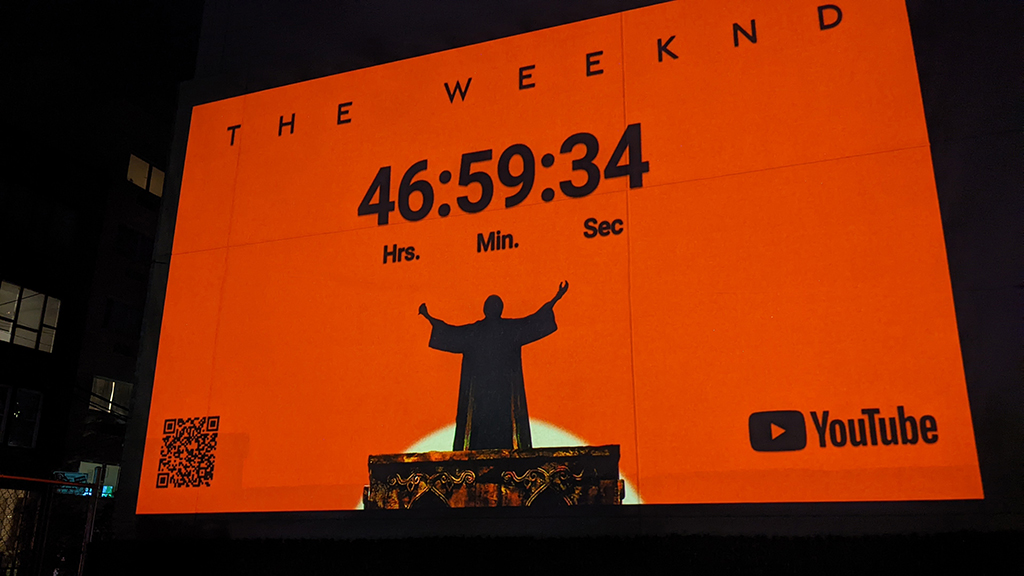
The persistent knock on guerrilla marketing is that it’s not measurable. That claim was more defensible ten years ago. In 2026, with GPS documentation on every placement, QR code tracking on every poster, geographic web analytics, and branded search volume monitoring, there are more measurement tools available for guerrilla marketing than most clients bother to deploy. The problem isn’t that street campaigns can’t be measured — it’s that measurement infrastructure needs to be built into the campaign from the beginning, not retrofitted afterward.
This guide covers the specific metrics that matter for different types of guerrilla campaigns, the tracking infrastructure that makes those metrics available, and the ROI benchmarks that help contextualize campaign performance against alternative media channels.
The ROI Challenge Specific to Guerrilla Marketing
Every media channel has attribution challenges. Last-click attribution in digital overstates the value of lower-funnel channels and understates the value of awareness channels. Television attribution requires panel research and lift studies that most advertisers don’t commission. Out-of-home attribution has historically relied on modeled traffic counts that only loosely correspond to actual audience exposure.
Guerrilla marketing’s attribution challenge is that it’s physical and often unexpected — people who encounter a street campaign aren’t logging their encounter with your attribution system. The response, if it happens, often comes later and through channels (a direct search, a store visit, a referral conversation) that don’t automatically connect back to the physical campaign trigger.
The solution is not to accept that street campaigns can’t be measured — it’s to build response mechanisms into the campaign that create direct attribution, and to layer in the indirect measurement approaches that capture the fuller picture of campaign impact.
Direct Response Measurement: Building Attribution Infrastructure
QR Codes on Every Placement
QR code adoption has reached near-universal smartphone penetration in the U.S., which makes QR codes the most practical direct response mechanism for physical advertising in 2026. A campaign-specific QR code on every poster, stencil, and decal provides direct attribution: every scan is a measurable response that can be tracked through to conversion.
Effective QR code implementation for guerrilla campaigns:
- Unique QR codes per market, neighborhood, or location cluster for geographic attribution breakdown
- UTM parameters on destination URLs to feed into Google Analytics with campaign, source, and medium attribution
- Campaign-specific landing pages rather than homepage redirects — designed to convert the specific audience that the street campaign reaches
- Scan volume monitoring in real time to track response rates during the campaign window
Campaign-Specific URLs
Vanity URLs that are simple enough to type from memory — brand.com/summer26, or a city-specific URL like brand.com/nyc — provide another direct response mechanism that works for audiences who don’t scan QR codes. Traffic to campaign-specific URLs is directly attributable to the campaign if the URL is only exposed through the physical campaign.
Promo Codes
For campaigns with a direct commercial objective — ticket sales, product purchases, service subscriptions — a campaign-specific promo code provides the cleanest conversion attribution available. Every use of the code is a direct response to the campaign, trackable through to revenue with no ambiguity about attribution.
Geographic Attribution: Website Traffic Measurement
Even when direct response mechanisms aren’t used, web analytics provide meaningful campaign attribution through geographic traffic analysis.
Zip Code Traffic Filtering
Google Analytics 4 and most enterprise analytics platforms allow filtering of sessions by geographic location at the zip code or city level. For a campaign running in Brooklyn neighborhoods, filtering web traffic from those specific zip codes and comparing it against the pre-campaign baseline shows the lift attributable to the campaign — controlling for the natural variation in traffic that would occur without any campaign intervention.
For multi-market campaigns, this analysis can be run simultaneously across all markets, providing market-by-market lift measurement that helps identify which cities responded most strongly and informs future campaign planning.
Branded Search Volume
Google Search Console provides branded search impression and click data by location. An effective awareness campaign in a specific market should produce measurable increases in branded search from those geographic areas during the campaign window. This measurement captures the full awareness impact including the segment of the audience who encounter the campaign but don’t respond immediately — they search later when they’re ready to engage.
Google Trends also provides relative branded search volume data that’s useful for tracking brand awareness trajectory over time and across markets without requiring Search Console access.
Earned Media as a Campaign ROI Multiplier
The most significant ROI multiplier in guerrilla marketing is earned media — press coverage, organic social media documentation, and word-of-mouth amplification that extends the campaign’s effective reach far beyond its paid physical footprint.
Press Coverage Value
A campaign that generates editorial coverage in a city publication with 500,000 readers adds those 500,000 impressions to the campaign’s effective reach at zero additional cost. Coverage in marketing trade publications like Adweek or Fast Company reaches marketing industry audiences who then become the campaign’s secondary audience. Coverage in cultural publications reaches the brand’s target consumers through a credible editorial context that paid advertising can’t replicate.
To estimate the earned media value of press coverage, multiply the publication’s monthly unique visitors by the industry-standard cost per impression for equivalent paid editorial placements. Coverage in a major city media outlet can generate $50,000 to $200,000 in equivalent advertising value from a campaign that cost $15,000 to execute.
Organic Social Media Amplification
Every organic social post generated by a campaign — a photograph of a striking installation, a video of a street team interaction, a Twitter/X post about an unexpected brand encounter — extends the campaign’s reach through the poster’s audience at no additional cost. These organic posts also carry the social proof of personal endorsement, which generates different quality attention than paid advertising.
Organic social volume can be tracked by monitoring brand mentions, hashtags, and location tags during the campaign window. For campaigns designed specifically to generate social documentation, pre-campaign benchmarking of organic mention volume allows measurement of the campaign-attributable lift.
Physical Impression Measurement
GPS-tagged documentation provides the foundation for physical impression counting. Every placement in our documentation system includes the location, the installation date, and a photograph confirming the placement quality.
From location data, impression estimates are calculated using foot traffic data from the placement locations. Several data providers (Placer.ai, Foursquare, StreetLight Data) offer pedestrian foot traffic counts at the location level that can be applied to our placement inventory to generate estimated impression counts with reasonable accuracy.
Physical impression CPMs for guerrilla marketing campaigns — calculated as cost per thousand physical impressions at documented placement locations — typically range from $3 to $20 depending on market, format, and location quality. This compares favorably with most traditional out-of-home formats and is directly competitive with digital display at the mid-market level.
Benchmarks by Campaign Type
Entertainment Launch Campaigns
For entertainment campaigns (film, streaming, music, gaming), the primary ROI metric is typically media value efficiency — the ratio of earned media value to paid campaign cost. Campaigns that generate 3x to 10x media value multiples (earning $30,000 to $100,000 in coverage from a $10,000 campaign) are considered strong performers. Social content volume and organic share counts are secondary metrics.
Consumer Product Campaigns
For consumer product campaigns with measurable purchase outcomes, direct response metrics — QR code scans, campaign URL traffic, promo code redemptions — combined with geographic sales lift analysis provide the cleanest ROI picture. A campaign that generates a 15% to 30% sales lift in target markets during the campaign window is demonstrating strong performance relative to baseline.
B2B Conference Campaigns
For B2B conference perimeter campaigns, the most valuable metrics are pipeline-based: how many conference attendees the campaign brought into the sales funnel, and what the average deal value of those contacts is. A $20,000 conference perimeter campaign that generates five qualified enterprise software leads with average deal values of $50,000 each is delivering exceptional ROI regardless of how the impression counts look.
Brand Awareness Campaigns
For awareness campaigns without direct conversion objectives, brand tracking studies — pre/post awareness surveys in target markets — are the gold standard measurement. For campaigns where formal tracking studies aren’t feasible, branded search volume growth and organic social mention volume provide reasonable proxies for awareness trajectory.
ROI Comparison: Guerrilla Marketing vs. Other Channels
Comparing guerrilla marketing ROI against other advertising channels requires using a consistent measurement framework. Here is how guerrilla marketing compares against the most common alternative channels when using equivalent metrics:
Guerrilla vs. Digital Display
Digital display advertising — banner ads, pre-roll, programmatic display — has well-documented viewability and attention problems. Industry benchmarks suggest that roughly half of digital display ads are never viewed by a human, and the ads that are technically viewed receive a fraction of a second of attention in most cases. Effective CPM for digital display, adjusted for actual viewability and attention, is significantly higher than the nominal CPM rates suggest.
A well-placed guerrilla marketing campaign on a high-foot-traffic wall generates impressions from people who are physically present and in a perceptual environment where the campaign is one of relatively few visual stimuli competing for attention (compared to a digital environment where dozens of ads compete simultaneously). The quality of a physical impression — measured by attention, recall, and subsequent behavior — is meaningfully higher than an equivalent-cost digital display impression.
Guerrilla vs. Out-of-Home Advertising
Traditional out-of-home advertising — billboards, transit shelter advertising, street furniture — provides physical presence in a city but at costs that reflect both the production and the format’s premium positioning. A billboard in a high-traffic Manhattan location may cost $50,000 to $100,000 per month. A guerrilla marketing campaign covering five Williamsburg neighborhoods for two weeks costs significantly less while reaching a more demographically precise audience with a format that generates organic social amplification that static billboards don’t.
The trade-off is reach: a billboard reaches everyone who drives or walks past regardless of demographic relevance. A guerrilla campaign in Williamsburg reaches only the people in Williamsburg’s neighborhood mix, which for many campaigns is the right audience rather than a limitation. Precision often produces better ROI than reach for campaigns with defined target demographics.
Guerrilla vs. Social Media Advertising
Paid social media advertising — Instagram, TikTok, Facebook, LinkedIn — provides precise targeting and measurable attribution but faces growing effectiveness challenges from algorithmic changes, creative fatigue, and audience ad-avoidance behavior. CPMs in competitive categories on paid social have risen significantly over the past five years, reducing the cost efficiency that made the channel compelling for earlier adopters.
Guerrilla marketing doesn’t compete with paid social on targeting precision for digital behavior signals — social platforms know more about individual user interests and purchase history than any physical targeting approach can match. But guerrilla marketing provides what social advertising cannot: physical presence in the real-world environment where the target audience lives and moves, the credibility of real-world existence, and the social amplification that comes when target audience members choose to document and share what they encounter.
Long-Term ROI: Brand Equity vs. Campaign-Level Return
Campaign-level ROI measurement, while important, captures only part of what sustained guerrilla marketing investment produces. Brands that run ongoing street-level campaigns in the neighborhoods where their target audience lives accumulate a form of brand equity that operates differently from awareness generated through digital channels.
Physical presence in a neighborhood over time creates a sense of brand belonging that consumers associate with locally authentic brands. The brand that has been on the walls of Williamsburg for two years is perceived differently by that neighborhood’s residents than the brand that ran one campaign six months ago. That accumulated presence creates a relationship quality that affects purchase decisions in ways that campaign-level attribution models don’t capture.
For brands building long-term market positions rather than executing single-campaign objectives, the cumulative ROI of sustained guerrilla marketing investment should be evaluated against the brand equity it builds in the target neighborhoods over time, not just the direct response metrics of individual campaigns. Our team works with clients to develop sustained market presence programs that build this equity systematically.
Talking to Stakeholders About Guerrilla Marketing ROI
One of the practical challenges of guerrilla marketing ROI measurement is translating physical campaign metrics into language that resonates with stakeholders who are accustomed to digital advertising measurement frameworks. A CMO comfortable with digital attribution models may not immediately understand what “GPS-tagged impression documentation” means in terms of campaign accountability.
The most effective framing for stakeholder conversations about guerrilla marketing ROI is comparative: how does the CPM of this campaign compare against the alternative channel we’d use for the same budget? How does the quality of a physical impression — attention level, recall rates, social amplification potential — compare against the digital display impressions we’d buy with the same money? What is the earned media multiplier we’d need to achieve to make this campaign’s effective CPM equivalent to our digital campaigns, and is that multiplier realistic given this campaign’s creative and placement approach?
Framing guerrilla marketing within familiar advertising economics — CPM comparisons, earned media value estimates, incremental reach analysis — makes the conversation more productive for stakeholders who haven’t evaluated physical advertising before. Our team provides the data that supports these comparisons: GPS documentation for impression counting, foot traffic data for location CPM calculations, and earned media tracking for multiplier estimation.
Building ROI Into Campaign Planning
The most effective approach to guerrilla marketing ROI is to define measurement methodology before the campaign launches rather than trying to construct attribution frameworks after the fact.
Pre-campaign measurement checklist:
- Define the primary campaign objective and its corresponding measurement metric
- Set up campaign-specific QR codes or URLs with UTM parameter tracking
- Establish baseline metrics (current web traffic from target zip codes, current branded search volume, current social mention volume)
- Brief sales team on the campaign timeline so they can note campaign mentions in CRM entries
- Configure geographic analytics segments in GA4 for the target campaign markets
- Set up social listening monitoring for brand mentions and campaign hashtags
With this infrastructure in place before installation, the post-campaign analysis has the data it needs to demonstrate actual campaign impact rather than estimated impressions.
Frequently Asked Questions
Is guerrilla marketing ROI measurable?
Yes, when attribution infrastructure is built into the campaign from the start. QR codes, campaign-specific URLs, geographic website traffic tracking, branded search volume monitoring, and direct response mechanisms all provide measurable data. GPS-tagged documentation provides physical impression counts by location.
What metrics matter most for guerrilla marketing campaigns?
The most directly actionable metrics are QR code scans or campaign URL traffic (direct response), website traffic increases in targeted zip codes during campaign windows (geographic attribution), and branded search volume lifts (awareness). Organic social content volume and earned media coverage are secondary metrics that indicate amplification potential.
How does earned media multiply guerrilla marketing ROI?
A campaign that generates press coverage reaches audiences who weren’t in the physical campaign zone. A striking installation covered by a city blog with 200,000 readers generates 200,000 additional impressions beyond the paid physical placement reach. Organic social shares from pedestrians who photograph and post the campaign generate additional no-cost reach. These earned impressions multiply effective ROI significantly above the paid campaign’s face value.
What is a reasonable CPM for guerrilla marketing campaigns?
Physical impression CPMs for guerrilla marketing campaigns typically range from $3 to $20 depending on market, format, and location quality. When earned media amplification is factored into the effective reach, the blended CPM often falls significantly below that range — making guerrilla marketing cost-competitive with mid-market digital channels on a pure impression basis.
How do I track website traffic from a street campaign?
Geographic traffic filtering in Google Analytics or GA4 allows you to isolate sessions from specific zip codes or cities during campaign windows. Comparing traffic from those geographies in the campaign period against the prior comparable period provides a baseline-adjusted lift measurement attributable to the campaign.
What ROI should I expect from a guerrilla marketing campaign?
ROI varies significantly by campaign type, objectives, execution quality, and creative strength. Campaigns designed primarily for awareness generate different return profiles than campaigns with direct response mechanisms. We work with clients to define objective-specific success metrics before campaign launch so measurement is calibrated to actual goals.