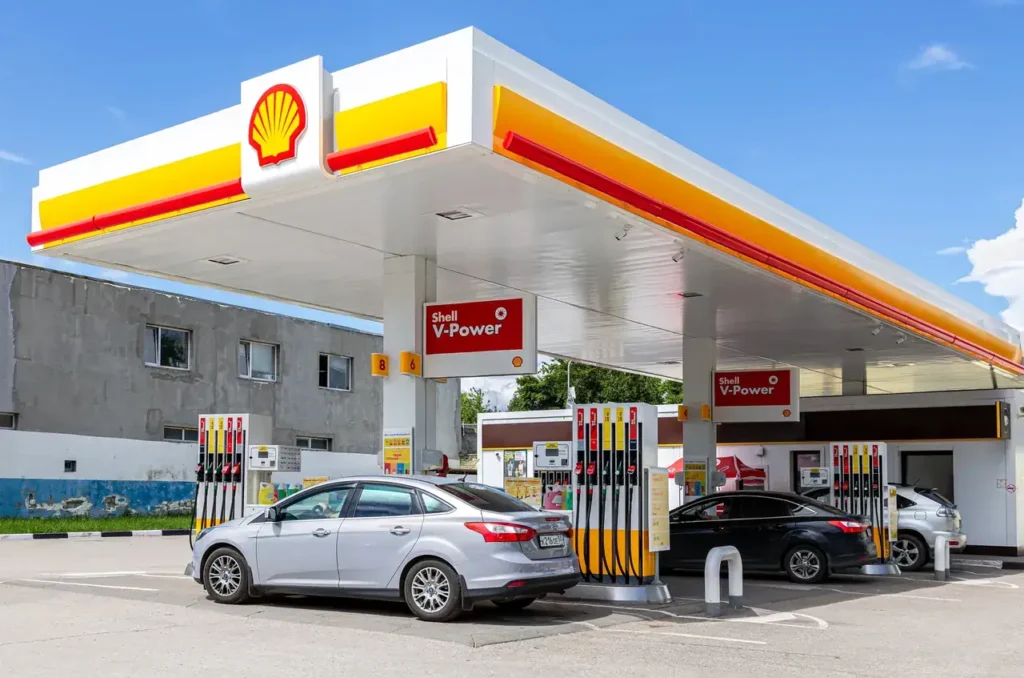
Gas pump top advertising is one of the most consistently undervalued formats in out-of-home media, and that undervaluation creates opportunity for brands willing to use it well. The core premise is simple: the average driver spends 4 to 7 minutes at the pump filling their tank. They’re standing in a fixed position, there’s nothing urgent to do, and your advertising is 18 to 36 inches from their face. There’s no scroll-past mechanism. There’s no competing content fighting for the same attention. The pump-top context delivers what most advertising formats promise but rarely achieve: genuinely captive, sustained, undistracted engagement with a brand message. This guide covers every gas pump advertising format, which networks operate in which markets, what targeting is actually possible, realistic pricing by campaign type, which creative approaches work and which don’t, and how pump-top advertising integrates into broader OOH and retail campaign strategies.
Why Gas Pump Advertising Works: The Captive Audience Mechanism
The American driver makes an average of 2 to 3 fill-up visits per week at the pump. Each visit lasts 4 to 7 minutes. During that time, the driver’s field of view is almost entirely occupied by the pump console, the display screen, the payment interface, and whatever advertising is positioned at eye level on the pump face or topper. Unlike a billboard that a driver passes in 3 seconds, or a digital ad that gets scrolled past in under 2 seconds, the pump-top format has captive time on its side.
Research on gas station advertising effectiveness confirms the recall advantage. Gas station advertising delivers recall rates significantly above comparable CPM placements in transit and billboard formats in the same markets. The physical proximity (pump-top displays are typically 18 to 36 inches from the viewer), the duration of exposure (4 to 7 minutes versus 3 to 5 seconds for highway billboard), and the low-distraction context combine to make this one of the highest-attention placements in outdoor media, despite being among the lowest cost per exposure.
The context extends beyond the pump. The gas station visit also includes the walk from the pump to the convenience store, the wait at the register, and the return to the vehicle, all additional contact windows for brand messaging at point-of-sale signage inside the station. For CPG brands with retail distribution in convenience stores, the gas station is a purchase-environment media opportunity as well as an out-of-home reach vehicle.
Gas Pump Advertising Formats: What’s Available in 2026
Static Pump Topper Panels
The classic pump topper is a static display panel mounted at the top of or directly on the pump console face, at the natural eye-level of a standing driver. Standard panel sizes are typically 10×12 inch, 11×17 inch, or vendor-specific custom dimensions. Creative is printed on high-quality static material and inserted or mounted into the panel housing at installation.
Static pump toppers are sold through OOH networks that aggregate gas station inventory across a market. Networks like Blue Line Media operate pump-top networks in 150+ U.S. cities, providing advertisers with access to station clusters organized by market, neighborhood, and station traffic volume. A market-wide campaign covering 100 gas stations in a metro area typically runs $500 to $2,000 per month for static panels, making this one of the most cost-efficient OOH formats on a CPM basis for suburban and commuter market reach.
The creative requirement for static pump toppers is strict: because the panel is small and the viewer has limited time to engage (they’re focused on the payment process), the creative must work with absolute minimal text. One strong visual, a brand name, and a single-line message or promotional offer is the maximum effective content. Any creative that requires more than 2 seconds to process is too complex for the format.
Digital Video Screens (Gas Station TV / GSTV)
The premium pump-top format in 2026 is the full-motion LED display embedded in or directly adjacent to the pump console, showing a rotating programming and advertising feed. GSTV (Gas Station TV) is the dominant national network in the U.S., with screens at more than 29,000 locations reaching 115 million unique viewers monthly according to the company’s published figures. Outfront Media and GasBuddy also operate gas station digital screen networks, with smaller but relevant national and regional footprints.
GSTV screens display a programming loop combining news headlines, weather, sports scores, and advertising content. A fueling event that takes 5 minutes exposes the same customer to multiple advertising slots in a single session, effectively delivering broadcast frequency in a one-to-one, personal context. GSTV’s audience data shows the network skews toward adults 25 to 54 who drive regularly, with above-average household income and commuter-class spending behavior. These demographic characteristics make GSTV valuable for automotive, QSR, financial services, CPG, and retail categories where the driving adult demographic is a primary target.
GSTV national advertising requires $50,000+ minimum program investment. Regional and DMA-specific campaigns on GSTV or comparable networks may start at lower minimums depending on the geography covered. Smaller independent gas station video screen networks in specific markets offer more accessible entry points, sometimes starting at $5,000 to $10,000 for a 4-week regional program.
Pump Island and Fueling Zone Signage
Beyond the pump console face, advertisers can use illuminated pump island signs (vertical panel signs mounted at the top of the pump island structure, visible from the street and from approaching vehicles), nozzle sleeve advertising (branded wraps on the fuel nozzle handle, the physical object in the driver’s hand during the entire fueling event), and cling advertising on pump door handles and side panels. These formats are available through specific station owner relationships and are more common in event-adjacent and retail-activation contexts than in standard network buys.
Nozzle sleeve advertising in particular has unusual attention characteristics: the customer’s hand is literally on the branded surface for the entire 4 to 7-minute fueling event. The brand isn’t nearby or adjacent, it’s in direct physical contact with the audience for the duration of the session. For brands for whom tactile brand contact carries value (hardware tools, sporting goods, automotive accessories), nozzle advertising is a remarkably direct physical engagement format.
How Gas Station Advertising Targeting Actually Works
Gas pump advertising targeting is station-selection-based rather than individual-user-based. The primary targeting mechanism is the choice of which gas stations to include in the campaign, based on the demographic and behavioral profile of the surrounding neighborhood and the station’s specific traffic patterns.
Demographic-Based Station Selection
GSTV and most pump-top networks provide audience data at the station level, demographic profiles of the drivers who fuel at each location, derived from mobile device observation data and transaction behavior analysis. An advertiser targeting 35 to 55-year-old homeowners with household income above $100,000 can filter the GSTV network to stations where the audience profile matches those parameters, concentrating spend where the audience concentration is highest.
U.S. Census ZIP code demographic data provides the foundation for station selection without relying on network-provided audience data. A station at the intersection of two arterial roads in a neighborhood with median household income of $125,000 and high homeownership rates will be populated primarily by that neighborhood’s residents for local commuter fill-ups. Station selection that matches neighborhood demographics to campaign audience targets is a reliable targeting approach even without proprietary audience measurement.
Proximity-to-Retail Targeting
For retail brands, the highest-value gas station targeting strategy is proximity concentration: selecting stations within 0.5 to 1.5 miles of the brand’s retail distribution locations. A consumer filling up at a station adjacent to or within walking distance of a Target, Walgreens, or grocery store that carries the brand’s products is physically proximate to the purchase environment. An advertising message at the pump for a product they’re about to encounter in the next retail visit they make creates a near-simultaneous awareness-to-decision arc that no other OOH format delivers.
We’ve used this proximity strategy for CPG brand clients in multiple markets, concentrating pump-top placements within 0.5 miles of key retail locations and measuring foot traffic lift using Placer.ai before and after the pump-top campaign window. In markets including suburban Atlanta (concentration around Kroger and Publix store clusters), suburban Chicago (concentration around Jewel-Osco and Mariano’s clusters), and suburban Dallas (concentration around Tom Thumb and H-E-B store adjacencies), proximity-targeted pump-top campaigns consistently produced measurable retail visit lift during the campaign window.
Gas Pump Advertising Costs: Realistic Market Budgets
Static pump topper panels (single market, 50 stations, 4 weeks): $500 to $1,500. Add printing costs: $150 to $400 for 50 static panel inserts at standard sizes.
Static pump topper (major metro, 100 stations, 4 weeks): $1,000 to $3,500. Standard small-to-medium market campaign entry point.
Static pump topper (national rollout, 500+ stations, 4 weeks): $5,000 to $15,000+ depending on network coverage and market tier mix.
GSTV national program (minimum): $50,000+ for a defined national audience delivery program. Regional and DMA programs may start lower, contact GSTV directly or through media agency relationship for current rate cards.
Nozzle sleeve advertising (per-station program): $50 to $150 per station per month for sleeve installation plus custom printing. Minimum meaningful program covers 25 to 50 stations, budget $1,500 to $7,500 per month depending on print specifications.
What Competitors Get Wrong About Gas Pump Advertising
The most common mistake is running generic brand advertising at pump scale. A pump-top panel is not a billboard. The viewer is 18 to 36 inches away, not 60 feet. Creative that works on a highway billboard, large image, minimal text, bold brand name, is the right starting point, but even that can be improved with the knowledge that pump-top viewers have 4 to 7 minutes to engage with the creative rather than 3 to 5 seconds. Slightly more specific promotional messaging (a price, a new product announcement, a directional arrow to a nearby retail location) is readable and actionable at pump scale in ways it isn’t at highway scale.
The second major mistake is buying station networks without filtering for audience match. A pump-top campaign covering 100 randomly selected stations in a metro area is less effective than 50 carefully selected stations concentrated in neighborhoods with the right demographics and retail proximity. Never buy gas station advertising based on total network size without understanding the specific stations included and their audience profiles.
The third mistake is treating pump-top as a standalone awareness format rather than a mid-funnel reinforcement tool. Pump-top advertising performs best as part of a campaign where the audience has already been exposed to brand messaging through a higher-reach format (television, radio, billboard) and the pump-top delivers the same message in a high-attention context as a frequency-building reinforcement. A consumer who has seen the TV commercial, heard the radio ad, and now encounters the brand on the pump-top panel is experiencing their third contact in a campaign surround, which is where recall and purchase intent meaningfully increase.
Integrating Gas Pump Advertising With OOH and Guerrilla Campaigns
The campaign structure that works best for suburban and commuter markets: highway billboards for upper-funnel reach (seen from the road at high speed), pump-top advertising for mid-funnel reinforcement (high attention, extended dwell time, at-purchase proximity), and in-store or street-level activation for conversion. Each format reaches the same audience at different points in their daily movement pattern and different levels of purchase readiness.
For clients running AGM street poster advertising and street team campaigns in urban markets, pump-top advertising fills the suburban and commuter geography that street-level pedestrian formats miss. Urban street poster advertising reaches the pedestrian-dense neighborhoods where the target audience lives. Pump-top reaches the same audience when they’re in their cars, in the suburban corridors between home and work and retail. Together, they provide geographic coverage that neither format alone achieves.
Contact americanguerrillamarketing.com/contact to plan an integrated street-level and pump-top OOH campaign covering both urban and suburban audience zones in your target market.
Frequently Asked Questions About Gas Pump Top Advertising
How effective is gas pump advertising compared to other OOH formats?
Gas pump advertising delivers 4 to 7 minutes of proximate, captive exposure versus 3 to 5 seconds for a highway billboard. Recall rates in independent studies consistently outperform comparable CPM placements in transit and billboard formats in the same markets. The format’s effectiveness is highest for promotional and new-product messaging with clear calls to action, the captive attention environment rewards creative with a specific message rather than pure brand awareness content.
What is GSTV and how do I advertise on it?
GSTV (Gas Station TV) is the largest national gas station video advertising network in the U.S., with screens at 29,000+ locations reaching 115 million monthly viewers. Advertising on GSTV is arranged through their national sales team or through media agencies with established GSTV relationships. National campaigns require $50,000+ minimums. Contact GSTV’s advertising sales team directly for current rate cards and program availability.
What creative works best on pump-top advertising?
Simple, high-contrast creative with one clear message. For static panels: one hero product visual, the brand name, and a single-line offer or message, no more. For digital screens: 15-second spots with bold visuals, minimal text, and a clear brand identifier in the first 3 seconds. Complex messaging, fine print, and multi-offer creative are unreadable at pump scale and in pump viewing conditions. Design for the viewing context: 18 to 36 inches away, in variable outdoor lighting, during a routine physical task.
How do I select the right gas stations for my campaign?
Request audience data from the network operator, most major networks provide demographic profiles at the station level derived from mobile observation data. Filter by: ZIP code demographic match to your target audience, traffic volume (higher-traffic stations deliver more daily impressions), proximity to your retail distribution (within 1 mile of target retail locations for retail brands), and station type (highway versus residential neighborhood stations have different traffic patterns and audience compositions).
Can a small business afford gas pump advertising?
Yes. Static pump topper campaigns at the local level (25 to 50 stations in a single metro area) start at $500 to $1,500 per month including production. This is one of the most accessible OOH formats for local businesses, a local restaurant, auto service provider, healthcare practice, or retailer can achieve neighborhood-level pump-top saturation at budgets that represent a small fraction of most digital advertising minimums in the same markets.
How long should a gas pump advertising campaign run?
For brand awareness building, a minimum of 4 to 8 weeks is required to achieve meaningful frequency among the commuter audience passing the campaign stations repeatedly. Promotional campaigns with time-limited offers can run for 2 to 4 weeks effectively. The dwell-time advantage of the pump format means fewer exposure events are needed to generate recall compared to highway billboard formats, but sustained presence over multiple weeks still outperforms short bursts at building brand familiarity.
What industries use gas pump advertising most effectively?
Quick service restaurants (QSR) targeting the drive-through adjacent audience, automotive brands (natural audience alignment with vehicle owners actively engaged with their car), CPG brands with convenience store distribution (in-purchase-environment media opportunity), financial services targeting the working-adult driver demographic, healthcare and pharmacy brands targeting suburban adults, and entertainment and events brands promoting time-sensitive local offerings all have strong use cases for gas pump advertising in suburban and commuter geographies.
How does gas pump advertising fit into a media mix?
Best positioned as a mid-funnel frequency-building and reinforcement format within a campaign that includes higher-reach upper-funnel formats. Radio, billboards, and television establish awareness; pump-top reinforces the message in a high-attention, purchase-proximate context. Pump-top advertising is rarely the primary media vehicle in a campaign, it performs best as a supporting format that adds tactical frequency to audiences already moving through a broader campaign surround.
Frequently Asked Questions
The Power of Gas Pump Top Advertising: Boosting Your Brand with Captive Audience Marketing generates better results when placement, timing, creative, and local execution all work together. These questions cover the details brands usually need before launch, during rollout, and while evaluating performance.
What is gas pump top advertising?
Gas pump top advertising places printed or digital ads directly on fuel pumps where drivers stand for several minutes while filling up, creating a useful window for repeated attention.
Why is gas station advertising effective?
It reaches people during a pause in their routine when there are fewer distractions than in many other media environments. That gives the message a better chance to stick.
What types of businesses benefit from pump top ads?
Local restaurants, healthcare, retail, entertainment, legal services, auto related brands, and consumer products often benefit because they can tie the message to nearby action.
How much copy should a pump top ad include?
Keep it tight. A short headline, one image, and one clear next step usually work better than trying to explain too much in that space.
Should gas pump ads include QR codes?
Yes, if the offer is immediate and the landing page is fast on mobile. The scan works best when the user gets a clear reward such as a coupon, map, or limited time promotion.
How do you choose the right gas stations for a campaign?
Pick locations based on traffic volume, neighborhood fit, commuter patterns, and proximity to the business or event you want to promote.
How long should a gas pump top campaign run?
A multi week run usually gives enough repetition to build recognition, though shorter flights can still work for events, openings, or seasonal promotions.
What is the biggest mistake in gas pump advertising?
Using generic creative that does not feel relevant to the location or audience is a common miss. The strongest ads connect to a nearby action or practical offer.
Can gas station advertising support local foot traffic?
Yes. It is often useful for nearby stores, restaurants, service businesses, and entertainment venues because the audience is already moving through the local area.
How do you measure gas pump top ad performance?
Track offer redemptions, QR scans, direct traffic, store visits, or sales lift in the stations surrounding the campaign footprint.
Related Pages and Articles