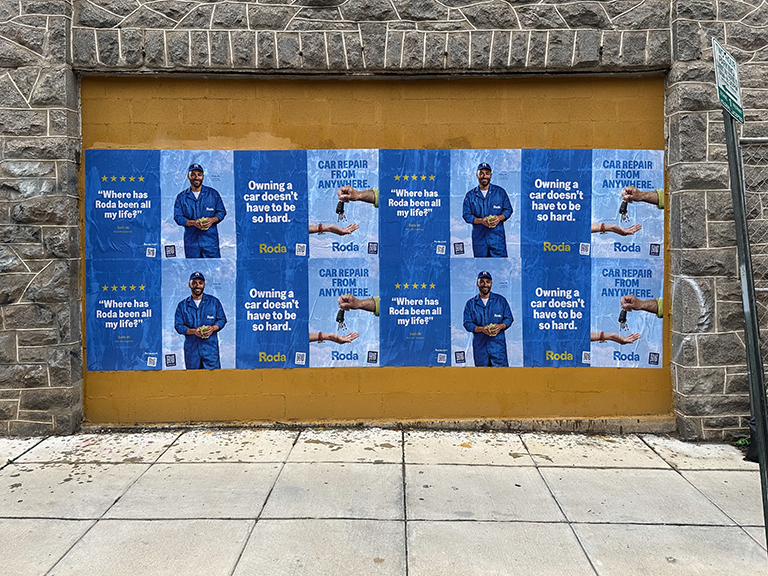
Automotive brands face a fundamental challenge that digital advertising alone cannot solve: purchase decisions for vehicles involve physical encounters. Consumers need to see, touch, sit in, and ideally drive a vehicle before they will commit at the level that automotive marketing ultimately requires. Street-level guerrilla marketing creates those physical encounter moments at scale, in the right geographic markets, with audiences who are already in the consideration phase.
Our team at American Guerrilla Marketing has executed automotive campaigns across every major US market. We deploy street teams near dealerships and in residential neighborhoods where target buyers live. We run wheat paste poster campaigns along commuter corridors. We operate LED billboard trucks on routes where purchase-consideration audiences drive every day. And we coordinate multi-city launch activations that build market-level awareness during the critical window when a new model or trim launches.
This guide covers the formats that produce results for automotive brands, how to structure a launch activation program, and what measurement looks like in practice.
Why Street-Level Marketing Works for Automotive Brands
Physical campaigns create brand encounters that persist differently than digital impressions. When a consumer sees your model parked at a lifestyle activation in their neighborhood, staffed by ambassadors who can answer questions and hand off a test drive invitation, that encounter carries a different weight than a pre-roll ad skipped after five seconds. The automotive purchase funnel is long. Street-level campaigns target the middle of that funnel, the consideration and preference stages where physical familiarity with the brand translates into showroom visits.
The Role of Context in Automotive Brand Building
Where you show up matters as much as how often you show up. Automotive brands that appear in lifestyle contexts, at weekend farmers markets in affluent suburbs, at tech company commuter zones, at outdoor event footprints in target demographic neighborhoods, build associations that align the vehicle with the buyer’s self-image. Our team selects deployment locations based on demographic data, competitive presence analysis, and the client’s target buyer profile. The goal is not just reach. It is reach in context.
Building Familiarity Through Repetitive Presence
Automotive purchase decisions rarely happen in a single moment. They build across multiple brand encounters over weeks or months. Street-level campaigns that maintain consistent presence in a market during a model launch window give consumers multiple touchpoints with the brand outside of the digital environment where they are actively tuning out automotive advertising. The consumer who sees your poster during their commute, your street team at the weekend market, and your LED truck near their gym is building brand familiarity without being served another digital ad.
Automotive Guerrilla Marketing Formats That Perform
Not all street-level formats deliver equal results for automotive brands. The formats that consistently perform for our automotive clients combine high-visibility presence with the ability to capture qualified lead interest.
Street Team Programs Near Dealerships and Test Drive Routes
Our brand ambassador teams deployed near dealership locations and along commuter corridors create direct consumer engagement in the highest-consideration geographic zones. Ambassadors distribute test drive invitations with incentives (gift cards, experiential rewards), capture email and phone leads, and answer product questions. Deployment timing targets the peak commuter and weekend morning windows when target buyers are most available.
LED Billboard Trucks on Target Commuter Routes
Our LED billboard trucks running video creative along commuter routes in target markets deliver automotive advertising in the one context guaranteed to reach drivers: the road. A truck running a model launch video along a commuter highway in Los Angeles or the FDR Drive in New York creates a high-impact impression at the moment when automotive brand messages are most contextually relevant. For EV launches, targeting routes near charging infrastructure creates additional context alignment.
Wheat Paste Poster Campaigns in Target Residential Corridors
Urban residential poster campaigns place the brand in the daily environment of target buyers. For luxury automotive brands, campaign zones are selected in high-income urban residential areas. For mass-market brands, campaign zones target the residential and commercial neighborhoods where the demographic concentration aligns with buyer profiles. Wheat paste poster campaigns in residential corridors create the impression of ubiquitous brand presence that reinforces digital campaign investment.
Static Mobile Billboard Trucks for Launch Coverage
Our static mobile billboard trucks provide a cost-effective complement to LED trucks for extended coverage of target routes. Static boards running a model launch image and call-to-action can be deployed across multiple routes simultaneously, creating market saturation during the critical first two weeks of a model launch.
The Launch Activation Playbook: How Multi-City Automotive Campaigns Run
Automotive launch activations are the highest-complexity execution in our portfolio. A multi-city launch typically involves simultaneous coordination across 5 to 20 markets, with street teams, poster campaigns, and mobile media running in coordinated deployment windows. Getting this right requires a planning structure that most brands underestimate.
Phase 1: Market Selection and Audience Mapping
Not all markets deliver equal return for every automotive launch. Our team works with automotive clients to rank target markets by new vehicle registration data, target demographic concentration, competitive brand presence, and dealer network density. For most US automotive launches, the top 10 markets by volume are Los Angeles, New York, Chicago, Houston, Dallas, Miami, Atlanta, Phoenix, San Francisco, and Washington DC. Luxury launches add Boston, Seattle, and Scottsdale. EV-focused launches weight San Francisco, Seattle, and Denver more heavily.
Phase 2: Format Mix and Budget Allocation
Once markets are selected, our team recommends format mixes based on the objectives for each market. Launch markets that already have high brand awareness may prioritize test drive event staffing and lead capture over broad poster awareness campaigns. Markets where the brand needs to build consideration from a lower base may invert that weighting. Budget allocation follows the market priority ranking and format effectiveness model.
Phase 3: Deployment Coordination and Field Management
We deploy field teams and crews with detailed route maps, timing windows, documentation protocols, and escalation contacts for every market. Our Industry City, Brooklyn NY operations team maintains real-time coordination across all active markets and provides clients with daily field reports during launch week deployments. Street team ambassadors follow brand training scripts developed in collaboration with the client’s marketing team.
Phase 4: Measurement and Reporting
All automotive campaigns generate GPS-documented placement photography for poster and mobile media elements, ambassador activity logs with hourly deployment data, direct lead capture reports from street team engagements, and QR/landing page engagement reports for any digital conversion tracking integrated into physical placements. Post-campaign reporting packages are delivered within 5 business days of campaign completion.
Test Drive Event Programs: Structure and Best Practices
Test drive event programs place vehicles and brand-trained ambassadors in lifestyle contexts where target buyers are naturally present. Shopping center parking areas, luxury apartment complex common areas, corporate campus events, and weekend lifestyle event footprints are the most productive deployment environments. Our guerrilla marketing services team manages full-cycle test drive event programs from location permitting through staffing, vehicle logistics, lead capture, and reporting.
Location Selection for Test Drive Events
The best test drive event locations put vehicles in front of the right demographic at a moment when they have time to engage. Corporate campus lunchtimes reach professionals in the $80,000+ household income range. Saturday morning farmers markets in affluent suburbs reach family-vehicle buyers. Fitness center parking lots on weekend mornings reach health-oriented, active lifestyle buyers who align strongly with certain crossover and SUV categories.
Ambassador Training for Automotive Campaigns
Our brand ambassador agency develops campaign-specific training for every automotive deployment. Ambassadors receive product knowledge training, objection-handling frameworks, lead capture protocols, and brand voice guidelines before they go into the field. For launch programs, we coordinate with client automotive product teams to deliver training that covers key differentiators versus the competitive set without crossing into comparative advertising territory.
Geographic Targeting Precision for Automotive Campaigns
Automotive campaigns benefit significantly from precise geographic targeting. Mass-market vehicle launches need broad market coverage. Luxury vehicle launches need demographic precision at the neighborhood level. Our team builds deployment zone maps for automotive clients using a combination of new vehicle registration data by zip code, median household income mapping, commuter corridor traffic volume, and dealer proximity analysis.
For a luxury SUV launch in New York, this might mean concentrating poster campaigns in the Upper East Side, Tribeca, and Park Slope, street team programs near Whole Foods and SoulCycle locations in target zip codes, and LED truck routes along the FDR Drive and West Side Highway during evening commute windows. The same campaign structure applied in Los Angeles would look entirely different, with Brentwood, Pacific Palisades, and Manhattan Beach as the residential zones and the 10 Freeway corridor as the mobile media route.
Connecting Street-Level to Digital: Cross-Channel Integration
The strongest automotive guerrilla campaigns are designed from the start to feed digital performance. QR codes on street posters drive landing page visits. Ambassador lead captures feed CRM sequences. Instagram-optimized placement photography generated during the campaign feeds paid social content. We coordinate with automotive client digital teams to ensure that street-level impressions build on digital audience pools rather than running in parallel with no connection.
Our sidewalk stencil campaigns and poster campaigns can be geo-targeted to overlap precisely with the radius audiences used in paid social and geofencing advertising, creating a reinforcement effect between the physical and digital campaigns. Consumers who see the poster in the morning and are served a social ad in the afternoon see a coordinated brand presence that amplifies both channels.
Automotive Campaign Documentation Standards
Automotive clients at the national level require documentation standards that match what their internal media and procurement teams expect from traditional out-of-home buys. Our reporting package for automotive campaigns includes GPS-tagged photography with timestamp and location metadata, daily activity logs for street team deployments, lead capture reports in CRM-compatible formats, and a final campaign summary with estimated reach by format and market.
For multi-city launch programs, we deliver market-by-market reporting packages in addition to the consolidated summary, allowing regional marketing managers to review performance in their specific markets. Reporting is delivered via secure shared folder within 5 business days of campaign completion for standard programs and within 24 hours of deployment completion for launch-week real-time reporting programs.
Frequently Asked Questions
What guerrilla marketing formats work best for automotive brands?
Automotive brands see the strongest results from street team programs near dealers and at lifestyle activation points, wheat paste poster campaigns in target residential corridors, LED billboard trucks on commuter routes, and test drive event staffing at lifestyle venues. The right format mix depends on campaign objectives: lead capture, awareness building, or competitive conquest.
How do you measure guerrilla marketing ROI for automotive brands?
Automotive guerrilla marketing ROI is measured through direct lead capture at activations, test drive sign-up volumes, QR code and landing page engagement from physical placements, and dealer referral attribution. GPS-documented impression counts from street and mobile media placements provide reach figures comparable to outdoor media CPM metrics.
How much does an automotive guerrilla marketing campaign cost?
Street team programs in a single market for a 2-week push typically range from $8,000 to $25,000. Multi-city launch activations with LED trucks, street teams, and poster campaigns across 5 to 10 markets typically range from $50,000 to $150,000 depending on format mix, market count, and campaign duration.
What markets are most important for automotive guerrilla marketing?
The highest-volume automotive guerrilla markets are Los Angeles, New York, Chicago, Houston, Dallas, Miami, and Atlanta. EV-focused campaigns prioritize San Francisco, Seattle, and Denver. Luxury campaigns add Boston, Washington DC, and Scottsdale. Our team can cover all of these through our 50+ market network.
Can automotive brands run multi-city campaigns through a single agency?
Yes. American Guerrilla Marketing coordinates multi-city automotive campaigns across 50+ US markets through a single client point of contact. Clients brief once, coordinate with one team, and receive unified campaign reporting across all markets. This eliminates the fragmentation of managing separate local vendors in each city.
How long does it take to launch an automotive guerrilla marketing campaign?
Street team programs can activate in 7 to 10 business days after brief approval. Wheat paste poster campaigns require 2 to 3 weeks for print production and crew coordination. Full multi-city launch activation programs with multiple formats typically require 4 to 6 weeks of planning before deployment begins.