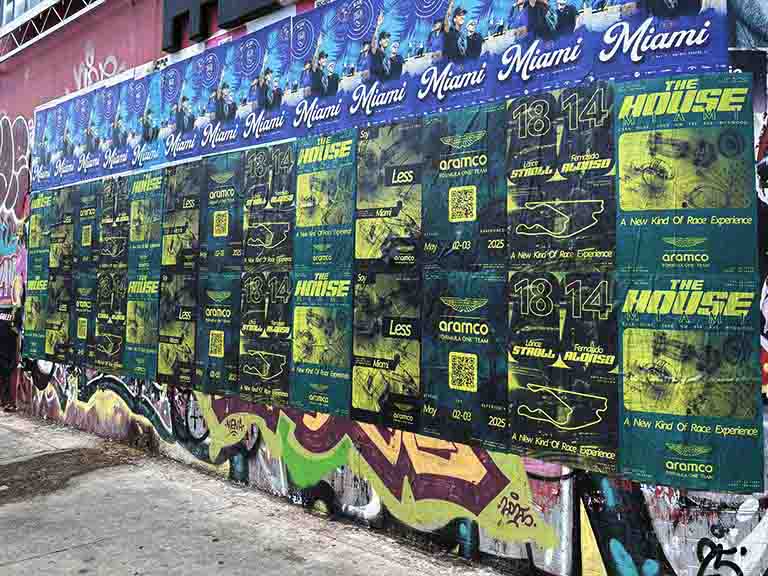
Retail has never been more competitive. Between the pressure from e-commerce, the fragmentation of consumer attention across dozens of media channels, and the rising cost of real estate, physical retail businesses face a constant challenge: how do you get people to walk in your door when there are so many alternatives? The answer, consistently, is advertising. Not generic, spray-and-pray advertising, but strategic, well-targeted communication that reaches the right people at the right moment with a reason to visit.
At American Guerrilla Marketing, we work with retail brands of every size — from regional chains to independent boutiques — on campaigns that drive real foot traffic. Our team deploys street-level campaigns in neighborhoods adjacent to retail locations because we know that proximity advertising, executed at high visibility and high frequency, moves people from awareness to action faster than almost any other medium. Understanding the importance of advertising in retail means understanding that strategy, not just spend, determines outcome.
This guide covers why advertising is non-negotiable for retail success, which strategies consistently perform, how to allocate budget across channels, and how physical and digital advertising can work together to build the kind of sustained brand presence that translates into revenue.
Why Advertising Is Non-Negotiable for Retail
There’s a persistent myth among small retail operators that word-of-mouth is sufficient — that a good product in a good location will find its audience. In some categories, in some markets, this was once partially true. It isn’t anymore. Consumer attention is scarce, competition is intense, and the assumption that people will discover your store organically is a recipe for underperformance.
The Foot Traffic Imperative
Physical retail lives and dies by foot traffic. Every strategy, from visual merchandising to staff training to product selection, is downstream of one simple requirement: people must walk through the door. Advertising is the primary mechanism for generating those visits. Without advertising investment, foot traffic depends entirely on location, which most retailers can’t control after signing a lease.
Research consistently shows that proximity out-of-home advertising — placements within half a mile of a retail location — drives measurable increases in store visits. A guerrilla marketing campaign concentrated in the blocks surrounding a new store opening generates awareness in the most relevant possible audience: people who are already in the neighborhood and therefore most likely to visit.
Brand Awareness and Consideration
Even consumers who pass a retail store regularly may not consciously register it until advertising creates top-of-mind awareness. The mere exposure effect — the psychological phenomenon where repeated exposure to a brand increases positive sentiment and likelihood to engage — operates in retail just as it does in other categories. Advertising that appears consistently in a consumer’s environment builds the familiarity that makes them choose your store when the relevant purchase need arises.
Competitive Defense
Advertising isn’t only about growing — it’s about defending what you have. If a competitor opens nearby and runs an aggressive advertising campaign while you run nothing, you will lose share regardless of how loyal your existing customer base is. Advertising is the mechanism through which loyalty is maintained under competitive pressure. This is particularly true in retail categories where brand switching is easy and product differentiation is limited.
Key Advertising Strategies for Retail Success
The most effective retail advertising strategies combine channel diversity, geographic targeting, and consistent messaging. No single channel is sufficient on its own. The goal is to create a brand presence across multiple touchpoints that reinforces the message from different angles and at different moments in the consumer journey.
Out-of-Home Advertising Near the Store
Out-of-home advertising within the immediate retail trade area is the highest-ROI channel for most brick-and-mortar businesses. This includes exterior signage and window displays that are often overlooked as advertising vehicles, as well as nearby poster campaigns, sidewalk stencils, and high-impact street installations. The geographic precision of proximity OOH ensures that impressions are delivered to the audience most likely to act on them.
For new store openings, we deploy concentrated OOH campaigns in the surrounding neighborhood two to four weeks before opening day and maintain elevated presence through the first 90 days. This window is critical for establishing awareness and habit formation among neighborhood residents who might otherwise continue shopping elsewhere.
Digital Advertising with Local Targeting
Paid social and search advertising with geographic targeting allows retailers to reach potential customers by location, demographic, and behavioral signals. Facebook and Instagram campaigns targeting users within a specific radius of a store location deliver measurable impressions to highly relevant audiences at relatively low cost per impression. Google Local campaigns drive store visit lift that can be measured directly through Google’s store visit conversion tracking.
The key to digital retail advertising is tight geographic targeting combined with clear, compelling creative that communicates a reason to visit — a promotion, a new collection, an event, or simply a message that resonates with the neighborhood audience. Generic retail advertising performs poorly in digital channels. Specific, relevant messaging to a specific local audience performs well.
Event Marketing and In-Store Experiences
Events are advertising by another name. A well-publicized in-store event — a product launch, a class, a community gathering, a pop-up collaboration — generates foot traffic and social sharing that extends reach far beyond the event itself. Retailers that build a calendar of in-store experiences create ongoing reasons for consumers to visit that go beyond transactional shopping.
Pairing events with brand ambassador programs that activate in the surrounding neighborhood in the days before the event creates a street-to-store funnel that drives attendance and documents the activation for social content. Our team has executed retail event campaigns in New York, Los Angeles, Chicago, and Miami that combined street presence with in-store programming to measurable foot traffic impact.
Loyalty Program Communication
Existing customers are your most valuable advertising audience. Loyalty programs create a direct communication channel with people who have already demonstrated purchase intent. Email marketing, SMS campaigns, and app-based messaging through a loyalty program are among the highest-ROI advertising channels available to retailers because the audience is warm, the cost per message is low, and the content can be personalized based on purchase history.
Building loyalty program enrollment through in-store and OOH advertising — and then activating that loyalty program to drive repeat visits — creates a virtuous cycle where advertising investment compounds over time rather than delivering only immediate returns.
The Role of Brand Identity in Retail Advertising
Advertising execution is only as good as the brand identity it expresses. Retailers with clear, distinctive visual identities and compelling brand stories perform better in advertising because their creative is more recognizable and more resonant. Brand investment — in naming, logo development, photography, copy tone, and visual standards — pays dividends in advertising effectiveness for years.
Consistency Across Touchpoints
A consumer who encounters your brand on a sidewalk stencil, then on Instagram, then on in-store signage should experience the same brand each time. Consistency of visual identity and messaging tone builds the cognitive familiarity that advertising research consistently links to purchase intent. Inconsistent brand expression — different logos, different colors, different voices across channels — erodes the trust that advertising is trying to build.
Local Brand Personality
Retail brands that embed themselves in local culture — referencing neighborhood identity, local events, community values — consistently outperform generic national brand messaging in local markets. A clothing retailer that runs advertising speaking to Brooklyn’s creative culture will outperform one running generic fashion advertising in that market. Our work in Industry City and across Brooklyn and Manhattan neighborhoods consistently confirms that locally relevant creative outperforms generic formats in foot traffic results.
Retail Advertising Budget Allocation
How you allocate advertising budget across channels is as important as how much you spend. Different channels serve different functions in the customer journey, and effective budget allocation reflects an understanding of those functions.
Awareness vs. Conversion Channels
Out-of-home advertising, social media awareness campaigns, and local PR are awareness channels — they build brand recognition among people who may not yet be considering a purchase. Search advertising, targeted social retargeting, and loyalty communication are conversion channels — they reach people who are closer to a purchase decision. Effective retail advertising budgets invest in both, because a brand with strong conversion advertising but weak awareness exhausts its existing audience without growing it.
Seasonal Budget Adjustment
Retail is seasonal. Budget allocation should reflect the revenue calendar. For most retailers, the fourth quarter demands the highest advertising investment because purchase intent is highest. But pre-season advertising that builds awareness before the peak shopping period is often more efficient than peak-season advertising when competitive noise is highest and media costs have risen. Planning the advertising calendar around purchase cycle peaks — not just peak season — optimizes returns.
New Store vs. Established Location Investment
New store openings require disproportionate advertising investment relative to established locations. A new store has no existing customer base, no word-of-mouth momentum, and no established neighborhood presence. The advertising campaign for a new opening is essentially building awareness from zero. Industry benchmarks suggest allocating two to three times the standard annual advertising budget in a store’s first year to accelerate customer acquisition and habit formation among the new trade area population.
Measuring Retail Advertising Effectiveness
What gets measured gets managed. Retailers that track advertising effectiveness rigorously make better decisions about budget allocation, creative strategy, and channel mix than those who advertise on instinct.
Foot Traffic Attribution
Modern foot traffic analytics platforms use mobile location data to measure store visit lift attributable to specific advertising campaigns. By comparing visit rates among consumers exposed to advertising versus a matched control group, retailers can calculate the incremental visits driven by each campaign. This methodology isn’t perfect, but it’s dramatically better than purely impressionistic evaluation of advertising impact.
Sales Lift Studies
For retailers with loyalty programs or strong POS data, sales lift studies compare purchase behavior before, during, and after advertising campaigns. This reveals not only whether campaigns drove more visits, but whether those visits resulted in higher average transaction values — a sign that advertising is attracting qualified customers rather than casual browsers.
Brand Awareness Tracking
Periodic surveys of neighborhood residents measuring brand awareness, consideration, and preference provide a longitudinal view of advertising impact that transaction data alone can’t capture. A retailer whose advertising is building awareness among non-customers is building future revenue, even if that impact doesn’t appear in this month’s sales figures.
Frequently Asked Questions About Advertising in Retail
Why is advertising important in retail?
Advertising in retail drives awareness, creates purchase intent, generates foot traffic, and builds the brand loyalty that sustains long-term revenue. Without consistent advertising, even well-located, well-merchandised retail businesses lose share to competitors who are actively investing in consumer awareness.
What types of advertising work best for retail businesses?
Effective retail advertising combines out-of-home placements near the store, social media and digital advertising targeting local audiences, in-store signage and point-of-purchase displays, loyalty program communication, and event-based marketing. The best mix depends on the store’s location, category, and target customer.
How do retailers measure advertising effectiveness?
Retailers measure advertising effectiveness through foot traffic counts, sales per square foot, average transaction value, conversion rate (shoppers who enter vs. those who purchase), customer acquisition cost, and return on ad spend (ROAS) for digital campaigns.
What is retail media advertising?
Retail media advertising refers to advertising placements sold by retailers to brands that want to reach shoppers during the purchase journey. This includes sponsored product placements on e-commerce platforms, in-store digital screens, and loyalty program communications targeting active shoppers.
How much should a retail business spend on advertising?
Industry benchmarks suggest retailers allocate 2% to 5% of gross revenue to advertising and marketing. High-competition categories or new store openings may require higher investment. The right number depends on growth stage, competitive intensity, and margin structure.
How can guerrilla marketing support retail advertising strategies?
Guerrilla marketing drives foot traffic through high-visibility street-level placements near store locations, creates social buzz that extends brand reach beyond the immediate neighborhood, and delivers memorable brand moments that outperform conventional signage in consumer recall.
What is the role of out-of-home advertising in retail marketing?
Out-of-home advertising reaches consumers in the physical world close to the point of purchase — when they’re already out of the house and potentially on the way to shop. Proximity OOH placements within a half mile of a retail location consistently outperform more distant placements in driving store visits.
Frequently Asked Questions
What is the importance of advertising in retail strategies for success?
American Guerrilla Marketing provides the importance of advertising in retail strategies for success services across 50+ U.S. markets. Every campaign is planned, scouted, executed, and GPS-documented by our field teams. We work with regional brands and Fortune 500 companies on campaigns that require real street-level execution and documented proof of performance.
How does AGM approach for success?
Our process starts with a market consultation to understand your goals, target audience, and budget. We then scout locations, handle any required permissions or permits, coordinate production and installation with our local crews, and provide a full GPS-tagged photo report after the campaign runs.
What markets does American Guerrilla Marketing cover for for success?
We operate in 50+ U.S. markets including New York, Los Angeles, Chicago, Miami, Houston, Atlanta, Seattle, Denver, Boston, and dozens of secondary markets. Contact us to confirm availability and pricing for your specific market.
How much does a for success campaign cost?
Campaign pricing depends on market, format, quantity, and duration. We work with budgets ranging from targeted single-market runs to national rollouts across multiple cities. Use our RFP Builder or contact us directly for a custom quote based on your specific campaign requirements.
How do I get started with for success through AGM?
The fastest way to get started is to submit your campaign details through our RFP Builder at americanguerrillamarketing.com, or contact us directly at [email protected] or (646) 776-2770. Our team typically responds within one business day with availability and initial pricing.