American Guerrilla Marketing
Nationwide Service
Media planning, media buying, billboard advertising, & guerrilla marketing
LED Billboard Trucks in Washington, DC

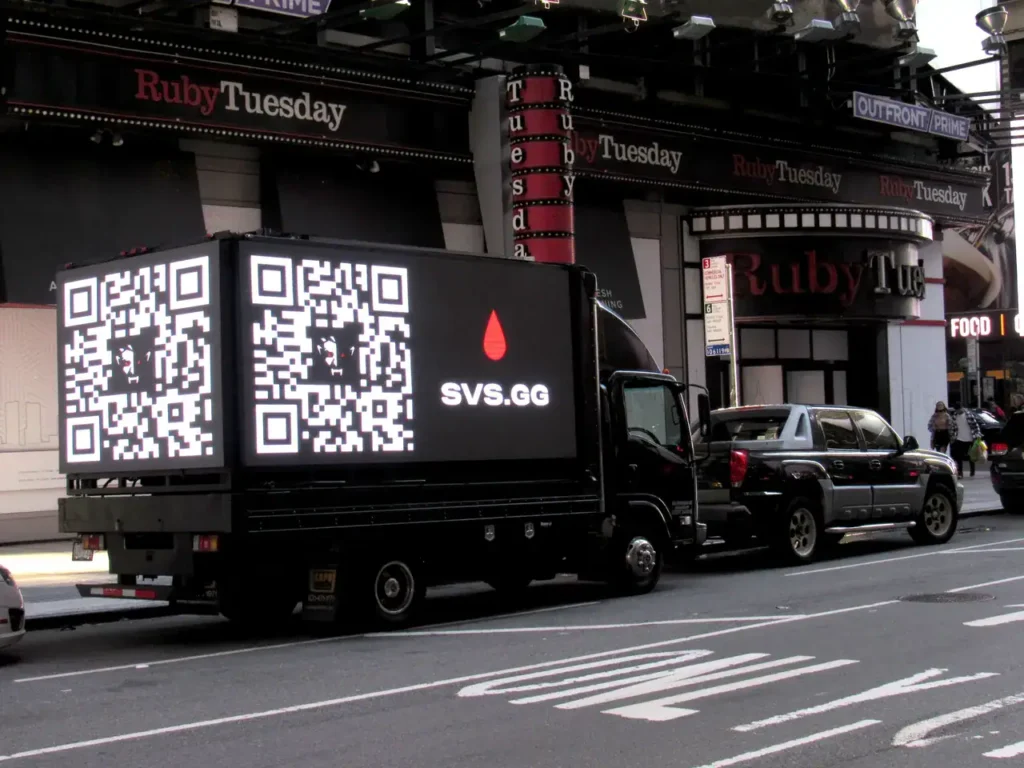
From the National Mall to Georgetown, Capitol Hill to the Navy Yard — American Guerrilla Marketing deploys mobile LED billboard trucks across the nation’s capital with strategic precision and maximum impact.
Washington, DC is the most politically consequential advertising market in the United States. Every major government agency, every federal contractor, every lobbying firm, every advocacy organization, and every media outlet with national reach maintains a presence here. The audiences that decision-makers, policymakers, journalists, and influencers form in DC ripple outward across the country and the world. For brands, causes, and campaigns with a national or governmental stake, advertising in Washington DC is not merely a local market play — it is a direct communication channel to the people and institutions that shape American life.
American Guerrilla Marketing’s LED billboard trucks cut through Washington’s dense, layered media environment with high-impact, mobile outdoor advertising that goes where your audience is — whether that’s Pennsylvania Avenue approaching the Capitol, K Street during the morning lobbying rush, Georgetown’s M Street on a weekend afternoon, or the Navy Yard around Nationals Park on a game day. Unlike fixed digital billboards, which are heavily restricted in DC’s federally managed zones, LED billboard trucks operate as registered vehicles on public streets — giving advertisers access to corridors, neighborhoods, and event approaches that fixed outdoor advertising cannot reach.
Washington DC’s advertising landscape is shaped by geography in a way unique among American cities. The federal zone — the Mall, the Capitol, the White House, the federal triangle of government buildings — creates large swaths of the city’s most visible real estate where traditional billboard infrastructure is banned or severely restricted. This scarcity of traditional outdoor advertising in DC’s most prominent locations makes mobile LED trucks extraordinarily valuable: they are one of the few advertising formats that can legally and effectively operate along Pennsylvania Avenue, approach the Capitol grounds, circle Embassy Row on Massachusetts Avenue, and navigate the dense mixed-use corridors of Georgetown and Dupont Circle without requiring fixed-site permits that DC’s federal land management restrictions make impossible.
The city’s neighborhoods are diverse in character and audience: Capitol Hill’s dense residential blocks and policy professional population, Georgetown’s affluent shopping and dining scene along M Street and Wisconsin Avenue, Dupont Circle’s cosmopolitan mix of embassies and culture, Adams Morgan’s 18th Street nightlife corridor, Columbia Heights’ 14th Street urban commercial strip, the exploding development of the Navy Yard and Capitol Riverfront around Nationals Park and Audi Field, the H Street Corridor’s Atlas District arts community, the Wharf’s waterfront entertainment complex, the Penn Quarter and Chinatown district around Capital One Arena, and the NoMa district’s rapidly growing residential and commercial presence. A well-planned LED truck campaign in Washington DC can cover multiple distinct neighborhood audiences in a single day, building frequency and reach across the city’s full geographic footprint.
Washington’s professional audience is exceptionally high-value from an advertising standpoint. The DC metropolitan area has the highest concentration of graduate degree holders and highest median household income of any major US metropolitan area. The workforce that populates K Street law firms, Pennsylvania Avenue government offices, think tanks on Massachusetts Avenue, tech contractors in Crystal City and Reston, and the conference hotel ecosystem around the Washington Convention Center represents the most influential consumer-professional audience in the country. LED truck advertising that reaches this audience in their daily commute and professional environment delivers impressions to people with significant purchasing power and enormous downstream influence over the brands, ideas, and policies they advocate for within their professional networks.
Launch Your Washington DC LED Truck Campaign
From the Capitol to the Wharf, K Street to Georgetown, Navy Yard to Embassy Row — American Guerrilla Marketing puts your brand in front of the most influential audiences in America. Call now to plan your campaign.
Why Led Billboard Trucks Are Dc's Most Flexible Advertising Format
Traditional outdoor advertising is more restricted in Washington DC than in any other major American city. The federal government controls significant portions of DC’s land and airspace, and federal aesthetic and visual standards impose severe limitations on billboard placement along the major corridors — Pennsylvania Avenue, the Mall, the approaches to the Capitol and White House — that are most visible to DC’s heaviest pedestrian and vehicle traffic. The DC Zoning Commission and the National Capital Planning Commission add additional layers of restriction that make fixed-location outdoor advertising a very limited option in the city’s most desirable advertising zones.
LED billboard trucks navigate this restrictive environment with complete legal flexibility. As registered motor vehicles operating on public streets and rights-of-way, they are not subject to the fixed-structure billboard regulations that restrict traditional outdoor advertising. This means that a campaign truck can drive directly down Pennsylvania Avenue, circle the Capitol Hill residential blocks where Hill staffers walk to and from work, approach the White House on 17th Street and H Street, navigate Georgetown’s M Street shopping district, and appear in front of the Kennedy Center — all without requiring the billboard permits that DC’s regulatory environment makes practically impossible to obtain for these locations.
This regulatory advantage is compounded by the mobile truck’s inherent tactical flexibility. In a city as dense and event-driven as Washington DC, the ability to redirect campaign coverage in real time — to follow a major news event, respond to a rally or march on the Mall, position adjacent to a major conference at the Convention Center, or track a congressional hearing’s audience before and after sessions — gives LED truck campaigns a responsiveness that no fixed outdoor format can match.
Dc's Key Advertising Districts And Corridors
National Mall and Capitol Hill Corridor
The National Mall — stretching from the Lincoln Memorial through the Washington Monument and the Smithsonian Institution complex to the US Capitol — is the most symbolically loaded advertising environment in America. Major political rallies, the Smithsonian Folklife Festival, the National Cherry Blossom Festival’s peak events, and year-round tourist traffic create sustained high-density audience moments. LED trucks operating on Constitution Avenue, Independence Avenue, and the Capitol Hill residential streets that radiate from the Capitol building reach both the tourist audience consuming DC as a destination and the policy professional audience that commutes to Capitol Hill daily. The Capitol Hill residential neighborhood — Eastern Market, Barracks Row on 8th Street SE, Pennsylvania Avenue SE — is home to a dense concentration of congressional staffers, lobbyists, and policy advocates who represent one of DC’s most influential consumer and political audiences.
K Street and the Lobbying Corridor
K Street NW is the symbolic home of Washington’s lobbying and government relations industry. The corridor from Georgetown to downtown DC houses a dense concentration of law firms, lobbying organizations, trade associations, and public affairs consultancies whose professional population is among the highest-income and highest-influence in the country. An LED truck running K Street during the morning and evening commute reaches the people who spend their professional lives shaping federal policy, regulatory frameworks, and legislative outcomes. For brands and organizations with federal affairs stakes — defense contractors, pharmaceutical companies, technology firms, advocacy organizations — a K Street LED truck campaign delivers direct access to Washington’s professional influence class in their daily professional environment.
Georgetown — M Street and Wisconsin Avenue
Georgetown’s M Street and Wisconsin Avenue intersection is Washington’s premier retail and dining destination — a dense commercial corridor lined with national retailers, specialty shops, upscale restaurants, and entertainment venues that draws both DC residents and visitors throughout the week. Georgetown’s consumer demographic is among DC’s most affluent: the neighborhood is home to Georgetown University, embassies, and a residential community of lawyers, lobbyists, diplomats, and executives. M Street on a Friday or Saturday evening generates pedestrian counts comparable to major urban commercial districts in New York and Chicago, with the added dimension of Georgetown University student traffic flowing through the commercial corridor toward the waterfront. LED trucks on M Street and Wisconsin Avenue in Georgetown reach this premium consumer audience at their highest social engagement moment.
Navy Yard, Capitol Riverfront, and Nationals Park
The Navy Yard neighborhood and Capitol Riverfront district along the Anacostia River has undergone one of the most dramatic urban transformations in DC’s recent history. Nationals Park (MLB’s Washington Nationals) and Audi Field (DC United soccer) anchor a rapidly growing mixed-use neighborhood of residential towers, restaurants, breweries, hotels, and office buildings that attracts a young, affluent professional demographic. On game days, the Navy Yard-Ballpark Metro station and the surrounding streets carry tens of thousands of sports fans — representing some of DC’s highest single-day pedestrian counts outside of major National Mall events. LED truck campaigns in the Navy Yard zone on game days, combined with the H Street corridor and the Capitol Hill residential neighborhood routing, create a comprehensive southeastern DC coverage strategy that reaches DC’s fastest-growing demographic cluster.
Dupont Circle, Adams Morgan, and 14th Street Corridor
Dupont Circle — the hub of Connecticut Avenue NW anchored by the Dupont Circle fountain and surrounded by embassies, independent restaurants, bookshops, and cultural venues — is Washington’s most internationally cosmopolitan neighborhood. The Adams Morgan entertainment district on 18th Street NW is DC’s most concentrated nightlife corridor. The 14th Street corridor through Logan Circle has transformed from urban blight to one of DC’s most vibrant dining and arts strips over the past decade. These three adjacent neighborhoods share a young professional, culturally engaged, and highly brand-conscious demographic that is exceptionally receptive to authentic, visually distinctive outdoor advertising. LED truck campaigns circulating through Connecticut Avenue, 18th Street, and 14th Street during evening and weekend hours reach DC’s creative class in their natural social environment.
The Wharf and Southwest Waterfront
The Wharf is DC’s newest and most ambitious waterfront development — a sweeping mixed-use complex along the Washington Channel in Southwest DC that has become one of the city’s most popular dining, entertainment, and event destinations since its opening. The development features multiple live music venues including The Anthem (one of DC’s premier concert halls), dozens of restaurants ranging from casual to fine dining, a waterfront promenade drawing year-round pedestrian traffic, and a marina with seasonal boat activity. LED truck campaigns in the Wharf zone reach a high-income, entertainment-oriented audience at peak engagement — actively spending on dining, concerts, and leisure experiences in one of DC’s most dynamic commercial environments.
Plan Your LED Billboard Trucks Campaign in Washington, DC
Tell us about your campaign goals, target audience, and preferred locations. Our team will help you plan a high-impact LED Billboard Trucks advertising campaign tailored to your needs.
Award Winning Personalized Service
You will get thoughtful, devoted, and individualized attention from our experienced, qualified, and professional personnel. Being one of the most illustrious agencies in Brooklyn, New York, American Guerrilla Marketing has been awarded the Best of Brooklyn title.
Nationwide
Industry City, Brooklyn, New York 11232
American Guerrilla Marketing
Hours
Mon - Fri: 9 AM - 5 PM
Sat & Sun: Closed
Automate your campaign with AGM’s Request for Proposal Builder.
Automate your campaign with AGM’s Request for Proposal Builder. Simply answer a few quick questions about your campaign goals, markets, and timeline, and the system will generate a tailored presentation with recommended strategies, quantities, and pricing. Click the RFP Builder to instantly receive your customized proposal.
Industries and Campaign Types in Washington DC
The range of advertising clients that benefit from LED truck campaigns in Washington DC is unlike any other American city. Political campaigns, PACs, and advocacy organizations use LED trucks to build public presence and intercept political media coverage. Federal government contractors use them for B2B brand awareness among contracting officers and procurement decision-makers. Law firms and lobbying organizations use them for professional brand positioning in the K Street corridor. Nonprofit and advocacy organizations — from environmental groups to veterans’ organizations to healthcare advocacy — use LED trucks to build public awareness during legislative campaigns. Technology companies (Amazon, Booz Allen, Leidos, SAIC, all of whom have massive DC-area presences) use trucks for recruitment and brand awareness campaigns. Hospitality brands — the Willard, St. Regis, Mandarin Oriental, Watergate Hotel, and countless other luxury properties — use LED trucks to reach the high-income visitor demographic. Universities (Georgetown, GWU, American, Howard, Catholic) use trucks for admissions and community awareness. Real estate developers promoting Capitol Riverfront, NoMa, Wharf, and other booming DC development zones use trucks to reach high-income potential buyers and renters.
Proven At The Highest Level
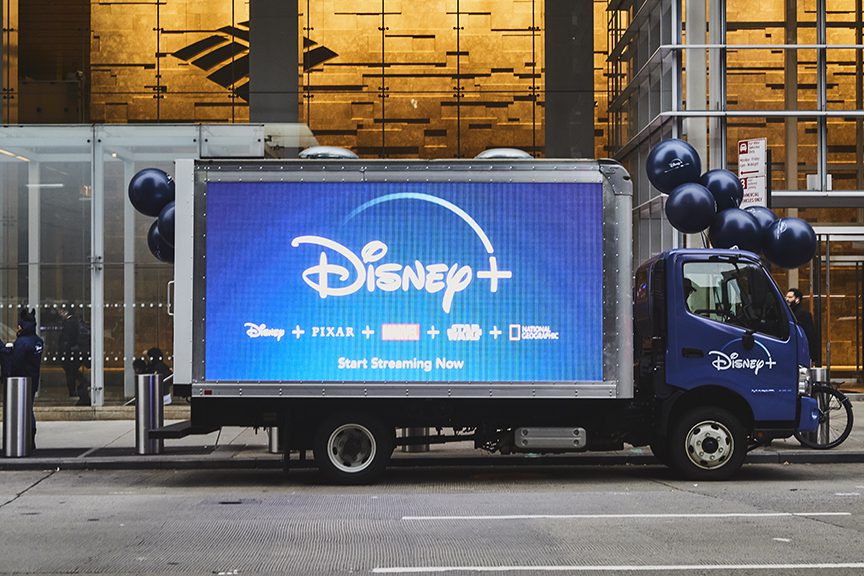
American Guerrilla Marketing’s portfolio includes LED billboard truck campaigns executed for some of the world’s most demanding organizations — Disney, Coca-Cola, FanDuel, the City of New York, and Live Nation. These are clients who operate in the highest-stakes advertising environments, where execution precision, strategic route planning, and operational reliability are non-negotiable. That same disciplined approach is applied to every Washington DC campaign we run — from a single-day advocacy truck campaign on the Capitol Hill approaches to a multi-day brand awareness campaign covering all of DC’s major entertainment and commercial districts. DC clients benefit from AGM’s national experience translated into deep knowledge of the capital’s unique neighborhood dynamics, event calendar, and regulatory environment.
Washington DC LED Billboard Truck FAQs
Yes. LED billboard trucks are registered motor vehicles that operate on public streets and are not subject to the billboard permit requirements and federal property restrictions that govern fixed outdoor advertising structures. Public streets in the vicinity of the Capitol, the White House, and the National Mall are open to commercial vehicle traffic including LED advertising trucks, subject to the same traffic laws that govern all vehicle operation in DC. There are specific security perimeters and closed streets immediately adjacent to some federal facilities — our operations team is thoroughly familiar with DC’s street access restrictions and plans routes that maximize advertising exposure while maintaining full compliance with all applicable traffic and security regulations. We have successfully executed campaigns on Pennsylvania Avenue, Capitol Hill, and throughout the federal zone’s accessible public street network.
Extremely effective. Washington DC is uniquely structured for political advertising — the decision-makers and opinion-shapers who are the actual audience for political advocacy campaigns commute through DC’s streets daily, attend events on the Hill and at the Convention Center, dine in Georgetown and Dupont Circle, and live in the neighborhoods where LED trucks can deploy. A well-planned advocacy campaign in DC can target specific congressional office buildings on Capitol Hill (the Cannon, Rayburn, Longworth, Russell, Dirksen, and Hart buildings are all approachable on public streets), the lobbying corridor on K Street, the media row hotels and briefing spaces around the White House, and the think tank corridor on Massachusetts Avenue — all within a single campaign day. Major advocacy organizations have used LED truck campaigns in DC timed to legislative votes, regulatory comment periods, and major congressional hearings to drive media coverage and Hill staff awareness of their messages.
During major events that involve significant street closures and security perimeter expansions — presidential inaugurations, State of the Union addresses, major political rallies on the National Mall — our operations team carefully plans routes that maximize advertising exposure within the accessible street network while operating fully within all security protocols. For events like the National Cherry Blossom Festival, which draws hundreds of thousands of visitors to the Tidal Basin and surrounding areas without major street closures, LED trucks can operate effectively on Independence Avenue, Ohio Drive, and the surrounding parkway network that carries event traffic. For the annual Smithsonian Folklife Festival on the National Mall, the surrounding street network on Constitution and Independence Avenues carries concentrated visitor traffic that LED trucks can intercept effectively. We always plan event-adjacent campaigns with full knowledge of the specific security and traffic management arrangements for that event.
Washington DC’s street grid — a combination of L’Enfant’s diagonal avenues overlaid on a Cartesian block grid, interrupted by the irregular boundaries of Rock Creek Park, the Anacostia River, and the federal reservation zones — requires sophisticated route planning that general GPS navigation systems don’t optimize for advertising purposes. AGM’s DC operations team builds campaign routes based on specific knowledge of the city’s traffic patterns by time of day and day of week, the locations of key audience clusters (congressional offices, Embassy Row, think tank buildings, major hotels, event venues), and the security restrictions around federal facilities that affect street access at different times. For each DC campaign, we provide a detailed route map showing coverage zones and estimated timing, along with historical traffic data for the specific corridors in the campaign plan.
The minimum booking for Washington DC campaigns is four hours, though most clients find that a full eight-hour day provides the best coverage across DC’s diverse neighborhood portfolio. For campaigns tied to specific events — a congressional hearing, a major conference at the Washington Convention Center, a Nationals or DC United game — a targeted four-to-six-hour window anchored to the event’s peak audience traffic (arrival and departure) is often the most cost-efficient approach. For brand awareness campaigns seeking DC-wide reach across multiple neighborhoods, multi-day bookings (typically two to five days) build the impression frequency necessary to register meaningfully with DC’s high-information, advertising-saturated professional audience. We offer flexible booking configurations to fit any campaign window and objective.
Yes. Embassy Row on Massachusetts Avenue NW — running from Dupont Circle northwest through the Woodley Park neighborhood — houses dozens of foreign embassies and diplomatic missions, and the surrounding area is home to a dense community of diplomats, international development professionals, NGO workers, and foreign service officers. LED truck campaigns on Massachusetts Avenue, Connecticut Avenue, and the surrounding Dupont Circle and Kalorama neighborhood streets reach this internationally-oriented, highly educated professional audience in a way that no other advertising format can match. For organizations conducting international advocacy, promoting international trade or cultural exchange, or seeking to reach the diplomatic community specifically, the Embassy Row corridor combined with the think tank and government relations buildings in the DuPont and Foggy Bottom areas creates a comprehensive campaign strategy for Washington’s international professional audience.
Washington DC’s government contractor community — one of the highest-value B2B advertising audiences in the country — is concentrated in several key geographic zones that LED trucks can efficiently cover. The Crystal City and Pentagon City complex in Arlington, Virginia (directly across the Potomac from DC, accessible via 14th Street Bridge and I-395) houses a massive concentration of defense and intelligence contractors. The K Street corridor in DC proper is home to the government relations arms of hundreds of contracting firms. Reston and Tysons Corner in Northern Virginia house technology contractors including Leidos, SAIC, Booz Allen, and many others, though these Northern Virginia suburbs require a separate campaign planning conversation. For campaigns specifically targeting the DC-based contractor community, K Street, the Pentagon City/Crystal City corridor (reachable with appropriate routing), and the government conference hotels around the Convention Center and Foggy Bottom are the most efficient coverage zones.
Absolutely. Nationals Park and Audi Field in the Navy Yard neighborhood are among DC’s highest single-day traffic generators. A full Nationals home game draws 30,000–40,000 attendees, with the surrounding Navy Yard neighborhood’s restaurants, bars, and waterfront promenade serving the pregame and postgame crowd. DC United matches at Audi Field bring 19,000+ soccer supporters to the same neighborhood. The Navy Yard-Ballpark Metro station processes enormous pedestrian throughput on game days, and the surrounding street network on Half Street, N Street SE, and the Anacostia riverfront fills with tailgaters, fans walking from Capitol Hill and the broader Southeast DC area, and the residential community that has grown rapidly in the Navy Yard redevelopment zone. LED trucks positioned in the Navy Yard on game days can cycle through the pregame crowd, stadium exterior, and postgame departure traffic for extremely high impression totals in a relatively compact geographic zone.
Washington DC differs from every other US LED truck market in one fundamental way: the audience here has a multiplied downstream influence. When a professional or policymaker sees your brand on an LED truck in DC, the impression doesn’t end with that individual — it extends through their professional networks, their legislative work, their media relationships, and their institutional decision-making. A brand or cause that registers effectively with DC’s professional-influence class reaches far beyond the immediate impression count that any demographic model would suggest. This is why organizations invest in DC advertising at premium rates relative to market size — the return on influential impressions in Washington DC is categorically different from the return on general consumer impressions in other markets. AGM understands this dynamic and designs DC campaigns to maximize exposure to the highest-influence audience segments rather than optimizing purely for volume.
Starting a Washington DC LED truck campaign with American Guerrilla Marketing begins with a planning consultation where we discuss your campaign objectives, target audience segments within the DC geography, and the specific time window and event context you’re targeting. DC campaigns often have specific strategic triggers — a legislative timeline, a conference date, a product launch, an advocacy moment — and we build the route plan and timing strategy around those triggers. Once we’ve developed a recommended campaign plan, we provide a clear cost breakdown based on our hourly and day rates, coordinate creative asset review to ensure your display content is optimized for the LED truck format, and finalize the deployment schedule. Our DC operations team manages all logistics on the deployment day, with real-time monitoring and post-campaign reporting including GPS tracking data, impression estimates, and photo documentation delivered within 48 hours of campaign completion.
Yes. The U Street Corridor — historically known as Black Broadway, anchored today by the Howard Theatre, Ben’s Chili Bowl, and a vibrant stretch of concert venues, restaurants, and bars on U Street NW — and the adjacent Shaw neighborhood are two of DC’s most culturally significant and commercially active areas. The evening and weekend pedestrian traffic on U Street between 14th and 9th Streets NW is dense and highly engaged — this is a neighborhood where people are out, social, and spending on entertainment and dining. The 7th Street NW corridor through Shaw connects the U Street scene with the Penn Quarter and Chinatown areas around Capital One Arena, creating a natural campaign routing spine for cultural and entertainment brands targeting DC’s young professional and creative community. LED truck campaigns on U Street, 14th Street, and 7th Street NW are among the most effective approaches for brands seeking authentic cultural resonance with DC’s most influential trend-setting demographic.
More AGM Outdoor Advertising Services
Guerrilla Projections
High-lumen projection on buildings and landmarks, overnight.

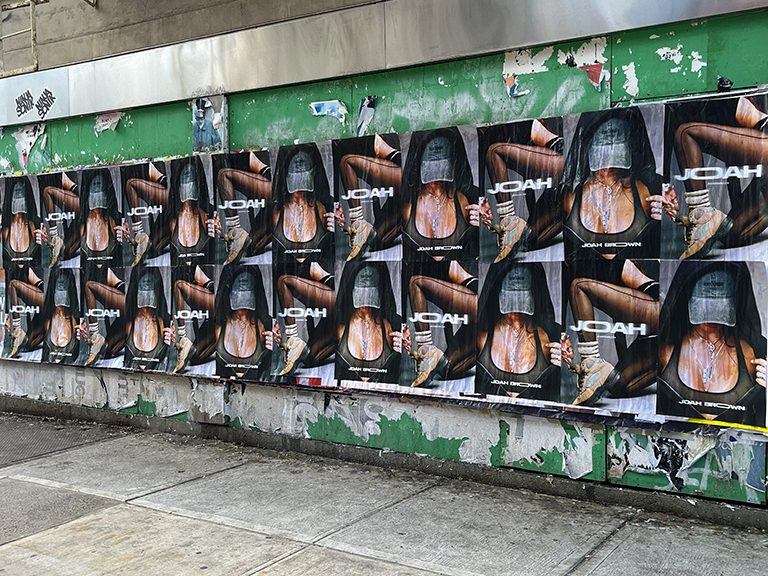
Fly Posting
Street-level poster saturation across walls, construction sites, and corridors.

Sidewalk Decals
Ground-level branded decals at pedestrian hotspots and event entrances.

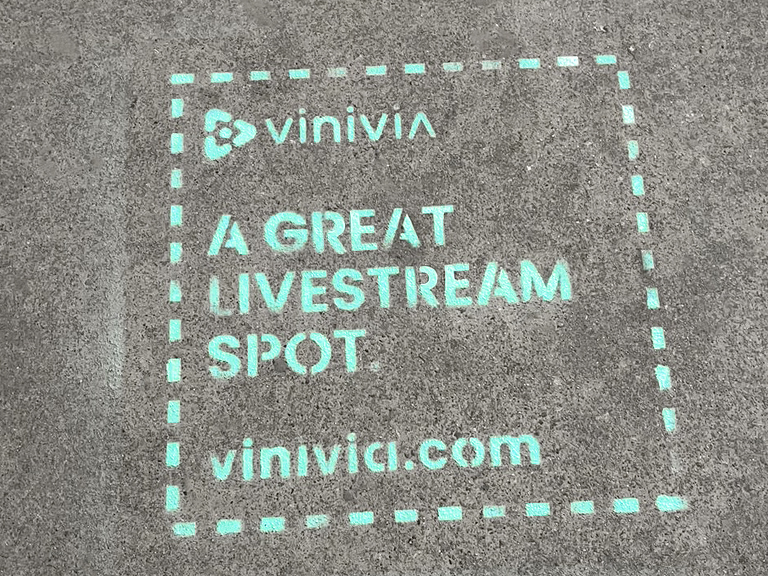
Sidewalk Stencils
Creative stencil campaigns that put your brand in the path of pedestrians.