American Guerrilla Marketing
Nationwide Service
Media planning, media buying, billboard advertising, & guerrilla marketing
The most densely populated state in America — and a single mobile LED billboard truck can reach millions of eyes in a single day. AGM operates full-size LED truck advertising across all of New Jersey, from the Turnpike corridor to the Shore.
New Jersey is the most densely populated state in the United States — approximately 9.3 million people packed into just 8,722 square miles. That single fact makes it one of the most compelling markets in the country for mobile LED billboard advertising. There is no other state where a single truck route, planned correctly, can touch so many distinct communities, commuter corridors, and commercial zones in the span of a single day.
The Garden State is not just a suburb of New York City, though that proximity is part of what makes it so valuable to advertisers. Northern New Jersey — including Hudson, Bergen, Essex, and Union counties — sits squarely inside the greater New York DMA, which means campaigns running here benefit from the reach, cultural weight, and consumer density of one of the world’s most important media markets. Jersey City and Hoboken are separated from lower Manhattan by only the width of the Hudson River, and the commuter flow between these communities and the city runs in the hundreds of thousands every weekday.
At the same time, New Jersey has its own distinct economic and cultural identity. The New Jersey Turnpike and Garden State Parkway are two of the busiest toll roads in America, handling over 100 million trips per year on the Turnpike corridor alone. The Port Newark-Elizabeth Marine Terminal is the busiest container port on the East Coast. MetLife Stadium — home to both the New York Giants and the New York Jets — sits in East Rutherford. Prudential Center in Newark hosts the New Jersey Devils and serves as one of the region’s top concert and live event venues. Princeton University draws global talent. Rutgers University in Piscataway and New Brunswick anchors a major college market. And Atlantic City, the only legal casino gaming hub on the East Coast outside of Connecticut, draws millions of visitors every year who arrive through a dense network of expressways and regional roads that are tailor-made for LED truck advertising.
American Guerrilla Marketing has deep operational roots in the New York/New Jersey metro area. As a Best of Brooklyn award winner and a firm that has executed campaigns for clients including Disney, Coca-Cola, and FanDuel, AGM brings a level of strategic understanding of this region that most out-of-market agencies simply cannot match. We know which roads produce the highest impression counts, which shore towns are worth targeting during which weeks, and how to build a route that delivers for a Newark retailer differently than it would for a pharmaceutical brand headquartered in Parsippany. That knowledge is built into every NJ campaign we execute.
Whether you're targeting Newark's commuter corridors, Atlantic City's casino district, the Shore in peak summer, or a multi-city route across northern NJ, AGM has the trucks, the routes, and the market knowledge to execute your campaign at the highest level. No middlemen. No guesswork. Direct execution from a team that knows this market.
Population density is the central variable in outdoor advertising efficiency. The more people a truck passes per hour, the lower the effective cost-per-impression. By that logic, New Jersey is among the most efficient outdoor advertising environments anywhere in the country. With an average of more than 1,000 people per square mile statewide — and dramatically higher densities in urban centers like Newark, Jersey City, Elizabeth, and Paterson — a single LED billboard truck driving a well-planned route generates an enormous volume of qualified impressions at a cost per thousand that traditional fixed billboards and digital media rarely match.
This density advantage compounds when you consider NJ’s infrastructure. The state’s highway network was designed to move massive volumes of people efficiently across short geographic distances. That means high-volume arterial roads are everywhere — Route 1 and 9, Route 3, Route 22, Route 35, Route 9, the Expressway to Atlantic City — and a skilled route planner can move a truck through communities of vastly different demographics and household income levels within a single afternoon. For brands running multicultural campaigns, this matters enormously. New Jersey has strong and established Hispanic, South Asian, and Portuguese communities, particularly in cities like Newark, Elizabeth, Paterson, Kearny, and Harrison. An LED truck campaign can be routed specifically through these communities to deliver messaging that lands with precision — without the broad waste that digital geo-targeting often produces at scale.
Even outside the urban core, NJ’s density remains high by national standards. Suburban counties like Middlesex, Monmouth, Morris, and Burlington are home to major retail corridors, corporate campuses, and shopping districts that concentrate thousands of shoppers and commuters in compact, walkable or driveable zones. An LED truck parked outside a major employer during shift change, or running loops through a suburban downtown on a Saturday afternoon, generates the kind of impressions that are nearly impossible to replicate with static advertising formats.
New Jersey is also home to some of the country’s most significant corporate names. Johnson & Johnson maintains its global headquarters in New Brunswick. Prudential Financial is headquartered in Newark. Goldman Sachs has major NJ offices in Jersey City. Verizon was founded and still has significant operations in the state. These corporate presences translate into dense concentrations of high-income, professional commuters — a demographic that many brands specifically want to reach — moving through predictable routes every weekday morning and evening.
Asbury Park is one of the Shore’s most culturally active cities, drawing a creative, affluent, and tourism-heavy crowd from spring through fall. The boardwalk corridor, Cookman Avenue, and the surrounding beach blocks create natural high-traffic loops for LED trucks during concert weekends, summer festivals, and holiday weekends. The Convention Hall and Stone Pony are iconic venues with consistent event traffic. Asbury Park is ideal for brands targeting a younger, design-conscious, and experience-driven audience.
Atlantic City is one of the highest-value LED truck markets anywhere on the East Coast. As the only legal casino gaming hub in the region outside Connecticut, AC draws millions of visitors annually — concentrated on the Boardwalk, in the casino districts, and along the Atlantic City Expressway corridor. Event traffic from boxing matches, concerts at Hard Rock, and gaming tournaments creates premium advertising windows that are tightly bounded and extremely targetable. LED trucks running the AC Boardwalk or positioned near casino entrances command attention in a way few other advertising formats can replicate.
Elizabeth is a dense, diverse city positioned directly adjacent to Newark Liberty International Airport and the Port Newark-Elizabeth complex. It sits along one of the highest-traffic corridors in the entire Northeast — the I-95/NJ Turnpike interchange zone. Elizabeth’s commercial districts along Broad Street and Elizabeth Avenue serve large Hispanic and Portuguese-speaking communities, making it an essential stop for multicultural campaigns targeting NJ’s northern urban core. The proximity to major logistics and freight infrastructure also makes Elizabeth a natural target for B2B and workforce recruitment advertising.
Jersey City occupies one of the most strategically valuable positions in the entire New York metro area. Its waterfront neighborhoods face directly onto the Lower Manhattan skyline, and its commuter infrastructure — PATH trains, ferries, NJ Transit buses — moves tens of thousands of people daily between NJ and NYC. Journal Square and the Grove Street PATH corridor are anchors of the city’s rapidly growing commercial and residential scene. Jersey City is home to major financial firms, tech companies, and a fast-growing population of young professionals who are difficult to reach with traditional out-of-home. LED trucks in Jersey City hit a demographic that is plugged in, brand-aware, and financially active.
Newark is New Jersey’s largest city and one of the most active advertising markets in the state. As the home of Newark Liberty International Airport — one of the three major NYC-area airports — Newark sits at a crossroads of regional and national traffic flows. The Prudential Center brings in major concert and sports events year-round. The Ironbound neighborhood is one of the most vibrant and walkable commercial districts in NJ, with dense foot traffic along Ferry Street. Broad Street and Market Street anchor downtown commerce. Newark also serves as a major transit hub for NJ Transit, making it a natural chokepoint for capturing commuter impressions at scale.
Paterson is a densely populated industrial city with a rich cultural heritage and a strong, established immigrant community — including one of the largest Turkish-American populations in the country and significant South Asian, Hispanic, and Middle Eastern communities. Market Street, Main Street, and the downtown corridor see consistent commercial traffic. Paterson is a high-value target for multicultural advertisers, community-focused brands, and local businesses looking to penetrate one of NJ’s most economically diverse markets. Its compact geography makes for efficient truck routing that delivers maximum impressions in minimum time.
Tell us about your campaign goals, target audience, and preferred locations. Our team will help you plan a high-impact LED Billboard Trucks advertising campaign tailored to your needs.
Award Winning Personalized Service
You will get thoughtful, devoted, and individualized attention from our experienced, qualified, and professional personnel. Being one of the most illustrious agencies in Brooklyn, New York, American Guerrilla Marketing has been awarded the Best of Brooklyn title.
Nationwide
Industry City, Brooklyn, New York 11232
American Guerrilla Marketing
Hours
Mon - Fri: 9 AM - 5 PM
Sat & Sun: Closed
Automate your campaign with AGM’s Request for Proposal Builder. Simply answer a few quick questions about your campaign goals, markets, and timeline, and the system will generate a tailored presentation with recommended strategies, quantities, and pricing. Click the RFP Builder to instantly receive your customized proposal.
New Jersey’s seasonal event calendar is one of the most compressed and high-intensity advertising environments in the country. The Shore season — running roughly from Memorial Day weekend through Labor Day — transforms the eastern coastline of New Jersey into a massive tourism market. Towns like Asbury Park, Point Pleasant, Seaside Heights, Long Branch, and Cape May draw millions of visitors over the course of the summer, concentrating spending and foot traffic in ways that are nearly impossible to replicate at any other time of year. For brands targeting consumers in a leisure mindset with disposable income, shore season represents a premium advertising window.
The traffic patterns that come with shore season are particularly well-suited to LED billboard truck campaigns. Garden State Parkway southbound on Friday evenings and northbound on Sunday afternoons becomes one of the most consistent impression corridors in the state. Route 9 along the Shore, Route 35 through Belmar and Asbury Park, and Ocean Avenue in any number of shore towns all see dramatically elevated vehicle and pedestrian counts from late May through early September. An LED truck positioned along these corridors during peak shore traffic periods reaches a high concentration of affluent, leisure-oriented consumers who are actively spending money on food, entertainment, accommodations, and retail.
Beyond the Shore, NJ’s event calendar creates advertising opportunities throughout the year. The PNC Bank Arts Center in Holmdel hosts a full summer concert series drawing tens of thousands of fans per show. Six Flags Great Adventure in Jackson Township generates massive family traffic from spring through fall. MetLife Stadium hosts NFL games, international soccer matches, college bowl events, and massive concerts — all of which bring traffic concentrations that are ideal for LED truck positioning on Routes 3 and 17 and around the Meadowlands complex. The July 4th holiday weekend is one of the highest-traffic periods on the Shore and along the Parkway, with LED trucks running through shore towns commanding exceptional visibility.
New Jersey also hosts hundreds of county fairs, food festivals, ethnic cultural celebrations, and local street fairs throughout the year. The density of these events means that almost any week of the year, there is a concentration of foot traffic somewhere in the state that an LED truck campaign can productively target. AGM’s team monitors the NJ events calendar as part of campaign planning, identifying the specific events, venues, and traffic corridors that align with each client’s target audience and geographic priorities.
Shore season and major NJ event dates book out quickly. Campaigns targeting Memorial Day weekend, July 4th, Labor Day, or major concert events at PNC Arts Center or Prudential Center should be planned a minimum of four to six weeks in advance. Premium summer Saturdays along the Shore corridor often fill even earlier. AGM advises clients with flexible campaign windows to consider shoulder-season timing — late May, early June, or post-Labor Day — when shore towns still carry meaningful traffic but truck availability is less constrained and routes can be more easily customized without competing for the same road space as peak-season tourism traffic.
AGM’s NJ pricing reflects the operational realities of running campaigns in one of the country’s most active advertising markets. Rates are based on truck size, campaign duration, and route complexity. All rates are transparent — no hidden fees, no middlemen, no subcontractor markups. Because AGM owns and operates its own trucks and executes every campaign with direct staff, the pricing you receive is the real cost of production.
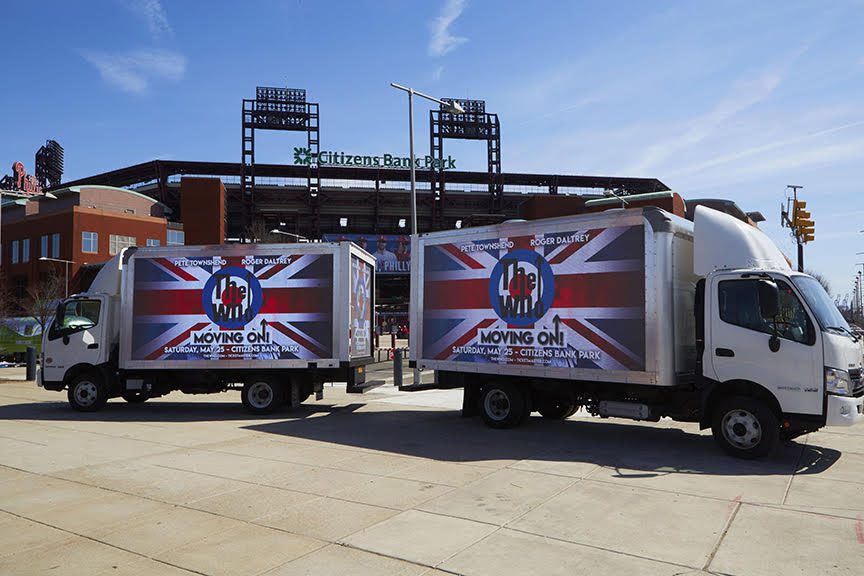
The 14ft truck is the most maneuverable option and works well in dense urban environments like Newark’s Ironbound, Jersey City’s downtown grid, and the tight streets of Paterson and Elizabeth. It can navigate residential corridors and secondary commercial streets that larger trucks cannot access, making it a strong choice for hyper-local neighborhood campaigns.
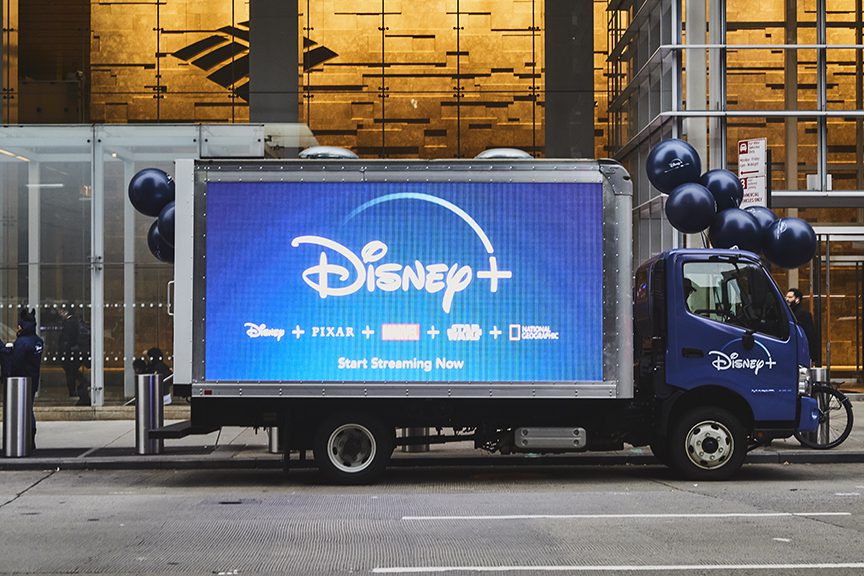
The 18ft truck delivers a larger display surface — making it the most popular choice for brand awareness campaigns in mid-density markets, shore towns, and suburban commercial corridors. It balances visibility with route flexibility, and the price-to-impression ratio is typically the strongest of any format in the fleet.
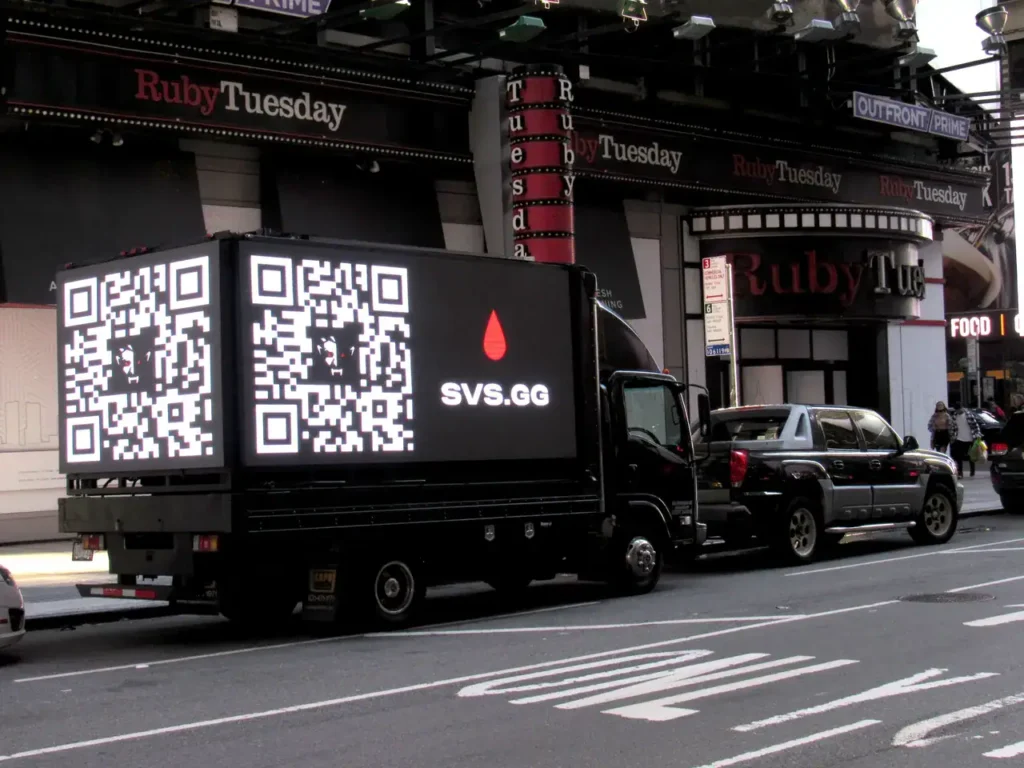
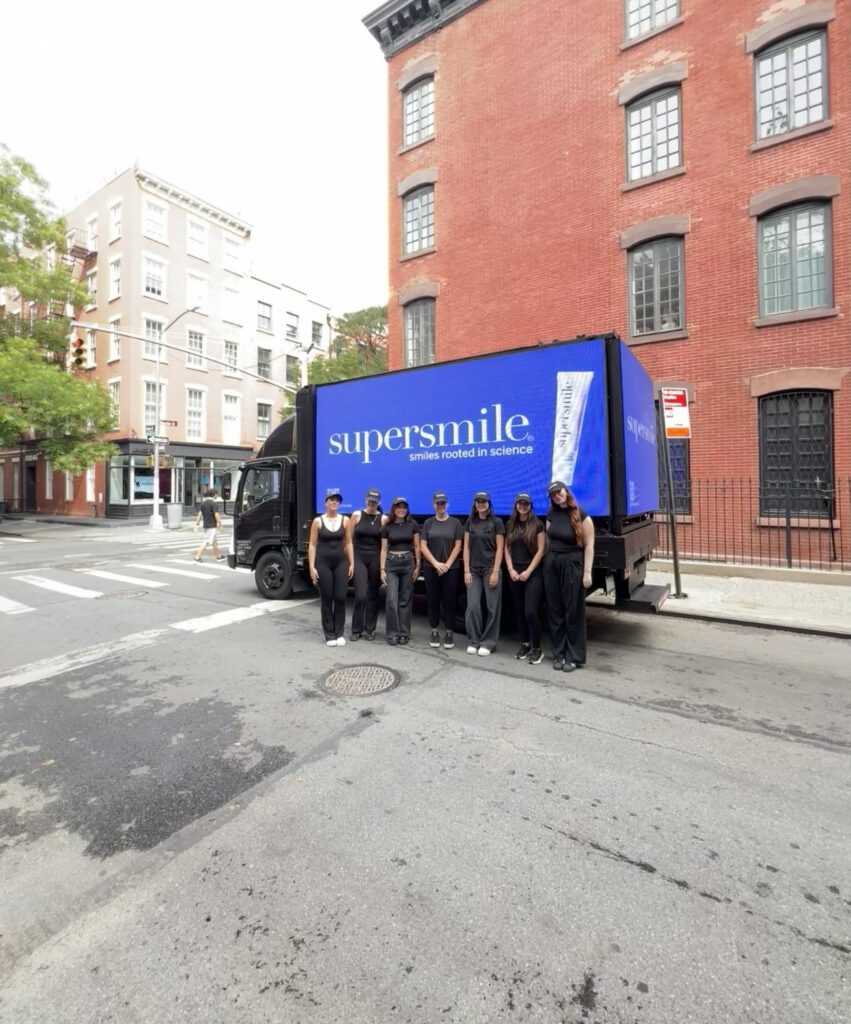
The 3D LED truck is the format of choice for launches, activations, and campaigns where maximum visual impact is the priority. Its three-dimensional display format stops foot traffic cold and generates the kind of organic social media documentation that extends the campaign’s reach well beyond the physical audience on the ground. For product launches, entertainment marketing, or any campaign where the goal is to generate conversation and earned media, the 3D truck consistently delivers.
The 32ft truck is the largest format in the fleet and is best suited for open-road highway routes, major event corridors, and shore-season campaigns where the truck is running high-speed impressions along the Parkway, the Expressway, or open ocean avenue corridors where size and visibility at distance are the primary factors.
Multi-day campaigns and campaigns combining multiple cities may be eligible for custom rate structures. Contact AGM directly to discuss the specifics of your campaign geography, timing, and objectives.
LED billboard truck advertising in New Jersey is not a one-size-fits-all medium. Different industries approach it differently, and the state’s geography and demographic diversity mean that the best-performing campaigns are almost always built with specific audience and route logic rather than generic coverage. Here are the industries and use cases where AGM sees the strongest campaign performance in the NJ market.
Concerts at PNC Bank Arts Center, boxing and sports events at Prudential Center, and major stadium shows at MetLife all benefit from LED truck advertising in the surrounding road corridors. Venue approaches on game and show days see captive, highly engaged audiences sitting in traffic — one of the highest-attention advertising environments that exists. AGM has executed campaigns for entertainment clients including Disney and knows exactly how to position trucks to maximize pre-event visibility.
Atlantic City’s gaming market is a natural fit for LED truck advertising. Brands in the gaming, sports betting, and entertainment categories can run trucks along the Atlantic City Expressway approach, the Boardwalk, and the casino district streets to capture visitors at the highest-intent moment of their trip. FanDuel has been among AGM’s clients, and that experience translates directly into knowing how to run gaming campaigns in the NJ market compliantly and effectively.
New Jersey’s suburban commercial corridors — Routes 1, 9, 22, 35, and the Route 130 corridor through South Jersey — concentrate retail shopping traffic in predictable patterns. LED trucks running these corridors during peak weekend shopping hours reach consumers at the point in the purchase funnel where awareness translates directly into store visits. Coca-Cola is among the major consumer brands AGM has executed campaigns for, and the scale and precision of those executions inform every retail campaign we run in NJ.
New Jersey’s real estate market — particularly the Jersey City, Hoboken, and Newark waterfront development boom — makes LED trucks a natural fit for new building launches, leasing campaigns, and neighborhood awareness efforts. Trucks can be routed through commuter corridors, PATH and NJ Transit station approaches, and the relevant neighborhoods to build awareness for new listings, grand openings, and development projects during the highest-intent discovery phases of the real estate search process.
New Jersey is home to a significant concentration of pharmaceutical and healthcare corporate operations, with Johnson & Johnson, Merck, Becton Dickinson, and numerous biotech firms all headquartered or substantially operating in the state. Healthcare systems, urgent care networks, and hospital groups use LED truck campaigns to build awareness in specific service area ZIP codes, target commuter corridors near major campuses, and drive appointment volume during open enrollment windows or new location launches.
New Jersey’s demographic diversity is a strategic asset for brands running culturally targeted campaigns. The state’s Hispanic communities in Newark, Elizabeth, Perth Amboy, and Passaic County; its South Asian communities in Edison, Iselin, and Middlesex County; its Portuguese communities in the Ironbound and Kearny; and its Turkish and Middle Eastern communities in Paterson all represent distinct audiences that respond to culturally relevant messaging. AGM can route campaigns specifically through these communities to deliver language-appropriate, culturally resonant advertising that generic broadcast and digital placements cannot replicate.
One of the distinct advantages of LED billboard truck advertising over fixed out-of-home formats is the ability to combine multiple markets into a single coordinated campaign without the cost and logistical complexity of booking multiple separate placements. In New Jersey, where major population centers are separated by relatively short driving distances, multi-city campaigns are not only feasible but often represent the most cost-efficient way to achieve meaningful statewide coverage.
A single truck operating out of the northern NJ region can realistically cover Newark, Elizabeth, Jersey City, and Paterson in the same operational day with proper route planning. Distances between these cities are short — often under 15 miles — and the arterial road network between them is continuous and commercially dense. This means a campaign that runs an eight-hour day in northern NJ can touch multiple distinct communities, demographic profiles, and commercial corridors without the dead-time or transit waste that comes with larger geographies.
For campaigns that need to cover both northern NJ and the Shore market — for example, a summer product launch targeting the NYC commuter market and the shore tourism market simultaneously — AGM can coordinate multiple trucks running concurrent routes in different parts of the state. One truck running the Jersey City, Hoboken, and Newark corridors while a second runs Asbury Park and the shore towns creates a genuinely statewide coverage footprint that would take weeks and a six-figure budget to replicate with fixed billboard placements.
AGM’s multi-city campaign planning process starts with a conversation about your target audience, your priority markets, and your objectives. From there, the team maps the most efficient routing logic to achieve your coverage goals within your budget and timeline. Every campaign includes GPS tracking and route documentation so clients have full transparency into where the trucks ran, what roads they covered, and during what hours — giving you the data you need to report results internally and plan future deployments.
Because American Guerrilla Marketing is based in New York and operates throughout the greater metro area, NJ campaigns can be seamlessly combined with New York City deployments. A brand running a major launch event in Manhattan can simultaneously deploy a truck through the Jersey City and Hoboken waterfront — reaching the NYC skyline backdrop market from the NJ side and capturing the tens of thousands of commuters crossing the Hudson daily. This cross-market coordination is a capability that few advertising partners in the region can execute with the operational depth AGM brings to it.
NJ Transit — the nation’s largest statewide transit system — also creates unique advertising windows at its major hub stations in Newark Penn Station, Secaucus Junction, and New Brunswick, where thousands of commuters pass through predictable chokepoints at consistent times every weekday. LED trucks positioned at or near these transit hubs during morning and evening peak periods reach high-volume commuter audiences who are typically unreachable by vehicle-based advertising formats.
American Guerrilla Marketing is not a broker. We own our trucks, we hire our drivers, we plan every route, and we execute every campaign with our own team. When you book an LED truck campaign with AGM, there are no subcontractors, no middlemen, and no margin layers added by intermediaries who have never driven the roads you’re advertising on. What you get is direct access to a team that has operated in the New York and New Jersey market for years and knows this region at the street level.
AGM is a Best of Brooklyn award winner — a recognition that reflects both the quality of our executions and the depth of our connection to the NYC/NJ metro market. Our clients include major brands like Disney, Coca-Cola, and FanDuel, which means we have the operational capacity, the logistics infrastructure, and the strategic experience to handle campaigns at any scale — from a single-truck, single-day activation to a coordinated multi-market statewide deployment running over multiple weeks.
Every campaign we run comes with GPS-verified route documentation. You know exactly where your truck went, what roads it covered, and for how long. That transparency is not standard in this industry — many operators provide only a final report with a few photos and a vague summary. AGM’s reporting gives you the data you need to evaluate the campaign, justify the spend internally, and make informed decisions about your next deployment.
We also consult on creative. If you’re bringing content that was designed for a static billboard or a social media post, we’ll tell you what adapts well to an LED truck display and what doesn’t. The physical format has specific requirements — viewing angles, font legibility at speed, animation frame rates, and color contrast for daylight visibility — and getting these right is the difference between a campaign that commands attention and one that gets ignored. AGM’s team has executed enough campaigns to know what works and will help you get there before the truck rolls.
New Jersey is a priority market for AGM. It’s not a secondary territory or an afterthought — it’s part of our operational core. The density, the event calendar, the demographic diversity, and the proximity to New York City all make New Jersey one of the most strategically important markets we serve, and we bring the same level of attention and expertise to NJ campaigns that we bring to our flagship NYC executions.
Yes. AGM operates LED billboard trucks across all of New Jersey — from the northern urban markets of Newark, Jersey City, Elizabeth, and Paterson through the mid-state corridors of Middlesex, Somerset, and Monmouth counties, and down through the Shore markets including Asbury Park and Atlantic City, as well as the South Jersey markets near Camden and the Philadelphia border. There is no region of New Jersey that falls outside AGM’s operational footprint. While the six dedicated city pages represent our highest-volume NJ markets, campaigns can be routed to any municipality in the state based on client needs. Contact AGM to discuss routing for markets not listed — the team will assess the feasibility and build a route plan that matches your target geography.
New Jersey’s status as the most densely populated state in the country — more than 1,000 people per square mile on average, and far higher in urban centers — fundamentally changes the economics of mobile LED advertising. Impression volume is a function of how many people a truck passes per hour. In a high-density state like NJ, a truck doesn’t need to travel far to generate a large number of impressions. A route through Newark, Elizabeth, and Jersey City over eight hours can realistically expose the campaign to hundreds of thousands of individual viewers without ever leaving a 25-mile radius. That geographic efficiency translates directly into a lower cost per impression compared to less-dense markets, and it allows campaigns to achieve meaningful reach with a single truck where other markets would require two or three. Add to that the concentration of corporate commuters, shore tourists, event attendees, and transit riders that NJ funnels through predictable corridors at predictable times, and the density advantage becomes even more pronounced.
Shore season — Memorial Day through Labor Day — is the highest-demand period for LED truck campaigns in New Jersey, particularly for routes targeting Asbury Park, Long Branch, Point Pleasant, Seaside, and the Atlantic City corridor. During this window, truck availability tightens significantly, especially for Friday-through-Sunday deployments when tourism traffic is at its peak. Pricing during shore season remains consistent with AGM’s standard rate structure, but bookings must be secured further in advance — typically four to six weeks minimum for peak summer weekends, and earlier than that for holiday weekends like July 4th. Clients who want shore season exposure but have flexibility on exact timing are often best served by targeting shoulder dates in early June or the weeks immediately following Labor Day, when shore traffic is still meaningful but competition for truck availability is lighter. AGM recommends locking in summer NJ campaigns as early as possible.
Absolutely, and this is one of the most common campaign structures AGM executes in New Jersey. The state’s compact geography makes multi-city routing on a single truck both practical and efficient. A standard eight-hour day gives a well-planned route enough time to move through three or four distinct markets with meaningful coverage in each. For example, a northern NJ route might begin in Newark during morning commute hours, move through Elizabeth and the Port area midday, transition to Jersey City and Hoboken for the afternoon and early evening, and finish in Paterson for a dinner-hour push through commercial corridors. That’s four distinct cities, four distinct demographic audiences, and four distinct geographic markets in a single operational day at a single day rate. For campaigns that need to span both northern NJ and the Shore in the same period, AGM can coordinate two trucks running concurrent routes — one in the north, one along the Shore — to achieve true statewide coverage simultaneously.
The businesses that consistently see the strongest returns from LED truck campaigns in NJ share a few characteristics: they have a defined geographic target area, a clear audience profile, and a message that benefits from high-frequency repetition or event-specific urgency. In New Jersey specifically, the categories that perform particularly well include entertainment and live events (concerts, sports, gaming), retail businesses with physical locations in high-traffic commercial corridors, real estate developments and new community launches, healthcare systems competing for patient volume in defined service areas, restaurants and hospitality brands targeting shore season visitors, and brands running multicultural campaigns targeting NJ’s diverse immigrant communities. Businesses that have tried digital targeting in NJ markets and found cost-per-acquisition climbing — particularly in the highly competitive NYC DMA — often find that LED truck advertising provides a meaningfully lower cost per qualified impression with a visibility and recall quality that digital formats rarely match.
The mechanics of the campaigns are similar — LED trucks, planned routes, GPS documentation, creative display — but several operational and strategic factors differ between NJ and NYC. New York City’s density and pedestrian culture mean that trucks frequently operate in contexts where foot traffic is the primary audience. New Jersey’s mix of urban density and suburban sprawl means that vehicle traffic plays a larger role in most routes, and truck sizing decisions matter differently — the 14ft truck that navigates Manhattan blocks easily may be less optimal on a Route 22 commercial corridor in Union County, where the 18ft or 32ft format commands more attention at speed. NJ campaigns also operate in a significantly less saturated advertising environment than Manhattan, where consumers are exposed to enormous volumes of competing out-of-home messages. In NJ markets outside the immediate NYC waterfront, an LED truck is still a novel and attention-commanding format, which generally translates into higher recall rates per impression. Shore season campaigns in NJ also have no true NYC equivalent — the concentration of leisure-oriented, high-spending consumers in a compact coastal geography during peak summer weekends is a dynamic that is uniquely New Jersey.