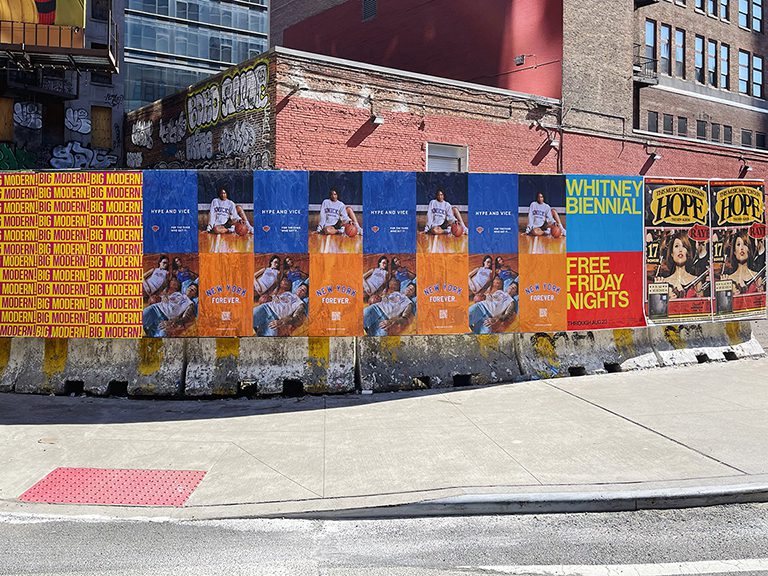
A wheat pasting campaign is not posters on walls. It is a structured, audience-mapped, documented media execution that happens to use wheatpaste as its delivery mechanism.
The difference between a wheat pasting campaign that drives results and one that just puts paper on walls is planning. Strategic planning. The kind where you know exactly which audience you are reaching, exactly which neighborhoods they move through, exactly which surfaces will carry your message to them, and exactly how you will know afterward whether it worked.
At American Guerrilla Marketing, every campaign we run follows a disciplined planning and execution process. We have run wheat pasting campaigns for fashion labels launching new collections, record labels putting out albums, consumer goods brands entering new markets, tech companies building local awareness, and event promoters trying to fill venues. The process is the same across all of them: brief, scout, plan, produce, install, document, measure.
This piece covers every stage of that process in enough detail that you can either execute it yourself or ask the right questions when hiring a professional team to do it for you.
A wheat pasting campaign is a coordinated, multi-location outdoor poster installation executed using wheatpaste adhesive. The term covers everything from a focused 25-placement neighborhood push to a 500-placement multi-city rollout.
What makes it a campaign rather than just a postering job is strategic intent. The locations are chosen based on audience geography, not availability. The timing is planned around campaign objectives, not convenience. The creative is designed for street scale, not adapted from digital. The results are documented and measured against objectives. These elements together are what separate a wheat pasting campaign from someone with a bucket of paste and leftover event flyers.
A wheat pasting campaign is a legitimate media channel with a specific set of strengths. It reaches audiences in the physical spaces where they actually spend time, bypasses the digital resistance that makes programmatic advertising increasingly expensive to make work, creates physical presence that builds brand awareness through repeated exposure over weeks, and generates organic social content when the creative is strong enough to make people want to photograph it and share it.
Stage 1: Brief and Objective Setting
Every campaign starts with a clear brief. The brief should answer five questions before any other work begins.
Who is the target audience? Age, lifestyle, interests, neighborhood patterns. The more specific, the better. “Young adults” is not an audience. “18-to-28 year olds in Brooklyn with strong interest in independent music and streetwear” is an audience that maps to specific neighborhoods, which maps to specific locations.
What is the campaign trying to accomplish? Brand awareness, product launch support, event promotion, local market entry, social media amplification, or some combination. The objective shapes the geographic strategy (broad coverage for awareness, concentrated density for event promotion) and the creative approach (art-forward for cultural embedding, message-forward for direct response).
What is the timeline? When does the campaign need to be on the street? How long should it run? Are there specific date anchors (launch dates, event dates, release dates) that determine the installation window? Campaigns tied to specific dates need to be on the street before that date, not after.
What is the geography? Which cities and which neighborhoods? This is usually defined by where the target audience is concentrated and where the budget allows for coverage. Single-city focus is more cost-effective and achieves higher density. Multi-city campaigns require more coordination and budget but build awareness across multiple markets simultaneously.
What does success look like? What signals will tell you whether the campaign worked? QR code scans? Branded search lift? Direct traffic? Event ticket sales? Social mentions? Setting the measurement framework before the campaign launches is the only way to capture the data you need to evaluate it after.
Stage 2: Creative Brief and Design
Street poster design is a distinct discipline from digital design or print design for indoor use. The creative brief for a wheat pasting campaign needs to specify the constraints and expectations of the format explicitly rather than leaving the designer to figure them out independently.
The Street Scale Test
Every design intended for outdoor use should be tested at full print scale before the print run is ordered. Print a single poster at the final output size. Stand 30 feet away from it. Can you read the headline? Can you identify the primary visual element? Does the design hold visual interest? If the answer to any of these is no, the design needs revision before printing 200 copies.
Text that reads clearly at 12 points on a computer monitor is often illegible at 24×36 inches from 30 feet away, particularly in condensed or light weights. Bold and extra-bold type faces at generous sizes are the standard for street-scale typography. Test everything at scale.
What Strong Wheat Pasting Campaign Creative Looks Like
One dominant visual element that reads from 30 feet in under two seconds
One headline of five words or fewer in large, high-contrast type
One secondary element: tagline, product name, or URL
High contrast throughout: dark on light or light on dark, not medium tones
Brand mark in a consistent location, typically bottom third
QR code and/or URL at a size that is readable from one meter (roughly 1.5 inch square for QR)
What Kills Street Campaign Creative
More than three elements competing for attention
Low contrast (dark gray on medium gray, pale colors on white)
Text at digital proportions scaled to a large format without adjustment
Decorative or script typefaces at small display sizes
Complex photography with multiple competing focal points
Anything that requires the viewer to stop and study it to understand it
Stage 3: Location Scouting
Scouting is the stage most first-time campaign managers skip or underestimate. It is also the stage that has the largest impact on campaign performance after creative quality.
Scouting involves physically walking the target neighborhoods and mapping available surfaces that match the campaign profile. The scout identifies walls with high foot traffic and pedestrian-level visibility. It identifies surfaces with good adhesion conditions (stable paint layers, appropriate porosity). It maps the route for installation day so the crew can work efficiently without backtracking.
Paper selection and print specifications are determined during the planning stage, before the print order is placed. The wrong paper makes an otherwise well-planned campaign fail on the wall.
Standard specification for outdoor wheat pasting campaigns: 70 to 80 pound uncoated text or cover stock. Matte or satin finish only (no gloss). CMYK printing at 300 DPI resolution. Bleed as required by the printer’s specifications.
Format: 18×24 or 24×36 for volume campaigns. Multi-panel for feature placements where larger-than-standard visual impact is required.
Quantity: Order 10 to 15 percent more than the planned placement count to account for damaged sheets during transport, test placements, and any surface-driven rejects on installation day. A 200-placement campaign should print 220 to 230 posters.
Delivery: Rolled in tubes rather than flat-stacked whenever possible. Flat-stacked poster runs at high quantities develop pressure creases that are visible after installation. Rolled posters apply flat without crease marks.
AGM Field Note: Get the Print Spec Right the First Time
We have seen clients order prints independently using the wrong stock and arrive at the campaign with glossy coated paper that will not bond properly. The cost of reprinting on the correct stock plus the delay it creates in the campaign schedule is always higher than the cost of asking the right questions before placing the print order. Confirm your stock spec with the installation team before ordering.
Stage 5: Paste Production
Paste is mixed in quantity before installation day. For a 200-placement campaign using 24×36 format, plan for 20 to 30 gallons of prepared paste depending on surface porosity in the target neighborhoods. Porous surfaces like rough concrete and unpainted brick absorb significantly more paste than sealed plywood or painted metal.
The standard professional formula is wheat starch cooked to consistency, cooled to room temperature, and then PVA glue incorporated at a ratio of approximately 4:1 paste to PVA. Paste is transported in sealed 5-gallon buckets. Working paste in the field is maintained at room temperature and stirred regularly to prevent settling and skinning.
Stage 6: Installation Day
Installation day is when the campaign becomes physical. The crew arrives at the start point of the planned route with all materials loaded. The sequence for each placement follows the same professional protocol: surface check, pre-wet, base coat, position, center press, top coat, edge seal, photograph. Move to the next location.
Morning vs. Evening Installs
For summer campaigns, early morning installs are preferred: temperatures are lower, direct sun is minimal, paste has time to begin curing before afternoon heat. For winter campaigns, midday installs when temperatures are at their daily maximum are preferred: paste remains workable longer and cures more reliably in moderate cold than in hard freeze conditions.
Crew Efficiency Standards
A two-person professional crew working a planned route in a dense urban market should complete 60 to 90 standard 24×36 placements in a full working day (eight to ten hours including transit and break time). Larger formats or widely spaced locations reduce that number. A 200-placement campaign across two neighborhoods in New York City typically runs across two to three installation days for a standard crew.
Handling Weather Disruptions
Rain on the planned installation day requires a reschedule. Paste applied to wet or rain-expected surfaces will not cure properly, and the campaign investment goes to waste. Our standard protocol is monitoring the 48-hour forecast and scheduling installations in confirmed dry windows. When weather disrupts a planned day, we notify clients and move to the next viable weather window rather than pushing through and risking campaign quality.
Stage 7: Documentation
Every placement gets photographed on installation day. The documentation sequence is: one context photo from across the street or a distance that shows the wall and neighborhood, and one closer photo showing the poster quality and installation condition. Both photos are taken immediately after the placement is completed, before the crew moves on.
Campaign reports include photo documentation from every placement, organized by location. For larger campaigns, geo-tagged placement maps show the full campaign geography. Reports are delivered within a few days of installation completion.
Campaign documentation serves three purposes: accountability (confirming the campaign ran as planned), content (clients routinely use placement photos on their social channels and in marketing materials), and planning (documentation from one campaign informs location selection for the next).
Stage 8: Measurement
Measuring a wheat pasting campaign requires combining signals from multiple channels rather than relying on any single metric.
QR scan volume: Direct engagement data from people who stopped and scanned. Unique destination URLs allow downstream conversion tracking.
Branded search lift: Compare Search Console branded query volume in the target geography for two weeks before the campaign versus two weeks after installation. Street campaigns produce consistent measurable lifts in this data.
Direct traffic analysis: Monitor direct traffic from the install date. Campaigns with URL-forward creative drive navigable spikes in direct traffic that correlate with install geography and timing.
Social mention volume: Monitor brand mentions, campaign hashtags, and neighborhood tags for organic social content generated by the campaign. Strong creative in the right neighborhood consistently generates organic social amplification that extends the campaign’s reach beyond the physical placements.
Campaign reports with placement photos: Beyond accountability, these photos are a measurement tool. The visual record of where the campaign ran, combined with traffic and search data from the same geography and timing, builds a picture of campaign effectiveness over time that improves with each successive campaign.
Common Campaign Planning Mistakes
Setting geography before setting audience: Many campaigns start with “we want to be in Williamsburg and the Lower East Side” before asking who they are trying to reach in those neighborhoods. Audience first. Geography follows from audience. If the target audience does not concentrate in Williamsburg, Williamsburg is the wrong target regardless of its cultural cachet.
Ordering too few posters: Order a 10 to 15 percent buffer over the planned placement count. Damaged sheets, test placements, and on-site surface rejects all reduce the effective use of the print run. Running short on the last installation day because every sheet was perfectly accounted for in advance is a preventable problem.
Designing for digital scale: Design teams who work primarily in digital often submit artwork that reads well at screen resolution and at standard print sizes but falls apart at outdoor poster scale. Full-scale print tests before the production run prevent this problem.
Planning no measurement baseline: Pull your branded search data, direct traffic numbers, and social mention volume before the campaign launches. Without a pre-campaign baseline, you have no way to attribute post-campaign changes to the street work rather than other marketing activity.
Underestimating lead time: A professional wheat pasting campaign requires three to four weeks of lead time for scouting, print production, paste preparation, crew scheduling, and weather contingency planning. Clients who approach campaigns with one week of lead time get reduced quality or delayed execution. Plan ahead.
AGM Field Note: The Best Routes Feel Obvious Only After the Scout
Clients sometimes assume the strongest block is the one with the most nightlife or the biggest mural scene. In practice, the best wheat pasting campaign routes are the ones where pedestrian flow, poster inventory, and creative fit all overlap. We find that overlap by walking the area, not by guessing from a map.
Building a Wheat Pasting Campaign Around Real Audience Movement
The strongest campaigns are designed around how people actually move through a neighborhood. That means understanding commute paths, lunch traffic, nightlife migration, retail clusters, and the blocks where people naturally slow down. A poster on a quiet side street can work if it is next to a beloved coffee shop, venue entrance, or crosswalk bottleneck. A poster on a seemingly prominent avenue can underperform if everyone rushes past it without noticing.
We map campaigns around these movement patterns. In Williamsburg, that may mean corridors near Bedford Avenue retail spillover and side streets feeding toward the L train. In downtown LA, it may mean routes between gallery clusters, warehouse venues, and parking approaches. In Miami, it may center on Wynwood foot traffic patterns during weekend peaks instead of weekday afternoons.
Why Density Beats Distance
Clients often ask whether they should spread 100 placements across an entire city for coverage. Usually the answer is no. Street campaigns are strongest when they create density inside a few target zones. If your audience sees the work twice in one night, the campaign feels present. If they see it once in a month across a giant geography, the effect is diluted.
Density also helps with operational quality. Tight zones reduce travel time between placements, which means less paste waste, more time for clean installs, and faster photo capture. Better operations usually produce better campaign outcomes.
Creative Systems for Multi-Placement Campaigns
A wheat pasting campaign works best when the artwork behaves like a system rather than a single isolated asset. The system might use one hero image and several text variations, a sequence of portraits with the same headline treatment, or a repeating visual device that changes from poster to poster. The point is not variety for its own sake. The point is keeping the route visually alive while making it clear that all the pieces belong to the same campaign.
We usually recommend one of three approaches. First, a single dominant design for brands that need straightforward recognition. Second, a two-to-four poster family that creates more energy across the route. Third, a phased system where teaser creative runs first and reveal creative follows a week later. The right choice depends on timeline, audience familiarity, and whether the campaign is tied to an event, launch, or ongoing brand build.
Campaign Cadence and Refresh Strategy
Most street poster campaigns do not end on installation day. If the geography matters and the audience is active, competitors, artists, and other promoters will continue using the same surfaces. For launches with narrow windows, that is fine. For month-long awareness pushes, you need a refresh plan.
Refreshes do not always mean reinstalling everything. Sometimes we top up only the best-performing corridors. Sometimes we rotate creative to keep the route feeling fresh. Sometimes we move secondary neighborhoods into the mix after the core zones have carried the first wave. Thinking this through in advance helps avoid reactive decision-making mid-campaign.
What Good Reporting Looks Like After the Install
Street media reporting should be simple, visual, and useful. The goal is not to bury the client in spreadsheets. The goal is to confirm the work happened, show where it happened, and give the brand assets it can use internally or socially. Photos, maps, and a clean summary of coverage are usually enough.
For bigger campaigns, we also note how the route behaved in the field. Which blocks had the strongest visual clustering? Which surfaces were crowded? Which placements produced the best street-level photos? That feedback improves the next campaign and helps clients understand where their audience actually responded.
Frequently Asked Questions
How is a wheat pasting campaign different from regular outdoor advertising?
Conventional outdoor advertising (billboards, transit shelters, bus wraps) uses purchased space in predetermined locations with no audience geography customization. A wheat pasting campaign places advertising in specific neighborhoods chosen based on audience profile, at pedestrian eye level where audiences encounter the message while walking rather than driving, using a format that integrates with the visual culture of those neighborhoods rather than standing apart from it as a commercial unit.
How much does a full wheat pasting campaign cost?
Campaigns are priced by poster package, format, and market. Print costs depend on quantity, format, and paper specification. Contact AGM for a custom quote.
How long does a wheat pasting campaign take to plan and execute?
For a single-city campaign of moderate scale (75 to 150 placements), three to four weeks from brief to installed campaign is a realistic production timeline. This covers brief review and audience mapping, location scouting, print production (typically 5 to 7 business days with standard turnaround), paste production, installation scheduling, and weather contingency. Compressed timelines are possible but carry execution risk.
What is the ideal number of placements for a wheat pasting campaign?
The ideal number depends on the geographic scope and audience concentration. For a single neighborhood in New York City, 30 to 50 placements achieves meaningful density. For a citywide push across four to six neighborhoods, 150 to 250 placements. For multi-city campaigns, 100 to 200 placements per city minimum for awareness-level impact. The density within a defined zone matters more than total placement count across a broad area.
What format works best for most wheat pasting campaigns?
24×36 inches is the most common professional format for outdoor wheat pasting campaigns. It is large enough to command attention from across the street, manageable for efficient installation across many locations in a day, and available from most large-format print vendors. 18×24 works well for high-volume campaigns where cost efficiency matters more than visual scale. Multi-panel formats work for feature placements requiring maximum visual impact on a specific wall.
How do you choose which neighborhoods to target?
Neighborhood selection starts with audience profile. Who are you trying to reach? Where do they live, work, shop, commute, and spend leisure time? Map the concentration of those behaviors to specific neighborhoods in the target cities. Then scout those neighborhoods for available surface inventory. The combination of audience geography and surface inventory determines the final campaign zone map.
How does documentation work on a wheat pasting campaign?
Every placement is photographed on installation day: one context photo and one close-up per location. Campaign reports are organized by location and delivered within days of installation completion. Larger campaigns include geo-tagged placement maps alongside placement photos. Documentation confirms the campaign ran as planned and produces a visual content asset that clients use across their own marketing channels.
Can a wheat pasting campaign be measured and attributed?
Yes. QR code scans provide direct engagement data. Branded search lift in the target geography is measurable in Google Search Console. Direct traffic changes correlate with install timing and geography. Social monitoring captures organic amplification. No single measurement captures everything, but combining two or three tracking approaches gives a clear picture of campaign impact relative to the investment.
What happens if it rains on the installation day?
We reschedule. Paste applied on wet surfaces or in advance of rain does not cure properly, and the campaign investment is wasted. Our standard protocol is monitoring the 48-hour forecast and scheduling installations in confirmed dry windows. When weather disrupts a planned day, we move to the next viable weather window and notify clients. No professional operation should install in rain or on rain-forecast days without expecting significant placement failure.
Can American Guerrilla Marketing run a wheat pasting campaign outside New York City?
Yes. We run campaigns in Los Angeles, Chicago, Miami, Austin, and other major markets through our crew network. Multi-city campaigns are coordinated across markets simultaneously or in sequence based on client timing requirements. The planning process, installation standards, and documentation deliverables are consistent across all markets. Contact us to discuss specific city requirements and lead time for non-New York campaigns.