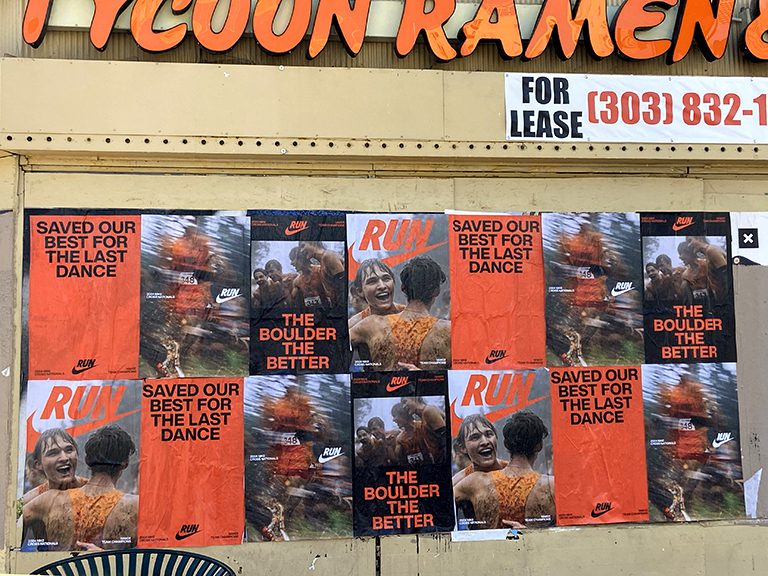
The average poster size in the United States is 18 inches by 24 inches. If you averaged together every poster produced and distributed in the U.S. market across events, retail, film, campaigns, and grassroots promotions, 18×24 would sit near the center of the distribution. It is the size that appears most often across the widest variety of applications.
That said, average is not always the right size for every campaign. We manage poster campaigns in cities across the country. We know when 18×24 works perfectly and when it leaves visual impact on the table. This guide covers what the average poster size means, which sizes surround it, and how to decide whether the average is actually the right choice for your specific campaign.
Average Poster Sizes Across Different Applications
The concept of “average” changes depending on context. Here is a breakdown of average poster size by application:
Application
Average Poster Size
Range
Concert and Event Posters
18 x 24 inches
11×17 to 24×36
Retail Promotional Signage
22 x 28 inches
14×22 to 24×36
Outdoor Street Campaign
24 x 36 inches
18×24 to 36×48
Movie Posters
27 x 40 inches
24×36 to 30×40
Campus / Academic
11 x 17 inches
8.5×11 to 18×24
Trade Show Displays
24 x 36 to 36 x 48 inches
18×24 to custom large
Across all these applications, 18×24 comes closest to a universal average. It appears across nearly every category. It is the format where the widest variety of campaigns converge. But the right size for your campaign is the one that fits your context, more than the average.
Why 18×24 Became the Average Poster Size
The 18×24 format did not become average by accident. Several factors converged to make it the default across decades of poster production in the United States:
Print Equipment Standardization
Commercial printers purchased equipment capable of producing 18×24 outputs efficiently. As more printers invested in this equipment, availability increased, costs dropped, and the format became self-reinforcing. Printers that could produce 18×24 posters cheaply saw demand grow. Demand growth justified further equipment investment. The cycle made 18×24 the most cost-effective format over time.
Frame and Display Hardware Standardization
Retailers started producing frames at 18×24 because that was what customers requested. Display fixture manufacturers built their products around 22×28 (for retail) and 18×24 (for general poster display). As hardware became available at these sizes, users naturally gravitated toward the formats that fit readily available display infrastructure.
Cultural Expectations
Once enough concerts, events, and venues used 18×24 posters, it became what audiences expected a poster to look like. The format carries a set of cultural associations tied to its ubiquity. An 18×24 poster looks like a concert poster, a gallery announcement, an event flyer scaled up. Those associations are powerful. They are also a reason many designers choose the format even before asking whether another size would work better.
Average Versus Optimal
The average poster size tells you what most people do. It does not tell you what works best for your specific campaign. Always evaluate size based on your placement location, your target viewing distance, and your production budget. The average size is a good starting point. It is rarely the optimal finish line.
What the Sizes Around the Average Look Like
The 18×24 sits in the middle of a range. Here is how the formats above and below it compare:
11×17: One Size Below Average
This is the small end of the standard poster spectrum. At 11×17, you are printing on tabloid paper, which is accessible and affordable. The format fits most bulletin boards and small venue windows. It cannot compete visually in dense outdoor environments. It is commonly used on campuses, in neighborhoods with heavy foot traffic and tight display spaces, and for high-volume distribution where cost per piece matters more than visual impact per piece.
18×24: The Average
This is the center of gravity for U.S. poster production. It works indoors and outdoors in the right context. It reads from up to 15 feet. It fits most standard frames. It is affordable in quantities from 25 to 1,000. It is the right choice when you are not sure what size to use and need something reliable and universally understood.
24×36: One Size Above Average
This is the step up from average. It is the right size for outdoor campaigns, high-traffic environments, and placements where you need more visual presence. At two feet by three feet, it is twice the area of the 18×24. It reads from 20 to 30 feet. It costs more per unit but delivers more impact per placement. In our experience, 24×36 posters in key outdoor locations consistently outperform a larger number of smaller posters spread across less strategic placements.
How Average Poster Size Compares to International Standards
The 18×24 average in the United States does not have a direct international equivalent. The ISO paper standard (used in Europe, Asia, and most of the world) uses the A-series sizes, which are based on a different ratio system.
U.S. Average Size
Closest ISO Equivalent
ISO Size (mm)
18 x 24 inches (457 x 610mm)
Between A2 and A1
A2 = 420x594mm; A1 = 594x841mm
24 x 36 inches (610 x 914mm)
Slightly larger than A1
A1 = 594x841mm
11 x 17 inches (279 x 432mm)
Close to A3
A3 = 297x420mm
The U.S. average poster size (18×24) falls between two ISO standard sizes. This means U.S. posters cannot be printed cleanly on international standard paper without adjustment. If you are printing overseas or sending files to an international printer, always specify your dimensions in millimeters and confirm that the printer can produce your exact U.S. standard size.
Factors That Push You Above or Below the Average
Most campaigns start at 18×24 and then move up or down based on these factors:
Budget
Smaller budgets push campaigns toward 11×17 or smaller quantities of 18×24. Larger budgets allow 24×36 or mixing both formats across a campaign. Per-unit cost for 18×24 is roughly half that of 24×36, so the format decision has direct budget implications.
Placement Location
Tight indoor spaces push toward 11×17 or 18×24. Outdoor environments and large interior spaces push toward 24×36 or larger. The physical dimensions of your target surfaces should always influence your format choice.
Viewing Distance
Short viewing distances (under 10 feet) allow smaller formats. Long viewing distances (over 15 feet) require larger formats to maintain readability. Measure or estimate the typical viewing distance for your primary placement locations before finalizing your size.
Campaign Goals
A brand awareness campaign benefits from larger formats that maximize visual footprint. A direct response campaign benefits from formats placed at eye level and close range, where people can clearly read a URL, phone number, or QR code. The goal should drive the format choice as much as the physical context does.
Field Observation: Size Affects Perceived Brand Value
We have noticed consistently that larger poster formats signal higher brand investment. A 24×36 poster in a great location feels like a real campaign. An 11×17 in the same location feels like a grassroots afterthought even when the design is identical. If you want your brand to feel running and credible in street-level contexts, invest in the larger format. The difference in print cost is usually small compared to the difference in perceived impact.
Average Poster Size for Print vs. Digital
People often come to us having designed a poster for social media and wanting to repurpose that file for print. The sizes are completely different. A social media graphic at 1080×1080 pixels is square. An average poster is 18×24 portrait. These proportions don’t translate to each other without a full redesign.
The average social media post size for Instagram is 1080×1080 pixels square. For Instagram Stories and TikTok, it is 1080×1920 pixels, which is a 9:16 portrait ratio. The 18×24 print poster is a 3:4 ratio. The 24×36 is a 2:3 ratio. None of these ratios match each other exactly.
If you need both a print poster and a social graphic, design them as separate files from the start rather than forcing one into the other’s proportions. The cropping and composition required to adapt a social graphic to print format often results in a poster that looks like it was designed for a phone screen. The inverse is also true. A print poster that gets cropped for a square social post loses crucial compositional elements.
Plan for both formats at the brief stage. Give your designer the full list of deliverables upfront: 24×36 print poster, 18×24 print poster if needed, 1080×1080 social square, and 1080×1920 Stories format. Design them in parallel as companions, not as derivatives of each other. The time investment is the same. The quality is significantly better.
Designing for Average Poster Size
An 18×24 poster has specific design constraints. Here is how to work within them effectively:
Headline: Use 72 pt minimum for the primary headline. At 18×24, headlines under 72 pt do not read reliably from 10 feet away.
Body copy: Keep it brief. Three to five lines maximum. Use 24 to 36 pt for supporting text that people need to read at a distance.
White space: Do not fill every inch. Give elements room to breathe. A visually open poster reads faster and better than a dense one.
Color: High contrast wins outdoors. Light on dark or dark on light with no more than three primary colors keeps the message clear.
QR codes: Make them at least 1.5 inches square on an 18×24 to ensure phone cameras can scan from 3 to 5 feet away.
Average Poster Size and Print Quantity: How the Two Connect
The size you choose directly affects how many posters you can afford to print and place. This is one of the most practical considerations in poster campaign planning, and one that brands often overlook until they see the print invoice.
A rough cost comparison: at a print run of 200 units, an 18×24 on 100 lb gloss text typically costs between $2.50 and $5.00 per unit depending on the printer and stock. A 24×36 at the same quantity typically costs $5.00 to $9.00 per unit. That difference adds up quickly. 200 units at 18×24 might cost $600 to $1,000. 200 units at 24×36 might cost $1,000 to $1,800. Same campaign, same quantity, same design work, but a meaningful cost difference driven by format alone.
This is where strategic thinking about format matters. If your campaign goal is neighborhood saturation, maximizing the number of placements within a fixed budget, the 18×24 lets you print more and place more for the same spend. If your campaign goal is maximum visual impact at a small number of premium locations, the 24×36 delivers more per placement and you need fewer total units to achieve your goal.
Most experienced campaign teams do not choose a single size and stick to it. They split print runs. A typical split might be 150 units at 24×36 for outdoor and high-visibility placements, plus 200 units at 18×24 for indoor, window, and secondary locations. You cover both the high-impact placements and the saturation placements within the same total budget. This approach consistently outperforms going all-in on either format alone.
Factor shipping and handling into your size decision as well. Larger posters are heavier, take up more space in boxes, and cost more to ship to field crews in multiple markets. For a single-city campaign, this doesn’t matter much. For a national program shipping materials to 15 cities, the difference in freight cost between 18×24 and 24×36 can be several hundred dollars on a typical print run.
Choosing Average Poster Size for Different NYC Neighborhoods
New York City is where the question of poster size becomes most immediately practical. The city has diverse surfaces, diverse audiences, and diverse visual environments. What works in one neighborhood doesn’t automatically work in another.
In SoHo, the average tends to run toward 24×36 for outdoor placements on construction boards and scaffolding walls. The competition for wall space is real. An 18×24 next to a 24×36 from a competing campaign looks undersized. Go bigger here when budget allows.
In the East Village and Lower East Side, both sizes work effectively. The neighborhood has smaller interior spaces , basement bars, compact venues, narrow storefronts , where 18×24 fits naturally. For outdoor work on building walls and wooden fences near Alphabet City, 24×36 holds its own.
In Williamsburg, the average poster for a serious campaign is 24×36. The neighborhood has long been the center of the NYC street art and poster scene. The visual bar is high. Small formats read as low-budget here regardless of how good the design is. Invest in the larger size.
In the Bronx and Queens commercial corridors, the 18×24 is an effective and cost-efficient format. Foot traffic is dense. Viewing distances are shorter in these commercial environments than in open Manhattan blocks. The 18×24 registers well at 10 to 15 feet, which is about the typical viewing distance in a dense commercial corridor on Fordham Road or Main Street in Flushing.
What is the average poster size?
The average poster size in the United States is 18 inches by 24 inches. This is the most widely used format across events, music, retail, and general campaigns. For outdoor and high-visibility applications, 24×36 is the other common reference size.
Is 18×24 the right size for my poster campaign?
It is the right starting point for most indoor campaigns. For outdoor placements, dense urban environments, or anywhere you need to be seen from more than 15 feet away, consider stepping up to 24×36. Scout your placement locations before committing to a format.
What is the average size of a concert poster?
The average concert poster in the U.S. is 18×24 inches. This has been the standard format for the music industry for decades. Larger shows and outdoor promotions sometimes use 24×36. Very small venues or local shows may use 11×17.
How does the U.S. average poster size compare to European sizes?
The U.S. average of 18×24 falls between the European A2 (420x594mm) and A1 (594x841mm) sizes. The formats are similar in feel but not interchangeable. Always specify exact dimensions in millimeters when working with international print vendors.
What is above average for a poster size?
The next step up from the average 18×24 is the 24×36 format. Beyond that, 27×40 (the movie one-sheet), 36×48 (the wide-format standard), and larger custom sizes move into territory above the typical poster production range.
What is below average for a poster size?
The 11×17 format is the most common size below the 18×24 average. It is used in tight spaces and high-volume local distribution scenarios. Anything smaller than 11×17 generally functions as a flyer rather than a poster.
Does average poster size change by industry?
Yes. The film industry averages 27×40. Retail averages 22×28. Outdoor campaigns average 24×36. The 18×24 is the average when you blend all industries together. Within any specific vertical, the average shifts toward that industry’s standardized formats.
What’s the average poster size for an album or music release?
Music campaigns in the United States average 18×24 for venue interiors and promotional placements, and 24×36 for outdoor street-level work. The 18×24 is the format associated with the concert poster tradition. The 24×36 steps up that tradition to street level where it competes visually with other large-format advertising. A typical music release campaign runs both sizes across different placement types.
What is the average poster size for a business grand opening?
For a business grand opening, 18×24 works well for neighborhood-level saturation in bar and venue windows. 24×36 is the right size for building-level and storefront outdoor placements. If the business is in a neighborhood where foot traffic passes within 10 feet, 18×24 gets the job done. If the frontage is on a busy street where people are passing at distance, 24×36 ensures the message is readable.
Should I always use the average poster size?
Not necessarily. The average is a useful starting point, not a mandate. If your placement context calls for a larger format, use one. If budget requires a smaller format, work with what you have. The goal is not to be average. The goal is to communicate effectively in the specific context where your posters will live.
Frequently Asked Questions
What is the average poster size?
The average poster size in the United States is 18 inches by 24 inches. This is the most widely used format across events, music, retail, and general campaigns. For outdoor and high-visibility applications, 24×36 is the other common reference size.
Is 18×24 the right size for my poster campaign?
It is the right starting point for most indoor campaigns. For outdoor placements, dense urban environments, or anywhere you need to be seen from more than 15 feet away, consider stepping up to 24×36. Scout your placement locations before committing to a format.
What is the average size of a concert poster?
The average concert poster in the U.S. is 18×24 inches. This has been the standard format for the music industry for decades. Larger shows and outdoor promotions sometimes use 24×36. Very small venues or local shows may use 11×17.
How does the U.S. average poster size compare to European sizes?
The U.S. average of 18×24 falls between the European A2 (420x594mm) and A1 (594x841mm) sizes. The formats are similar in feel but not interchangeable. Always specify exact dimensions in millimeters when working with international print vendors.
What is above average for a poster size?
The next step up from the average 18×24 is the 24×36 format. Beyond that, 27×40 (the movie one-sheet), 36×48 (the wide-format standard), and larger custom sizes move into territory above the typical poster production range.
What is below average for a poster size?
The 11×17 format is the most common size below the 18×24 average. It is used in tight spaces and high-volume local distribution scenarios. Anything smaller than 11×17 generally functions as a flyer rather than a poster.
Yes. The film industry averages 27×40. Retail averages 22×28. Outdoor campaigns average 24×36. The 18×24 is the average when you blend all industries together. Within any specific vertical, the average shifts toward that industry’s standardized formats.