
September 7, 2026
What Is the Size of a Standard Movie Poster?
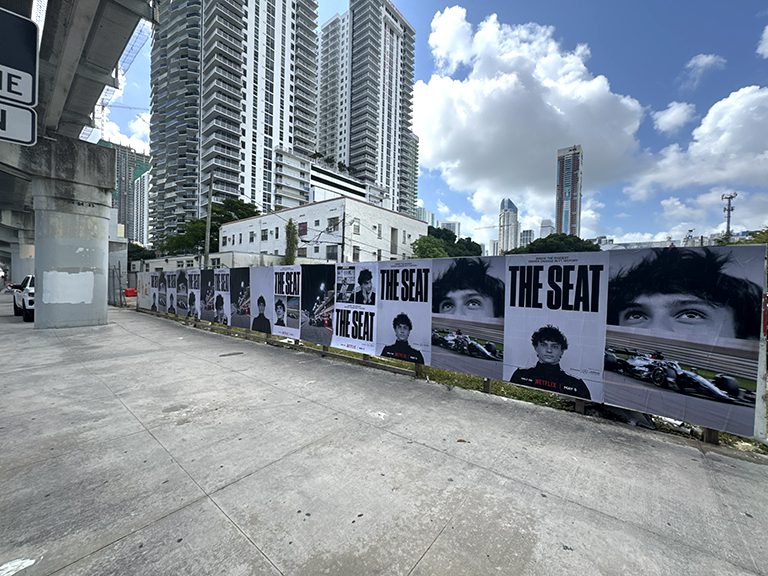
Movie posters follow a tightly defined set of industry standards that have been in place for decades. Know the formats before you design, print, or plan a film advertising campaign.
The standard movie poster size has been one of the most consistent format standards in the entire advertising industry. While digital has disrupted nearly every other format, the physical movie poster has maintained its standard dimensions across generations of film marketing. Understanding these dimensions matters for anyone ordering posters for a film, planning an outdoor advertising campaign for a film release, or collecting vintage and contemporary film posters.
At American Guerrilla Marketing, we have run urban outdoor advertising campaigns for independent film releases, streaming platforms, and major studio pictures. Knowing the standard movie poster sizes and how they translate to different advertising contexts is part of our daily work. This guide explains the standard formats in detail, how they are used, and how movie poster standards connect to broader outdoor advertising practice.
The Standard US Movie Poster: The One-Sheet
The standard movie poster in the United States is the one-sheet. Its dimensions are 27 inches wide by 40 inches tall. This format has been the standard for theatrical movie promotion in North America for more than 70 years. The one-sheet is the size used in theater lobbies, outdoor display cases, promotional street installations, and retail movie merchandise.
The name “one-sheet” comes from the early days of theatrical advertising, when poster sizes were standardized by the number of sheets of paper required to produce them. A one-sheet was a single large sheet of paper. Two-sheets, three-sheets, six-sheets, and 24-sheets were all proportionally larger formats designed for different display environments. Most of these larger multi-sheet theater formats are now largely obsolete, but the one-sheet has persisted as the foundational standard.
The 27×40 format creates an aspect ratio of roughly 2:3 in portrait orientation. This proportion is practical for both portrait-format film imagery, which tends to feature vertical compositions with actors framed against backgrounds, and for the standard display cases in theater lobbies and poster display fixtures.
The one-sheet standard: 27 inches wide by 40 inches tall. This is the format that has defined movie advertising for more than 70 years. When you picture a movie poster, you are picturing a one-sheet. When you design film advertising materials, this is the format to start from.
Other Standard US Movie Poster Formats
The one-sheet is the most common format, but film advertising uses a range of other standardized formats for different display contexts. Understanding the full range is important for anyone planning a complete theatrical advertising program.
The Half-Sheet (22 x 28 Inches)
The half-sheet is a environment-format poster measuring 22 inches tall by 28 inches wide. Despite the name, it is not exactly half of a one-sheet in area. The half-sheet was historically used for in-lobby display stands and window displays at theaters and retail locations. It is still used for some in-lobby and point-of-sale applications, though it is less common than the one-sheet in contemporary film marketing.
The Insert (14 x 36 Inches)
The insert is a narrow vertical format measuring 14 inches wide by 36 inches tall. It was designed for display in narrow spaces like doorways, columns, and narrow wall sections within theater lobbies. The insert is now relatively rare in theatrical contexts but is still used for some specialty display applications where the narrow vertical format fits available space.
The Three-Sheet (41 x 81 Inches)
The three-sheet is a large outdoor format historically used on the exterior of theaters. At 41 inches wide by 81 inches tall, it required three sheets of paper to print, which is where the name originates. The three-sheet is no longer in common use for theatrical advertising, having been largely replaced by custom large-format prints and digital displays.
The Bus Stop or Shelter Poster (47.5 x 69 Inches)
The transit shelter poster, sometimes called the bus stop poster, is a critical format for urban film promotion. In New York City, the standard transit shelter format is 47.5 inches wide by 69 inches tall. This is the format you see in glass-enclosed sidewalk advertising cases throughout Manhattan, Brooklyn, and other dense urban markets. Studios use this format extensively for major film releases.
International Movie Poster Formats
Different countries use different standard movie poster sizes. The UK double crown format is 20 inches wide by 30 inches tall, significantly smaller than the US one-sheet. The UK quad format is 30 inches wide by 40 inches tall in environment orientation, which is one of the most distinctive international movie poster formats and is highly prized by collectors.
In continental Europe, the A1 format is the most common standard for movie posters. A1 measures approximately 23.4 inches wide by 33.1 inches tall and is part of the international ISO paper size system used throughout Europe. The French grande format is 47.2 inches wide by 63 inches tall, considerably larger than any standard US theatrical format.
The Japanese format, called the B2, measures approximately 20.3 inches wide by 28.7 inches tall. Japanese movie posters are particularly prized by collectors for their distinctive design aesthetic, which often differs significantly from the US one-sheet for the same film.
| Format Name | Dimensions (inches) | Country/Region | Primary Use |
|---|---|---|---|
| One-Sheet | 27 x 40 | United States | Theater lobbies, standard promotional |
| Half-Sheet | 22 x 28 | United States | Lobby stands, retail display |
| Insert | 14 x 36 | United States | Narrow lobby spaces, columns |
| Transit Shelter | 47.5 x 69 | United States (NYC) | Sidewalk display cases, OOH |
| UK Double Crown | 20 x 30 | United Kingdom | Interior theater display |
| UK Quad | 30 x 40 (environment) | United Kingdom | Exterior display, collector market |
| A1 | 23.4 x 33.1 | Europe (ISO standard) | Standard European theatrical |
| Japanese B2 | 20.3 x 28.7 | Japan | Theatrical, collector market |
Movie Poster Sizes in Urban Outdoor Advertising Campaigns
When film studios run urban outdoor advertising campaigns separate from their traditional theatrical distribution, they use a range of formats beyond the standard one-sheet. These campaigns are designed to create street-level awareness in specific geographic markets ahead of a film’s release.
For street-level postering campaigns in dense urban markets, studios often use 24×36 inch sheets alongside the one-sheet format. The 24×36 prints more economically in large quantities and works well for high-volume street campaigns where the goal is saturating a neighborhood with the film’s imagery and release date. It is slightly smaller than the one-sheet but close enough in proportion that the creative translates well between formats.
For prestige art house films and independent releases targeting specific urban audiences, the campaign approach often emphasizes quality over quantity. A well-designed one-sheet placed in carefully selected locations near theaters, arts venues, and neighborhood coffee shops and record stores can create more impact than hundreds of generic posters in less curated locations.
Transit advertising is a major format for film campaigns in major cities. The bus shelter panel, the subway car card, the platform poster, and the full bus side all play roles in major film launches. The transit advertising campaign for a major studio release in New York City can involve dozens of format types across hundreds of individual placements, all designed to create the impression of total market saturation in the weeks leading up to the opening weekend.
Designing Movie Posters to Standard Sizes
If you are designing materials for a film release or film-related advertising campaign, starting at the one-sheet size of 27×40 inches is the right approach. Design to the one-sheet first, then adapt to other formats. The one-sheet proportion tends to be the most challenging because the aspect ratio is narrower and taller than many designers are accustomed to working with. Mastering the composition at one-sheet proportions first makes adapting to other formats more straightforward.
For print production, one-sheet movie posters should be set up at 300 DPI at the full 27×40 inch size. With standard bleed, the file setup size would be 27.25×40.25 inches. Fonts should be embedded or converted to outlines before submission to the printer. Images should be in CMYK color mode for offset printing and either CMYK or RGB for digital printing, depending on the specific vendor’s requirements.
For transit shelter formats, always request the exact specifications from the transit advertising operator before designing. Transit authorities publish specification sheets for every format they sell. These specs define the exact trim size, bleed, safe zone, and file format requirements. The consequences of missing these specifications include delayed campaigns and rejected materials. Confirming specs before designing is always faster than redesigning after a rejection.
From design to street: Movie poster campaigns for independent and art house films often rely heavily on street-level postering to build buzz in urban markets where the target audience is concentrated. A film opening in 10 theaters across Manhattan needs a concentrated, neighborhood-specific postering campaign to build awareness in the weeks before opening. The one-sheet design sets the tone; the postering campaign puts it in the places that matter.
How Film Poster Sizes Have Evolved Over Time
Movie poster standards have changed significantly since the early days of cinema. In the silent film era, theaters commissioned a wide variety of custom-sized promotional materials, from small window cards to massive multi-sheet lithographed banners. The industry gradually standardized around fewer formats as printing technology, distribution logistics, and theater display infrastructure became more uniform.
By the mid-20th century, the one-sheet at 27×40 had become the dominant standard in the United States. The standardization benefited everyone in the distribution chain. Printers could optimize production runs. Distributors could plan shipping and logistics. Theaters could install standard display fixtures. The format became self-reinforcing as the infrastructure built around it made it increasingly impractical to deviate from.
The digital revolution created new challenges for the one-sheet standard. Film promotion has expanded dramatically into digital formats, with social media graphics, digital out-of-home displays, and streaming platform thumbnails all requiring different aspect ratios and resolutions than the one-sheet. Studios now produce their key art in a master format and then adapt it to dozens of different format specifications across the full promotional campaign. The one-sheet remains the foundational format from which most of this key art is derived, but the era of the single-format promotional campaign ended with the rise of digital media.
Physical one-sheet printing has also evolved. Modern offset and digital printing produces higher color fidelity and sharper image reproduction than the lithographic printing of earlier decades. Contemporary one-sheets can accurately reproduce photographic images and complex color gradations that would have been difficult or impossible to achieve with earlier printing technologies. This improvement in print quality has made the one-sheet a more compelling visual object and contributed to the growth of the collector market for contemporary film posters.
The Movie Poster as Collectible
Beyond their advertising function, movie posters have a long history as collectible art objects. Original theatrical one-sheets from major films can command significant prices at auction, particularly for vintage titles and key artistic designs. The collectible market for movie posters creates demand for specific print runs and authentication standards that advertising campaigns do not require.
Vintage movie posters from the golden age of Hollywood are among the most sought-after advertising collectibles in the world. Original one-sheets from major studio releases of the 1930s through 1960s command prices ranging from thousands to hundreds of thousands of dollars at specialist auctions. The rarity of surviving originals, combined with the artistic quality of the best examples, makes them genuine works of art with lasting cultural significance.
Contemporary collectors also pursue original theatrical materials from more recent films, particularly for franchise films, director’s works with strong critical reputations, and films with distinctive poster art created by recognized illustrators or designers. The rise of the poster art movement, which produces limited-edition alternative versions of movie posters with artistic interpretations of specific films, has created a parallel collector market alongside traditional theatrical materials.
For films producing both promotional posters and collectible editions, the two programs often operate separately. Promotional materials are produced in large quantities on standard commercial stock for advertising use. Collectible editions are produced in limited quantities on higher-quality materials with more attention to color accuracy and print quality. Both programs use the one-sheet as their base format, but the production specifications and intended use are very different.
What to Know Before You Print a Film Postering Campaign
Film postering campaigns in major cities are more than a printing job. They require location scouting, permissions knowledge, and boots on the ground at the right time. The poster quality matters. So does where it goes and who puts it up.
Street-level campaigns work best when placements are chosen around foot traffic patterns, more than geography. A one-sheet on a block that gets 5,000 pedestrians a day beats five posters on quieter streets. In New York, that means targeting specific corridor blocks in neighborhoods like the Lower East Side, Williamsburg, the East Village, and Bushwick for indie and art house audiences. In LA, Silver Lake, Echo Park, and the Arts District do the same work.
Timing matters as much as location. The best window for a film postering campaign is the two to three weeks before opening weekend. Install too early and the posters weather or get covered. Install too late and there is not enough time to build recognition. Knowing the release schedule and working backward from opening day is how experienced campaign teams plan the install window.
Documentation is non-negotiable. Any competent campaign operator sends GPS-tagged photos for every placement the same day it goes up. You should be able to see every location on a map and verify the poster condition at installation. If a vendor cannot provide that, find a different vendor.
Frequently Asked Questions
What is the standard size of a movie poster in the US?
The standard US movie poster is the one-sheet, measuring 27 inches wide by 40 inches tall. This format has been the industry standard for theatrical promotion in North America for more than 70 years and remains the foundational format for contemporary film advertising.
Why is a movie poster called a one-sheet?
The term comes from the early era of theatrical advertising when posters were sized by the number of sheets of paper required to print them. A one-sheet required a single large sheet of paper. Larger formats like two-sheets, three-sheets, and 24-sheets required multiple sheets and were proportionally larger. The one-sheet has persisted as the primary standard while most multi-sheet formats have become less common.
What size is a movie poster in the UK?
The most distinctive UK movie poster format is the quad, measuring 30 inches wide by 40 inches tall in landscape orientation. The UK also uses the double crown at 20×30 inches for interior theater display. Neither format matches the US one-sheet dimensions, which is why international film campaigns require different print runs for different markets.
What poster size do film studios use for outdoor campaigns?
For outdoor campaigns, studios use a range of formats depending on the specific placement. Transit shelter panels are typically 47.5×69 inches in NYC. Street-level postering campaigns often use 24×36 inch sheets for their economy at high volumes. Bus sides, subway platform panels, and billboards each have their own specific dimensions set by the advertising operator.
What resolution should a movie poster file be?
Movie poster files for commercial printing should be set at 300 DPI at the full output size. A 27×40 one-sheet at 300 DPI requires a file of 8,100 by 12,000 pixels. Files should be set up in CMYK color mode for offset printing. Always add standard bleed of at least 0.125 inches on all sides and keep critical content within a safe zone at least 0.25 inches from the trim edge.
Can I use the one-sheet format for non-film advertising?
Yes. The 27×40 format is suitable for any poster advertising application, not just film. Brands use it for event promotion, product launches, and retail display. It is slightly larger than the more common 24×36 format, so print costs are slightly higher, but the proportions work well for a wide range of advertising applications.
Where can I print movie posters in the US?
Commercial poster printers that handle advertising-quality work can produce movie posters in standard formats. For large campaign quantities, specialty outdoor advertising printers offer the best combination of price, quality, and turnaround. For limited-edition collectible prints, fine art printing studios and screen printing shops offer higher-quality substrates and printing processes appropriate for premium poster production.

Ready to Run Your Campaign?
Call us or email us. We’ll tell you exactly what we can do in your market and what it costs.
Related Services
Explore similar advertising solutions offered by American Guerrilla Marketing.
American Guerrilla Marketing — Los Angeles
Street-level campaigns in Los Angeles and nationwide. Wheatpasting, LED trucks, street teams, and more.
(646) 776-2770
Related Articles
-
Street Poster Advertising Ottawa: A Complete Campaign Guide
September 17, 2026
-
Activation Marketing: How Brands Win at Street Level
September 13, 2026
-
Experiential Marketing Firms Chicago | American Guerrilla Marketing
September 12, 2026
-
Pop Up Experiential
September 12, 2026
-
Mobile Pop Up
September 12, 2026