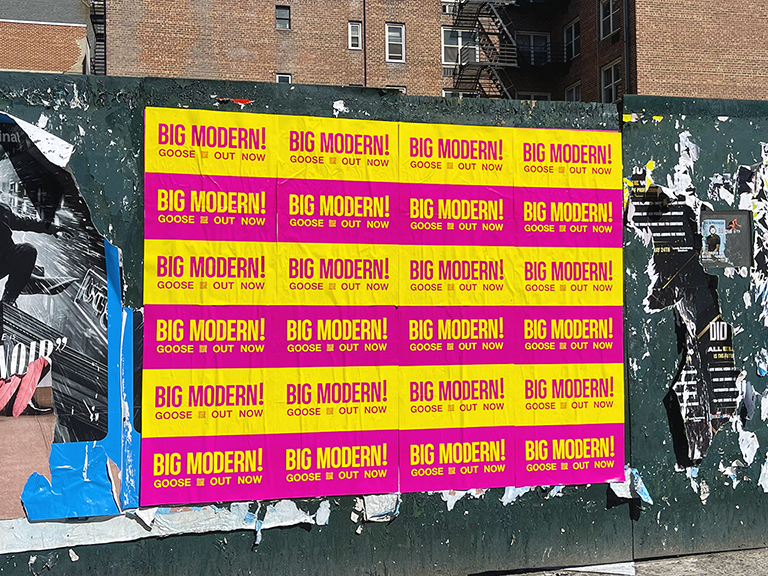
Normal poster size is 24×36 for street advertising and 18×24 for indoor and window use. Here’s the complete breakdown of what normal means in every poster context, from field experience.
“Normal” is one of those words that sounds specific but depends entirely on what you’re comparing to. Normal for a music venue is not normal for a movie theater lobby. Normal for a grassroots political campaign is not normal for a national brand rollout.
We work with posters every day. Our crews place them across every major US market. When clients ask what normal poster size is, our first question is always: where is the poster going? The location determines the normal size more than any other single factor.
Here’s the definitive breakdown of normal poster sizes across every context we work with.
The two sizes that cover the most ground in advertising are 18×24 and 24×36. Together, they handle indoor, window, and street-level applications across virtually every campaign type. If you’re unsure which one applies to your situation, start with these two and add other sizes as the campaign requires.
Normal Poster Size for Street Campaigns: 24×36
For street-level advertising in US cities, the normal poster size is 24×36 inches. Two feet wide, three feet tall, six square feet of print area. This is the format that our crews carry and post in neighborhoods like Williamsburg in Brooklyn, the Mission in San Francisco, Pilsen in Chicago, and Crenshaw in Los Angeles.
The 24×36 became the normal street size because it hits the right balance of visibility and practicality. It’s visible from 30 to 40 feet in typical urban conditions. One person can carry a roll of 50 under their arm. Print shops produce it efficiently without waste. And decades of campaign work have built industry infrastructure around this exact size.
When a brand does a major urban rollout in New York, they’re ordering 24×36. When a music label posts for an album release in Los Angeles, they’re using 24×36. When an entertainment agency seeds a neighborhood ahead of a film opening, the street-level work is 24×36. This is what normal looks like on city streets across America.
The 24×36 in context: Stand in front of a standard door. A 24×36 poster is about 2/3 the width of that door and half its height. That’s how present it is in an urban environment. It fills a meaningful portion of a building wall and catches the eye of passing pedestrians and slow-moving vehicles.
Normal Poster Size for Indoor and Window Use: 18×24
For indoor advertising in venues, retail stores, restaurants, and bars, the normal poster size is 18×24 inches. One and a half feet wide, two feet tall, three square feet of print area.
The 18×24 is normal for indoor use because it fits the snap frames and display channels already installed in most US commercial spaces. Walk into a bar on Frenchmen Street in New Orleans, a record store on Haight Street in San Francisco, a venue on Wyckoff in Bushwick in Brooklyn, or a restaurant on Armitage in Lincoln Park in Chicago. The window and interior promotional posters are 18×24. The hardware is there. The size is right. The format is normal.
At 18×24, the poster communicates effectively at 15 to 20 feet. In a venue interior, that covers most viewing situations. The design at this size works with a strong image, a headline, supporting text, and a call to action. All of those elements have enough room without the design feeling crowded.
What Makes a Poster Size “Normal”?
A poster size is normal in a given context when three things are true. First, the majority of posters in that context use that size. Second, the display infrastructure (frames, panels, mounts) is built around it. Third, the printing industry has optimized production efficiency for it.
The 24×36 meets all three criteria for outdoor street advertising. The 18×24 meets all three for indoor and venue advertising. The 27×40 meets all three for entertainment and cinema contexts. These are the sizes that have evolved into normal through decades of industry practice.
Below these standards, the 11×17 is normal for grassroots campaigns and bulletin board work. Above them, the 36×48 is normal for transit advertising. The complete spectrum of normal poster sizes in US advertising is 11×17, 18×24, 24×36, 27×40, and 36×48.
Normal Poster Size vs Large Poster Size
People often ask whether a certain size is “normal” or “large.” The answer depends on what you’re comparing. In the context of decorative home posters, 24×36 is large. In the context of transit advertising, 24×36 is small. In the context of street advertising, 24×36 is normal.
Here’s how the sizes relate to each other in relative terms:
11×17 is small relative to the poster size range
18×24 is medium in the overall range, but normal for indoor use
24×36 is large in the overall range, but normal for outdoor use
27×40 is larger, but normal for entertainment contexts
36×48 is extra-large, but normal for transit advertising
The word “normal” is always relative to context. In advertising, normal means the size that the majority of campaigns in a specific context use. That’s the most useful definition for anyone ordering or planning a poster campaign.
Normal Poster Size in Different Countries
The US normal sizes don’t apply globally. Here’s what normal looks like in other major markets:
Country
Normal Outdoor Size
Normal Indoor Size
Measurement System
United States
24 x 36 in
18 x 24 in
Inches
United Kingdom
A0 / 48-sheet format
A1 (23.4 x 33.1 in)
Mixed (ISO + British)
Germany / France
A0 (33.1 x 46.8 in)
A1 (23.4 x 33.1 in)
Millimeters (ISO)
Australia
A1 (23.4 x 33.1 in)
A2 (16.5 x 23.4 in)
Millimeters (ISO)
Japan
B1 (28.7 x 40.6 in)
B2 (20.3 x 28.7 in)
Millimeters (JIS)
If you’re running campaigns across US and international markets, the normal size in each country is different. Design separate print-ready files for each market. Don’t assume that resizing a US format to international dimensions will produce a correct layout. The proportions are different and your design will not hold up through simple scaling.
How to Design for Normal Poster Sizes
Here’s a quick reference for setting up files for normal poster sizes:
For 18×24 (Indoor Normal)
Document size: 18 x 24 inches
Resolution: 300 DPI for close-range viewing, 150 DPI minimum
Color mode: CMYK
Bleed: 0.125 inches on all sides for full-bleed designs
Headline text: 1.5 to 2 inches tall
For 24×36 (Outdoor Normal)
Document size: 24 x 36 inches
Resolution: 150 DPI minimum for street viewing distance
Color mode: CMYK
Bleed: 0.125 to 0.25 inches on all sides for full-bleed designs
Headline text: 2.5 to 3.5 inches tall
File setup matters: Set up your document at the correct dimensions before you start designing. Don’t design at a smaller size and scale up. Scaling introduces resolution and proportion errors that are difficult to fix after the design is complete. Start at the correct normal size from the first step.
FAQ: What Is Normal Poster Size?
How Normal Poster Size Decisions Affect Production Timelines
The size you choose affects more than the look of your campaign. It affects how quickly you can get it printed, shipped, and placed.
For normal sizes like 18×24 and 24×36, most commercial print vendors keep materials on hand. Standard turnaround for a 500-piece run of 24×36 on paper stock is 2 to 3 business days. Rush orders of 100 pieces or fewer can often be completed in 24 to 48 hours at most full-service shops. The infrastructure is there because demand is consistent.
For less common sizes, turnaround extends. If your campaign calls for 25×37 or 20×30, the printer may need to special-order paper stock. That can add 3 to 5 business days to a production timeline. On a campaign with a hard launch date, that extra time can blow the schedule.
Shipping and handling also scale with size. Rolled 24×36 posters fit in standard poster tubes available from any shipping carrier. Flat-packed 24×36 pieces stack efficiently in standard boxes. Non-standard sizes may not roll to standard tube dimensions and may need custom packaging that adds cost and handling complexity.
The normal sizes have normal shipping infrastructure around them. That infrastructure saves time and money on every order. It’s one more reason why sticking to the normal sizes is the right call for most campaigns.
How Normal Poster Size Has Evolved
What counts as normal in poster advertising has shifted over time, though the core sizes have remained remarkably stable for decades.
In the early 20th century, poster campaigns operated at a different scale. Lithographed stone-print posters were produced in large format because the printing process and the viewing distances of a pre-automobile pedestrian city demanded it. Large theatrical posters, transit advertising, and commercial promotion all used bigger formats than what we’d call normal today.
As offset printing became the standard through the mid-20th century, costs dropped and smaller formats became practical for larger quantities. The 11×17 tabloid size became widely used in commercial printing by the 1960s and 1970s as print shops standardized on tabloid-capable presses. The 18×24 and 24×36 formats solidified as the standard advertising sizes as large-format printing technology became more accessible in the 1980s and 1990s.
Digital printing has made the normal sizes even more accessible by eliminating many of the minimum order constraints that came with offset printing. A campaign can now print 25 pieces at 24×36 as easily as 500. That democratization has not changed what the normal sizes are. It has just lowered the barrier to using them.
What has changed is the role of digital alongside physical. A campaign in 2010 that relied primarily on physical posters now likely combines physical posters with social media content, digital advertising, and sometimes augmented reality elements. The normal poster size is still 24×36 outdoors. But that physical presence is now often designed to generate digital content at the same time, turning a street placement into both an outdoor impression and a social content creation opportunity.
Normal Poster Sizes and Color Profiles
One area where understanding normal poster sizes really pays off is in setting up color profiles correctly for print.
Screen colors (RGB) and print colors (CMYK) are fundamentally different. What looks vibrant on screen may print differently than expected if the file was not set up in CMYK from the start. For normal outdoor poster sizes like 24×36, the most impactful colors are high-contrast primaries and secondary colors: blacks, reds, yellows, blues, and greens that are clean and saturated in CMYK.
Neon and fluorescent colors that look vivid on screen often print dull in standard CMYK. If your design relies on those colors, ask your print vendor about specialty ink options (fluorescent Pantone inks, UV-reactive inks) that can bring that intensity to a physical print. These are premium options that cost more, but for a campaign where color impact is central to the brand identity, they are worth the investment.
For the yellow-on-black color palette that AGM uses in our own print materials, CMYK renders both colors at their strongest without special ink treatments. That combination works at every normal poster size and at every viewing distance we use in the field.
Normal Poster Size for Different Campaign Scales
The scale of your campaign shapes which normal size makes the most economic sense.
Local Neighborhood Campaigns (50 to 200 pieces)
At this scale, 24×36 is often the right choice. You have enough pieces for meaningful coverage of a neighborhood without the per-unit cost becoming a budget crisis. A 200-piece run of 24×36 on 80 lb satin stock runs roughly $600 to $900 at a commercial print shop. For neighborhood-scale brand awareness, that’s a reasonable investment.
City-Wide Campaigns (200 to 500 pieces)
At city scale, a mix of 24×36 for outdoor and 18×24 for indoor usually gives the best coverage per dollar. 18×24 indoor placements at venues, retail locations, and coffee shops add depth to the outdoor street presence. 24×36 handles the high-traffic corridors and major visible surfaces. Together they create the impression that the campaign is everywhere.
Multi-City Rollouts (500 to 2,000+ pieces)
Large campaigns running in 3 or more cities need consistent sizing to allow centralized production. We typically produce one large print run in a single facility and distribute to regional installation crews. Standard sizes allow this. Non-standard sizes add complexity to a system that needs to run efficiently across multiple markets at the same time.
For brands rolling out across New York, Los Angeles, Chicago, and Miami at the same time, 24×36 as the primary outdoor size and 18×24 as the indoor size is the right framework. Both sizes are available from vendors in every major US city. If a piece gets damaged in transit, a local replacement print is an easy solve. With non-standard sizes, a damaged piece might require rush shipping from the primary production facility.
Frequently Asked Questions
What is the most normal poster size?
For outdoor and street-level advertising, the most normal size is 24×36 inches. For indoor and venue advertising, 18×24 is most normal. These two sizes together cover the vast majority of what advertising campaigns require in terms of poster format.
Is 24×36 a normal poster size?
Yes. The 24×36 is the most commonly used poster size for street-level advertising in the US. It’s widely produced by print shops as a standard offering. Most large-format campaign work in major US cities uses 24×36 as the primary format.
What is the normal poster size for a band or musician?
For venue and window promotion, the normal size is 18×24. For street-level promotion in the area around a venue, 24×36 is normal. Most independent music promotions use 18×24 for the venue itself and may add 24×36 for surrounding blocks when budget allows.
What is the normal movie poster size?
The normal movie poster size is 27×40 inches. This is the one-sheet format. It’s the size of frames in theater lobby display cases across the US. For street-level film promotion outside theaters, 24×36 is often used as a complementary size.
What is normal poster size for a school project?
For school projects, normal is the 22×28 inch poster board available at retail stores. For science fair displays, the 36×48 tri-fold is the most common “normal” standard. Check your specific assignment’s requirements before buying materials.
What is the normal poster size in centimeters?
The 18×24 indoor normal is 45.7 x 61 centimeters. The 24×36 outdoor normal is 61 x 91.4 centimeters. The 27×40 entertainment normal is 68.6 x 101.6 centimeters. None of these match ISO European standard sizes exactly.
Is 18×24 or 24×36 more normal?
Both are normal in their respective contexts. The 18×24 is normal for indoor and venue use. The 24×36 is normal for outdoor and street use. Neither is more normal in an absolute sense. The right answer depends on where the poster is going.