The phrase “marketing initiative” appears in strategy documents, budget discussions, and quarterly reviews constantly – but it’s often used imprecisely, which creates confusion about what’s actually being proposed, approved, or evaluated. This guide provides a clear working definition of what a marketing initiative is, how it differs from related terms, what the components of a well-built initiative look like, and how to execute one effectively.
American Guerrilla Marketing has been planning and executing marketing initiatives since 2006, with particular depth in street-level, experiential, and community-based programs. We work with brands on initiatives ranging from focused single-market product launches to national brand re-engagement programs spanning multiple channels and markets. What follows is how we think about initiatives, defined clearly enough to be operationally useful.
If you use the term “marketing initiative” in your work – or need to explain what one is to someone who doesn’t – this guide will give you a precise, practical definition and the context to use it well.
What Is a Marketing Initiative? The Core Definition
A marketing initiative is a structured, goal-driven program that coordinates specific marketing activities toward a defined business outcome, within a specific time period and budget, with measurable success criteria established before the program begins.
This definition has several load-bearing components worth unpacking. “Structured” means the initiative has explicit components, owners, timelines, and deliverables – not just a vague intention to do more marketing. “Goal-driven” means it’s built around a specific business objective, not a set of marketing activities looking for a purpose. “Defined time period” means it has a start and end – not an ongoing program without accountability checkpoints. “Measurable success criteria established before the program begins” means the definition of success is fixed at launch, not constructed post-hoc to match whatever results occurred.
Marketing Initiative vs. Marketing Campaign
A campaign is typically a specific coordinated communication effort with a defined theme, creative execution, and channel deployment. A marketing initiative is the broader program that may include multiple campaigns, along with activities that aren’t strictly “campaigns” – distribution changes, pricing programs, retail partnerships, community events, PR outreach. Campaigns are often tactical components of larger initiatives. A product launch initiative might include a sampling campaign, a PR push, a retail partner program, and a digital awareness campaign as components of the single larger initiative.
Marketing Initiative vs. Marketing Strategy
Strategy is the overarching framework: where a brand is trying to go and why, over a multi-year horizon. Marketing initiatives are the specific, time-bound programs through which a brand pursues strategic priorities in defined periods. Strategy sets direction; initiatives execute against it. A marketing strategy that says “become the leading brand in the natural food category in the Northeast” will spawn multiple initiatives over time – a New York market entry initiative, a regional retail distribution initiative, a community engagement initiative – each contributing to the larger strategic goal.
The Components of a Well-Built Marketing Initiative
Marketing initiatives that produce results share a consistent structural anatomy, regardless of category, scale, or channel mix.
Component 1: A Specific Business Objective
The business objective is the foundation. Not a marketing goal – a business goal. “Increase brand awareness” is a marketing goal. “Grow market share in the 18-34 demographic in Los Angeles from 8% to 12% within 12 months” is a business objective that marketing activities will be designed to achieve. The business objective sets the stakes and provides the measurement standard by which the initiative will ultimately be evaluated.
Component 2: A Defined Target Audience
The initiative’s activities need a specific audience definition – who are you trying to reach, where are they concentrated, and what do you know about their current relationship with the brand? A generic audience definition (“adults 18-54”) is too broad to drive specific tactical decisions. A well-defined audience for a marketing initiative includes geographic concentration, behavioral characteristics, category relationship (non-users, occasional users, competitive brand users), and cultural context.
Component 3: A Channel and Tactic Mix
Initiatives deploy multiple marketing activities in coordination. Channel selection should follow audience and objective, not budget availability or habit. For initiatives that require trial – product launches, market entries, brand relaunch programs – experiential marketing, guerrilla street marketing, and sampling programs are often the highest-ROI channels, particularly in urban markets. For initiatives requiring broad awareness, outdoor advertising and digital channels provide scale and frequency. Most initiatives need both – trial-driving channels and awareness-building channels working in parallel.
Component 4: A Budget with Channel Allocations
Budget should be allocated to channels based on their expected contribution to the objective, not on historical habit or media agency recommendations. Street-level programs often receive less budget than they deserve because they’re less familiar to finance teams than digital or broadcast buys, even when their cost-per-engagement competes favorably. Build channel allocations from a bottoms-up estimate of what each channel needs to do its job, then compare to total budget and make explicit tradeoffs where necessary.
Component 5: A Timeline with Milestones
Marketing initiatives need timelines that account for actual lead times – not idealized schedules. Permitting in major markets can take four to six weeks. Creative development and production takes time. Staffing and training for brand ambassador programs takes time. Building a timeline that reflects real operational constraints is planning; building a timeline that ignores them is wishful thinking.
Component 6: Success Metrics Defined in Advance
Before the initiative launches, define what success looks like and how you’ll measure it. If the objective is trial, the metric is units sampled and post-trial purchase rates. If the objective is awareness, the metric is aided and unaided recall tracking in targeted markets vs. control markets. If the objective is market share, the metric is measured share change. Defining metrics in advance prevents post-hoc rationalization and creates accountability for real outcomes.
Types of Marketing Initiatives
The term “marketing initiative” covers a wide range of programs. Understanding the common types helps clarify how the definition applies in practice.
Product Launch Initiatives
Product launches are among the most common marketing initiative types. They coordinate PR outreach, retail placement, sampling programs, digital advertising, and community engagement around the introduction of a new product. The operational challenge is ensuring all elements launch in coordination – a PR push that runs before product is on shelves, or a sampling campaign that runs before retail partners are confirmed, wastes momentum. AGM frequently runs the street-level sampling and activation components of product launch initiatives, designed to build consumer trial in key markets before or alongside retail rollouts.
Market Entry Initiatives
When a brand with an established presence in some markets tries to establish or strengthen presence in new geographic markets, a market entry initiative coordinates the activities required: local PR, community engagement, retail distribution development, sampling programs, and advertising in the new market. Market entry is an area where street-level and community marketing is especially important – a brand entering a new city needs to build local credibility, not just local awareness.
Brand Relaunch Initiatives
Brands that have experienced category decline, brand drift, or reputational challenges use brand relaunch initiatives to reset consumer perception. These programs typically combine new creative positioning with community engagement, PR, and experiential marketing that gives consumers a direct, current brand experience rather than relying on media messaging to override existing negative or outdated impressions.
Seasonal and Promotional Initiatives
Many brands run recurring seasonal initiatives – back-to-school, holiday, spring launch periods – where heightened consumer activity creates marketing opportunities. These initiatives coordinate promotional messaging, retail activation, and sometimes street-level programs timed to the highest-volume periods. Street team campaigns and sampling activations during spring and fall transition periods are particularly effective for CPG brands whose products have seasonal relevance.
How Street-Level Marketing Fits Into a Marketing Initiative
For brands executing marketing initiatives in urban markets, street-level and experiential components often play a critical role that digital and traditional channels cannot fill.
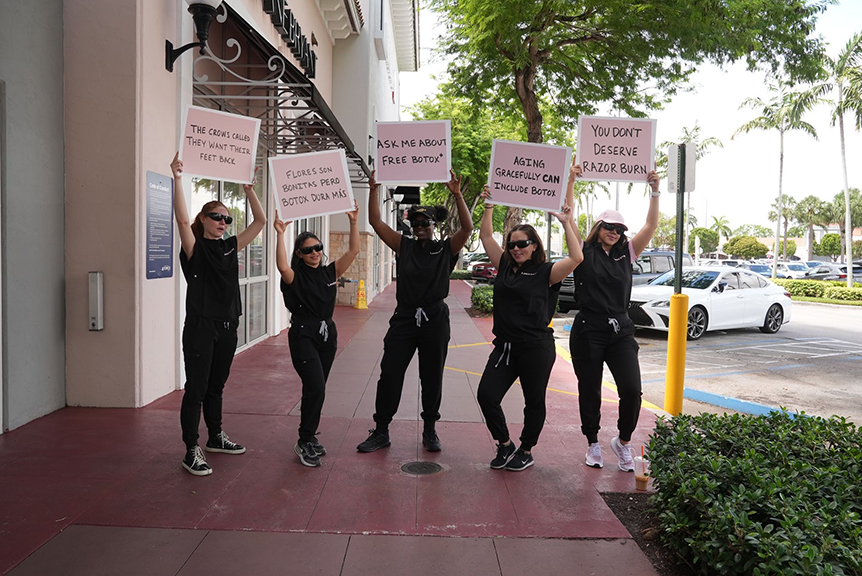
Wheatpasting campaigns build visual presence in target neighborhoods quickly and cost-effectively. Sidewalk stencils create street-level brand touchpoints at pedestrian scale. Brand ambassador programs create direct consumer conversations. Sampling activations drive product trial. Murals build sustained community presence and generate organic social documentation. Each of these tactics serves a different function within a broader initiative, and their coordination with other channels is what makes an initiative effective rather than a collection of disconnected activities.
AGM executes the street-level and experiential components of marketing initiatives across 50+ U.S. markets. We work best as an execution partner to brands and their internal marketing teams – bringing field expertise, market knowledge, and operational infrastructure that most brands don’t maintain in-house.
Common Marketing Initiative Failures and How to Avoid Them
Marketing initiatives fail in predictable ways. Understanding the patterns helps avoid them.
Vague Objectives
Initiatives built around vague objectives (“increase brand presence,” “build community”) lack the specificity needed to make focused tactical decisions. If you can’t tell at the end of the initiative whether it succeeded or failed, the objective wasn’t specific enough at the start. Fix: require measurable success criteria before approving any initiative budget.
Diffuse Ownership
When everyone owns an initiative, no one does. Initiatives succeed when a single person is accountable for outcomes – not for managing a process, but for producing the result. Fix: name a single initiative owner with clear authority and accountability before the program launches.
Execution Without Integration
Initiatives that consist of independently executed tactics – a PR team doing PR, a media agency doing media, a street team doing street work, all without coordination – miss the multiplier effect that comes from channel coordination. The whole is greater than the sum of parts only when the parts are coordinated toward a shared objective. Fix: require a single initiative brief that all channels operate from, with integrated timelines and shared success metrics.
Technology’s Role in Modern Marketing Initiatives
Marketing initiatives increasingly integrate digital technology – tracking, automation, data systems – with physical execution in ways that improve both measurement and coordination. Understanding how technology serves (and doesn’t replace) the human elements of marketing initiative execution is important for brands planning programs in 2026.
GPS-Tracked Field Documentation
GPS tracking has transformed the documentation of street-level and experiential marketing initiative components. Field staff equipped with GPS-enabled devices produce timestamped, location-verified documentation of campaign execution that gives brand managers and senior leadership genuine proof-of-performance rather than anecdotal reports. This documentation is particularly valuable for marketing initiatives that include street-level components in multiple cities – GPS verification confirms consistent execution standards across all markets. AGM provides GPS-tracked documentation as a standard component of every field execution program.
Real-Time Performance Dashboards
Marketing initiatives that span multiple channels and markets benefit from real-time performance dashboards that aggregate data from digital, outdoor, and field execution components into a single view. These dashboards allow initiative owners to identify performance gaps early enough to make adjustments during the campaign rather than discovering problems at post-campaign evaluation. Building the data infrastructure for real-time visibility requires investment at the planning stage – it can’t be retrofitted after the initiative launches.
Technology as Support, Not Substitute
The risk of technology investment in marketing initiatives is over-indexing on measurement and under-investing in execution quality. A GPS-tracked street team that’s poorly trained and deployed in the wrong locations produces bad results with excellent documentation. The documentation proves the program ran; it doesn’t compensate for strategic or executional failures. Technology serves the initiative when it improves execution quality and measurement precision; it doesn’t substitute for the strategic and operational disciplines that determine outcomes.
When to Launch a New Marketing Initiative vs. Optimize an Existing One
Marketing initiative portfolios face a recurring question: when does a brand benefit more from launching a new initiative vs. optimizing the performance of existing ones? The answer depends on current initiative performance, strategic priorities, and available organizational capacity.
Optimize Before You Launch New
The most common marketing initiative mistake is launching new programs before extracting full value from existing ones. An initiative that’s producing decent results but hasn’t been thoroughly optimized – better location selection, improved staffing training, tighter channel coordination – will typically deliver more incremental value per dollar than a new initiative starting from scratch. Before launching anything new, audit what’s running: what’s performing above expectations, what’s underperforming, and whether the underperformance is strategic (wrong objective or audience) or operational (wrong execution). Operational fixes are usually faster and cheaper than strategic pivots.
When New Initiatives Are Justified
New marketing initiatives are justified when: a new business objective has emerged that existing programs don’t address; a new market opportunity requires a focused program that existing initiatives aren’t built to serve; or the current initiative portfolio has been thoroughly optimized and additional investment would produce diminishing returns rather than proportional outcomes. These are strategic decisions that benefit from honest assessment of what existing programs can and can’t deliver, not reflexive campaign-building that keeps agencies and internal teams busy regardless of strategic necessity.
Marketing Initiative Governance: Keeping Programs on Track
The best-planned marketing initiatives fail when governance breaks down – when no one is making decisions, accountability diffuses across agencies and internal teams, or when the initiative loses strategic focus as execution pressures mount. Governance is not bureaucracy; it’s the infrastructure that keeps a multi-component program moving toward its objective.
Decision Rights and Escalation
Define decision rights explicitly before the initiative launches: who can approve scope changes? Who can approve additional budget? Who is the single escalation point when field execution issues arise? When decision rights are unclear, initiatives develop delays and quality gaps at decision moments. Clear decision rights – written down, communicated to all parties – prevent the majority of governance failures that slow or derail marketing initiatives.
Checkpoint Cadence
Initiatives need structured checkpoint moments – weekly during high-tempo execution phases, biweekly during planning and post-campaign periods – where all team members report status against the plan and flag issues early enough to address them. An initiative without a checkpoint cadence develops information gaps that allow small problems to become large ones before anyone with decision authority knows about them. Build the checkpoint structure into the initiative plan before execution starts.
What is a marketing initiative?
A marketing initiative is a structured, goal-driven program that coordinates specific marketing activities toward a defined business outcome. It’s distinct from general marketing strategy in that it has a specific objective, a defined time period, a budget, and measurable success criteria. Examples include a product launch initiative, a market entry initiative, and a brand relaunch initiative.
What is the difference between a marketing initiative and a marketing campaign?
A marketing campaign is typically a specific set of coordinated communications or activations with a defined theme and timeframe. A marketing initiative is broader – it’s the overarching program that may include multiple campaigns, along with other activities like distribution changes, pricing programs, or retail partnerships. Campaigns are often components within larger initiatives.
What are examples of marketing initiatives?
Common examples include: a product launch initiative coordinating sampling, PR, retail placement, and advertising; a geographic market entry initiative building brand presence in a new city through street marketing and community events; a brand relaunch initiative refreshing perception through new creative and consumer engagement programs; and a seasonal initiative coordinating promotional messaging and street-level activations around high-traffic periods.
How do you measure a marketing initiative’s success?
Success metrics should be defined before the initiative launches and should map directly to the stated objective. Common metrics include sales volume changes, market share shifts, brand awareness tracking, trial rates, customer acquisition costs, and retention rates. The specific metrics depend on the initiative’s primary objective – which is why defining that objective precisely at the start is so important.
How do marketing initiatives fit into a broader marketing strategy?
Marketing initiatives are the operational expressions of strategic priorities. A company’s marketing strategy defines what it’s trying to achieve over a 12-36 month horizon. Marketing initiatives are the specific structured programs through which it pursues those goals in defined time periods. Strategy is the direction; initiatives are the moves that cover the ground.
Who is responsible for a marketing initiative?
Effective marketing initiatives have a single named owner with accountability for outcomes – typically a marketing director, brand manager, or VP-level sponsor – along with a cross-functional team responsible for execution across channels. When ownership is diffuse across agencies and internal teams without a single accountable owner, initiatives typically underperform because no one is accountable for the overall result.
Can AGM support a marketing initiative with street-level execution?
Campaign Architect — American Guerrilla Marketing
Frequently Asked Questions
What is a marketing initiative?
A marketing initiative is a structured, goal-driven program that coordinates specific marketing activities toward a defined business outcome. It’s distinct from a general marketing strategy in that it has a specific objective, a defined time period, a budget, and measurable success criteria. Examples include a product launch initiative, a market entry initiative, or a brand relaunch initiative.
What is the difference between a marketing initiative and a marketing campaign?
A marketing campaign is typically a specific set of coordinated communications or activations with a defined theme and timeframe. A marketing initiative is broader – it’s the overarching program that may include multiple campaigns, along with other activities like distribution changes, pricing programs, or retail partnerships. Campaigns are often components of larger initiatives.
What are examples of marketing initiatives?
Examples include: a product launch initiative (coordinating sampling, PR, retail placement, and digital advertising for a new product); a geographic market entry initiative (building brand presence in a new city through street marketing, retail partnerships, and community events); a brand relaunch initiative (refreshing brand perception through new creative, community engagement, and press outreach); and a customer retention initiative (loyalty program, community events, and personalized communications).
How do you measure a marketing initiative’s success?
Success metrics should be defined before the initiative launches and should map directly to the stated objective. Common metrics include sales volume changes, market share shifts, brand awareness tracking (aided and unaided recall), trial rates, customer acquisition costs, and retention rates. The specific metrics depend on the initiative’s primary objective.
How do marketing initiatives fit into a broader marketing strategy?
Marketing initiatives are the operational expressions of strategic priorities. A company’s marketing strategy defines what it’s trying to achieve over a 12-36 month horizon. Marketing initiatives are the specific structured programs through which it pursues those goals in defined time periods. Strategy is the direction; initiatives are the moves.
Who is responsible for a marketing initiative?
Effective marketing initiatives have a single named owner with accountability for outcomes – typically a marketing director, brand manager, or VP-level sponsor – and a cross-functional team responsible for execution across channels. When ownership is diffuse, initiatives typically underperform because no one is accountable for the overall result.
Can AGM support a marketing initiative with street-level execution?
Yes. AGM executes the street-level and experiential components of marketing initiatives across 50+ U.S. markets – sampling programs, guerrilla installations, brand ambassador campaigns, and outdoor activations. Contact us at [email protected] or (646) 776-2770.