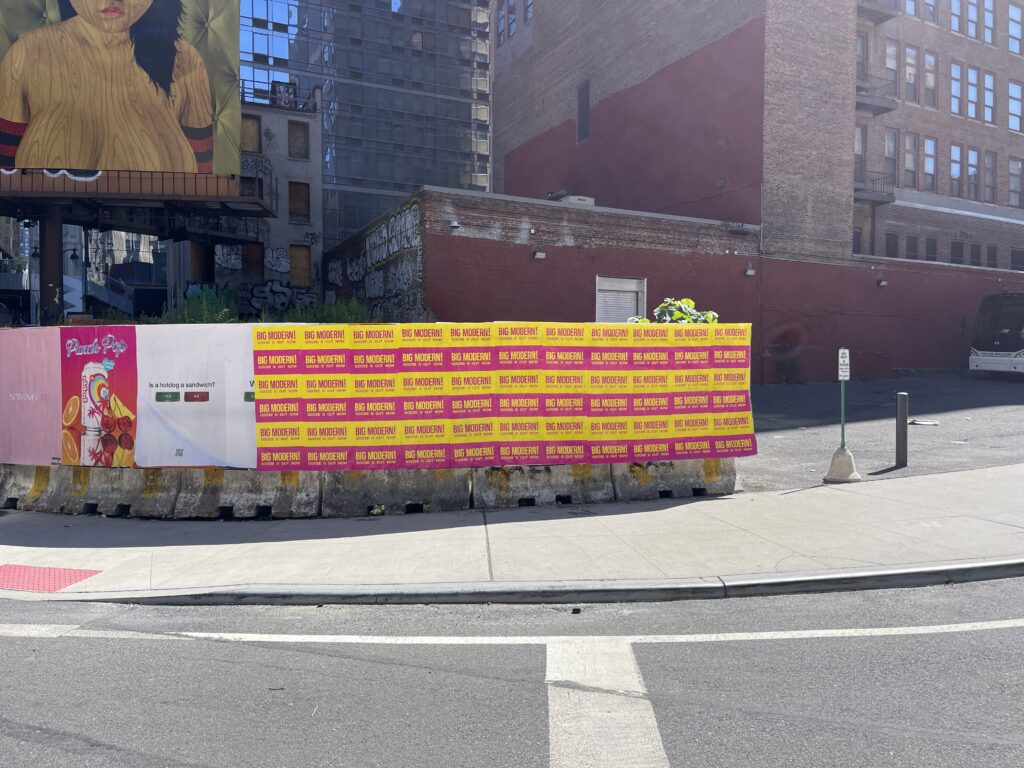
What Are the Standard Poster Sizes? Complete Guide
In the US, the standard poster sizes for advertising are 11×17, 18×24, and 24×36 inches. Here’s what each size is for, how they compare, and how to pick the right one.
People ask us this question regularly. “What are the standard poster sizes?” It’s one of the first things a new client or a designer new to print advertising needs to get sorted before any other work starts.
The answer is clear: the US printing and advertising industry has converged on three primary standard poster sizes for most applications. Those sizes are 11×17, 18×24, and 24×36 inches. Above 24×36, you get into larger format work with 27×40, 36×48, and 40×60. Below 11×17, most pieces are classified as flyers or handouts rather than posters.
Our team has placed posters in almost every major US city. We know which sizes work where. This guide gives you the full picture from field experience.
The three primary standard poster sizes that US print shops, display hardware, and advertising campaigns are built around:
Standard Size
Dimensions
Area
Primary Application
Small Standard
11 x 17 inches
187 sq in
Bulletin boards, corridors, grassroots
Medium Standard
18 x 24 inches
432 sq in
Window displays, retail, event venues
Large Standard
24 x 36 inches
864 sq in
Street campaigns, outdoor advertising
These three sizes form the backbone of US poster advertising. Master these three and you have the framework for most campaign planning decisions.
Standard Poster Size 1: 11×17 Inches
The 11×17 inch poster is the smallest format most people in advertising call a poster. Below this size, you’re in flyer or handout territory. The 11×17 is also known as the “tabloid” or “ledger” format, because it’s simply double the standard US letter sheet (8.5×11).
Where does 11×17 work? Community bulletin boards. College campus posting areas. Inside venues. Staple-and-tape grassroots campaigns in residential neighborhoods. Coffee shop windows. Library notice boards. Anywhere that close-viewing is expected and foot traffic is moderate.
The primary advantage of 11×17 is cost. You can print hundreds of these for a very low cost. Large-format digital printers turn them out quickly. Copy shops and local print services can handle 11×17. You don’t need a specialized vendor.
The trade-off is visibility. From 15 feet, an 11×17 starts to lose impact. From 25 feet, the text is essentially unreadable unless the headline is very large and the design is extremely clean. Use 11×17 for locations where viewers will be within 10 feet.
Standard Poster Size 2: 18×24 Inches
The 18×24 is the middle standard. One and a half feet wide, two feet tall. This is the most common size for event promotion, venue advertising, retail window displays, and indoor brand work.
At 18×24, you have 432 square inches of print area. That’s more than double the 11×17. The extra space allows for a proper visual hierarchy: a dominant image, a strong headline, supporting information, and a call to action. With a clean design, an 18×24 reads clearly from 15 to 20 feet.
We use 18×24 constantly for venue work in New York. A bar on Rivington Street promoting a Friday night. A gallery in Chelsea for an opening. A restaurant in the Meatpacking District for a pop-up dinner. These are 18×24 placements. The size fits venue window frames. It’s easy to transport. It works.
The 18×24 also fits standard snap frames and poster holders, which are common in retail environments. If you’re placing in a location that has existing display hardware, confirm the frame size before you print. Most retail snap frames are 18×24.
18×24 in practice: This is the most common size for venue and retail placements. It fits standard display hardware in most US retail environments. If you’re placing posters inside venues or in storefront windows, start with 18×24 unless you have a specific reason to go larger.
Standard Poster Size 3: 24×36 Inches
The 24×36 is the standard for street-level outdoor advertising. Two feet wide, three feet tall. This is what our crews carry into position on building walls, storefronts, and outdoor surfaces across every city we work in.
At 864 square inches, the 24×36 has twice the print area of an 18×24. The size impact at street level is significant. On a block in Williamsburg or a stretch of Fairfax in LA, a 24×36 poster commands attention. It’s large enough to see from across the street. The headline text at this size works from 30 to 40 feet with a clean layout.
Print cost for 24×36 runs higher than 18×24, but the cost increase is proportional to the visibility increase. For any street-level campaign where outdoor exposure is the goal, 24×36 is the right standard size to start with.
The 24×36 is also the primary size for music tour promotion and brand activation campaigns in urban markets. It’s what entertainment marketing agencies use for city-level rollouts. It’s what our crews place ahead of major product launches, album releases, and film openings in New York, LA, and Chicago.
24×36 in practice: This is the primary standard for street-level outdoor campaigns. If you’re running a poster campaign in an urban market and targeting street-level visibility, 24×36 is where you start. It’s the format most print shops have optimized for efficient production.
Extended Standard Sizes Above 24×36
Above 24×36, the standard sizes for US poster advertising are:
27×40: The Entertainment Standard
The 27×40 inch one-sheet is the standard for US movie and entertainment marketing. It’s the size of theater lobby frames. Entertainment agencies and studios use this size for campaign materials. For non-entertainment brands, using 27×40 creates associations with the entertainment industry, which can work well in specific contexts.
36×48: Large Format Poster
The 36×48 is used for transit advertising, large retail windows, and high-traffic outdoor locations where 24×36 doesn’t provide enough visual presence. It’s four times the area of an 18×24. At this size, simplicity in design is not optional, it’s required. The viewer is processing the image from 30 to 50 feet away.
40×60: Bus Shelter Standard
The 40×60 format matches the standard US bus shelter advertising panel. It’s 16.7 square feet. This is the largest size routinely called a “poster” rather than a banner or billboard. Campaigns using 40×60 are typically in the territory of paid media buys rather than street-level grassroots work.
Standard Poster Sizes for Specific Industries
Industry
Primary Standard Size
Secondary Size
Notes
Music / Events
18 x 24 in
24 x 36 in
18×24 for venues, 24×36 for street
Film / Entertainment
27 x 40 in
24 x 36 in
27×40 is the industry one-sheet standard
Retail / Brand
18 x 24 in
24 x 36 in
18×24 for in-store, 24×36 for windows
Grassroots / Political
11 x 17 in
18 x 24 in
11×17 for volume, 18×24 for windows
Academic / Research
36 x 48 in
24 x 36 in
36×48 portrait is conference standard
Transit / Outdoor
40 x 60 in
36 x 48 in
Paid media panel standards
These industry patterns developed from practical experience. They reflect the size that works best for the viewing context, the infrastructure that exists in each sector, and the cost constraints that different campaign types operate under.
Standard Poster Sizes in Other Countries
The US standard sizes are not universal. Most of the world uses ISO 216 standard sizes, which are measured in millimeters and have different proportions from US formats. The main ISO poster sizes used internationally are A0 (841 x 1189 mm), A1 (594 x 841 mm), A2 (420 x 594 mm), and A3 (297 x 420 mm).
None of these match US standard sizes exactly. The A1 is close to a 24×36 but slightly smaller. The A2 is close to an 18×24 but slightly smaller. If you’re running campaigns across US and international markets, you’ll need separate print files sized correctly for each system.
Standard Poster Sizes: Typical Print Volume and Cost Structure
Understanding the cost dynamics of standard poster sizes helps you plan a campaign that delivers maximum presence within your budget. Print pricing is driven by three factors: paper size, print quantity, and substrate type. Here is a general framework.
For an 11×17 poster, budget-run quantities of 500 to 1,000 copies can be produced for very low per-unit costs at most local and online print vendors. This makes 11×17 the right format when volume is the priority and the budget is tight. A grassroots political campaign or a local event promotion on a shoestring budget can blanket a neighborhood with 11×17 posters for a fraction of what 24×36 would cost.
For 18×24, costs increase because the paper requires large-format print equipment rather than standard office sheet presses. Quantities of 100 to 500 are common for venue campaigns. Per-unit cost drops significantly as quantity increases, so if you are placing in 30 or more venues, print in volume. The per-unit savings on 500 versus 100 copies of an 18×24 can be substantial.
For 24×36, you are in large-format territory across the board. Quantities for street campaigns typically run 50 to 200 per market for a targeted placement effort, or 500 to 1,000 for a saturating campaign across an entire city. The 24×36 costs roughly twice what an 18×24 costs per unit, but delivers dramatically more street-level visibility. In urban markets like New York and Los Angeles, the 24×36 in quantity is the standard street campaign format.
Stock choice also drives cost. Uncoated 60 lb paper is the cheapest. Coated 100 lb text adds about 15 to 25 percent to cost but improves color vibrancy significantly. Synthetic or weatherproof substrates for outdoor applications may cost two to three times the paper rate but last weeks instead of days in the elements. Match the substrate to the exposure and the budget to the market.
How Location Type Shapes Standard Size Selection
The neighborhoods where you are placing posters shape the size selection as much as any other factor. Different urban environments have different visual rhythms, different surface availability, and different audience expectations.
Dense residential neighborhoods like the West Village in Manhattan or Silver Lake in Los Angeles have smaller surface inventory. Windows are narrow, storefronts are smaller, and the overall visual scale is intimate. The 18×24 fits here. A 24×36 can feel oversized and out of character in a neighborhood where the visual scale is oriented toward individual shopfronts and brownstone windows.
Commercial corridors and transit hubs are different. The Bowery in New York, Melrose in Los Angeles, or Milwaukee Avenue in Chicago have wider walls, more blank surface area, and audiences moving at speed. These environments demand 24×36 or larger. An 18×24 disappears in these contexts. The ambient visual competition from signage and other street graphics means you need size to register.
College campuses are predominantly bulletin board and flat-wall territory. The 11×17 is the functional standard here because posting surfaces are small, turnover is high, and the audience is close to the wall when they read. A 24×36 on a campus bulletin board is overkill and frequently takes up space that is needed for other postings, which can create resentment from campus community members.
Outdoor festival and event environments vary by the specific venue. A city block party has walls, fences, and vendor tents that can accommodate 24×36. A small indoor art fair might only have 8-foot wide booth panels, making 18×24 or even 11×17 more practical. Always assess the specific environment before finalizing the standard size for the context.
How to Choose the Right Standard Poster Size
Work through these questions in order:
Where is the poster being placed? Outdoors: start at 24×36. Indoors or window: start at 18×24. Bulletin board: 11×17.
What’s the expected viewing distance? Under 15 feet: 11×17 or 18×24. 15 to 30 feet: 18×24 or 24×36. Over 30 feet: 24×36 or larger.
Is there existing display hardware? Confirm the frame size and match the poster to it.
What’s the print budget? The standard size that gives you the best balance of visibility and cost for your specific situation is the right answer.
Most campaigns use two standard sizes. A primary size for anchor locations and a secondary size for supplemental placements. This is almost always the right approach for any campaign that spans both indoor and outdoor locations.
What are the three most common standard poster sizes in the US?
The three most common standard poster sizes in the US are 11×17 inches (small), 18×24 inches (medium), and 24×36 inches (large). These three sizes are available from virtually every print vendor and are the basis for most advertising poster campaigns.
Is 18×24 or 24×36 the more standard poster size?
Both are standard. The 18×24 is the standard for indoor and window applications. The 24×36 is the standard for outdoor and street-level applications. For a campaign that covers both indoor and outdoor placements, both sizes are standard and you’ll likely use both.
What is the most standard poster size for advertising?
For street-level advertising, 24×36 is the most standard size. For retail and indoor advertising, 18×24 is most standard. These two sizes dominate commercial poster advertising in the US.
What size are standard poster frames?
Standard poster frames are available at 11×17, 18×24, and 24×36 inches at most home goods and art supply retailers. These three sizes are the most common for both decorative and functional framing. Custom and specialty sizes are also available from frame shops.
What is a standard poster size for school projects?
For school projects, the most standard sizes are the 22×28 poster board (for free-standing single-panel displays) and the 36×48 tri-fold board (for self-standing science fair displays). These sizes are sold at retail stores as standard school supplies.
Do standard poster sizes vary by country?
Yes. The US uses inch-based sizes (11×17, 18×24, 24×36). Most other countries use ISO A-series sizes measured in millimeters (A3, A2, A1, A0). These don’t align exactly. Always check which size system applies in your target market before printing.
What is the standard poster size in Photoshop?
In Photoshop, create a new document at the exact dimensions you need (e.g., 24 inches x 36 inches). Set resolution to 150 DPI for large-format viewing or 300 DPI for close-range viewing. Set color mode to CMYK for print. These settings work for any standard poster size.