
July 20, 2026
Wall Mural Advertising: How Brands Use Painted Walls
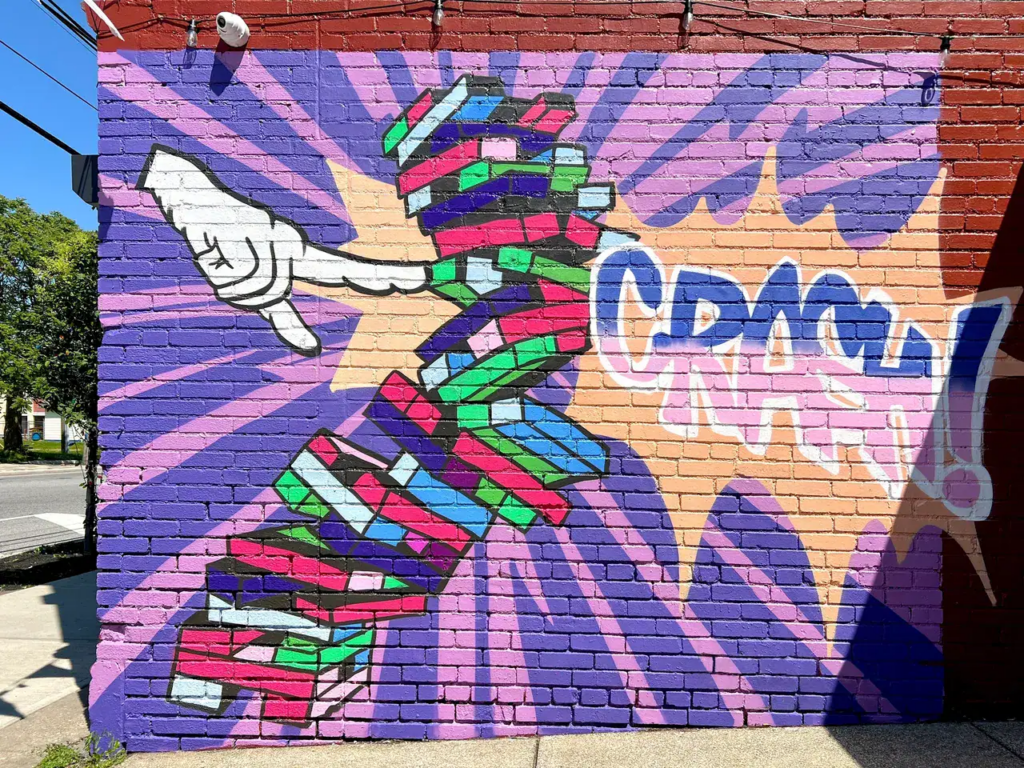
A painted wall can do something a billboard cannot. It belongs to the neighborhood. It earns photography. It shows up on social feeds without a media buy. Here is how brands use wall mural advertising and what it actually costs.
At American Guerrilla Marketing, we have sourced, designed, and executed wall murals across New York City, Los Angeles, Chicago, Nashville, and beyond. Wall mural advertising is one of the most powerful formats in outdoor media, not because of raw impression volume, but because of the depth of impression it creates. A well-executed mural becomes a landmark. People navigate by it, photograph it, post it, and return to it. That kind of presence is hard to buy through any other format.
This guide covers everything a brand needs to know before committing to a wall campaign: what wall mural advertising actually is, the difference between wall types, how AGM sources walls and manages execution, where the best wall locations are in major cities, what the whole thing costs, and how to get the most out of a mural through social amplification and earned media. AGM manages all site coordination before installation for every campaign we run.
What Is Wall Mural Advertising?
Wall mural advertising is the practice of placing large-format brand imagery on the exterior walls of buildings. The execution can range from hand-painted murals created by artists using spray paint and rollers to large-format vinyl wraps installed by production crews. The common thread is scale. Murals are measured in stories, not square inches. At 20 to 40 feet tall, a mural dominates the visual field of an entire block.
Unlike a traditional billboard, which sits on its own structure and screams advertisement from the moment you see it, a mural lives on the building itself. It becomes part of the architecture. Depending on the design approach, it can read as public art, as brand identity, as cultural commentary, or as all three simultaneously. That ambiguity is a feature, not a bug. The less something reads like an ad, the more time people spend with it.
Brands use wall murals for a range of strategic purposes:
- Product launches that need a physical moment in a specific market
- Brand awareness campaigns targeting culturally influential neighborhoods
- Campaign anchors that generate organic social content from passersby
- Experiential marketing that gives events, pop-ups, and activations a visual home base
- Long-term brand presence in markets where the brand has physical retail or community investment
The format works because murals are permanent enough to build brand memory but flexible enough to be updated on a campaign cycle. A brand that runs mural campaigns twice a year in the same neighborhood builds a presence that feels local even if the company is global.
Types of Wall Murals
Not all murals are the same. The three main production approaches have different aesthetics, different timelines, and different cost profiles. Understanding the distinction helps you choose the right approach for your brand and campaign goals.
Hand-Painted Murals
Hand-painted murals are created by artists using spray paint, exterior latex, and traditional brushwork applied directly to the wall surface. The result is tactile, textured, and unmistakably human. No two hand-painted murals look exactly alike. The brushwork is visible up close, the gradients have character, and the piece reads as art in a way that printed vinyl simply cannot replicate.
Hand-painted is the right choice when brand equity depends on cultural authenticity. If your brand is trying to signal that it belongs in a creative neighborhood rather than just buying space in one, the hand-painted approach communicates that. It also holds up better over time than vinyl in harsh weather environments. A well-applied exterior paint job on a brick or concrete wall will still look good two to three years later. Vinyl starts to show seams, bubbles, and edge lift within the first year in most outdoor environments.
The tradeoff is time and cost at the production level. A complex hand-painted mural at 40 feet requires a skilled muralist or team, typically 3 to 7 days of work depending on size and complexity, plus lift equipment and materials. That labor is part of what the premium tier pricing reflects.
Printed Vinyl Murals
Printed vinyl murals start with large-format digital printing on weather-resistant vinyl substrate, which is then applied to the wall surface in panels. The advantage is speed and photographic fidelity. Any image you can print, you can put on a wall. Product photography, lifestyle imagery, typographic layouts, and complex photographic compositions all transfer cleanly.
Vinyl murals can be installed in a single day on a prepped wall surface. For campaigns with tight windows or designs that depend on photographic accuracy, vinyl is often the practical choice. The look is crisper and more commercial than hand-painted work, which is appropriate for some brands and aesthetically off for others.
Hybrid Murals
Hybrid murals combine printed elements with hand-finished artwork. A typical approach is printing the background or photographic elements on vinyl, then having an artist layer hand-painted work over the top to add texture, depth, and artistic detail. This approach gives brands the best of both methods: the precision of print and the authenticity of handwork. Hybrid production is common for campaigns where the brief calls for both product imagery and cultural resonance.
Wall Types: AGM premium walls, Private Walls, and Ghost Walls
The type of wall you are on determines the visual context your mural lives in, the audience that sees it, the pricing structure, and the process for securing it. AGM works across all three wall types and manages all site coordination before installation regardless of which category your wall falls into.
AGM premium walls
AGM premium walls are high-profile public-facing walls in prime locations that AGM has sourced and maintains relationships with for commercial mural campaigns. These locations are typically in high-foot-traffic corridors with strong demographic alignment for consumer brands. The visibility profile for a AGM premium wall is similar to a premium billboard: high daily impression count in a desirable geographic zone.
The pricing reflects that premium. AGM’s AGM premium wall rate is $28,000 per 4-week cycle. For brands that need to make a statement in a specific market during a campaign window, AGM premium walls are the direct path to a guaranteed prominent location. AGM handles all coordination with property owners and site logistics.
Private Walls
Private walls are sourced through AGM’s network of property owners, building managers, and real estate relationships across major markets. These are walls where we have negotiated directly with the property owner for access and where the creative execution is entirely brand-driven. Private walls offer more flexibility on timing, duration, and creative direction than premium placement walls, and they come in at a significantly lower price point.
Private wall advertising through AGM is priced at $2,700 per month. For brands with ongoing mural programs or campaigns that need extended duration, the private wall structure is often the more economical choice. AGM manages all owner coordination and site access before installation.
Ghost Walls
Ghost walls are the historic painted advertisements that appear on older brick buildings, typically in cities with dense pre-war building stock. These are surfaces where a previous advertisement was painted directly onto the brick and has partially faded over decades, creating a layered, aged aesthetic that carries genuine urban history. Some ghost wall surfaces in neighborhoods like the Lower East Side and Bushwick have four or five layers of old advertising visible simultaneously.
Ghost walls are the most visually distinctive mural surfaces available. Painting a new brand mural over or alongside an existing ghost wall creates an instant visual tension between past and present that photographers cannot resist. They are also typically located in neighborhoods with strong cultural cachet. AGM sources ghost wall access through our property network. Pricing is included in the private wall rate structure, though specific ghost wall locations command a premium based on prominence and condition.
Wall Mural Advertising Pricing
Mural pricing at AGM is structured across two dimensions: the placement cost (access to the wall location and AGM’s coordination) and the production cost (design complexity and execution). Here is the full pricing breakdown.
Wall Access Pricing
| Wall Type | Rate | Notes |
|---|---|---|
| AGM premium wall | $28,000 | Per 4-week cycle. Prime locations, high-foot-traffic corridors. |
| Private Wall | $2,700/month | Flexible duration. AGM-sourced property network. |
Production Pricing by Design Complexity
| Design Tier | Price | What It Covers |
|---|---|---|
| Simple Design | $21,000 | Bold typography, flat graphics, 1 to 2 color schemes, limited detail work |
| Mid-Level Design | $42,000 | Multi-element composition, illustrated work, moderate color complexity |
| Premium Design | $90,000 | Full narrative murals, photorealistic work, complex multi-artist execution |
Production Pricing by Physical Size
| Mural Size | Price | Typical Application |
|---|---|---|
| Small (~10 ft) | $30,000 | Boutique storefront, alley wall, lower-traffic accent location |
| Mid-size (20 to 30 ft) | $55,000 | Standard building side, retail district visibility, most common format |
| Large (40 ft+) | $140,000 | Full building-side campaigns, major intersection anchor, landmark presence |
Add-On Technology Enhancements
| Enhancement | Starting Price | Description |
|---|---|---|
| Augmented Reality (AR) Layer | from $5,000 | Scan the mural with a phone to access animated content, video, or interactive brand experience |
| Drone Coverage | $3,000 | Professional aerial documentation of the mural and surrounding neighborhood for campaign content |
| 3D Lettering / Dimensional Elements | $6,500 | Raised physical elements integrated into the mural face for depth and tactile interest |
How AGM Sources Walls
Finding the right wall is not a Google search. It is a relationship business. AGM has spent years building and maintaining connections with property owners, building managers, real estate operators, and community organizations across every market we work in. When a brand comes to us with a target neighborhood, we already know which walls are available, which are coming available, and which owners are open to creative partnerships.
The sourcing process starts with your brief. We need to know your target neighborhoods, your audience demographics, the visual scale you are aiming for, and your campaign window. With that information, we pull from our active inventory and make calls to our property contacts to surface options that fit. We photograph candidate walls, document their surrounding context (nearby businesses, pedestrian patterns, sight lines), and present a focused shortlist for you to review.
Once a wall is selected, AGM manages all coordination with the property owner, including access scheduling, surface preparation, and any owner requirements around design review or documentation. You never need to negotiate directly with a property owner. That is our job, and it is something we do across every market we operate in.
For brands in markets where we do not yet have a deep wall inventory, we activate our partner network and conduct fresh sourcing within your campaign timeline. This typically adds a week to the front end of the project.
Best Wall Mural Locations by City
Location is everything in mural advertising. A great mural in a low-traffic location is a tree falling in the forest. A good mural in exactly the right spot, where the right people are moving through in the right frame of mind, generates returns that compound far beyond the campaign window. Here is our market-by-market breakdown of the top mural zones.
New York City
Bushwick, Brooklyn: Bushwick is the center of gravity for outdoor mural culture in New York. The Bushwick Collective has transformed dozens of building sides into large-format art pieces, and brand murals in Bushwick benefit from the existing cultural context. Visitors come specifically to photograph the murals. The foot traffic is intentional. People are looking for something to engage with. A brand mural that fits aesthetically earns photography and social posting at a rate that is unusual for any other location type.
Williamsburg L Train Corridor, Brooklyn: The blocks surrounding the Bedford Avenue, Lorimer Street, and Graham Avenue L train stations in Williamsburg are among the highest-pedestrian-traffic zones in Brooklyn. The L train carries a disproportionately young, brand-aware, social-media-active ridership. A mural positioned on the building sides visible from these station exits lands directly in front of the audience most brands want to reach. The Wythe and Berry Street corridors are particularly strong for visibility.
Lower East Side, Manhattan: The LES has a density of street-level culture, independent retail, and nightlife that draws a consistent creative and professional crowd. The Houston Street wall between the Bowery and Allen has historically been one of the most publicized mural surfaces in the country. Surrounding blocks on Orchard, Ludlow, and Rivington also carry strong mural tradition. An LES placement signals cultural awareness in a way that a Midtown placement simply cannot.
NoLita, Manhattan: NoLita’s tight block grid and high-end independent retail make it a natural fit for lifestyle and fashion brand murals. The scale is typically smaller here than in Brooklyn industrial zones, but the audience quality is high. Mott Street between Spring and Prince sees some of the most photographed storefronts and building sides in Manhattan.
Los Angeles
Melrose Avenue: Melrose is the original branded wall corridor in Los Angeles. The Paul Smith pink wall is the most-photographed object on the block. Brands that install murals in the Melrose Avenue zone from La Brea to Fairfax are positioning themselves alongside some of the most recognizable branded outdoor art in American retail culture. The foot traffic is heavily intent-driven. People come to Melrose to shop and to take photos. Your mural becomes part of that experience.
Fairfax District: The Supreme and streetwear corridor on Fairfax generates lines of brand-aware consumers every weekend. Building sides on Fairfax between Melrose and Beverly attract photographers and brand enthusiasts who are specifically looking for things to document. Mural visibility in this corridor is almost entirely composed of your target demographic for streetwear, lifestyle, and youth culture campaigns.
Arts District, Downtown LA: The Arts District south of the 10 freeway is the Bushwick of Los Angeles. Warehouse walls, loading dock sides, and former industrial buildings now carry some of the most prominent outdoor murals in the West. The neighborhood draws creative professionals, gallery visitors, restaurant-goers, and weekend explorers. Scale works well here because the buildings are large and the streets are wide enough to see them fully.
Chicago
Wicker Park: Wicker Park is Chicago’s most mural-dense neighborhood and has been for years. The intersection of North, Damen, and Milwaukee is one of the most heavily trafficked pedestrian zones in the city outside of downtown. Building sides on Milwaukee Avenue north of North Avenue are prime placement zones. The audience is young, culturally engaged, and very likely to share what they see on social media.
Pilsen: Pilsen has one of the richest outdoor mural traditions in the country, rooted in the neighborhood’s Latino cultural history. Murals here carry genuine community meaning. Brands that approach Pilsen with authentic creative partnerships, working with neighborhood artists and organizations rather than dropping generic brand content, earn enormous goodwill. A brand mural in Pilsen that feels earned and locally connected will generate more genuine press than a generic wall in any other Chicago neighborhood.
Nashville
The Gulch: The Gulch is Nashville’s most Instagram-documented neighborhood. The “I Believe in Nashville” mural has been photographed millions of times. Brand murals in The Gulch benefit from a tourist-driven foot traffic pattern that skews toward people actively looking for things to photograph and share. Walls on 11th Avenue South and in the surrounding blocks see constant flow from visitors who have specifically traveled to the neighborhood to document it.
Organic Social Amplification and Earned Media
The metric that most mural clients underestimate going in is organic social amplification. A mural in the right location does not just generate the impressions of people walking past it. It generates impressions every time someone posts a photo of it, which means impressions to the audiences of every person who photographs the wall. That multiplier can be significant.
To maximize that effect, there are specific production and promotion decisions that matter.
Design for Photography
Not all murals photograph equally well. The murals that get shared most have specific design characteristics: bold color contrast, an element that creates a natural foreground-background relationship for portrait photography, a clear focal point, and ideally some element of surprise or humor that makes people want to share it as a reaction rather than just a document.
At AGM, our design team considers the photography angle from the first sketch. We look at where people will stand, what the sight line from the street looks like, and whether the composition rewards being framed in a vertical photo, since that is the native format for Instagram and the format in which most phone photos of murals are shared.
Seed with Influencer Preview
Before a mural goes public, we recommend a targeted influencer preview. Bring two or three local creatives or micro-influencers to the wall in the first 24 to 48 hours after installation before it is widely seen and give them early access. Their posts seed the algorithm. By the time the general public starts photographing it, there is already a social context that frames the wall as something worth documenting. This approach consistently drives significantly higher organic reach in the first week of a campaign than simply waiting for organic discovery.
Earned Media Pitching
A well-executed mural with a compelling story behind it is genuinely pitchable as news. Local culture and arts writers at city publications cover murals regularly. The pitch angle matters. A brand mural that tells a story about the neighborhood, was created in collaboration with a local artist, or has some surprising detail worth examining will generate press that a generic brand placement will not. AGM helps clients identify and develop the story angle that gives a mural a legitimate editorial hook before we reach out to press contacts.
AR Integration for Social Moments
The augmented reality add-on (from $5,000) is specifically designed to create a shareable social moment on top of the physical mural. When a pedestrian scans the mural with a branded AR filter or app, animated content plays that makes the wall come alive on screen. The resulting video is inherently shareable because it looks like magic. If the AR content is genuinely engaging, videos of the experience spread well beyond the immediate neighborhood audience.
AGM Documentation and Reporting
Every mural campaign we execute is documented from first brushstroke to final day. This is not just for our records. It is an asset for your brand.
Our documentation package for every mural campaign includes:
- Professional photography from multiple angles and distances during and after installation
- Drone aerial coverage (included as an add-on at $3,000, or standard for large-format installations on request)
- Time-lapse video of the installation process where logistics allow
- Geo-tagged location documentation for media verification
- Post-campaign foot traffic and impression estimates based on location data
- Social listening summary of organic mentions, shares, and tags during the campaign window
The installation time-lapse in particular is consistently one of the most-viewed pieces of content a brand gets from a mural campaign. Watching a blank wall become a 40-foot brand image over the course of a day is compelling. That content lives long after the campaign window closes and continues to generate views and brand engagement independently.
We deliver the full documentation package within 72 hours of installation completion. For campaigns with tight internal reporting cycles, we can provide preliminary photography and location confirmation within the first 24 hours.
Frequently Asked Questions
What is the difference between a AGM premium wall and a private wall?
A AGM premium wall is a high-profile location that AGM has sourced and qualified for commercial mural campaigns. It is priced at $28,000 for a 4-week cycle and comes with established sight lines, high pedestrian traffic, and a straightforward booking process because we have already handled all site coordination. A private wall is sourced through our property owner network at $2,700 per month. Private walls offer more flexibility on timing and creative direction and are a stronger option for brands with longer campaign windows or more specific neighborhood targeting needs.
How long does it take to execute a mural from brief to installation?
A typical mural campaign takes 3 to 6 weeks from first brief to installation day. Wall sourcing and design development run in parallel during the first two weeks. Production and site coordination take another 1 to 2 weeks. Installation itself is typically 1 to 7 days depending on size and design complexity. Rush timelines are possible in markets where we have available wall inventory, but compressed timelines reduce design iteration time and increase coordination pressure. We recommend building in at least 4 weeks for first-time mural clients.
Can I approve the design before the mural is painted?
Yes, always. Our design process includes a detailed review phase where you see full-scale mockups of the mural on the actual wall before any paint is applied. We render the design to scale in your chosen location so you can evaluate how it will look from the street. Client approval is required before any production work begins. For vinyl murals, you also review the printed proof before installation.
Do murals work for B2B brands or only consumer-facing companies?
Wall mural advertising is used primarily by consumer-facing brands because of its mass-reach nature. That said, B2B brands with strong brand equity goals, active recruitment campaigns, or trade event presences in target cities have successfully used murals near convention centers, office districts, and creative neighborhoods where their talent and partner audiences concentrate. The question for B2B is always whether the audience geography aligns. If your buyers walk the streets of the Meatpacking District or the Arts District in LA, a mural there can work. If they do not, the format is less efficient than alternatives.
What happens if the mural is damaged during the campaign window?
AGM monitors campaign installations throughout the run. If a mural sustains significant damage from weather, vandalism, or any other cause, we assess and advise on repair options. For hand-painted murals, touch-up is often faster and less expensive than you might expect, since the original artist can repaint damaged sections without redoing the full piece. For vinyl installations, panel replacement is straightforward if we have retained original print files. We handle the assessment and coordination. You are not navigating property owner relationships or repair logistics on your own.
How do I measure the impact of a mural campaign?
We use a layered measurement approach. For brand awareness, we look at social listening data: how many times is the mural tagged, shared, or mentioned in the campaign window? We also track any AR interaction volume if the technology layer is included. For direct response campaigns, QR codes embedded in the mural design give clean click and conversion data. Location intelligence partners can provide foot traffic lift data comparing the campaign period to the prior baseline at the wall location. And for earned media campaigns, we track press placements and readership. None of these are perfect single metrics. Together, they build a picture of reach and resonance.
Can I run the same mural in multiple cities simultaneously?
Yes, and multi-market simultaneous mural programs are a specialty of ours. We coordinate sourcing, production, and installation across markets in a way that aligns timing so the campaign launches in all cities in the same window. The production economics also improve at scale. If the same design is being executed in NYC, LA, and Chicago, print costs for vinyl elements are amortized across all three, and our design team builds assets once for deployment everywhere. Call (646) 776-2770 to discuss a multi-market program.
What surfaces can murals be painted on?
Brick, concrete block, stucco, and painted cinderblock are all strong mural surfaces for hand-painted work. Smooth concrete and metal panel surfaces work well for vinyl. Wood surfaces can work but require more surface prep. The surface assessment is part of our site evaluation process. We inspect candidate walls before committing to them and will flag any surfaces that present production challenges. Some brick walls require a skim coat before painting to get a clean paint surface. That surface prep is factored into the production quote.
Putting It All Together
Wall mural advertising at its best is not just a media placement. It is a contribution to the visual culture of a neighborhood. Brands that approach it that way, investing in real creative, choosing locations with intention, and treating the mural as a genuine brand expression rather than a billboard substitute, consistently get more out of it than brands that treat it as just another OOH format.
At American Guerrilla Marketing, we have watched murals drive national press coverage for brands that had never earned a single earned media mention from traditional OOH. We have watched a single well-placed mural generate more organic social impressions in a week than a 10-unit billboard buy generated all month. The format works when the creative is right, the location is right, and the promotion strategy treats the mural as a content asset rather than just a static placement.
AGM manages all site coordination before installation. We source the wall, handle all property owner relationships, manage production and crews, document the whole thing, and help you build the story that earns press and social attention beyond the campaign window. You bring the brand. We build the presence.
For more on this topic, see our guide to Impactia Metairie LA: Street-Level Marketing in the New….
For more on this topic, see our guide to brand ambassador programs.
Reach us at (646) 776-2770 or [email protected] to start the conversation about your mural campaign.

Ready to Run Your Campaign?
Call us or email us. We’ll tell you exactly what we can do in your market and what it costs.
Related Services
Explore similar advertising solutions offered by American Guerrilla Marketing.
American Guerrilla Marketing — Los Angeles
Street-level campaigns in Los Angeles and nationwide. Wheatpasting, LED trucks, street teams, and more.
(646) 776-2770
Related Articles
-
Street Poster Advertising Ottawa: A Complete Campaign Guide
September 17, 2026
-
Experiential Marketing Firms Chicago | American Guerrilla Marketing
September 12, 2026
-
Pop Up Experiential
September 12, 2026
-
Mobile Pop Up
September 12, 2026
-
Experiential Marketing Agencies New York: How to Find the Right One for Your Brand
September 12, 2026