
July 20, 2026
Take-One Box Advertising: Run a Program That Works
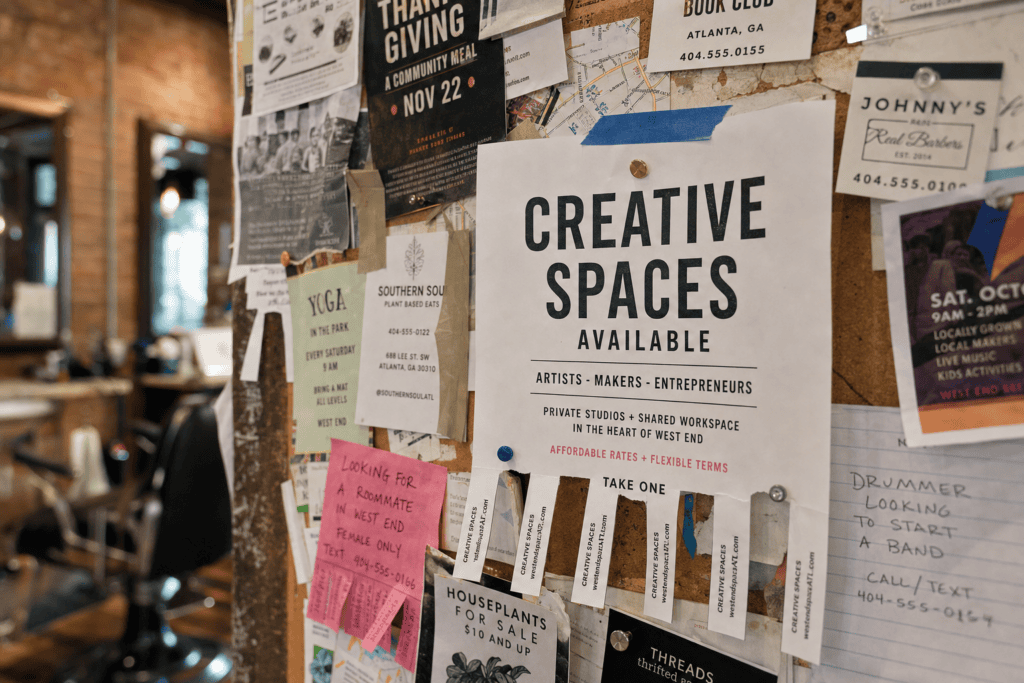
A take one box sitting on a coffee shop counter sounds simple. It is simple. That simplicity is also why so many brands run the format badly. They print something, drop a box in a few locations, and check in six weeks later to find the box still half full, moved to a shelf near the back, or gone entirely. The campaign produced almost nothing because nobody managed it.
A take one box program that works is a distribution operation. It requires location selection, placement negotiation, box design, print management, a monitoring schedule, and restock logistics. Get those things right and take one box advertising delivers strong local reach at very low cost per impression. Get them wrong and you have a box of cards gathering dust in a location your target audience never reaches.
At American Guerrilla Marketing, based in Industry City, Brooklyn, NY, we run take one box programs as part of broader local campaigns. We have built distribution networks covering hundreds of locations in single markets and multi-city programs covering thousands. Here is what the field has taught us about running a program that produces real results. Call (646) 776-2770 to discuss your campaign geography.
Why Take One Box Advertising Still Works
There is a persistent assumption that print distribution is obsolete, that nobody picks up physical materials anymore. The data from well-run programs says otherwise. A well-placed take one card in a high-traffic location serving the right audience depletes at predictable, measurable rates. People pick them up. They put them in their pockets. Some portion of them take the action the card asks for.
The format works for several reasons. It is non-intrusive. Nobody pushed it at you; you chose to pick it up, which means your attention to it is voluntary. It is tangible. Unlike a digital ad that disappears after a fraction of a second, a physical card stays in a pocket or on a desk until the person decides to act on it or throw it away. And it is local. The card exists in a physical location that your audience actually visits, which means the geographic targeting is passive and automatic.
The digital advertising environment has become saturated and expensive. CPMs on most platforms have risen significantly while attention quality has fallen. A take one box program at the right locations for the right audience can produce cost-per-impression numbers that no digital channel matches at the local level.
Location Selection: The Variable That Drives Everything
The most important decision in a take one box program is where to place the boxes. A single high-performing location with 400 daily transactions from your target audience is worth more than twenty poor locations combined. Location selection is not a quantity game. It is a targeting game.
Defining Your Audience Geography
Before selecting locations, define where your target audience lives, works, and moves through their day. A take one program targeting office workers in a downtown district needs boxes in coffee shops, food halls, and lobby desks in that district, not in residential neighborhoods where the same people are in a different mode. A program targeting fitness-focused consumers needs gym front desks, yoga studios, and health food stores.
The geographic footprint of the program should match the geographic footprint of your audience. Going wider than that increases cost and reduces effective reach because you are paying to be in front of people who are not your buyers.
Location Type and Dwell Time
The best take one locations combine high foot traffic with a brief pause in the transaction. Coffee shops work because people wait for their order. Pharmacies work because people wait for prescriptions and stand at checkout. Gyms work because people linger at the front desk to check in. Transit waiting areas work because people are stationary for defined windows.
Locations where people are moving continuously without pausing work less well. A busy retail corridor without a natural pause point is a poor take one environment even if the foot traffic number is high. The pickup requires a moment of stillness. Build your location list around moments of stillness.
Negotiating Placement
Most small businesses will accept a take one box if approached correctly. Walk in during a slow period. Introduce yourself and explain what the material is. Make clear it is not asking the business to endorse the product, just to offer a piece of printed material to interested customers. Bring a branded box that looks professional. Leave a sample of the card so they can see what they are hosting.
Businesses that already host printed materials from other advertisers are easier placements. They have established the behavior. Businesses that have never hosted anything need a bit more context, but most will say yes to a clean, professional-looking program that offers something relevant to their customer base.
For large programs covering 100 or more locations, we use network operators who manage relationships with location clusters, particularly in the hospitality and food service categories. These operators allow rapid placement across multiple locations with a single relationship, which dramatically reduces the time investment in individual placement negotiation.
The Take One Box: Design and Specification
The box itself is part of the presentation. A clear acrylic holder with your brand name or logo on a label insert looks professional. A generic, unlabeled box looks like whatever is cheapest and signals to the location that you did not invest in the program. The location owner’s willingness to keep the box on the counter is influenced by how well it fits the aesthetic of their space.
We recommend two box formats. A countertop acrylic holder for indoor counter placements where the box sits flat and takes the card in a fan or stacked configuration. And a wall-mounted holder for businesses that do not have available counter space but will permit a wall or door-adjacent placement. Having both formats available means you do not lose placements due to space constraints.
Print Specifications for the Card
The card inside the box needs to be appropriately sized for the holder. Standard take one card sizes are 4×6 inches, 5×7 inches, or business card (3.5×2) for compact programs. The stock should be at least 14pt cover with a coating. Thin, uncoated stock feels cheap and gets damaged faster in a shared counter environment.
The front of the card does the heavy lifting. One headline. One image or visual. One call to action. Everything else is secondary. The back can carry supporting information, but assume that half the people who pick up the card will only look at the front. Make the front sufficient on its own to prompt the action you want.
Managing the Distribution Network
The most common failure mode in take one box programs is the unmanaged network. Boxes are placed in month one and nobody checks them until month three, by which point half are empty, a third have been moved or removed by the business, and the data is useless. The program ran for one month and looked like it ran for three.
Building a Monitoring Schedule
Every location in the network needs a scheduled check. High-traffic locations should be checked weekly. Lower-traffic locations can be checked biweekly. The check involves confirming the box is still in place, assessing the depletion level, restocking as needed, and logging the visit. That log creates the data you need to evaluate location performance.
After the first two weeks, depletion rate data tells you which locations are performing and which are not. A location that depletes 50 cards in two weeks is worth restocking aggressively. A location that has moved 5 cards in two weeks either needs to be moved to a better position within the location or dropped from the network and replaced with a better option.
Restock Logistics
Restock routes need to be designed geographically to minimize travel time between locations. Grouping locations into clusters by neighborhood and assigning each cluster a service day reduces the per-location cost of monitoring. A well-designed route can service 15-20 locations per day. An undesigned route can take twice as long to cover half as many.
We map routes before starting any program and refine them based on the first monitoring cycle. If locations are added to the network, they are assigned to the nearest existing route. If locations are dropped, the route is recalculated to maintain efficiency.
Connecting Take One Box to Digital Tracking
The knock on physical distribution has always been attribution. You cannot tell who picked up a card and whether they converted. You can close that gap with QR codes tied to UTM parameters, location-specific landing pages, or unique phone numbers by location cluster.
A QR code on the card that goes to a landing page with a unique parameter per location zone lets you see which geographies are driving traffic. If your downtown office district locations are driving 80 percent of your QR scans while your residential locations drive 20 percent, that is data that tells you where to concentrate your next card run.
Phone number routing through a call tracking platform does the same thing for programs with a phone call conversion. Different numbers for different geographic zones connect call volume to location performance without requiring the caller to identify where they picked up the card.
Scaling a Take One Box Program
A program that works in one neighborhood can be scaled to a city and then to multiple cities. The scaling logic is the same at each level. Define the audience geography. Identify the right location types. Negotiate placement. Manage the network with structured monitoring. Optimize based on depletion data.
Our guerrilla marketing services team runs multi-city take one programs for brands that want consistent local presence across 10-50+ markets simultaneously. The print management, location negotiation, monitoring infrastructure, and reporting are all centralized while the actual placement and service is executed locally in each market.
For brands that want to combine take one distribution with higher-visibility street formats, we integrate take one programs with wheatpasting and poster campaigns that create neighborhood-level brand presence at street scale while the take one boxes work at the counter level. The two formats reinforce each other. Someone who has seen a poster on the block and then encounters your card at the coffee shop has two touchpoints in a short physical distance, which compounds the impression significantly.
Our brand ambassador agency can add a human element for launches or events, with ambassadors distributing the same card directly at high-traffic locations while the boxes work passively. The combination of active and passive distribution maximizes reach without requiring both to run continuously.
When Take One Box Is the Right Format
Take one box advertising is particularly effective for local service businesses, events and entertainment, real estate, food and beverage, health and fitness, and any brand that benefits from persistent neighborhood-level awareness. It is less effective for products that require significant explanation before purchase or for brands with no local relevance.
The format works best when the message is simple, the call to action is direct, and the audience is geographically predictable. If you can answer the question “where do my customers go in their daily lives?” with a list of specific location types, take one box advertising is a strong option. If your audience is too diffuse or too digital-native to engage with a physical pick-up moment, other formats will perform better.
Frequently Asked Questions
What is take one box advertising?
Take one box advertising is a form of out-of-home distribution where branded printed materials are placed in countertop or wall-mounted dispensers at high-traffic locations. Passersby pick up one piece, taking the message with them. The format works for direct response campaigns, event promotion, local service advertising, and product launches.
Where are take one boxes placed?
Take one boxes are placed at coffee shops, gyms, barbershops, laundromats, pharmacies, transit waiting areas, building lobbies, and any location with consistent foot traffic from the target audience. Location selection is the most important factor in program performance.
How do you get businesses to host a take one box?
Most small businesses are receptive to hosting a take one box that serves their customers. A personal visit with a professional-looking sample, a clear explanation of the material, and a request for counter or wall space is usually sufficient. Businesses that already host other printed materials are easier placements than those that do not.
How many locations should a take one box program cover?
A neighborhood saturation program typically covers 30-80 locations within a defined geographic radius. A city-wide program can cover 200-500 locations across multiple districts. The number should be driven by your target audience density and your ability to monitor and restock on a defined schedule.
What should the printed piece in a take one box look like?
The piece should have a single compelling headline, a clear value proposition in 2-3 lines, a strong visual, and one call to action with a QR code or phone number. The back can carry supporting content. Avoid cramming multiple messages into the piece. One message, one action.
How long does a take one box program run?
Most programs run 4-12 weeks. Campaigns tied to specific events or launches run for the duration of the relevant period. Ongoing local service advertising programs may run continuously with refreshed creative every 4-8 weeks to maintain attention from repeat visitors.

Ready to Run Your Campaign?
Call us or email us. We’ll tell you exactly what we can do in your market and what it costs.
Related Service
Explore similar advertising solutions offered by American Guerrilla Marketing.
American Guerrilla Marketing — Los Angeles
Street-level campaigns in Los Angeles and nationwide. Wheatpasting, LED trucks, street teams, and more.
(646) 776-2770
Related Articles
-
Street Teamer: What They Do and How to Run Them | AGM
August 8, 2026
-
Take One Flyer: How to Design and Deploy Them Effectively | AGM
August 8, 2026
-
Poster Sniping: Targeted Outdoor Poster Campaigns in the City | AGM
August 8, 2026
-
Flyer Posting: How to Run a Street-Level Print Campaign That Works | AGM
August 8, 2026
-
Poster Distribution: Street-Level Reach for Your Brand Campaign | AGM
August 6, 2026