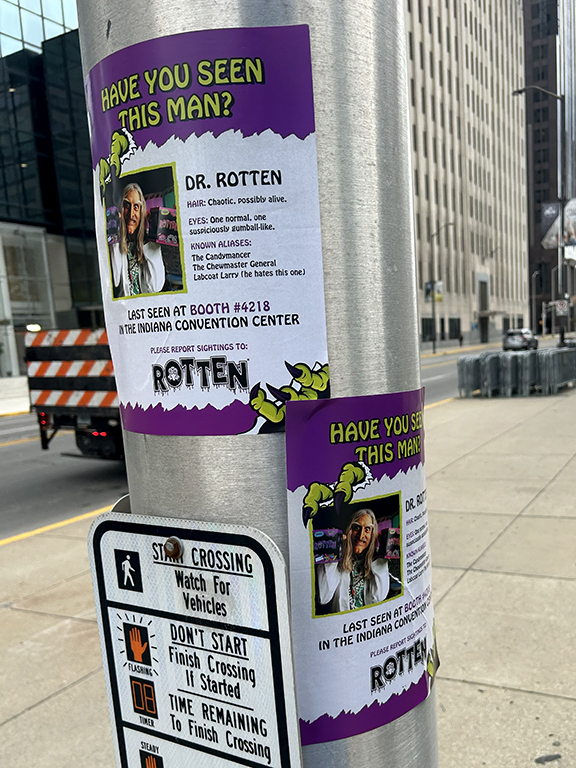
The convention center is not the only place to advertise at a trade show. For most major US trade shows, it is not even the most efficient place to advertise. Inside the hall, every exhibitor competes for attendee attention simultaneously in a visually saturated environment that conditions the professional audience to filter out brand messages they did not specifically seek out. Outside the hall, the same audience is walking specific routes, eating at specific restaurants, staying in specific hotels, and moving through an outdoor environment where brand presence is less expected and therefore more noticed.
Trade show outdoor advertising reaches the conference audience in these outdoor environments, across every format available for use on public streets and in commercial areas adjacent to convention centers. Mobile LED billboard trucks that follow the audience’s daily route from hotel to venue and back. Brand ambassador programs at convention center entrance points where every attendee arrives. Sidewalk stencils that build ambient awareness along approach corridors. Poster placements in the restaurant and retail areas where conference attendees spend their off-floor time. Each of these formats reaches the same professional audience that every exhibitor inside the hall is trying to reach, but in an environment where competition for attention is dramatically lower.
This guide covers every outdoor advertising format that works at trade shows, when each format is most effective, and how to structure an outdoor advertising campaign that maximizes reach and frequency with the conference audience across a four or five day show.
Mobile LED Billboard Trucks at Trade Shows
Mobile LED billboard trucks are the highest-visibility outdoor advertising format available at trade shows because their mobility allows them to follow the conference audience across the convention district geography throughout the show day. A static billboard at a fixed location reaches only the audience that passes that location. A mobile billboard reaches the audience at the hotel, at the convention entrance, at the lunch restaurant, and at the entertainment district in the evening, building frequency across the entire geography of the show.
Our LED billboard truck campaigns at trade shows are route-planned based on the specific geography of each show’s convention district and the movement patterns of the conference audience throughout the day. For a Las Vegas trade show at the LVCC, the morning route runs from the primary Strip hotel properties to the convention center entrance. The midday route covers the casino-connected restaurant clusters where conference attendees take lunch. The afternoon route returns to the convention center area as the show floor approaches closing. The evening route covers the Strip entertainment district where the conference social events concentrate.
For shows in compact urban convention districts like Dreamforce at Moscone in San Francisco, the mobile billboard route covers a tighter geographic area with higher frequency per circuit. The compact SOMA geography means that a truck running a Moscone-circuit route can pass the primary audience concentration points every twenty to thirty minutes, building extraordinary frequency with the same audience across a show day.
LED truck messaging at trade shows should be show-specific: booth number, a specific product or solution, and a clear call to action that is simple enough to read from a moving vehicle in three seconds or less. Generic brand awareness messaging on mobile billboards at trade shows underperforms compared to specific booth-traffic messages that give the audience a concrete reason to act on what they see.
Brand Ambassador Programs at Convention Entrances
Convention center entrance brand ambassador programs are the most direct outdoor advertising format at trade shows because they produce physical, personal interaction with every arriving conference attendee rather than a visual impression from a distance. An ambassador at the primary entrance handles the audience at the moment of maximum accessibility: arriving attendees are not yet inside the competitive noise of the show floor, they are moving at pedestrian pace, and they are in a receptive state for a brief, relevant professional interaction.
The logistics of brand ambassador programs at convention entrances require attention to the specific access conditions at each venue. Convention centers typically own the property immediately adjacent to their entrances, and promotional activity on convention center property may require a permit or official show participation agreement. The public sidewalk adjacent to the convention center property is available for brand ambassador programs without show approval, and the line of demarcation between convention property and public sidewalk is the critical geographic boundary for planning ambassador positioning.
Our brand ambassador agency programs for trade show entrances map the entrance approach geometry of each show venue to identify the optimal ambassador positions on public sidewalk that intercept the maximum attendee flow without encroaching on convention property. These positions vary by venue: at Moscone, the public sidewalk on Howard Street provides ideal positioning. At Javits, the approach sidewalks on 11th Avenue and 34th Street provide the primary public positioning. At LVCC, the public areas adjacent to the venue’s taxi and rideshare drop-off zones provide the primary positioning during the morning arrival window.
Sidewalk Stencil Programs in Convention Districts
Sidewalk stencils using water-soluble chalk-based materials are one of the most cost-effective outdoor advertising formats for trade show environments because they create continuous ambient brand messaging in exactly the pedestrian corridor where the conference audience is most concentrated. Every attendee who walks from the surrounding hotels to the convention center entrance passes the same stencil positions on the approach sidewalks twice per day for four to five days, creating impression frequency that accumulates across the show’s duration without additional cost per impression after the initial deployment.
Our sidewalk stencil programs at trade show venues target the highest-traffic approach corridors based on the specific pedestrian movement patterns of each show. At NRF at Javits, the stencils go on the 34th Street sidewalk from 8th Avenue west to the convention entrance. At Dreamforce, they go on Howard Street and the pedestrian approach routes from the surrounding SOMA hotel cluster. At SXSW, they go on the Convention Center approach routes and in the 6th Street and Red River entertainment district corridors where attendees concentrate during evening programming.
Stencil messaging at trade shows should be specific: booth number, show name, and a brief, memorable message that identifies the brand and communicates the reason to visit. Stencils placed on high-foot-traffic approach routes that are walked repeatedly by the same audience build awareness through ambient repetition without requiring the audience to stop and engage, creating the brand familiarity that makes booth visit conversion more likely.
Poster Placements in Convention District Commercial Areas
Poster placements in the restaurants, bars, coffee shops, and retail environments where conference attendees spend their off-floor time reach the professional audience in low-competition environments where they are relaxed and have dwell time that the show floor does not provide. A poster in the coffee shop where conference attendees take their morning break, or in the restaurant where they eat lunch, is seen by the same audience repeatedly across the show’s duration in a context where their attention is not being competed for by thousands of other exhibitors simultaneously.
Placement partnerships with restaurants and retail businesses in convention districts require advance relationship development and compensation arrangements that are specific to each venue city and each business. Our local field operator network in major convention cities maintains established relationships with the commercial businesses adjacent to major convention centers, allowing poster placement programs to be deployed in commercial environments without the cold-start logistics challenges of establishing new placement relationships from scratch for each show.
Experiential Activations in Outdoor Convention Spaces
Outdoor spaces adjacent to convention centers, including entrance plazas, parking areas, and public spaces that convention centers have developed as event environments, provide opportunities for experiential activations that go beyond standard OOH formats. An activation in an outdoor convention plaza that creates something worth photographing and sharing generates social media amplification that extends campaign reach far beyond the immediate physical audience.
Our experiential marketing team plans outdoor trade show activations with specific attention to the visual environment and the professional audience context. An experiential activation that would be appropriate and attention-generating in a consumer event environment may be too informal for the professional context of a major B2B trade show. Outdoor experiential programs at trade shows need to maintain the professional presentation standards that B2B audiences expect while still creating the moment of surprise or genuine engagement that makes an experiential activation worth stopping for.
Multi-Day Frequency: How Trade Show Outdoor Advertising Compounds
One of the most underappreciated advantages of outdoor advertising at trade shows is the frequency compounding effect that results from the same audience moving through the same geographic area for four or five consecutive days. A static billboard in a typical market reaches any individual consumer once or twice per week. A static billboard adjacent to a convention center entrance reaches every conference attendee twice per day for four or five days, accumulating eight to ten impressions with the same audience over the course of a single show run.
This frequency compounding changes the economics of outdoor advertising at trade shows relative to outdoor advertising in standard market contexts. The cost-per-impression calculation for a four-day trade show placement is dramatically lower than the same calculation for a standard market placement of the same duration, because the audience concentration and behavioral predictability of conference attendees produces a much higher impression-per-dollar ratio than the general population exposure that standard OOH generates.
For mobile billboard campaigns, the frequency compounding effect extends across multiple locations rather than a single fixed point. A truck running the same route twice per day for four show days accumulates eight to ten encounters with the same audience at multiple locations along the route, building frequency through both repetition and geographic variation. An attendee who sees the truck at the hotel on Monday morning, at the convention entrance on Tuesday afternoon, and on the restaurant block at lunch on Wednesday has encountered the brand three times in different contexts over two days, building the brand familiarity that static placements cannot produce with equivalent efficiency.
Coordinating Outdoor and Indoor Trade Show Marketing
The most effective trade show marketing programs coordinate outdoor advertising with indoor booth experience, ensuring that the audience reached through outdoor programs is delivered to an indoor environment that fulfills the promise made outside. An outdoor LED truck message that promises a specific product demonstration needs to deliver that demonstration when the attendee reaches the booth. An ambassador interaction that describes a specific booth experience needs to be reflected in the actual booth experience the attendee finds when they arrive.
The coordination between outdoor and indoor programs also extends to messaging consistency: the outdoor campaign’s creative, messaging, and brand positioning needs to match what the attendee encounters in the booth, in the conference sessions, and in any digital outreach that preceded the show. Attendees who receive inconsistent messaging across outdoor, indoor, and digital channels experience brand confusion rather than brand reinforcement. Consistent messaging across all channels builds the frequency and coherence that drives booth visit conversion and post-show follow-up response.
Our full guerrilla marketing services for trade show environments cover all outdoor advertising formats: LED billboard trucks, brand ambassador programs, sidewalk stencil campaigns, and experiential activations outside the convention hall. All programs are GPS-tracked and documented with the same field reporting infrastructure we apply across our entire market network.
Frequently Asked Questions
What is trade show outdoor advertising?
Trade show outdoor advertising refers to out-of-home advertising formats deployed in and around convention center environments to reach conference attendees outside the show hall. This includes mobile billboard trucks, LED display vehicles, brand ambassador programs at convention entrances, sidewalk stencils on approach routes, poster placements near the convention district, and experiential activations in outdoor spaces adjacent to the convention center.
Why is outdoor advertising effective at trade shows?
Trade show outdoor advertising is effective because it reaches the conference audience in environments where they are more accessible, more relaxed, and less visually saturated than on the show floor. The concentrated geographic area of most trade show environments means outdoor advertising reaches the same professional audience repeatedly across multiple show days, building awareness frequency that a single inside-the-hall interaction cannot produce.
Does American Guerrilla Marketing run outdoor advertising at trade shows?
Yes. Our team runs outdoor advertising campaigns at major US trade shows including CES, Dreamforce, NRF, HIMSS, SXSW, NAB, SEMA, and dozens of industry-specific events. We deploy LED billboard trucks, brand ambassador programs, sidewalk stencils, and poster campaigns in convention district environments. All campaigns are GPS-tracked and documented with comprehensive field reports.
What is the best outdoor advertising format for trade shows?
Mobile LED billboard trucks are the most flexible and highest-visibility outdoor advertising format for trade show environments because their mobility allows them to follow the audience across the convention district throughout the show day. Brand ambassador programs at convention entrances produce the highest direct interaction rates. Sidewalk stencils build consistent ambient awareness along approach routes. The optimal format mix depends on the specific show’s geography and campaign objectives.
How do you advertise outside a convention center without using the convention’s official advertising programs?
Advertising on public streets, public sidewalks, and in surrounding businesses does not require participation in official convention advertising programs. Mobile billboard trucks on public streets, brand ambassador programs on public sidewalks outside the entrance, and OOH advertising placements in the surrounding commercial district are all available to any brand without official show participation or paying official show advertising rates.
What timing windows produce the best results for trade show outdoor advertising?
The morning arrival window from 7:30 to 9:30 AM concentrates the entire conference population at entrance points. The lunch break from 12 to 1:30 PM disperses attendees into the surrounding restaurant and retail environment. The end-of-day exit from 5 to 6:30 PM creates another high-traffic window. Campaigns that cover multiple daily windows build higher frequency with the same audience across the show’s duration.
How do outdoor advertising campaigns at trade shows get documented?
All outdoor advertising campaigns we run at trade shows are GPS-tracked and documented with timestamped photography showing vehicle positions, brand ambassador deployment locations, stencil and poster placements, and activation coverage throughout each show day. Clients receive consolidated field reports after each show day that demonstrate campaign execution and support internal ROI reporting.