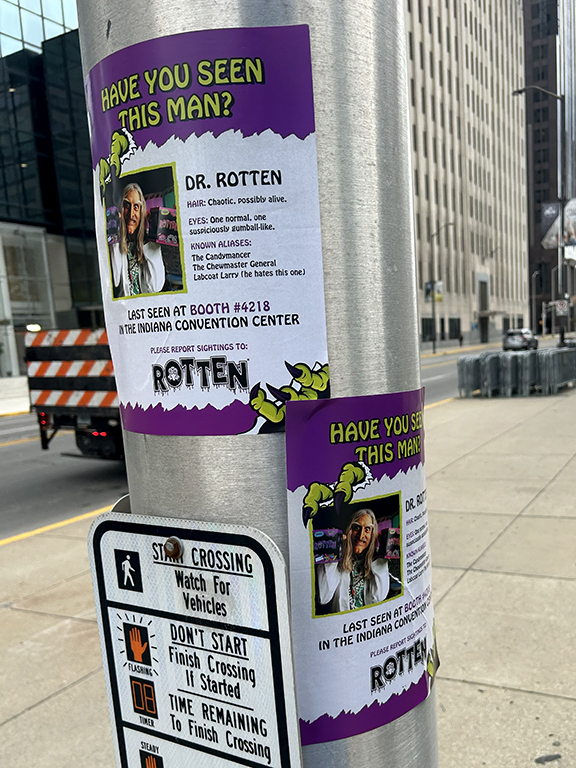
Named trade shows are not generic trade show environments. Dreamforce is not HIMSS is not NRF is not SXSW. Each of these shows has a distinct geography, a distinct professional audience, a distinct city context, and a distinct set of logistical and regulatory conditions that determine which outside-the-hall marketing tactics work and which create problems. An agency that applies the same trade show marketing framework to every named show is an agency that does not understand the shows it is marketing at.
Our team has run street-level marketing campaigns at most of the major named US trade shows across multiple years. The field intelligence we have built across these shows, including which entrance positions produce the highest ambassador interaction rates, which approach routes carry the highest attendee foot traffic, and which hotel corridor environments are accessible for brand ambassador programs, is the practical knowledge that separates effective trade show marketing from the generic “we can activate at your trade show” capabilities that most marketing firms claim.
This guide covers the show-by-show field mechanics of street-level marketing at the seven largest named trade shows in the US: Dreamforce, SXSW, HIMSS, NRF, SEMA, NAB, and IAAPA. Each section covers the show geography, the audience profile, the highest-value outside-the-hall marketing environments, and the specific timing windows that produce the strongest results.
Dreamforce: San Francisco’s Salesforce Ecosystem Event
Dreamforce at Moscone Center in San Francisco’s South of Market district is one of the most geographically concentrated major US trade shows. The Moscone complex and the surrounding SOMA hotel and restaurant cluster contain the entire Dreamforce audience within a compact area that makes outside-the-hall marketing unusually efficient. Brand ambassador programs at Moscone entrances on Howard Street and Third Street, OOH advertising along the pedestrian corridors connecting the surrounding hotels to the venue, and hotel lobby programs in the adjacent Marriott Marquis, Park Central, and Westin all reach the same audience in different geographic environments throughout each conference day.
Dreamforce draws a concentrated Salesforce ecosystem audience: Salesforce customers, prospects, partners, developers, and ISVs from across the enterprise software industry. This professional concentration makes Dreamforce one of the highest-value single-show enterprise software marketing environments in the world. Our brand ambassador agency programs at Dreamforce are briefed specifically on the Salesforce ecosystem context to ensure that ambassador interactions are relevant and professional for an enterprise software audience rather than a consumer product audience.
The morning registration rush at Dreamforce, which runs from approximately 7:30 to 9:30 AM for the first two days of the show, is the highest-volume single activation window at Moscone. All 170,000+ Dreamforce registrants (the show’s typical scale) funnel through a small number of registration and badge pickup points during this window. Brand ambassador teams positioned at the primary pedestrian approaches to Moscone during this window can achieve tens of thousands of direct interactions with the Salesforce ecosystem audience in a two-hour window.
SXSW: Austin’s City-Wide Marketing Environment
SXSW is unique among major named trade shows because it operates across Austin as a city rather than at a single convention center campus. The Austin Convention Center handles the conference sessions, but the music showcases, film screenings, brand activations, and networking events that make up the majority of SXSW’s programming happen across dozens of venues on 6th Street, Red River Street, Rainey Street, and East Austin. This dispersed geography requires a completely different marketing approach than a convention center-concentrated show.
SXSW street-level marketing focuses on the high-density pedestrian environments that concentrate the SXSW audience at specific times: the badge line at the Austin Convention Center during registration, the 6th Street entertainment corridor during evening showcase hours, the Red River Cultural District during the day parties and afternoon programming, and the Rainey Street bar district during late-night events.
Mobile OOH campaigns are particularly effective at SXSW because the dispersed geography means that an LED truck can follow the audience across the city throughout the day and evening, reaching the same attendees at multiple locations in multiple states of mind. A morning approach to the convention center during conference programming, an afternoon loop through the day party district, and an evening route along the 6th Street entertainment corridor covers the SXSW audience across the full programming day in multiple environments.
Our guerrilla marketing services for SXSW include street team programs throughout the festival footprint, LED billboard trucks running city-wide routes across the SXSW geography, and sidewalk stencil programs in the high-foot-traffic festival approach corridors. SXSW requires more geographic coverage than any other named trade show and rewards brands that understand the city’s layout and program with it rather than against it.
HIMSS: Healthcare IT’s Most Important Annual Gathering
HIMSS, the healthcare information and management systems conference, moves between convention cities but most recently has concentrated in Las Vegas and Chicago. The HIMSS audience is the most professionally homogeneous of any major US trade show: healthcare IT executives, hospital CIOs, health system administrators, and the technology vendors who serve them. This professional specificity makes HIMSS brand ambassador programs require the highest level of professional presentation and subject matter credibility among all major named shows.
Brand ambassadors at HIMSS need to understand the healthcare IT context well enough to make credible, relevant pitches to hospital CIOs who have seen every vendor pitch style available. Generic promotional approaches fail completely with the HIMSS audience. Ambassadors briefed on the brand’s specific healthcare IT value proposition, who can engage with attendees on the regulatory, operational, and technology context of healthcare information management, produce dramatically better results than brand ambassadors with standard product briefings.
The approach corridors at HIMSS convention venues, the hotel connections, and the shuttle routes that connect the healthcare IT attendee community to the convention center all produce strong outside-the-hall marketing environments. The compressed geography of HIMSS (most attendees stay at the connected hotel properties) makes brand presence in the hotel-to-venue transition environments particularly efficient.
NRF Retail’s Big Show: Javits Center and the New York Context
NRF at the Javits Center on Manhattan’s far west side concentrates the retail industry’s decision-making audience in one of the most logistically challenging convention environments in the US. The Javits Center’s location at the end of 34th Street, away from the main Midtown hotel cluster, means that most attendees travel to the venue by taxi, rideshare, or on foot along specific approach routes from 34th Street hotels and the Penn Station area.
The NRF approach corridor along 34th Street from 8th Avenue west to the Javits, and along 11th Avenue between 34th and 40th, carries the entire retail industry audience during the morning arrival windows. OOH advertising and brand ambassador programs along this corridor reach every NRF attendee who walks to the venue, which is a substantial proportion given the proximity of Midtown hotels to the 34th Street route.
NRF’s retail industry audience is one of the highest-value professional audiences at any US trade show. The concentration of retail C-suite executives, major retail chain buyers, and retail technology decision-makers makes NRF outside-the-hall marketing programs extraordinarily efficient for retail technology vendors, retail services firms, and any brand seeking access to the senior retail industry community.
NAB Show: Broadcasting and Media Production in Las Vegas
NAB Show at the Las Vegas Convention Center concentrates the broadcast, media production, and entertainment technology industry in a Las Vegas setting that creates specific logistical considerations for outside-the-hall marketing. The Las Vegas Strip hotel network means that NAB attendees are spread across multiple hotel properties rather than concentrated in a single hotel block adjacent to the convention center. The convention center shuttle system connects the Strip hotels to the LVCC, creating shuttle stop environments that function as high-density touchpoints during peak morning and evening transfer windows.
NAB outside-the-hall marketing focuses on the LVCC entrance environments during morning registration, the shuttle stop clusters at the major Strip hotel properties that serve the convention center, and the Las Vegas Convention Center area restaurants and retail along Paradise Road that NAB attendees use during lunch and break periods. LED billboard trucks running the Strip-to-LVCC route during morning arrival hours reach the NAB audience across the full shuttle network in a single mobile campaign.
SEMA: Automotive Aftermarket in Las Vegas
SEMA at the Las Vegas Convention Center occupies a different section of the convention campus and draws a distinct professional audience from NAB: the automotive aftermarket industry’s manufacturers, retailers, distributors, and media. The SEMA audience profile is distinctive for the automotive industry’s combination of professional buyers and passionate enthusiasts, with a proportion of attendees who are attending as enthusiasts as well as professionals.
Outside-the-hall marketing at SEMA benefits from this enthusiast dimension. Brand experiences that engage the automotive passion of the audience, not just the professional buyer motivation, produce response rates from SEMA attendees that exceed what equivalent programs produce at shows with exclusively professional audiences. The outdoor areas around the LVCC during SEMA, where automotive brands often park demonstration vehicles and display vehicles, extend the show’s footprint into an outdoor space that provides additional activation opportunities beyond the indoor convention hall.
IAAPA: Attractions Industry’s Global Convention
IAAPA, the International Association of Amusement Parks and Attractions, typically runs at the Orange County Convention Center in Orlando. The IAAPA audience concentrates theme park operators, attraction owners, ride manufacturers, and entertainment technology suppliers in one of the largest convention centers in the US. The Orlando convention context, with the major theme parks nearby and the convention hotel cluster connected to the OCCC, creates a distinctive environment for outside-the-hall marketing.
The IAAPA audience is professionally diverse in a way that reflects the breadth of the attractions industry: from major theme park executives to small family entertainment center operators. Outside-the-hall programs at IAAPA focus on the convention center entrance environments and the hotel corridor programs in the connected Rosen Centre and Rosen Plaza hotels, where the IAAPA community concentrates for conference networking and events.
Our full guerrilla marketing services for named trade shows include show-specific field intelligence, local field operator coordination at each venue city, brand ambassador programs tailored to each show’s professional audience, and GPS-tracked documentation that verifies campaign execution at every named event in our program portfolio.
Frequently Asked Questions
How do you market outside the hall at Dreamforce?
Dreamforce in San Francisco concentrates its audience between Moscone Center and the surrounding South of Market hotels and restaurants. Brand ambassador programs at Moscone entrances during the morning registration window reach the entire Salesforce ecosystem in a compressed geographic area. OOH advertising along Howard Street and the surrounding SOMA blocks builds awareness in the pedestrian corridors attendees use between hotels and the venue. The compact Dreamforce geography makes outside-the-hall marketing particularly efficient.
What makes SXSW different from other trade show marketing environments?
SXSW operates across a city-wide footprint in Austin rather than a single convention center campus. Attendees move between the Austin Convention Center, the 6th Street entertainment district, the Rainey Street corridor, East Austin venues, and dozens of hotel conference spaces across downtown. This dispersed geography requires mobile OOH, neighborhood-level street team deployment, and multiple activation locations across the full SXSW footprint.
Does AGM run marketing campaigns at named trade shows?
Yes. Our team has run street-level marketing campaigns at Dreamforce, SXSW, HIMSS, NRF, NAB, SEMA, CES, and many other major US trade shows. We deploy brand ambassador programs, OOH campaigns, sidewalk stencils, and experiential activations tailored to the specific geography and audience of each show.
How does NRF Retail’s Big Show work as a marketing environment?
NRF at the Javits Center in New York City concentrates retail industry decision-makers in the far west side of Manhattan. The approach routes from Midtown hotels to the Javits, along 34th Street and 11th Avenue, create predictable pedestrian corridors for OOH and brand ambassador programs. The concentration of retail industry C-suite executives at NRF makes it one of the highest-value single-show professional audiences available in US trade show marketing.
What is the best marketing approach for HIMSS?
HIMSS concentrates healthcare IT executives in convention environments that require the highest level of professional brand ambassador presentation and substantive subject-matter pitches. Generic promotional approaches fail with the HIMSS audience. Ambassadors briefed specifically on healthcare IT context who can engage with attendees on regulatory, operational, and technology specifics produce dramatically better results than standard product briefings.
How does NAB Show work for outside-the-hall marketing?
NAB Show at the Las Vegas Convention Center concentrates the broadcast and media production industry in a Las Vegas setting where attendees are spread across Strip hotel properties and travel to the LVCC via shuttle. OOH campaigns on the Strip approach routes and at shuttle stop locations reach the NAB audience during their transit time. LED billboard trucks running the Strip-to-LVCC route during morning arrival hours are particularly effective.
What makes CES different from other trade show marketing contexts?
CES operates across multiple Las Vegas venue locations simultaneously: the Las Vegas Convention Center, the Venetian Expo, and hotel showroom spaces. The multi-venue geography and enormous scale (150,000+ attendees) create marketing opportunities at multiple venue approach points simultaneously. Mobile billboard and LED truck campaigns are particularly effective at CES because they can cover the multi-venue footprint that static placements cannot.