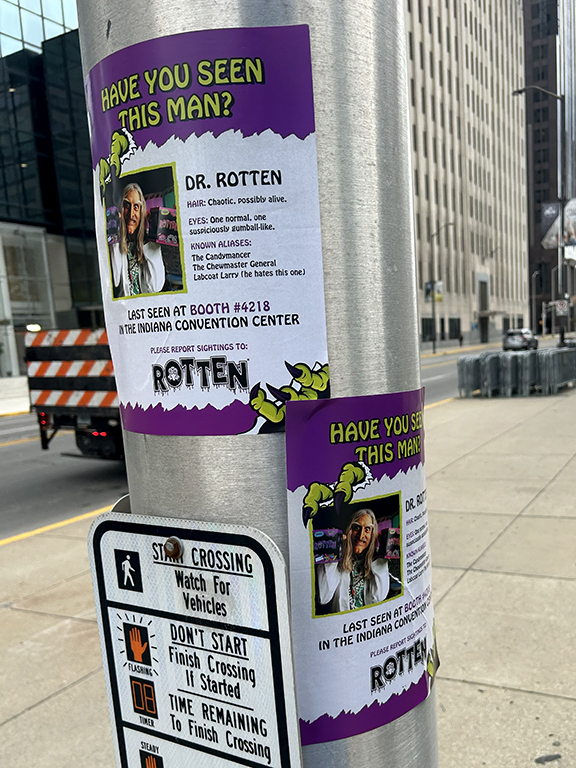
Every exhibitor with a physical product has considered product sampling at trade shows. Most of them run it the same way: a booth staffer hands a sample to whoever walks past the exhibit, the attendee nods, maybe stops for thirty seconds, then moves on to the next booth. That version of sampling works. It is familiar, it runs inside the booth footprint, and it produces some conversions. It also operates in the most competitive, most overstimulated environment imaginable, surrounded by several hundred other exhibitors doing exactly the same thing.
The version of trade show sampling that most exhibitors have not tried is the one that happens outside the convention hall. At the entrance plaza where attendees arrive at 8:15 in the morning. At the hotel breakfast zone before the show floor opens. At the lunch spots two blocks from the venue where attendees scatter for thirty minutes of quiet. Those locations intercept the exact same audience at moments when the product is more relevant, the environment is calmer, and the brand is not competing with an entire exhibition hall for attention.
At American Guerrilla Marketing, our team builds and executes product sampling programs for trade shows and conventions that operate outside the hall entirely. We deploy brand ambassadors, manage product logistics, and place crews at the high-conversion locations where convention attendees move through naturally. This guide covers why the outside-the-hall environment outperforms booth sampling for most product categories, where we deploy, how we manage the logistics, and what brands should plan for across the major U.S. convention markets.
The Psychology of Sampling at Trade Shows and Conventions
Convention floors create a specific psychological state in attendees. By 10 AM on day one, the average attendee has processed dozens of brand interactions, fielded a handful of sales approaches, and begun developing a deflection reflex. Booths compete not just on product but on every sensory element: lighting, signage size, booth design, proximity to main aisles. The attention environment on a convention floor is compressed and adversarial.
Outside the hall, that dynamic reverses. An attendee arriving at the convention center entrance at 8:30 AM is alert, unhurried, and not yet in deflection mode. An attendee grabbing lunch two blocks from the venue is relaxed, on a break, and in a frame of mind that is genuinely more receptive to a brief brand interaction. A well-positioned brand ambassador at a shuttle stop can have a thirty-second conversation that leaves a stronger impression than three minutes of booth interaction, because the attendee chose to engage rather than being surrounded by the environment.
Novelty as a Conversion Multiplier
When a brand appears somewhere unexpected, it registers differently. Attendees who encounter a sampling program outside the hall often comment on it to colleagues, mention it in the context of the event, and remember it as distinct from everything that happened inside the building. That novelty effect is one of the reasons outside-the-hall sampling outperforms booth sampling on recall metrics across product categories.
Timing Advantages Over Booth Sampling
Booth sampling is constrained to show floor hours and is concentrated in moments when attendees are actively navigating exhibits. Outside-the-hall sampling captures the approach window, the departure window, the lunch window, and the hotel morning window, all of which are underserved by any other form of convention marketing. Each of those windows is distinct. The approach window captures fresh attention. The departure window captures attendees processing the day. The lunch window captures a relaxed break-state audience. All three are high-conversion environments when staffed correctly.
Where Convention Product Sampling Works: The Five Key Locations
Not every location outside a convention center is worth staffing. We identify the five location types that consistently produce the highest interaction rates and lowest cost-per-sample across the major convention markets.
Convention Center Entrance Plazas
The entrance plaza is the single highest-traffic location outside any convention center. Attendees converge on a small number of doors from multiple directions during the thirty-minute window before doors open each morning. A team of three to four street team members at the right entrance positions can intercept a significant percentage of attendees before they reach the show floor. At the Las Vegas Convention Center, the entrance plazas on the North and Central Halls are the primary approach points for the major CES, SEMA, and NAB attendee populations. At Javits in New York, the main pedestrian approach from the 11th Avenue side and the Moynihan Train Hall corridor are the critical placement zones.
Hotel Breakfast and Lobby Areas
The hotels adjacent to convention centers host large concentrations of attendees during morning hours. Hotel lobbies and breakfast areas see peak traffic in the 7 to 9 AM window, before the show floor opens. Placing a sampling team in or immediately adjacent to a hotel lobby, with consent coordination handled in advance, reaches attendees in a calm, receptive environment before the day’s sensory load accumulates. This is particularly effective for beverage, food, and supplement categories where a morning consumption context is ideal for the product experience.
Lunch Destination Zones
Convention centers typically have limited and crowded food options, pushing attendees to nearby restaurants and food destinations during the midday break. The blocks immediately surrounding major venues develop predictable lunch traffic patterns. A well-placed sampling team at a lunch destination zone on day one of a show typically achieves higher interaction rates than the same team stationed on the show floor during the same time window. At McCormick Place in Chicago, the Cermak Road corridor and the restaurant cluster near the Hyatt Regency are the primary lunch destinations. In Orlando, the International Drive restaurants near the Orange County Convention Center draw the bulk of midday foot traffic.
Shuttle Stop Waiting Zones
Many major convention centers operate shuttle networks connecting nearby hotels to the venue, and attendees waiting for shuttles represent a captive, dwell-time-rich audience. A three-minute shuttle wait is long enough for a full product experience, a brief conversation, and a literature handoff. Shuttle stop sampling consistently produces higher engagement per interaction than entrance plaza sampling because the audience is stationary and has time to pause.
Outdoor Seating and Break Areas Near the Venue
Convention center complexes typically include outdoor plazas, seating areas, and green spaces that fill with attendees during breaks. These areas generate a standing, stationary audience during mid-morning and mid-afternoon breaks. Sampling teams placed in or adjacent to these areas can operate at a relaxed pace, generating deeper interactions and more detailed product conversations than the rapid-pass environment at entrance plazas.
Trade Show Sampling Logistics: How We Build and Manage the Program
Outside-the-hall sampling is more logistically complex than booth sampling because the team is operating across multiple locations, managing product on the move, and coordinating without the fixed infrastructure of an exhibit booth. Our operations team handles every element of the logistics chain from product receipt to post-event reporting.
Product Transport and On-Site Storage
For perishable or temperature-sensitive products, we coordinate refrigerated transport to the market and on-site cold storage at a hotel room or rented cooler setup near the deployment locations. For non-perishable products, we stage inventory in a vehicle that serves as the mobile base for the sampling team, allowing crews to reload without traveling back to a fixed storage point. Product inventory is tracked by shift so we know daily distribution volume and can adjust the following day’s pull quantity based on actual throughput.
Branded Packaging and Distribution Materials
Samples need to be packaged in a way that survives mobile distribution and leaves the attendee with a branded impression. We coordinate branded sample packaging, collateral cards with QR codes or short URLs, and branded bags or carriers when volume allows. The goal is for the sample handoff to leave the attendee with three things: the product itself, the brand name, and a clear next step to learn more or connect with the booth if one exists.
Team Management and Shift Structure
Convention sampling programs typically run across three shifts aligned with attendee movement windows. The morning shift covers the 7:30 to 10 AM approach and hotel zone window. The midday shift covers 11:30 AM to 1:30 PM at lunch zones and outdoor areas. An optional evening shift covers the 5 to 7 PM departure and hotel bar window for brands targeting the post-show networking audience. Each shift uses a different location set and a different conversational pitch calibrated to the attendee frame of mind at that time of day.
Product Categories That Perform Best for Convention Sampling
Not every product is equally suited to trade show sampling outside the hall. The highest-performing categories share a common characteristic: the product creates an immediate, sensory experience that the sample delivers in full. An attendee who tastes your product at the entrance plaza has a complete experience in under thirty seconds. An attendee who receives a bottle of your beverage supplement can make an immediate evaluation. That directness of experience is what drives recall and conversion.
The strongest categories we see at convention markets include packaged food and beverage, including energy drinks, functional beverages, nutrition bars, and snack products; personal care items, including skincare samples, hand treatments, and wellness products that are immediately usable; tech accessories small enough to sample and demonstrate in a brief interaction; and branded merchandise like tote bags or useful giveaway items that attendees will carry through the rest of the convention, serving as walking signage for the brand.
Our product sampling team has experience across all of these categories. We match the distribution approach, pitch script, and location strategy to the product type and the event audience to maximize interaction quality per sample distributed.
Connecting the Outside-the-Hall Sampling Program to Booth Traffic
For brands with an exhibit presence, outside-the-hall sampling is most powerful when it is connected to the booth experience. The sample handoff becomes a teaser for a fuller booth conversation. We train sampling teams to direct interested attendees to the booth by name and location, and to use handoff cards or QR codes that track the traffic attribution back to the sampling program. Brands that run coordinated inside-booth and outside-the-hall sampling programs typically see booth traffic increases of 20 to 40 percent attributable to the street-level sampling activity, depending on the category and the quality of the product experience.
For brands without a booth, outside-the-hall sampling functions as a standalone presence play. The product and the brand ambassador create the entire brand experience in that brief interaction, which places even higher demands on the quality of the sample, the packaging, and the ambassador conversation. Our experiential marketing team designs these standalone programs to be self-contained, ensuring attendees leave the interaction with everything they need to follow up with the brand digitally.
Convention Sampling Programs by Market
The tactical details of outside-the-hall sampling vary by city and venue. Each convention center complex has a different physical layout, a different transit environment, and a different attendee movement pattern. Below are operational notes on the four highest-volume convention markets.
Las Vegas Convention Center Shows
CES, SEMA, NAB, and the other major Las Vegas shows draw attendees who move between the LVCC and the Strip hotel corridor daily. The primary sampling locations are the entrance plazas on the north and central sides of the LVCC, the Monorail station at the Convention Center stop, and the Las Vegas Boulevard hotel lobby zones during morning hours. Our Las Vegas sampling operations coordinate with the same local crew network we use for LED billboard truck deployments around the Strip, allowing brands to run integrated street-level campaigns across multiple formats simultaneously.
Javits Center, New York
New York shows at Javits draw attendees arriving primarily from Midtown hotels and Penn Station via the M34 crosstown bus or the 7 train to Hudson Yards. The 11th Avenue entrance corridor is the primary sampling location during morning approach hours. The Hudson Yards outdoor plaza area is ideal during lunch and break windows. Our New York team is based in Industry City, Brooklyn, and manages the full logistics chain for Javits-area sampling programs, including product storage and crew coordination.
McCormick Place, Chicago
Chicago’s McCormick Place is one of the largest convention centers in North America, and its relative isolation from the main hotel district creates predictable shuttle and transit patterns that are ideal for sampling placement. Shuttle stops along Martin Luther King Drive and the Metra station at McCormick Place are the highest-traffic non-venue locations. The food destinations on Cermak Road capture the lunch window reliably. Our guerrilla marketing team handles McCormick-area programs with a Chicago-based crew operating from a staging location in the South Loop.
Orange County Convention Center, Orlando
Orlando’s OCCC draws attendees from the International Drive hotel corridor, and the walking and transit environment between hotels and the convention center creates excellent sampling windows. The pedestrian path along International Drive between the hotel blocks and the OCCC entrance is a reliable morning approach zone. Our Orlando crew handles OCCC programs including sampling team deployment, product staging, and coordination with any LED truck or sidewalk stencil programs running concurrently at the same event.
Measuring Trade Show Sampling Performance
Outside-the-hall sampling is measurable at the program level even without formal survey infrastructure. We track units distributed by shift, by location, and by day. We track booth traffic attributable to the sampling program using QR code analytics or badge scan data where available. We track lead quality through a post-event comparison of booth lead demographics against the sampling team’s interaction log. For brands running digital follow-up against the convention audience, we can segment campaign performance by attendees who received a sample versus those who did not, providing a direct conversion comparison.
Each program ends with a full post-event report covering distribution totals, location performance, crew hours, and any notable attendee feedback gathered during interactions. We use that data to refine the approach for the next trade show in the same market or the same industry vertical.
Frequently Asked Questions
Why does trade show product sampling work better outside the hall than inside a booth?
Inside a booth, you compete with hundreds of exhibitors for the same attention in the same overstimulated environment. Outside the hall, at entrance plazas, hotel breakfast zones, and lunch spots, you intercept the same attendees during calmer moments when they are more receptive and not actively deflecting sales pitches. The outside-the-hall environment produces higher recall and more relaxed product interactions than the show floor.
What locations work best for trade show product sampling?
The five highest-performing locations are convention center entrance plazas, hotel breakfast and lobby areas, lunch destination zones within walking distance of the venue, shuttle stop waiting areas, and outdoor seating and break zones adjacent to the convention center. Each location type captures a distinct attendee moment and a different receptivity frame.
Do you handle product storage and logistics for convention sampling programs?
Yes. Our team manages product transport, on-site storage including temperature control where required, branded packaging and collateral, and full crew logistics across morning, midday, and evening shifts. Brands ship product to our local staging point and we handle everything from there through the final post-event distribution report.
What product categories perform best for convention sampling?
Packaged food and beverage, supplements, personal care, tech accessories, and branded merchandise all perform strongly. The consistent characteristic of high-performing sampling categories is a product that delivers a complete, sensory experience in under thirty seconds, giving the attendee an immediate basis for evaluation and recall.
Can you run a sampling program at a trade show even if we do not have an exhibit booth?
Yes. Our outside-the-hall sampling programs operate completely independently of booth presence. Many brands use this approach as a standalone convention marketing tactic, reaching the full attendee audience without the cost and complexity of an exhibit floor presence.
What major convention markets does American Guerrilla Marketing operate in?
We operate in Las Vegas, New York, Chicago, Orlando, San Francisco, Los Angeles, Miami, Dallas, Boston, and 40+ additional U.S. markets. Our network of vetted sampling crews and local logistics partners covers every major convention center in the country. Call us at (646) 776-2770 to discuss your specific event and market.
How much product should we plan to distribute at a convention sampling program?
For a three-day trade show with 20,000 attendees, a well-placed outside-the-hall program typically distributes 3,000 to 8,000 units depending on team size, deployment hours, and location count. We calculate a specific volume recommendation for each program based on event attendance data and your placement plan.