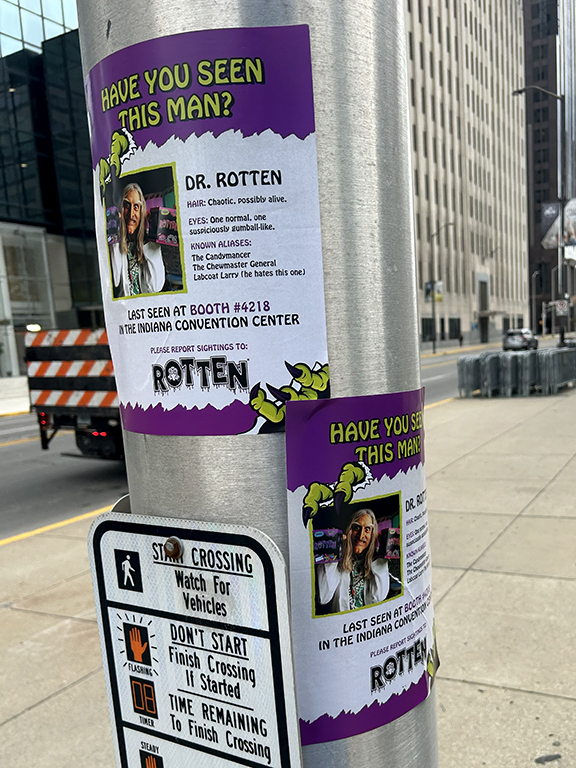
Trade Show Booth Traffic: The Field Tactics That Actually Drive Attendees Through Your Door
The advice you will find on most trade show marketing blogs for driving booth traffic follows a familiar pattern: design an eye-catching booth, choose a high-traffic aisle location, run pre-show social media, staff your booth with engaging people, have a hook or a giveaway. All of that is reasonable. None of it is the whole picture.
What those articles consistently miss is the field—the geography outside the convention hall where the battle for attendee attention is almost completely uncontested. While every exhibitor is optimizing their 10-by-10-foot booth layout and booking premium location packages, the streets around the convention center are empty of brand marketing. The hotel lobbies where attendees cluster in the morning are empty. The shuttle stops where they wait for eight minutes twice a day are empty. The rideshare zones where they stand with their phones and nothing to do are empty.
That empty territory is the trade show booth traffic opportunity that almost no one is taking. At American Guerrilla Marketing, it is where we work. This piece is a detailed walkthrough of the field tactics we use to drive booth traffic from outside the convention hall—how each one works, where it deploys, and what it actually generates in the field.
The Pre-Arrival Window: Where the Booth Traffic Decision Gets Made
There is a window between when an attendee wakes up in their hotel room and when they badge into the convention hall that most exhibitors have no presence in. That window is where the day’s agenda gets formed. Attendees are scrolling through the exhibitor list, checking their schedule, thinking about who they want to see. A brand that appears in their environment during that planning window—as they walk to the hotel breakfast spot, as they wait for a rideshare, as they walk the approach route to the convention center—inserts itself into that planning process in a tangible, memorable way.
The pre-arrival window is the highest-value period of the convention day for driving booth traffic. Attendees are fresh, unhurried, and mentally organizing. A well-placed brand ambassador, a product sample that makes the walk better, a mobile billboard they pass on the approach—these are not just impressions. They are inputs to the attendee’s mental model of who they should visit on the floor.
Field note: We have seen brand ambassador deployments at hotel lobby areas generate measurable booth traffic increases for clients when the ambassadors are briefed to include specific booth location information—hall letter, aisle number, easy landmark—in every engagement. The more specific the direction, the higher the conversion from street contact to booth visit.
Tactic 1: Street Teams at Convention Entrances
Convention center entrances are the single highest-density pedestrian concentration point in the entire trade show geography. Every single attendee passes through the primary entrance corridors—for badge check, for daily re-entry, for transitions between halls. The volume of qualified foot traffic at a major convention center entrance during the 8:00 to 9:30 a.m. peak arrival window is enormous and fully predictable.
Street teams deployed at convention entrances—outside the hall, on the public sidewalk and plaza areas adjacent to the entrance—intercept this flow with materials, messages, and direct conversation. The key is positioning. Convention center entrances typically have specific chokepoints where the pedestrian flow converges: the approach from the main parking/rideshare zone, the primary pedestrian corridor from the hotel district, the exit from the transit station serving the venue. We identify these chokepoints in advance and deploy our street teams at the highest-volume intersection of attendee traffic.
What Convention Entrance Street Teams Do
An effective convention entrance street team does three things simultaneously:
Material distribution—high-quality, compact materials that tell the attendee exactly why they should visit your booth and where it is. Not a generic brochure. A targeted piece with a specific value proposition and specific booth direction.
Active engagement—brief conversations (30 seconds to two minutes) that qualify the attendee’s interest and reinforce the booth visit invitation with a personal touch. The ambassador is not just handing out flyers—they are having conversations.
Brand impression—even attendees who do not stop and engage see the brand ambassador in uniform, see the materials, and register the brand as present and active in this environment. That frequency contributes to booth visit intent even without a direct conversation.
We brief convention entrance street teams on the specific show audience, the client’s key differentiators, and the exact booth location with easy landmark references. A briefed team that can have a genuine 60-second conversation about why a prospect should visit the booth outperforms an unbriefed team handing out materials by a wide margin.
Tactic 2: Brand Ambassadors at Hotel Lobbies
The hotels where convention attendees stay are the second most valuable deployment point in the trade show field geography, after the convention entrance itself. And unlike the convention entrance, hotel lobbies offer a significantly more relaxed and receptive audience environment.
Hotel lobbies during the pre-show morning window—roughly 7:00 to 9:00 a.m.—are busy with a specific kind of activity: checking out (briefly, then heading to the show), grabbing breakfast or coffee, waiting for colleagues, reviewing the day’s agenda on a laptop or phone. Every person doing any of those things is a qualified trade show attendee in a relatively unhurried state. They have time for a 90-second conversation that the packed convention floor never provides.
Which Hotels to Target
For any major trade show, we identify the primary attendee hotels in advance. This information is usually available through the show’s official hotel block, the convention’s hotel partner listing, or through our field knowledge of each market. In Las Vegas, the Westgate, Renaissance, and Marriott cluster near the LVCC are the primary LVCC attendee hotels—but for CES-scale shows, the Strip hotel deployments at The Venetian, Wynn, and Caesars are equally important. In Chicago, the Hyatt Regency McCormick Place and Marriott Marquis are anchor properties. In New York, the Marriott at Hudson Yards and the cluster of Javits-adjacent properties on the West Side are primary targets.
The highest-value hotel lobby deployments are at the properties with the highest concentration of the specific show’s attendees—which is not always the closest hotel to the venue. We research attendance patterns, check official block data, and apply our market knowledge to identify the right properties for each campaign.
What Hotel Lobby Brand Ambassadors Do
Hotel lobby brand ambassadors are positioned in the natural flow paths within the lobby—near the elevator banks (the most consistent traffic point), adjacent to the lobby coffee service area, or near the hotel entrance for attendees coming and going. They are dressed in clear brand representation, with materials that speak specifically to the show and the booth, and briefed to engage in a natural, professional way that respects the hotel environment and the attendee’s morning schedule.
The engagement objective in a hotel lobby is slightly different from the convention entrance. At the entrance, the contact is quick—attendees are in motion. In the lobby, there is more time. Ambassadors can have a more substantive conversation, learn something about the attendee’s role and interests, and tailor the booth invitation to what is specifically relevant to that person. Those tailored invitations convert at higher rates than generic ones.
Tactic 3: Sampling at Convention Center Entrances
Product sampling at the convention center entrance creates a brand touchpoint that is both tangible and contextually perfectly timed. Convention attendees walking in during the morning arrive in a physical state that tends to make certain kinds of samples genuinely welcome: they are alert, their energy levels are variable, they are mentally preparing for a full day on their feet.
A functional beverage sample—an energy drink, a kombucha, a packaged coffee product—handed to an attendee walking into the convention at 8:30 a.m. lands in a moment when the product is genuinely useful. A branded snack pack that gives the attendee something to eat on the walk through the exhibit hall hits a real need. A useful branded item—not cheap swag, but something the attendee will actually use during the show day—creates a positive brand association through functional value rather than just messaging.
Sampling Placement and Timing
Sampling at convention entrances requires attention to placement and timing. We position sampling teams at the natural pauses in the approach flow—at the last outdoor plaza before the entrance doors, at the badge check adjacent area where attendees briefly pause, at the outdoor seating areas near the main entrance where some attendees stop for a moment before going in. These pauses are where sampling creates the most impact: the attendee is not in full motion, they have a second to receive and process the sample, and the interaction can be completed naturally without a awkward catch-me-if-you-can running distribution.
Timing is equally important. The morning arrival window (7:30 to 9:30 a.m.) is the highest-value sampling window at most trade shows—maximum traffic density, maximum morning product relevance, maximum planning-window brand insertion. A secondary sampling window around the lunch hour (11:30 a.m. to 1:30 p.m.) catches the departure flow heading to the lunch zones and the return flow coming back in.
Tactic 4: Mobile Billboards Circling the Venue
A mobile billboard truck circling the convention venue and its immediate district is a brand presence format that the show floor simply cannot replicate. Inside the hall, your brand occupies one fixed point among thousands. Outside the hall, a mobile billboard goes wherever the audience is—on the approach route, in front of the convention center main entrance, through the hotel strip, past the restaurants where attendees eat at noon.
The circling pattern is deliberate. We route mobile billboards through the convention district on a loop that is calculated to pass through the highest-density points of attendee movement multiple times per hour during peak windows. An attendee who sees the billboard on the way in from the hotel, then again at the convention center entrance, then again from the window of the hotel restaurant at lunch, has had three separate impressions in three separate contexts—and not a single one of those impressions required the attendee to walk past the right aisle in the right hall.
Mobile Billboard Timing for Booth Traffic
For booth traffic specifically, the most valuable mobile billboard windows are:
Pre-show morning (7:00 to 9:30 a.m.)—attendees on the move toward the venue, in the planning mindset, encountering the brand message right before they make their floor agenda
Mid-morning break (10:30 to 11:00 a.m.)—when attendees exit session areas for a brief break, the mobile billboard in the adjacent exterior area catches them in a brief outdoor moment
Lunch window (11:30 a.m. to 1:30 p.m.)—the highest-volume attendee movement window of the day outside the show open/close; attendees are in motion between the venue and lunch destinations
LED mobile billboard trucks add the dimension of video—your product demo loop, your booth event invitation, your brand message in motion. In high-visual markets like Las Vegas where the ambient visual environment is saturated, an LED truck with a compelling visual plays above the baseline noise level in a way that a static board alone sometimes cannot.
Tactic 5: Coordinated Multi-Point Deployment
The highest-performing booth traffic programs we run are not single-tactic campaigns. They are coordinated deployments that place brand presence at multiple points in the attendee’s daily movement simultaneously. The result is a frequency effect—the attendee encounters the brand at the hotel lobby, then again at the approach route, then again at the convention entrance, then again on the mobile billboard at lunch. By the time they are on the floor considering which booths to visit, this brand has been in their environment four times across different contexts.
That frequency is the difference between a brand the attendee vaguely recognizes and a brand they have had a mental relationship with all day. Booth visits for the recognized brand are warmer, more intentional, and more likely to result in a qualified conversation than the cold stop from a floor walk.
Deployment Point
Timing
Attendee State
Primary Objective
Hotel lobby brand ambassadors
7:00—9:00 a.m.
Relaxed, morning planning mode
Direct booth invitation with tailored conversation
Convention entrance street team
7:30—9:30 a.m.
Moving, professional mindset
Material distribution + booth location awareness
Convention entrance sampling
7:30—9:30 a.m.
Arriving, need-aware
Brand association through product value
Mobile billboard route
7:00 a.m.—7:00 p.m.
Varied throughout day
Frequency and reach across all movement points
Evening restaurant/bar ambassadors
5:30—8:00 p.m.
Social, relaxed, reflective
Next-day booth visit invitation
Briefing: The Difference Between a Team That Converts and One That Doesn’t
The most common failure mode we see in street-team-based booth traffic programs is insufficient briefing. Brand ambassadors who do not deeply understand the client’s brand, the show audience, or the specific booth value proposition default to generic interactions: “Here is a flyer, our booth is in Hall A.” That interaction generates awareness but rarely converts to a visit.
A properly briefed brand ambassador can do something meaningfully different: engage in a real 60-second conversation that identifies whether the person they are talking to is actually a qualified prospect, communicate a specific and relevant value proposition for that person’s role, and direct them to the booth with enough context that they actually show up with intent rather than wandering past.
Our briefing process for trade show street teams covers:
Client overview: what the company does, what problem it solves, who its customers are
Show audience: who attends this show, what their primary roles are, what they typically come to this show to find
Booth specifics: hall, aisle number, a memorable visual landmark, any key events or demonstrations happening at the booth on specific days
Qualifying questions: how to quickly identify whether someone is a relevant prospect versus a general attendee who will not benefit from a booth visit
Handling objections: how to respond to “I’ve already seen you guys” or “we’re not in the market right now” in a way that still creates a positive brand impression
That briefing depth takes time before each show. It is non-negotiable for us. A team that has not been properly prepared performs at a fraction of the capacity of one that has.
Measuring Booth Traffic from Field Activations
One of the most common questions we get from new clients is how to connect field activations to booth traffic numbers. The direct measurement challenge is real—there is no automatic tracking tag that moves from a street ambassador’s materials to a booth badge scan. But there are practical approaches that give useful signal.
The simplest is to include a specific element in the materials distributed by field teams that booth staff can track. A unique QR code on ambassador-distributed materials, tracked separately from digital ads and pre-show emails, gives a clean count of how many booth visits originated from street-team-distributed materials. A distinct offer or invitation included only in the street materials (“mention this invitation for X at the booth”) creates a trackable conversion point.
Beyond direct tracking, we look at qualitative signals: did booth staff notice an increase in attendees who said they “saw someone outside” or who arrived with a specific material piece? Did the early morning booth traffic—the first-hour visitors who had not yet done a full floor walk—increase relative to previous shows? These signals, combined with impression volume from ambassador deployments and mobile billboard routes, give a working picture of field activation impact that is useful for evaluating campaign ROI.
Booth Traffic at Specific Show Venues: What the Geography Demands
Las Vegas Convention Center
The LVCC entrance on the North Hall side on Convention Center Drive, and the main Central Hall entrance on Convention Center Drive, are the two primary arrival points for the majority of attendees. The paved pedestrian plaza areas surrounding these entrances are large, open, and handle enormous foot traffic during morning arrivals. Street teams at these plazas, combined with brand ambassador deployments at the Westgate and Marriott hotels immediately adjacent, cover the majority of the on-foot attendee arrival flow for most LVCC shows.
Javits Center, New York
The Javits main entrance on 11th Avenue between 34th and 40th Streets is the primary pedestrian arrival point for subway and rideshare attendees. The elevated public walkway connecting the Hudson Yards development to the Javits area and the outdoor plaza approach from the 7 train station exit are the highest-density pedestrian corridors. Street teams at these convergence points—particularly the 34th Street and 11th Avenue approach plaza—cover the bulk of the transit-arriving attendee flow.
McCormick Place, Chicago
The main entrance on Martin Luther King Drive, the sky-bridge connection to the Hyatt Regency, and the Cermak station pedestrian approach are the three primary attendee arrival corridors at McCormick. For maximum booth traffic impact, brand ambassador deployments at the Cermak approach (capturing the transit audience) and at the Hyatt lobby (capturing the hotel audience) cover the two largest attendee arrival populations outside the rideshare drop-off zone.
Orange County Convention Center, Orlando
The OCCC’s dispersed hotel geography and shuttle-dependent movement patterns make the hotel shuttle stops the highest-value deployment point in this market. Morning shuttle stops at the Rosen Centre, Hyatt Regency, and Hilton Orlando on I-Drive are where the maximum attendee concentration occurs in the pre-show window. Convention entrance sampling at the OCCC West Building entry on Destination Parkway covers the rideshare and taxi arrival flow simultaneously.
Frequently Asked Questions
What is the most effective single tactic for driving trade show booth traffic from outside the hall?
In our field experience, hotel lobby brand ambassador deployments during the morning pre-show window generate the highest-quality booth traffic leads—the longest conversations, the most tailored booth invitations, and the warmest attendee visits. Convention entrance street teams generate higher raw volume. The combination of the two, coordinated with the same briefing, produces both quality and quantity.
How early should we deploy street teams on the first day of the show?
Convention entrance deployments should be in place before the venue doors open—typically by 7:30 a.m. for an 8:00 a.m. opening. Hotel lobby deployments can start as early as 7:00 a.m. for shows with early general sessions or heavy early-morning floor traffic. The goal is to be present during the full pre-show movement window, not just the peak moment.
Does field activation for booth traffic work at smaller trade shows?
Yes, and in some ways it works better at smaller shows. At a niche industry trade show with 3,000 to 5,000 attendees, a well-deployed brand ambassador team can reach a meaningful percentage of the total attendance in a single morning. At a 60,000-person mega-show, the same team covers a smaller fraction of total attendance but still generates significant booth traffic from the contacts made. The cost-efficiency of field activation scales down well for smaller shows.
Can we use field teams to promote a specific booth event, not just the booth itself?
Absolutely. Street teams briefed to invite attendees to a specific demonstration, product launch, or presentation happening at the booth at a specific time can drive targeted event traffic that is even more valuable than general booth visits. An attendee who comes to the booth at 2 p.m. specifically for the product demo is significantly further along in the consideration process than one who wanders past.
How do you handle multi-day shows where the same tactics might feel repetitive?
We rotate messaging and placement across show days so the experience feels fresh rather than repetitive. Day 1 street teams focus on awareness and the full show-week invitation. Day 2 teams can shift to promoting a specific day-of event or demonstration. Different deployment locations on different days also reduce repetition for attendees who move through the same corridors. Multi-day campaigns require a day-by-day messaging plan, and we build that into every multi-day program.
Should we do field activations if we have a small booth or less prominent location?
Field activation is especially valuable for exhibitors with non-premium booth positions. If you are in a back aisle or a secondary hall, the general floor traffic at your location is lower than for front-row or high-traffic-aisle exhibitors. Street-level activations compensate for that position disadvantage by directing specifically qualified traffic to your booth with explicit location guidance—which is more effective than relying on organic floor traffic to find you.
How do sampling programs at convention entrances drive booth traffic specifically?
Sampling creates a brand impression that is both tangible and personalized. When sampling teams include branded materials with booth location information in the sample distribution, they create a direct brand-to-booth connection at the moment of the most positive brand interaction. We include booth location information in every sampling distribution piece specifically for this reason—the sample creates the positive association, the material converts it to a booth visit direction.
What is the best way to brief field teams for trade show booth traffic work?
The brief needs to cover the client’s brand and value proposition, the specific show audience, the booth’s exact location with easy landmarks, any key events happening at the booth, and qualifying questions to identify relevant prospects. A good brief takes 30 to 45 minutes and turns a generic team into one that can have genuine, converting conversations. We do not skip the briefing; it is the foundation of the campaign’s performance.