Tour Marketing Agency: What We Actually Do City by City for Live Tours on the Road
If you search “tour marketing agency” right now, almost everything you will find is about tourism marketing—digital campaigns for travel companies, booking engines, destination marketing organizations. That is not what we do. We are a tour marketing agency in the sense that actually matters for live entertainment: we put campaigns on the streets of every city a tour visits, in the physical geography surrounding the venues, in the hours and days before a show draws a crowd.
American Guerrilla Marketing has run street-level campaigns for music tours, comedy tours, theatrical productions, and residencies across the country. We have worked the approach routes to Madison Square Garden in Manhattan, the United Center neighborhood in Chicago, and the Hollywood Bowl corridors in Los Angeles. Each of those venues has a specific geography that determines where the campaign lives and how the audience encounters it on the way in. Understanding that geography is what separates a tour marketing agency that has actually done this work from one that puts together a slide deck and calls it a strategy.
This article is a detailed walkthrough of what tour marketing looks like in the field. We cover the planning process, the tools and formats we deploy, and the specific geography of three major markets where we have the most experience. If you are managing a national tour and trying to understand what ground-level promotional support actually involves, this is the clearest explanation you will find anywhere.
A tour marketing agency focused on live entertainment handles the street presence of a tour in each market it visits. The job is to create visible momentum around a show in the physical environment where the audience lives and moves. That means outdoor advertising, street team activation, and format-specific placements timed to the show date.
The work starts days before the show, not the morning of. Effective tour marketing requires enough lead time for audiences to encounter the campaign multiple times in their daily routines. A poster that goes up 24 hours before a show catches the audience member who was already planning to come. A poster that goes up five days before a show has a chance of reminding someone who was on the fence, driving them to the box office or the ticketing link. The difference between those two scenarios is the difference between a sold-out house and one with open seats.
Our role on a given tour date typically begins two to three weeks before the show with advance coordination: establishing vendor contacts in the local market, confirming placements, reviewing venue geography, and building the deployment plan. By the time the date is 72 hours out, the plan is fully operational and the team is ready to execute.
The Core Formats We Deploy on Tour
Every tour market deployment uses some combination of the following formats, scaled and mixed based on venue size, market characteristics, and campaign goals:
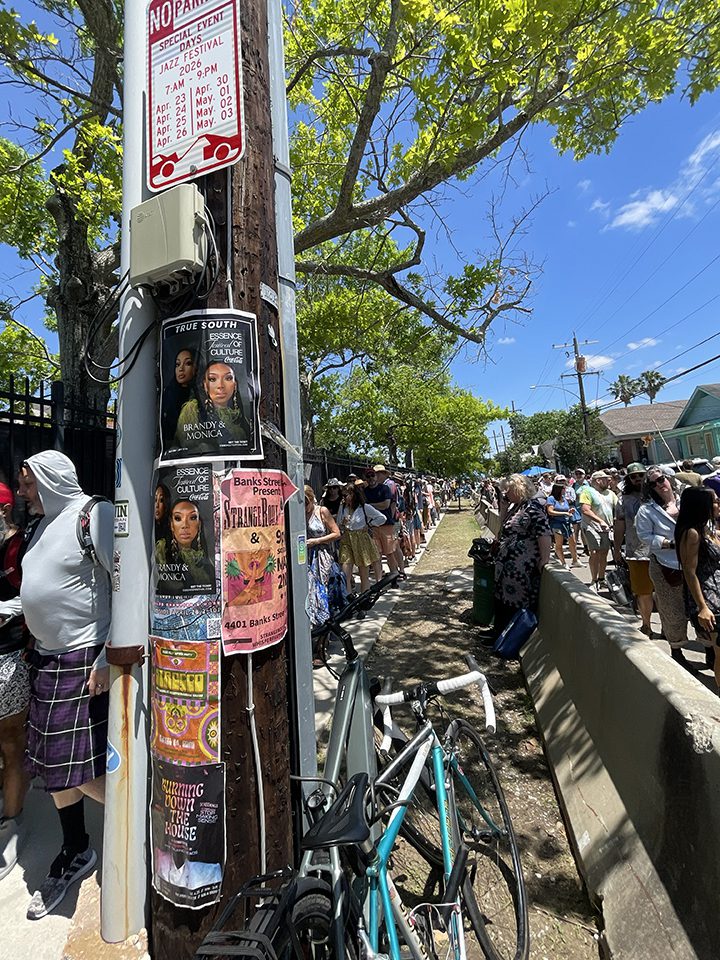
Poster campaigns: High-visibility placements on the blocks immediately surrounding the venue, along approach routes, and in the neighborhoods where the audience is most concentrated. We handle production, placement, and market-specific logistics.
Street teams: Two to eight person crews deployed to flyering, sampling, and engagement work in the venue district and at relevant foot traffic locations in the market.
Brand ambassadors: Positioned at the venue approaches and at high-concentration points like transit exits, parking structure entrances, and the venue box office area to deliver direct audience contact in the hours before and during shows.
Mobile billboards: Truck-mounted boards circling the venue district on show day, reaching both the arriving audience and the broader neighborhood population.
The mix changes by market and by tour type. A 2,000-capacity club tour in three cities uses a different deployment plan than a 20,000-seat arena tour with 35 dates. But the underlying principle—put the campaign in the physical path of the audience, at the right time, in the right formats—stays constant regardless of scale.
The 72-Hour Window: How a Market Activation Unfolds
The 72 hours before a show is where tour marketing either works or does not. Everything that happens in that window—what goes up, where it goes up, who is deployed and when—determines whether the campaign creates visible momentum or blends into the background noise of the city.
72 Hours Out: Installation and Advance Presence
Three days before the show, the poster campaign goes up. We work with local crews who know the specific blocks around the venue—not a map of the blocks, but the actual surfaces, the traffic patterns, the sight lines. Which walls on this specific block face the heaviest foot traffic? Where does a poster at 7th Avenue and 33rd Street read from? What is the pedestrian flow pattern coming out of Penn Station and which direction does the audience disperse from the 34th Street transit hub toward the Garden?
These are not abstract questions. They are the operational intelligence that determines whether a poster placement generates 8,000 impressions over three days or 800. We have walked those routes enough times that the decisions are not guesswork—they come from knowing what actually works at each specific location.
The 72-hour window also includes any surface work that benefits from multiple days of exposure: high-traffic locations with long dwell times, spots near venue parking that audiences will encounter on their way in and on their way out. The goal at this stage is to seed the campaign across the venue geography before the audience convergence begins.
24 Hours Out: Street Team Pre-Activation
The day before the show, street teams begin active engagement work. This is flyering and conversational brand contact at high-foot-traffic locations within walking distance of the venue. In New York, that might mean the food hall at Moynihan Train Hall, the turnstile exits at the 34th Street Penn Station subway complex, and the pedestrian flow on 7th Avenue between 28th and 33rd Streets—the corridor that funnels the bulk of the Manhattan foot traffic toward MSG.
Street team deployment at this stage is as much about creating awareness as it is about distribution. A team member who engages someone directly and hands them a flyer creates a moment of human contact that a poster cannot. That contact has a higher recall rate than passive exposure, and it is the appropriate format for the window when a potential audience member might still be deciding whether to go.
Show Day: Full Deployment
On the day of the show, the full campaign is live. Mobile billboards are in rotation through the venue district from early afternoon through the show’s load-in. Brand ambassadors are positioned at the transit approaches—the station exits, the box office area, the pedestrian channels leading to the main entrance—as the crowd builds from two hours before doors through first song. Street teams stay active on the approach blocks, engaging the foot traffic that is moving toward the venue.
The goal on show day is not to convince someone to buy a ticket at the last minute. It is to create the kind of visible street presence that confirms the show is a real event—the urban signal that something significant is happening at this venue tonight. That presence shapes perception for both the arriving audience and the street population around the venue who may not be going. That secondary audience becomes an awareness pool for the next tour stop announcement or the next album release.
Field note: The most common mistake in tour marketing is compressing all activity into show day. Show-day flyering and ambassador work matters, but campaigns that start 72 hours out consistently outperform campaigns that start the morning of. The difference is cumulative exposure—each time someone in the neighborhood sees the campaign is another impression stacking toward action.
Madison Square Garden: The New York Approach Geography
Madison Square Garden sits at the intersection of 7th Avenue and 31st Street in Midtown Manhattan, with the main entrance on 7th Avenue between 31st and 33rd Streets. The venue is directly above Penn Station, one of the busiest transit hubs in the country, which means a significant portion of every MSG audience arrives by subway and commuter rail. Understanding the pedestrian flow out of Penn Station and its surrounding transit infrastructure is essential to effective tour marketing in this market.
The Key Approach Corridors
The primary audience approach routes to MSG run along 7th Avenue and 8th Avenue between 31st and 34th Streets. 7th Avenue is the main facade of the building and carries the most concentrated pedestrian traffic toward the entrance in the hours before a show. The sidewalk along 7th Avenue from 29th Street north to 34th Street is one of the highest-value poster placement zones in the building’s approach geography—the audience walks this corridor, and anything on those walls gets multiple impressions over the time it takes to reach the doors.
8th Avenue between 31st and 34th runs parallel to 7th and catches a significant portion of the audience coming from the Port Authority Bus Terminal to the north and from the subway exits on the 8th Avenue lines. The corridor along 8th Avenue is particularly strong for brand ambassador deployment because the pedestrian flow is more dispersed than on 7th—there are multiple routes converging on the venue from the 8th Avenue side, which gives a well-positioned team member good engagement volume over the show-day window.
The blocks east of 7th Avenue—particularly 34th Street between 7th and Broadway—carry heavy tourist and retail traffic from Herald Square and Macy’s. This population skews less toward the specific show audience, but for major tours with broad awareness, it is worth having presence in this corridor because the incidental exposure to the campaign extends reach beyond the core ticket-holding audience.
Transit Exit Strategy at MSG
The subway exits around Penn Station are a critical targeting layer for MSG campaigns. The 1/2/3 trains and the A/C/E trains both exit into the Penn Station complex, and the pedestrian flow from those exits onto 7th and 8th Avenue surfaces is predictable and dense. We position brand ambassadors at the street-level exits rather than inside the transit system—on the sidewalk immediately outside the stairwells where the crowd surfaces and reorients itself. That moment of reorientation is a natural engagement window: the person has just come up from underground, they are looking around, they have three seconds before they start moving toward the venue. A confident team member with a flyer or a promotional item in that moment gets a disproportionate amount of attention relative to the effort.
For shows with late-arriving crowds—major concert acts, for instance—the deployment window at the transit exits extends right up to setlist start time. We do not pull the team at doors-open. We keep people in the approach corridors through the period when the audience is still streaming in, which in New York can be 45 minutes to an hour after official show time.
The United Center: Chicago’s West Side Venue District
The United Center sits at 1901 West Madison Street in the Near West Side neighborhood, approximately a mile and a half west of the Loop. Unlike MSG, which is embedded in the highest-density transit infrastructure in the country, the United Center is in a stand-alone venue district—the surrounding blocks are not a commercial retail corridor but a sports and entertainment zone that comes alive around event times and quiets between them.
West Madison Street and the Damen Avenue Corridor
West Madison Street is the primary approach route from the east—the direction from which most of the audience arrives, whether on the CTA Pink or Green Line from the Loop or by vehicle from the highway exits. The strip of West Madison Street between Damen Avenue and the United Center is one of the most concentrated approach corridors in Chicago sports and entertainment geography. Bars, parking structures, and the open plazas around the arena cluster in this zone, and in the two hours before a major show the pedestrian density on West Madison is significant.
Damen Avenue itself, running north-south and intersecting with West Madison, is the eastern anchor of the venue district and the point where much of the audience flow converges. Posters on the buildings and structures along the Damen Avenue approach see the audience twice—once on the way in and once on the way out, because the same corridor is the primary exit route toward the Pink Line stop at Damen and Polk.
We run brand ambassador deployments at the United Center along the West Madison Street sidewalk from the CTA stop at Damen east toward the arena entrance plaza. This is a long, open corridor with good visibility and relatively light competing visual noise compared to the dense commercial streets you find around venues in New York. A well-positioned team here gets sustained engagement with pedestrian traffic over the two-hour pre-show window.
Parking Structure Approaches
The United Center’s adjacent parking structures—particularly Lot A and Lot D on the north side of West Madison—are arrival points for a significant portion of the audience that drives in. Brand ambassadors at the pedestrian exits from these structures, and poster placements on the approach streets leading into the lots, catch the vehicle-arrival audience that a transit-focused street team might miss entirely.
The parking lot environment is also a natural product sampling location for the right campaign types. The audience arriving by car typically has a longer dwell time in the parking area than the audience arriving by transit—they park, gather their group, and walk at a more leisurely pace toward the arena entrance. That longer dwell time is an engagement opportunity that a transit-arrival audience rarely provides.
Field note: Chicago’s pre-show street presence has a different rhythm than New York. The audience tends to arrive in tighter windows around doors-open rather than trickling in over 90 minutes the way an NYC crowd does. Deployment timing in Chicago needs to front-load coverage toward the 75-to-30-minutes-before-doors window rather than spreading evenly across the approach period.
The Hollywood Bowl: Los Angeles Approach Geography
The Hollywood Bowl is one of the most distinctive venue geographies in the country for tour marketing, because the approach to the Bowl is almost entirely vehicle-based, routed through a canyon road system that funnels the audience along specific streets with no real alternative. That funnel is a captive exposure opportunity that few other major venues offer.
Highland Avenue and the Canyon Drive Lots
The primary vehicle approach to the Hollywood Bowl runs north on Highland Avenue from the Hollywood Boulevard intersection, then through the canyon road system toward the Bowl’s multiple parking lots. Highland Avenue between Hollywood Boulevard and the Bowl entrance corridor is the highest-concentration approach zone in this market. Every audience member arriving by vehicle passes this corridor, and the sustained slow-moving traffic in the pre-show window—the Bowl traffic backup is legendary among Angelenos—creates extended dwell time for any advertising or street presence along Highland.
We run mobile billboard circulation on Highland Avenue from Hollywood Boulevard north through the approach to the Bowl parking intake for two to three hours before major shows. The gridlock-adjacent traffic conditions mean exposure times per vehicle are significantly longer than what a mobile billboard achieves in normal urban traffic. A billboard that gets a five-second exposure in Manhattan traffic gets 30 to 60 seconds in Hollywood Bowl pre-show traffic on Highland.
The Canyon Drive lot approaches—the secondary parking corridors off Highland and through the residential canyon streets—carry lighter traffic but a concentrated audience segment: typically the higher-end ticket buyers who have purchased premium parking. Brand ambassador deployment at the pedestrian flow from these lots toward the venue entrance reaches this segment after they have parked but before they enter the Bowl.
The Hollywood Boulevard Footprint
The blocks of Hollywood Boulevard in the immediate vicinity of the Highland Avenue intersection—from Cahuenga west to La Brea—carry significant foot and vehicle traffic unrelated to the show. This broader audience zone is worth a poster campaign footprint for major tours, because the Hollywood Boulevard population is tourist-heavy and culturally engaged in ways that match the audience profile for live entertainment. A poster campaign in this zone does not reach the show audience directly—they are in their cars on Highland—but it creates ambient visibility in the cultural geography where the audience lives and moves in the broader sense.
For tour marketing purposes, we treat the Hollywood Boulevard zone as a reach campaign that complements the direct show-night activation on Highland. The two zones together—broad awareness on the Boulevard, direct campaign on the approach—cover both the “consider going” audience and the “on my way” audience.
Scaling Tour Marketing: How AGM Handles National Tour Campaigns
Running a tour marketing campaign across a full national run—20 to 50 dates over multiple months—requires a fundamentally different operational approach than a single-market activation. The challenge is not doing the work once. The challenge is doing it consistently across dozens of markets with local variation in vendor infrastructure, venue geography, audience behavior, and campaign timing.
Centralized Creative, Local Execution
Every national tour we work on operates from a centralized creative package: a master poster design, a consistent brand ambassador brief, standardized promotional materials. We produce the creative assets once, at the beginning of the tour run, and adapt locally for specific market requirements—format sizes, material types, market-specific tactical adjustments. The audience in every city sees a consistent campaign identity, even though the execution team in each city is local.
This centralized creative approach is critical for brand consistency. A tour that runs 35 dates over four months cannot afford to have a different visual identity in each market. The audience in Chicago might not know what the New York campaign looked like, but the artist’s team does, and the consistency of street presence across markets reflects directly on how the campaign is perceived by everyone involved.
Local Vendor Networks
We maintain vendor relationships in the major markets we work most frequently. Those relationships mean we are not starting from scratch in each city—we have crews who know the specific venues, who understand the local approach geography, and who have run campaigns in those markets before. That institutional knowledge reduces the friction of multi-city execution significantly.
In secondary markets, we work with carefully vetted partners who execute to the same standards we apply in primary markets. The brief is identical; the expectation is identical. We do not apply lower standards to smaller dates on a tour. A 3,000-capacity date in Columbus gets the same preparation and execution quality as a 20,000-seat date at the United Center. The scale is different; the standard is not.
Timeline Management Across Tour Dates
Managing the deployment timeline for a multi-city tour requires tracking dozens of independent activation windows simultaneously. A campaign that is 72 hours out in one city might be 14 days out in the next. Materials need to be in local hands before the deployment window opens. Vendor confirmations need to be locked down before the date is close enough to create rush problems.
Our production and logistics team builds a per-market timeline for every tour run we manage, with hard deadlines for material delivery, vendor confirmation, and deployment go/no-go checkpoints. Each market’s timeline rolls up into a tour-level campaign tracker that gives the client a single view of where every activation stands. That visibility matters when a tour manager is on a bus rolling into a new city every night and needs to know that the campaign is already live on the streets ahead of their arrival.
Field note: The logistical bottleneck in multi-city tour marketing is almost always materials production and shipping, not field execution. We build extra lead time into production schedules specifically for unexpected delays in printing or freight. A campaign that cannot execute because the posters did not arrive is a failed campaign, regardless of how good the field team is.
What Tour Marketing Actually Produces
Clients ask us about outcomes, which is the right question to ask. Here is what street-level tour marketing actually delivers.
Ticket Sales Proximity
Street-level marketing in the venue district in the days before a show reaches an audience that is geographically proximate to the venue and temporally proximate to the date. That combination—location and timing—is the closest alignment you can achieve between a marketing touchpoint and a purchase decision. The person walking past a poster on West Madison Street three days before a United Center show is in the right place, at the right time, in the right city. If they were already considering the show, this contact can be the moment that converts consideration into a ticket purchase.
Artist Presence Signal
Beyond the direct audience reaching ticket-buyers, a strong street campaign creates the visible signal that an artist is in town and the show is a real event. That signal matters for cultural status. Major artists who tour without street-level presence look smaller than they are. The street campaign is part of what makes a tour date feel like an event rather than just a transaction.
Organic Social Amplification
Distinctive poster campaigns, well-executed brand ambassador moments, and mobile billboard visibility all generate organic photography and social sharing by audience members and bystanders. That user-generated content amplifies the campaign beyond its direct reach to the people who were present. An artist’s fan base picks up street photos from the tour and shares them widely. A well-designed campaign in the MSG approach zone, photographed from the 7th Avenue sidewalk, circulates through fan communities and extends the impression count well beyond the street-level audience.
Campaign Element
Primary Role
Best Deployment Window
Poster campaign
Repeated passive exposure for venue-area audience
72 hours before show
Street teams / flyering
Direct human contact, awareness in broad venue district
24-48 hours before show
Brand ambassadors
High-engagement contact at audience approach points
2 hours before doors through opening act
Mobile billboards
High-visibility, moving presence in venue district
Show day, early afternoon through showtime
Tour Types We Work With
Our tour marketing work spans several live entertainment categories, each with slightly different campaign requirements.
Music Tours
Music tour marketing is our highest-volume category. We work with touring artists across genres—rock, hip-hop, pop, country, electronic—and the geographic scale ranges from regional runs with six to ten dates to full national tours with 40-plus stops. The music audience tends to be concentrated in specific neighborhoods in each market (the core fan community clusters in recognizable parts of each city), and effective tour marketing leverages that geography by placing campaign elements where the core audience lives, not just where they will arrive on show night.
Comedy Tours
Comedy tours operate at a slightly different scale—typically smaller venue capacities than major music acts, but with highly passionate and specific audience segments. The comedy audience skews toward social sharing; a great street photo from a tour campaign can travel through comedy fan communities and media channels in ways that create disproportionate earned reach relative to a similarly sized music campaign. We have run comedy tour campaigns that generated more organic social amplification per dollar of campaign investment than much larger music tour deployments.
Theatrical and Residency Productions
Broadway productions, touring theatrical shows, and limited-run residencies have longer campaign windows than single-night concert events, which changes the campaign architecture. A Broadway production opening a new run has weeks of opportunity for street-level marketing to influence the decision window. A residency at a major venue—an artist doing multiple nights in one city—creates a sustained campaign need rather than a single-date push. We structure the campaign timeline differently for these formats: more emphasis on sustained outdoor presence, less on show-day saturation tactics that work best for one-night events.
What to Look for When Choosing a Tour Marketing Agency
The word “agency” covers a wide range of actual capabilities. Before hiring a tour marketing agency for a national run, there are specific questions worth asking.
Does the agency have direct experience with the specific venues on the tour? Generic event marketing knowledge does not translate directly into venue-specific campaign expertise. The difference between knowing that MSG is in Midtown Manhattan and knowing how the pedestrian flow from the 1/2/3 exit actually routes around the building is significant. Ask for specific examples of past campaigns at the venues on your route.
Does the agency own its execution, or does it broker out to local companies in each market? Brokered execution introduces quality control risk. When the agency managing the campaign is two steps removed from the person installing the poster or briefing the street team, the standards that matter to the artist and the management team degrade in translation. Ask how the agency staffs each market and who is accountable for execution quality on the ground.
Can the agency handle logistics at scale? A multi-city tour is fundamentally a logistics problem as much as a marketing problem. Materials need to arrive in the right cities at the right times. Deployment windows need to be coordinated across simultaneous activations in multiple markets. An agency that can run a great single-market campaign is not necessarily equipped to run 30 of them in parallel. Ask about the operational infrastructure behind the campaign, not just the creative approach.
At AGM, we run campaigns in-house. Our field crews are not subcontracted staffing agencies with no brand knowledge; they are teams briefed, trained, and directed by our account management team on the specific campaign, the specific artist, and the specific market. That integration between the campaign strategy and the field execution is what makes the difference between a campaign that works and one that looks good in a post-campaign deck but did nothing on the streets.
Frequently Asked Questions
What does a tour marketing agency do?
A tour marketing agency handles the street-level promotional campaign for each date on a live tour. That includes poster campaigns in the venue district, street team deployment, brand ambassador activation at venue approach points, and mobile billboard coverage on show day. The goal is to create visible campaign presence in the physical geography around the venue in the days and hours before each show.
How far in advance should tour marketing begin for each date?
We recommend 72 hours minimum for the first elements to go live in each market, with planning and logistics locked down at least two weeks before each date. For major tours with complex multi-format deployments, the logistics process starts three to four weeks out per market. Campaigns that compress everything into show day consistently underperform.
What formats do you use for tour marketing campaigns?
The primary formats are poster campaigns (high-visibility placements on and around the venue approach), street teams (flyering and engagement in the venue district), brand ambassadors (positioned at transit exits and venue approach points), and mobile billboards (circulating the venue district on show day). The mix varies by venue size, market characteristics, and campaign goals.
Can you run campaigns for all the dates on a national tour?
Yes. We manage multi-city tour campaigns with a centralized planning team that handles per-market logistics, vendor coordination, and deployment tracking across all dates simultaneously. We have run national tours with 30-plus dates and managed per-market activation timelines for each one.
What venues and cities does AGM have the most experience with?
We have the deepest field experience in New York (Madison Square Garden, Barclays Center, Forest Hills Stadium, Radio City Music Hall), Chicago (United Center, Wintrust Arena, Chicago Theatre), and Los Angeles (Hollywood Bowl, Kia Forum, YouTube Theater, Crypto.com Arena). We also operate in most other major US touring markets.
Does AGM work with all music genres or specific types of tours?
We work across all live entertainment categories: music (all genres), comedy, theatrical productions, residencies, and festival support. Campaign tactics vary by audience profile and venue geography, but the operational approach applies across all tour types.
How does street-level tour marketing work with digital campaigns?
Street-level marketing and digital campaigns serve different functions and are most effective together. Digital campaigns build awareness and drive online ticket discovery. Street-level campaigns create physical presence in the venue geography that converts the already-aware audience and signals cultural event status. When they are coordinated—the same creative identity, the same campaign window—each amplifies the other.
Do you handle poster production, or do we provide printed materials?
We can handle production end-to-end or work with materials you provide. If we are managing production, we handle print, finishing, and delivery to each local market on the tour timeline. If you are providing printed materials, we specify the formats needed for each market and coordinate delivery so materials are in local hands before the deployment window opens.
How do I get a quote for tour marketing services?
Contact us at (646) 776-2770 or [email protected] with the tour dates and venues, the markets you want to activate, and the level of campaign support you are looking for. We will put together a per-market and full-tour proposal based on your specific run.