College and graduate students are one of the most valuable audiences available to brands building long-term customer relationships. They are forming habits, discovering brands, and establishing spending patterns that will persist for decades. They are also one of the most resistant audiences to traditional advertising. Students who have grown up in a digital-native environment with multiple ad-blocking mechanisms, both technological and social, have highly developed filters for brand communications that feel manufactured or inauthentic.
Reaching student audiences effectively requires the opposite of what digital advertising offers: physical presence, peer-level engagement, and an understanding of the specific spaces where student life actually happens. A brand that shows up at the right dining hall entrance at 8:30 on a Tuesday morning with a product that is genuinely relevant to the students passing through generates more real engagement in two hours than a month of targeted digital ads at the same audience.
Our student marketing programs at American Guerrilla Marketing are built on operational knowledge of specific campus geographies, recruitment of campus-native crews who engage as peers rather than representatives, and physical campaign formats that create brand presence in the spaces students actually occupy. This guide covers how student marketing works in practice, from the academic calendar timing that determines success to the specific formats that generate measurable results with college and graduate audiences.
Why Student Audiences Require a Specialized Agency
Student audiences are not simply a younger version of the general consumer market. They are a specific population concentrated in specific physical environments with specific daily rhythms, social structures, and engagement patterns. The campus environment creates a distinct social world with its own geography, its own authority structures, and its own information networks. Understanding that world from the inside, not from a media planning spreadsheet, is what determines whether a brand activation is effective or invisible.
The Peer Influence Dynamic
The single most important dynamic in student marketing is peer influence. College students trust other students significantly more than they trust brand communications. This trust differential is not marginal. It is the difference between an audience that dismisses a message and an audience that acts on it. A campus ambassador who is a student, using natural language in campus spaces and engaging their peers as one of them, generates a fundamentally different response than a brand representative in branded attire handing out samples from behind a table.
We build student marketing programs around this dynamic. Our campus crew recruitment prioritizes students and recent graduates at the target campuses. We brief crews on campaign objectives without scripting them. We want the engagement to sound like a peer conversation because that is what generates the word-of-mouth amplification that extends the campaign’s reach beyond the direct contacts.
The Academic Calendar as a Campaign Framework
Student marketing is one of the most calendar-driven disciplines in field marketing. The academic year creates predictable windows of high engagement and low engagement, and campaign timing relative to those windows determines much of a campaign’s potential impact.
Move-In Week: The Brand Formation Window
Move-in week, the period when residential students arrive on campus for the first time or return after summer, is the highest-value student marketing window of the academic year. Students arriving on campus are in an active brand discovery mode. They are setting up new living spaces, establishing new routines, and forming brand relationships that will persist across the academic year. A brand that reaches a student during move-in week with a genuinely useful product or experience has an outsized chance of becoming part of that student’s established routine.
Move-in week activations focus on residential areas: dormitory approaches, campus convenience stores, and the commercial blocks adjacent to residential zones. The logistical demands of helping students move in create specific product categories that have natural relevance in this window: food and beverage, household items, campus services, and apps or platforms that address campus life needs.
Back-to-School Weeks: The Activity Peak
The three weeks following move-in week represent the peak of campus social activity. Student organizations are recruiting. Campus events are concentrated. The social geography of the campus is fully active. This is the highest-volume activation window for sampling, street team deployments, and table activations because the audience is at maximum density and maximum social engagement.
Homecoming and Major Campus Events
Homecoming weekends, major athletic events, and annual campus traditions create secondary high-density activation windows throughout the academic year. These events bring alumni back to campus, increase the visitor population, and elevate the social energy of the campus environment for the surrounding days and weeks. Brands that activate around homecoming reach not just the current student population but the alumni audience that returns to the campus environment with strong emotional associations from their own student experience.
Campus Geography and Position Strategy
Every campus has a specific geography with distinct high-value positions for student marketing activation. Generic campus marketing plans that treat all positions as equivalent will consistently underperform programs that are built on specific position knowledge for the target campus.
Dining Halls: The Concentrated Morning Position
Residential dining halls are among the highest-concentration student positions on any campus with significant residential enrollment. The morning meal window between 7:30 and 9:30 AM creates a predictable stream of student foot traffic through a tight geographic zone. Exterior positioning at dining hall entrances captures students who are less rushed and more receptive to engagement than they will be at any other point during the day.
The Central Quad: Peak Midday Activity
The central outdoor gathering space, whether it is called the Quad, the Diag, the Oval, or the Mall, is the hub of midday campus life. Students moving between classes, gathering informally, and eating outdoors populate this space throughout the midday window. Table activations with strong visual elements, mobile crew working the surrounding pedestrian corridors, and sampling programs that give students a reason to stop all work effectively in the central quad position.
Student Union and Library Approaches
The approaches to major campus facilities, particularly the student union and the main library, represent the most consistent foot traffic positions throughout the day. Students visiting these facilities are moving with intention but are not in the same rush as students moving between classes on a tight schedule. The approach corridors to these buildings are effective midday and afternoon positions for student marketing crews.
Off-Campus Student Districts
Most major universities are surrounded by commercial districts that are student-dominant, accessible without campus coordination, and active across a longer daily and weekly window than on-campus spaces. These student districts represent a significant activation opportunity that many campus marketing programs underuse because they fall outside the on-campus permission framework.
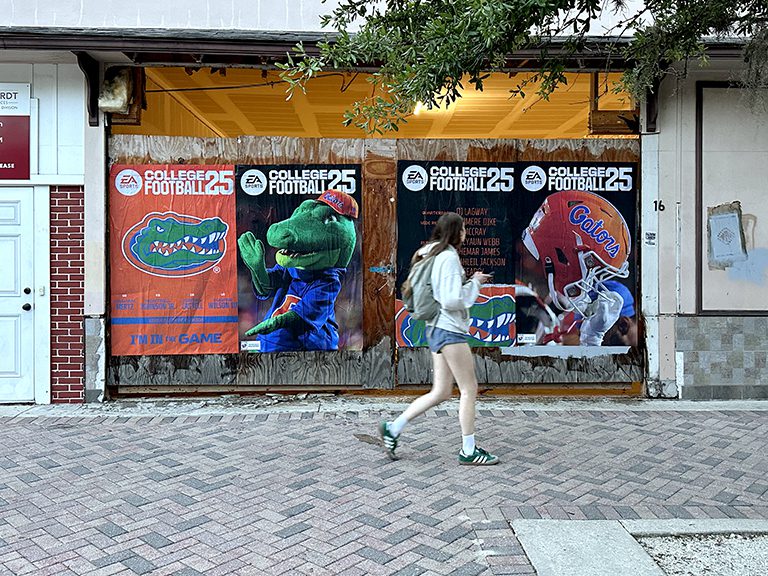
The bar and restaurant strips adjacent to major campuses, the coffee shops and bookstores that function as student work and social spaces, and the pedestrian corridors between the campus and the transit connections that students use to move between campus and the broader city are all accessible without university permission. Street team activations, wheatpasting and poster campaigns, and sidewalk stencils in these off-campus zones create brand presence that surrounds the entire student geographic footprint, not just the university-controlled spaces.
Peer Ambassador Programs
Peer ambassador programs are the highest-efficiency format available for sustained student marketing. Rather than deploying external crews, a peer ambassador program recruits students at the target university to serve as ongoing brand representatives in the campus environment. Ambassadors engage their networks organically, maintain physical brand presence in campus spaces, and generate word-of-mouth reach that extends far beyond their direct activation footprint.
Recruiting Campus Ambassadors
Effective campus ambassador recruitment targets students who are naturally well-networked, socially active, and interested in both the brand category and the compensation structure. Campus influencers with real social networks, leaders in student organizations, and students with part-time experience in events or hospitality are the strongest candidates. We manage the recruitment process and briefing for ambassador programs and provide ongoing supervision and performance tracking across the semester.
Ambassador Activation Requirements
A well-structured peer ambassador program defines specific weekly activation requirements: minimum engagements per week, documentation standards for each activation, social content requirements if applicable, and attendance at specific campus events. The specificity of requirements determines the quality of performance. Vague ambassador programs with loose accountability produce inconsistent results. Programs with clear expectations and documented verification produce consistent, measurable output.
Product Sampling in Student Environments
Product sampling is one of the highest-impact student marketing tactics available to food, beverage, personal care, and similar categories. The trial-to-purchase conversion rates for products that students actually like and use are strong in the campus context because the social sharing of product discovery among students amplifies the initial trial across friend and dormitory networks.
Our guerrilla marketing services include product sampling programs designed specifically for campus environments, including dining hall approach activations, quad sampling tables, and targeted distribution in off-campus student districts. Sampling programs include brand ambassador engagement at every trial moment to contextualize the product and create a genuine brand experience rather than a passive sample handout.
Physical Print and Poster Campaigns on Campus
Physical print campaigns in university environments are a persistent and cost-effective way to maintain brand presence throughout an academic term. Campus bulletin boards in academic buildings, student unions, dormitory common areas, and off-campus commercial spaces all represent posting opportunities that reach students in spaces where they are specifically looking at posted materials.
Poster campaigns work best when they are refreshed regularly to maintain freshness and when the visual design is strong enough to compete with the high visual noise environment of a campus bulletin board. We have posted campaigns across multiple campuses and know which bulletin board locations carry the highest student readership and which are overlooked despite their physical prominence.
Measuring Student Marketing Campaign Results
Student marketing results measurement combines quantitative output tracking with qualitative engagement observation. Direct metrics include samples distributed, materials handed out, ambassador activation counts, and documentation of crew positions and timing. Qualitative field observations from crew supervisors capture how students responded to the brand, what product attributes generated the most engagement, and which positions produced the most organic conversation versus passive material acceptance.
For campaigns with digital components, tracking codes in physical materials, QR codes on posters, and ambassador-specific referral links provide direct attribution of digital conversions to campus marketing activity. The combination of field output data and digital attribution creates a measurement picture that justifies investment and informs campaign optimization across subsequent activations.
Graduate Student and Professional School Audiences
Graduate students and professional school students represent a distinct sub-segment within the university population with significantly higher purchasing power, more autonomous decision-making, and different daily geographic patterns than undergraduates. MBA programs, law schools, medical schools, and graduate departments have student populations that are often overlooked in campus marketing programs focused on the undergraduate residential experience.
Where Graduate Students Live and Move
Graduate students typically live off campus, commute by transit or by car, and inhabit the off-campus commercial geography rather than the residential campus zone. The on-campus activation positions that work for undergraduates, the dining hall approach, the central quad, the student union, are often less effective for reaching the graduate population that passes through these spaces less frequently. Graduate student engagement is better targeted through the off-campus commercial district, the coffee shops and restaurants adjacent to graduate school buildings, and the evening social zones that the graduate student community uses.
Graduate professional programs often have distinct building locations on the campus that are separate from the main undergraduate campus. MBA programs at major universities are often located in dedicated business school facilities with their own social ecosystem. Medical and law schools similarly have concentrated building clusters with their own adjacent commercial geography. Knowing the specific building locations and daily movement patterns for the graduate program you are targeting is as important as knowing the undergraduate campus geography.
International Student Audiences on Campus
International students represent a substantial and growing segment of the student population at major U.S. research universities. At many flagship state universities and elite private institutions, international students make up 15 to 25 percent or more of the total student body. This population has distinct social patterns, different brand relationship histories, and specific communication preferences that shape effective campus marketing for brands targeting the international student segment.
International students are often most accessible through the international student centers and offices that serve as community hubs on most large university campuses. Events organized by international student associations, cultural organizations, and country-specific student groups create activation opportunities within well-defined community contexts. Brands that can offer genuine relevance to the international student experience, practical products for the challenges of studying abroad, community resources, or brands that are recognized from the student’s home country, find strong engagement in these channels.
Semester-Timing Strategy by Academic Calendar
The academic calendar creates distinct timing windows for student marketing activation that differ across universities based on their specific academic structure. Quarter-system universities at schools like UCLA and the University of Chicago operate on different semester schedules than the standard two-semester calendar. The timing windows for activation at quarter-system schools require specific calendar knowledge that generic campus marketing programs often miss.
For semester-system schools, the full calendar looks like: fall move-in and first weeks of September for the highest-value window; October for homecoming-adjacent activations; November for a final push before Thanksgiving break; January semester opening for spring reactivation; and February through April for the sustained spring semester window. Understanding this calendar and building campaign timing around it produces significantly better results than campaigns that are scheduled based on the brand’s internal calendar rather than the student’s academic calendar.
Commuter Student Audiences: The Overlooked Campus Segment
Most campus marketing programs focus on the residential student audience that lives on or immediately adjacent to campus. Commuter students, who travel to campus for classes and leave, represent a substantial segment at many large urban universities that is systematically underserved by standard campus activation approaches. At many state universities with large commuter populations, commuter students may represent 40 to 60 percent of the total enrollment.
Reaching commuter students requires a different geographic approach than residential campus activation. Commuter students arrive at specific transit stops and parking areas, move along specific corridors to their academic buildings, and leave via the same routes without spending extended time in the residential campus zones where most campus activations are concentrated. Building activation positions that intercept commuter students on their specific arrival and departure corridors requires knowledge of which transit connections and parking areas the commuter population uses and what the timing of their on-campus presence looks like throughout the day.
Measuring Long-Term Brand Impact of Campus Marketing
The full impact of a strong campus marketing program is not visible in the metrics collected during the campaign itself. Students who are brand-converted during their college years carry those brand relationships forward into a decade or more of adult consumer behavior. The brand that wins a student’s loyalty at 19 retains it, on average, through the consumer decisions of their 20s and into their 30s. The long-term return on campus marketing investment is substantially higher than the immediate activation metrics suggest, because the customer lifetime value of a college-acquired brand loyalist extends across decades of purchasing behavior.
Brands that track cohort-based data, comparing purchase behavior across consumer segments based on first brand encounter age, can quantify the college-acquisition premium that justifies sustained campus marketing investment even when immediate conversion metrics appear modest. The lifetime value calculation for a college-acquired customer frequently demonstrates that campus marketing investment generates returns that are unmatched by any other acquisition channel targeting the same age demographic.
Frequently Asked Questions
What is a student marketing agency?
A student marketing agency specializes in reaching college and university student audiences through physical, in-person campaigns. This includes campus street teams, peer ambassador programs, dining hall and quad activations, poster campaigns on campus and in surrounding student districts, and event-based marketing timed to the academic calendar.
Why is student marketing different from general youth marketing?
College students are a physically concentrated audience with predictable movement patterns, high peer influence, and active skepticism toward traditional advertising. They are accessible in specific campus and university-district spaces that require local knowledge to activate effectively.
What makes peer ambassador marketing effective for students?
College students trust peers significantly more than brand representatives. A campus ambassador who is a student themselves generates engagement rates substantially higher than professional brand ambassador deployments on campus because the engagement reads as peer recommendation rather than marketing.
What academic timing works best for student marketing?
The first three weeks of fall and spring semesters are the strongest windows. Move-in week captures students who are forming new brand relationships. Back-to-school weeks when campus life is fully active are ideal for sampling and street team activations.
How many universities can you activate simultaneously?
We maintain field networks across 50+ U.S. markets. We can activate simultaneously at universities in multiple cities with consistent briefing standards, documentation protocols, and reporting formats across all markets.
What student marketing programs does American Guerrilla Marketing offer?
We offer campus street team deployments, peer ambassador recruitment and management, product sampling in dining halls and quad areas, poster and print campaigns on campus and in surrounding student districts, and event-based activations timed to the academic calendar.