Toronto hosts a significant volume of North American trade shows, technology conferences, healthcare conventions, and business events annually. The Metro Toronto Convention Centre is one of the largest convention facilities in Canada, positioned at the heart of downtown Toronto adjacent to the CN Tower, Rogers Centre, and the major convention hotel cluster along Front Street West. The concentration of convention attendees in the financial district and Entertainment District geography of downtown Toronto creates a well-defined field marketing environment for brands targeting the B2B and professional conference audience.
Our team executes convention marketing campaigns in Toronto as part of our North American market operations. The Toronto convention geography has specific characteristics that shape campaign planning differently than U.S. convention markets. The PATH underground pedestrian network, which connects Union Station to the major downtown hotels and office towers, creates significant attendee foot traffic that moves below street level and requires specific positioning strategy. The King Street and Bay Street pedestrian corridors above ground are the primary daytime outdoor engagement zones. The Entertainment District along King Street West between Spadina and University becomes the dominant evening social geography for convention attendees.
This guide covers the full Toronto convention marketing landscape: venue geography, hotel corridor positions, transit approaches through Union Station and the TTC, the specific pedestrian corridors that carry the highest convention attendee density, and how to build a campaign that reaches the Toronto convention audience effectively across the multi-day convention schedule.
Metro Toronto Convention Centre: The MTCC Geography
MTCC spans two connected buildings, the North and South Buildings, on the block bounded by Front Street West, Bremner Boulevard, and Rees Street, adjacent to the CN Tower. The primary pedestrian entrances face Front Street on the North Building and Bremner Boulevard on the South Building. Convention attendees arriving from the major hotel cluster along Front Street approach from the east along the Front Street sidewalk. Those arriving from the Union Station transit hub approach via the PATH underground network or the Front Street East exterior.
The Front Street West Hotel Corridor
The primary convention hotel corridor for MTCC events is the Front Street West strip between Bay Street and Rees Street, encompassing the InterContinental, Fairmont Royal York, the Westin Harbour Castle, and the Metro Toronto Hotel properties. Street teams positioned along this corridor on the MTCC approach intercept convention attendees during the morning departure window, the lunch break return, and the evening departure at the end of programming. The hotel corridor position captures a consistent stream of MTCC attendees in a predictable pedestrian flow.
PATH Network Access Points
The PATH underground pedestrian network connects Union Station to the MTCC via the underground concourse below Front Street. During winter months and inclement weather, a significant proportion of MTCC attendees use the PATH rather than the exterior sidewalks. Field marketing in the PATH corridor approaches, particularly at the Union Station connections and the MTCC-adjacent PATH entrances, reaches attendees who would otherwise be inaccessible from street-level campaign positions. PATH advertising requires TTC coordination for certain positions, but the pedestrian approaches near the exits from PATH into the hotel lobbies and MTCC are managed through the adjacent properties.
Union Station: The Primary Transit Hub
Union Station is the single most important transit hub for Toronto convention marketing. Convention attendees arriving by GO Transit from the Greater Toronto Area, by VIA Rail from other Canadian cities, and by TTC from across Toronto all pass through Union Station. The station’s Great Hall and the exterior Yonge Street Bus Terminal approach are among the highest-volume transit arrival zones in downtown Toronto during major convention periods.
Front Street Exterior and Bay Street Approaches
The exterior Front Street approaches from Union Station toward MTCC, and the Bay Street pedestrian corridor connecting the financial district hotel properties to the PATH network and the station, are effective positioning zones for convention street teams working the transit arrival audience. The Bay-Front intersection is one of the highest-concentration pedestrian points in the convention attendee geographic footprint, with flows from the subway exits, the hotel corridor, and the PATH network all converging.
Enercare Centre at Exhibition Place
The Enercare Centre at Exhibition Place on Toronto’s western lakefront is the second major convention venue in the Toronto market. It hosts major trade shows, consumer events, and large-scale industry exhibitions. The Enercare geography is distinct from MTCC: it is situated within the Exhibition Place park complex, accessed primarily via Lake Shore Boulevard from downtown or via the TTC Exhibition stop on the Liberty Village corridor.
The Exhibition Place Approach Geography
Convention attendees arriving at Enercare by transit typically use the 509 or 511 streetcar to the Exhibition stop on Dufferin Street, or arrive via the GO Bus connections at Exhibition GO Station. The Dufferin Gate approach along the Exhibition Place perimeter and the Lake Shore Boulevard pedestrian corridor from the Princes Gates entrance are the primary street-level positioning zones for Enercare-targeted convention marketing campaigns.
The Liberty Village Evening Zone
Convention attendees at Enercare who choose to stay in the western Toronto hotel properties near the Liberty Village neighborhood use the King Street West and Dufferin Street commercial corridor for dining and social activity. Liberty Village itself, the former industrial neighborhood redeveloped as a mixed commercial and residential area, has a concentration of restaurants and bars that attracts convention attendees from the Enercare location. Evening convention marketing activations in the Liberty Village zone reach this audience in a more relaxed social environment than the exhibition grounds themselves.
King Street West: The Evening Convention District
King Street West between Spadina Avenue and University Avenue is Toronto’s primary entertainment district, with a concentration of restaurants, bars, and cultural venues that draws convention audiences from MTCC in the evening hours. The King Street corridor is approximately a 10 to 15 minute walk from MTCC along King or Front Street, making it accessible on foot from the primary convention hotel cluster.
Evening street team activations in the King Street West zone reach convention attendees in a social, off-duty state. The engagement format is different from the professional morning approach: more casual, more social, with give-away items and activations that fit the entertainment district context. Brands targeting the professional convention audience benefit from the King Street evening position because it reaches the same audience in a social state where brand recall from a genuine human interaction is higher than from the more formal morning convention approach encounter.
Wheatpasting and Poster Campaigns in the Toronto Convention District
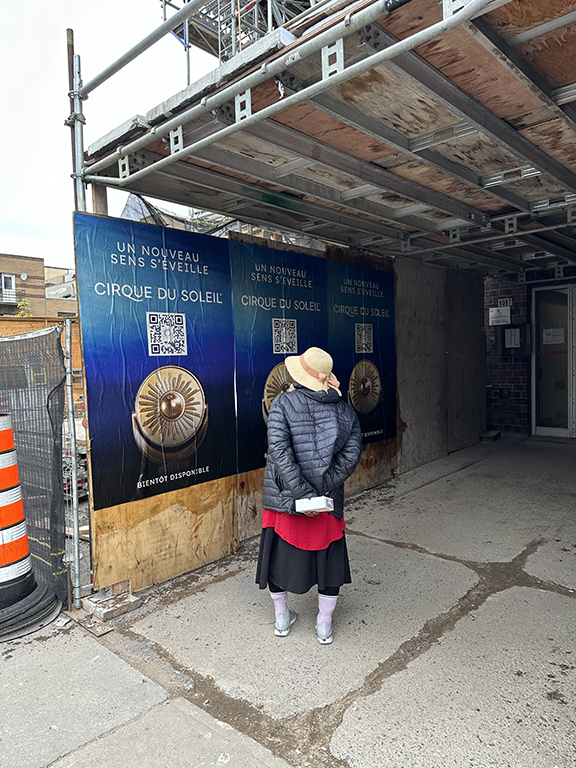
Advance wheatpasting and poster campaigns in the Toronto convention district create physical brand presence that builds across the days before a major event opens. The primary placement zones for MTCC-targeted campaigns are the Front Street and King Street West commercial corridors, the hotel-adjacent blocks along Wellington and John Streets, and the Entertainment District retail and commercial frontage along King Street West.
Toronto has a developed street art and poster culture in several neighborhoods, and the convention district is surrounded by areas including Queen Street West and Kensington Market where physical poster campaigns have strong visual context. For campaigns with broader Toronto audience targeting beyond the convention attendee population, these adjacent neighborhoods extend the campaign’s reach into the broader creative and professional community that surrounds the downtown convention zone.
Street Teams in the Toronto Convention Market
Toronto convention street teams are recruited from the Toronto event marketing labor pool, which is deep and experienced across the financial district, entertainment, and technology event circuit. We brief Toronto crews using the same standardized briefing protocols as U.S. market activations, with Toronto-specific geography and transit detail added to the position assignment documentation. Documentation standards, GPS photography, and engagement logging are identical to our U.S. market activations.
Our guerrilla marketing services in the Toronto market include street team deployments, poster and print campaigns, and brand ambassador programs targeting the Toronto convention and professional event audience. We coordinate Toronto activations as part of multi-city North American programs that also cover U.S. convention markets in New York, Chicago, Las Vegas, and Orlando.
Measuring Toronto Convention Marketing Results
Toronto convention campaign measurement follows the same framework as our U.S. market activations: materials distributed, engagement counts by position and time window, GPS-documented photo reports from all deployment positions, and field notes from crew supervisors on audience engagement quality. For multi-day Toronto campaigns, daily reporting allows for optimization across the convention schedule based on what positions and formats are generating the strongest results on day one and two.
Currency and logistical differences for Toronto activations, CAD vs. USD pricing, Canadian labor and permit frameworks, and specific Toronto property access protocols, are managed as standard elements of the campaign planning process for North American brands extending their U.S. convention marketing programs into the Canadian market.
Toronto’s Convention Industry Profile
Toronto hosts a significant concentration of North American conferences across technology, healthcare, finance, and entertainment sectors. The city’s bilingual character, international business connectivity, and strong professional service sector make it a natural conference hub for industries with North American and global footprints. Major technology conferences have grown significantly in Toronto with the emergence of the city’s tech sector, particularly the MaRS Discovery District ecosystem. Healthcare and life sciences conferences draw from the University of Toronto and hospital network research community. Finance and professional services conferences leverage Toronto’s status as Canada’s financial capital.
Toronto Tech and Startup Conferences
The technology conference calendar in Toronto has grown substantially over the past decade, driven by the expansion of the Waterfront Innovation Centre, the MaRS Discovery District, and the tech startup ecosystem concentrated in the King West and Distillery District commercial zones. Major tech conferences in Toronto draw audiences from across Canada and increasingly from U.S. markets, creating a cross-border professional audience profile that is valuable for brands targeting the North American tech professional segment.
Toronto Entertainment and Media Events
The Toronto International Film Festival (TIFF) is the highest-profile convention-adjacent event in the Toronto market, drawing international film industry professionals, celebrities, and entertainment brand audiences to the KING West and Entertainment District geography for ten days in September. TIFF creates a distinct convention marketing environment that differs from standard trade show campaigns because the audience is entertainment-industry-concentrated with high media visibility and strong social media amplification potential. Brands that activate in the TIFF district during the festival reach an audience that includes both the professional film community and the significant general public attendance that TIFF attracts.
PATH Network Navigation for Convention Campaign Planning
The PATH underground pedestrian network is the most important geographic element of convention campaign planning in downtown Toronto that is not visible on street-level maps. The network connects Union Station to the MTCC, to the major downtown convention hotels, to the financial district tower complex, and to the Eaton Centre retail hub. During cold or rainy weather, a substantial proportion of the downtown Toronto professional population moves through PATH rather than the surface streets.
Convention campaign planning in Toronto requires understanding which convention attendee hotel properties connect to PATH and which do not, and what the pedestrian flows look like within the PATH network during convention periods. Advertising positions within PATH corridors are managed by the TTC and require formal applications for placement. The pedestrian approaches at PATH exit points, the sidewalk zones immediately outside PATH entrances, and the lobby areas of buildings that connect to PATH where accessible, provide alternative positions for campaigns that want to reach the PATH-using convention audience without formal TTC approval.
Cross-Border Campaign Considerations for U.S. Brands
U.S. brands extending convention marketing programs into the Toronto market need to navigate several cross-border operational considerations that do not apply to U.S.-only campaigns. Canadian labor law governs the employment of field marketing crew in Toronto, and the requirements differ from U.S. state labor standards in several areas including minimum wage, overtime, and contractor classification. Canadian HST applies to campaign expenses incurred in Canada. Currency conversion and budget management across USD and CAD requires explicit planning in the campaign budget.
Promotional product regulations in Canada differ from U.S. regulations in some categories, particularly for alcohol, certain food products, and promotional contest mechanics. Brands running promotional programs in Toronto that were designed for U.S. regulatory environments need legal review of the Canadian applicability before activating. Our team navigates these cross-border operational requirements as standard elements of campaign planning for U.S.-based brands activating in the Toronto market.
Neighborhoods Adjacent to Toronto Convention Venues
The neighborhoods immediately surrounding Toronto’s major convention venues create distinct secondary activation geographies that extend convention marketing reach beyond the immediate convention district. King West, the entertainment district west of University Avenue, is the primary evening destination for MTCC convention audiences. The Distillery District, accessible via King Street East and Front Street East, draws convention attendees who want a distinctive Toronto cultural experience during their visit. Kensington Market and the Queen West commercial corridor attract convention audiences from the creative and technology sectors who seek out Toronto’s independent retail and cultural character during downtime in the convention schedule.
These neighborhood extensions of the convention geography are accessible for wheatpasting campaigns, street team deployments, and physical advertising without any coordination with the convention venue or convention organizers. For brands that want to reach the Toronto convention audience in a broader city context, rather than only in the immediate convention precinct, these neighborhood campaigns create brand presence in the specific Toronto geographies that professional convention audiences explore during their visits.
Seasonal Convention Calendar in Toronto
The Toronto convention calendar is strongly seasonal, with the heaviest concentration of major trade shows and conferences in September through November and a secondary concentration in February through April. The summer months, particularly July and August, have reduced convention activity due to the overlap with TIFF preparation and the general summer slowdown in corporate event programming. Convention marketing campaigns in Toronto should be timed to the specific conventions on the target calendar rather than to a general “convention season” that overgeneralizes the market’s actual activity pattern.
The TIFF window in September creates a specific convention-adjacent marketing opportunity that is distinct from the trade show convention marketing programs that target professional industry audiences. TIFF draws international entertainment industry professionals and a large consumer audience simultaneously, creating a unique combined professional and cultural audience in the Entertainment District geography. Brands that can speak to both the industry professional TIFF audience and the broader Toronto entertainment culture audience benefit from the overlapping reach that the TIFF window creates in the King Street West geography.
Building Long-Term Convention Market Presence in Toronto
Brands that attend or target the same major Toronto conventions year after year benefit from building sustained physical brand presence in the Toronto convention district rather than executing one-time campaign activations around each event. Sustained presence through longer-duration poster campaigns, established commercial zone partnerships with hotel and restaurant properties in the convention district, and recurring field activations at the same conventions over multiple years builds the kind of familiarity with the professional convention audience that one-time campaigns cannot achieve.
The Toronto professional audience, like professional communities in any market, forms impressions about brands partly through the persistence and consistency of their presence in professional contexts. A brand that shows up at the same major Toronto conference year after year, with consistent and evolving campaign creative, is perceived differently by the conference audience than a brand that appears for a single year and is not seen again. The sustained presence communicates brand commitment to the market and the professional community that one-time activations do not convey. Building a multi-year Toronto convention marketing program is an investment in market standing, not just in single-event exposure.
Frequently Asked Questions
What is convention marketing in Toronto?
Convention marketing in Toronto involves running brand campaigns that reach attendees of conferences and trade shows at the Metro Toronto Convention Centre, Enercare Centre, and other major Toronto event venues. This includes street team deployments, poster campaigns in convention corridors, and field activations in the hotel and entertainment districts where convention attendees gather.
What are Toronto’s main convention venues?
The Metro Toronto Convention Centre in downtown Toronto is the primary convention facility, located adjacent to the CN Tower and Rogers Centre. The Enercare Centre at Exhibition Place on the lakefront hosts major trade shows and consumer events.
Where do Toronto convention attendees go outside the convention centre?
MTCC attendees concentrate in hotels along Front Street West and the financial district. Evening activity moves toward King Street West and Entertainment District bars and restaurants between Spadina and University avenues.
How do you reach Toronto convention attendees with street marketing?
Toronto convention street teams are positioned at the Union Station approaches, at the King Street and Bay Street pedestrian corridors, and in the Entertainment District during evening social hours. Transit-based deployment covers the largest attendee transit population.
Does American Guerrilla Marketing operate in Toronto?
Yes. American Guerrilla Marketing executes convention marketing campaigns in Toronto as part of its North American market coverage. Toronto convention campaigns include street team deployments, wheatpasting and poster campaigns, and field marketing programs.
What does Toronto convention marketing cost?
Toronto convention marketing campaigns typically range from $3,000 to $12,000 USD depending on crew size, campaign duration, and formats included. Single-day street team activations in Toronto start at $2,000 USD.