Social media has fundamentally changed how brands reach people. Paid ads get blocked, traditional TV audiences are fragmenting, and the credibility gap between brand messaging and consumer trust keeps widening. Into that gap stepped influencer marketing — and with it, an entire industry of specialists built to navigate it. Understanding the role of an influencer marketing agency in the digital age means understanding why brands can no longer manage creator relationships with a spreadsheet and a DM.
American Guerrilla Marketing works at the intersection of physical activations and digital amplification. We see firsthand how influencer campaigns, when run with strategic intent, extend the reach of street-level work by orders of magnitude. A wheat-paste campaign that blankets Williamsburg can earn 50,000 impressions on the ground and ten times that when the right creators document and share it. That multiplier effect is why brands increasingly treat influencer marketing as a core channel — not a supplement.
This guide breaks down what influencer marketing agencies actually do, why specialization matters, how campaigns get built and measured, and what to look for when you’re evaluating an agency partner.
What Is an Influencer Marketing Agency?
An influencer marketing agency is a specialized firm that connects brands with content creators, manages the campaign lifecycle from strategy through execution, and measures performance against business objectives. Unlike a general marketing agency that might offer influencer placement as one of many services, a dedicated influencer agency builds its entire operating model around creator relationships, platform expertise, and campaign infrastructure.
Core Functions of an Influencer Marketing Agency
The agency model exists because influencer marketing is deceptively complex. On the surface, it looks simple: pay someone with followers to post about your product. In practice, it involves creator vetting, contract negotiation, FTC disclosure compliance, creative direction, platform algorithm strategy, content approval workflows, and performance analytics — all running simultaneously across multiple creators and platforms.
Agencies bring infrastructure to that complexity. They maintain proprietary influencer databases, software platforms for tracking deliverables and performance, established legal templates for contracts, and account managers who have built relationships with creators over time. That institutional knowledge is difficult for brands to replicate in-house without significant investment.
Services a Typical Agency Offers
While service menus vary, most influencer marketing agencies offer some combination of the following: influencer discovery and vetting, campaign strategy and creative direction, contract negotiation and management, content review and approval, paid media amplification of organic posts, real-time performance tracking, post-campaign reporting, and talent relationship management for ongoing partnerships.
Some agencies also offer production support for more elaborate branded content, crisis communications when influencer relationships go sideways, and competitive analysis to identify which creators your competitors are using and how those campaigns are performing.
Why the Digital Age Made Influencer Agencies Necessary
The rise of social platforms didn’t just create a new advertising channel — it created a new form of media trust. Nielsen data consistently shows that consumers trust recommendations from people they follow far more than brand advertising. That trust asymmetry is the engine driving influencer marketing’s growth, and it’s also what makes managing it so complicated.
The Scale of the Creator Economy
By the mid-2020s, the global creator economy had expanded to more than 50 million people producing content professionally or semi-professionally. The sheer volume of potential partners — across every niche, platform, and geographic market — makes manual identification and outreach impractical for most brands. Agencies exist in part to solve a discovery problem that grows more acute every year as more creators enter the market.
Platform Complexity and Algorithm Dynamics
TikTok’s algorithm favors frequency and watch time. Instagram rewards saves and shares. YouTube prioritizes session length and subscriber notifications. LinkedIn engagement dynamics are entirely different from B2C consumer platforms. Each platform has its own content formats, community norms, and monetization rules. Agencies that specialize in influencer marketing maintain platform-specific expertise that most brand marketing teams can’t develop without dedicated headcount.
Compliance and Disclosure Requirements
The FTC requires clear disclosure of paid partnerships in influencer content. Platforms have built native disclosure tools, but compliance varies widely among creators, and the consequences of violations fall on the brand, not just the influencer. Agencies manage disclosure as a standard operating procedure — vetting creator practices, writing compliance language into contracts, and auditing posted content before it goes live.
How Influencer Campaigns Get Built
A well-executed influencer campaign doesn’t start with a list of creators. It starts with a clearly defined business objective. Whether the goal is brand awareness, product launch visibility, community building, event amplification, or direct conversion, the objective shapes every downstream decision — which platforms to activate, which creator tiers to prioritize, what content formats to deploy, and how to measure success.
Influencer Discovery and Vetting
Finding the right creators goes beyond follower count. Agencies evaluate audience demographics, engagement rate authenticity (checking for purchased followers or engagement pods), content quality and consistency, past brand partnership history, audience sentiment in comments, and brand safety — making sure the creator’s existing content doesn’t conflict with the brand’s values or category.
The vetting process is where agencies earn their fee. A macro influencer with 500,000 followers and a 0.5% engagement rate delivers less actual reach than a micro influencer with 40,000 followers and a 6% engagement rate among a tightly aligned audience. Our team always prioritizes audience quality over vanity metrics.
Strategy and Creative Direction
Once the creator roster is confirmed, the agency develops creative direction that gives influencers enough structure to stay on brand while enough freedom to produce content that feels authentic to their audience. Over-scripted content performs poorly. Under-directed content risks going off-message. Finding that balance requires both strategic rigor and creative instinct.
For brands running guerrilla marketing campaigns, influencer creative direction often involves coordinating in-person documentation of physical activations — briefing creators to show up at specific times and locations, capture genuine reactions, and share within defined windows to maximize the algorithmic lift from simultaneous posting.
Execution and Content Amplification
Influencer content doesn’t have to live only on the creator’s channel. Agencies increasingly deploy influencer content as paid social ads — using whitelisted access to boost creator posts through brand ad accounts. This approach combines the authenticity of organic creator content with the targeting precision of paid media, dramatically improving reach efficiency. We’ve seen this approach double or triple the effective reach of campaign content with relatively modest paid media budgets.
Influencer Tiers and When to Use Each
One of the most common strategy questions is whether to work with a small number of large influencers or a larger number of smaller ones. The answer depends entirely on objectives, budget, and the nature of the brand’s target audience.
Nano and Micro Influencers
Nano influencers (under 10,000 followers) and micro influencers (10,000 to 100,000 followers) deliver the highest engagement rates relative to their audience size. Their communities tend to be tightly defined around a specific interest or geography, and their recommendations carry strong personal trust because they feel like people you actually know. For local market activations, product launches targeting niche communities, or campaigns where authenticity is the primary value, micro and nano influencer strategies often deliver superior results per dollar spent.
If your brand ambassador program operates on a local level, micro influencers in specific cities or neighborhoods are natural extensions of that field presence.
Macro and Mega Influencers
Macro influencers (100,000 to 1 million followers) and mega influencers (above 1 million) deliver scale. If the objective is rapid national awareness — a product launch that needs to reach millions of people within a defined window — macro creators provide that reach efficiently. The trade-off is higher cost per placement, lower engagement rates relative to audience size, and more complex contract negotiations.
Mixing Tiers for Campaign Impact
The most effective campaigns often blend tiers. A macro influencer drives initial awareness. A roster of micro influencers creates depth and community conversation. Nano influencers in specific local markets make the campaign feel present and real in cities that matter. This layered approach creates the impression of ubiquity — the sense that a brand is everywhere at once — which is the same effect we create with wheatpasting campaigns in physical markets.
Measuring Influencer Campaign Performance
Performance measurement is where many influencer campaigns fall short. Vanity metrics like total impressions or follower reach don’t tell you whether the campaign moved the business. Agencies that take measurement seriously build attribution frameworks before the campaign launches, not after.
Engagement and Earned Media Value
Engagement rate measures how actively an audience responds to content — likes, comments, shares, saves, and replies relative to reach. Earned media value (EMV) attempts to translate that engagement into dollar equivalents by calculating what the same reach would have cost in paid media. Both metrics are useful directional indicators, but neither measures business impact directly.
Conversion Tracking and Attribution
Serious campaigns build conversion tracking from the start. This means unique affiliate links for each creator, custom UTM parameters for tracking clicks through to the site, and promo codes that let customers self-identify as coming from a specific influencer. These mechanisms aren’t perfect — last-click attribution misses the brand lift that influenced purchases made later through other channels — but they provide the most direct measurement of commercial impact.
Brand Lift Studies
For larger campaigns, agencies can run brand lift studies through platforms like Meta and YouTube that survey exposed versus unexposed audiences to measure shifts in awareness, consideration, and purchase intent. These studies are expensive and require sufficient campaign scale to produce statistically significant results, but they provide the most rigorous measurement of campaign impact on brand health.
How Influencer Marketing Integrates with Physical Campaigns
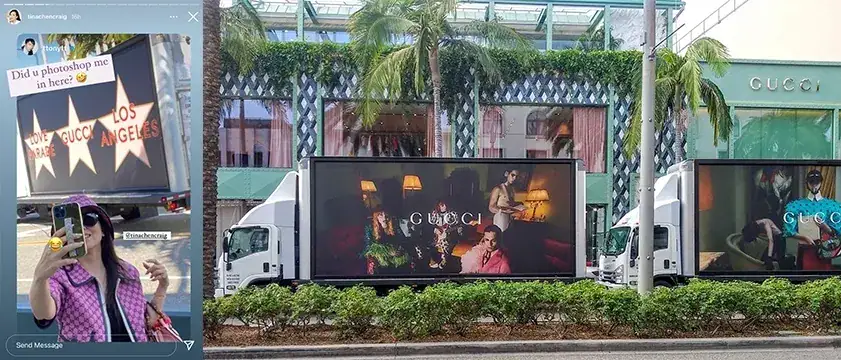
At American Guerrilla Marketing, we’ve built a practice around combining high-impact physical placements with strategic digital amplification. When our team deploys sidewalk stencils or executes a large-format LED billboard truck activation, the physical impression is just the starting point. When influencers document that activation and share it with their audiences, the reach extends far beyond the physical location.
This integration creates what we call earned media loops. A physical activation generates organic social content from bystanders. Seeded influencers add credibility and reach to that content. The combination earns media coverage that wouldn’t happen from either element alone. This is the power of treating street marketing and influencer marketing as a single integrated campaign rather than separate initiatives.
Choosing the Right Influencer Marketing Agency
The influencer agency market is crowded. Evaluating partners requires cutting through a lot of case study theater to find teams with real operational depth.
What to Look For in an Agency Partner
Look for agencies that demonstrate platform-specific expertise rather than generic “social media” capabilities. Ask about their creator vetting process — how do they identify authentic engagement, and what do they do when a creator’s metrics look suspicious? Ask how they handle disclosure compliance. Ask for case studies with concrete business results, not just impressions and EMV.
Understand their fee structure. Some agencies charge a flat management fee. Others take a percentage of the influencer fees they negotiate. Some agencies have undisclosed relationships with certain creators that create conflicts of interest. Transparency about how they get paid matters.
Questions to Ask Before Signing
Ask how they measure success and what reporting you’ll receive. Ask who owns the creative content after the campaign — this matters for repurposing in paid media. Ask how they handle situations where a creator delivers substandard content or misses deadlines. Ask what their escalation process looks like when a campaign isn’t performing. Agencies with mature operations have clear answers to all of these. Newer agencies often don’t.
The Future of Influencer Marketing Agencies
The influencer marketing industry is evolving faster than any other segment of digital advertising. Several trends are reshaping what agencies need to be good at to remain valuable.
AI-Assisted Creator Discovery
Machine learning tools are dramatically improving the speed and accuracy of creator discovery and audience analysis. Agencies that don’t incorporate AI-assisted vetting will be slower and less precise than those that do. The human judgment layer — evaluating content quality, brand fit, relationship management — remains essential, but the data processing is increasingly automated.
Long-Term Creator Partnerships
One-off sponsored posts deliver diminishing returns. The market is moving toward long-term ambassador relationships where creators become genuine advocates for a brand over time. This requires agencies to manage more complex, ongoing contracts and to function more like talent management firms than media buyers.
Creator-Led Commerce
Social commerce — where consumers purchase directly through creator content without leaving the platform — is growing rapidly. Agencies that understand the commerce layer of TikTok Shop and Instagram Shopping are positioned to connect influencer content directly to revenue in ways that older attribution models couldn’t achieve.
Frequently Asked Questions About Influencer Marketing Agencies
What does an influencer marketing agency actually do?
An influencer marketing agency identifies, vets, and contracts social media creators on a brand’s behalf, manages the creative brief process, executes content placements across platforms, and tracks campaign performance against business KPIs.
How much does influencer marketing cost through an agency?
Agency fees vary widely based on scope, influencer tier, and platform mix. Micro-influencer campaigns can start around $5,000 while large-scale macro campaigns with agency management can run $50,000 or more per activation.
What’s the difference between a nano, micro, and macro influencer?
Nano influencers have fewer than 10,000 followers and deliver high engagement rates. Micro influencers range from 10,000 to 100,000 followers and often have strong niche audiences. Macro influencers have 100,000 to 1 million followers, offering scale at a higher cost per post.
How do influencer marketing agencies measure ROI?
Agencies track earned media value, reach, impressions, engagement rates, click-through rates, conversion tracking via affiliate links or UTM parameters, and brand sentiment shifts across the campaign window.
Should a brand combine influencer marketing with guerrilla marketing?
Yes. Pairing street-level activations with influencer amplification creates earned media loops where online audiences discover physical campaigns and share them organically, dramatically extending reach beyond the activation footprint.
What platforms do influencer marketing agencies work across?
Agencies work across Instagram, TikTok, YouTube, X (Twitter), LinkedIn, Pinterest, and Twitch depending on brand category, target demographic, and content format requirements.
How long does an influencer marketing campaign take to execute?
From strategy development to first post, most influencer campaigns take four to eight weeks. This includes influencer identification, contracting, briefing, content creation, approval rounds, and scheduling.
Frequently Asked Questions
What is the role of an influencer marketing agency in the digital age?
American Guerrilla Marketing provides the role of an influencer marketing agency in the digital age services across 50+ U.S. markets. Every campaign is planned, scouted, executed, and GPS-documented by our field teams. We work with regional brands and Fortune 500 companies on campaigns that require real street-level execution and documented proof of performance.
How does AGM approach digital age?
Our process starts with a market consultation to understand your goals, target audience, and budget. We then scout locations, handle any required permissions or permits, coordinate production and installation with our local crews, and provide a full GPS-tagged photo report after the campaign runs.
What markets does American Guerrilla Marketing cover for digital age?
We operate in 50+ U.S. markets including New York, Los Angeles, Chicago, Miami, Houston, Atlanta, Seattle, Denver, Boston, and dozens of secondary markets. Contact us to confirm availability and pricing for your specific market.
How much does a digital age campaign cost?
Campaign pricing depends on market, format, quantity, and duration. We work with budgets ranging from targeted single-market runs to national rollouts across multiple cities. Use our RFP Builder or contact us directly for a custom quote based on your specific campaign requirements.
How do I get started with digital age through AGM?
The fastest way to get started is to submit your campaign details through our RFP Builder at americanguerrillamarketing.com, or contact us directly at [email protected] or (646) 776-2770. Our team typically responds within one business day with availability and initial pricing.