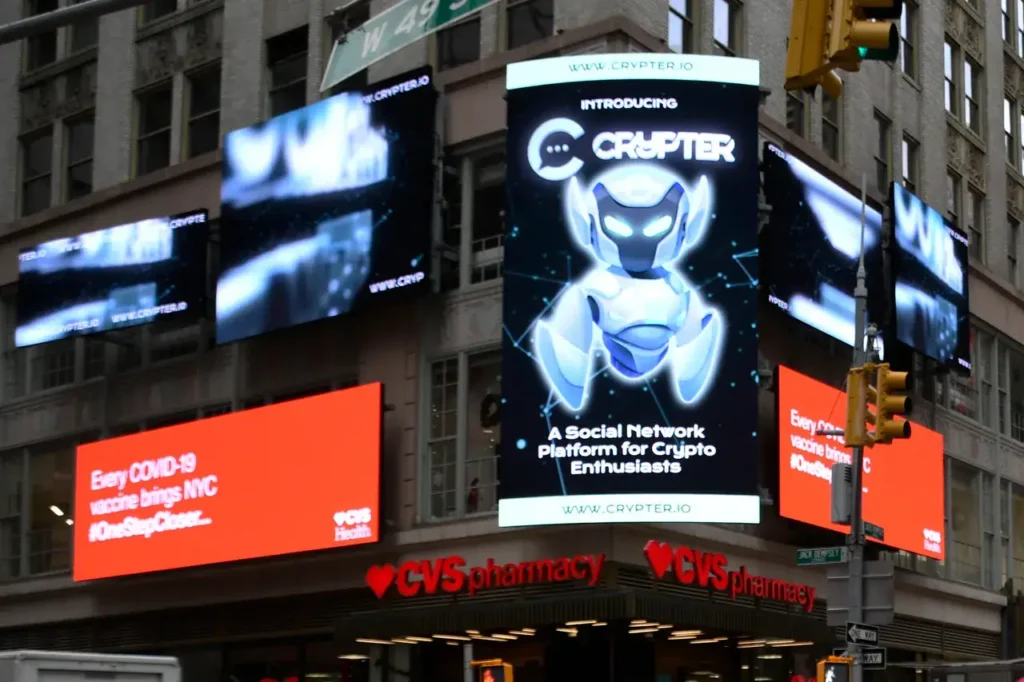
Out-of-home marketing is the only advertising format that is physically impossible to skip. You can close a browser tab. You can fast-forward through a commercial. You can install an ad blocker. You can unsubscribe from an email list. You cannot walk past a well-placed poster without seeing it. You cannot drive down a street without registering the billboard. You cannot ignore the sidewalk stencil at the crosswalk you cross every morning.
That unavoidability is not enough on its own to make a campaign work. A bad billboard is unavoidably bad. But it does establish the foundational condition for effective brand communication: the consumer encounters the message whether they intended to or not. Everything after that depends on what the message is, where it is placed, and how well it is executed.
American Guerrilla Marketing has executed OOH campaigns in more than 50 U.S. markets. From Times Square bulletins to 400-piece snipe runs on Bedford Avenue in Williamsburg, Brooklyn, the consistent finding is the same: physical brand presence creates brand memory in ways that digital impressions do not replicate. This guide covers the full landscape of OOH marketing, how to use it effectively, and how to build campaigns that consumers actually remember.
What Is Out-of-Home Marketing?
Out-of-home marketing is every advertising format that reaches consumers outside their homes and away from their personal screens. The category is broader than most marketers initially assume:
- Billboards (static vinyl, digital, bulletins, posters)
- Transit advertising (bus shelters, subway stations, rail cars, airport displays)
- Street-level formats (poster campaigns, wheatpasting, snipe campaigns)
- Ambient formats (sidewalk stencils, projection advertising, building wraps)
- Mobile formats (LED truck billboards, vehicle wraps)
- Street furniture (bus benches, kiosks, newsstands)
- Experiential activations in public spaces
Each format reaches consumers differently, in different contexts, at different moments in their daily movement through the physical world. The strategic question is not whether to use OOH but which formats serve your objectives in which markets.
Why OOH Creates Brand Memory That Digital Cannot
Research on advertising recall consistently shows a pattern: physical advertising formats generate higher unaided brand recall than digital display formats at equivalent exposure levels. The explanation is not that digital is ineffective, it is that the attention and cognitive processing involved in a physical encounter with a brand is qualitatively different from a digital impression.
A billboard encountered during a daily commute is seen repeatedly, in the same physical location, as part of the consumer’s real-world spatial map. Over days and weeks, the brand becomes part of the visual fabric of a route that the consumer experiences as real. That integration into physical reality creates a different kind of memory than a banner ad that appears and disappears in a digital environment the consumer knows is artificial.
Street-level formats like poster campaigns and wheatpasting create what we call neighborhood ownership: when a brand saturates the visual environment of a specific area with consistent creative, the brand begins to feel like it belongs there. That sense of belonging builds trust and familiarity at a level that no amount of digital advertising in the same market can replicate at equivalent cost.
A 400-snipe run on Bedford Avenue in Williamsburg generates roughly 18,000 weekly impressions from foot traffic alone, repeated over 3 to 4 weeks, reaching the same people on the same commute corridor day after day until the brand is simply part of the neighborhood’s visual fabric.
The Major OOH Advertising Formats
Billboards: Static and Digital
The most recognizable OOH format. Static vinyl billboards offer 24/7 exposure at a fixed location for the duration of the posting period, typically 4 weeks. Digital billboards rotate through multiple advertisers on a schedule, offering shorter exposure windows at higher locations. The choice between static and digital depends on the campaign objective: static for sustained market presence, digital for time-sensitive messages and premium locations.
Transit Advertising
Bus shelters, subway stations, and rail cars reach commuters in moments of relative stillness, when they have time to read and process advertising content. This dwell-time advantage makes transit formats particularly effective for longer messages and detailed offer communication that outdoor formats do not accommodate. Major transit systems in New York, Chicago, Los Angeles, and other cities offer significant audience scale.
Poster campaigns and Wheatpasting
The street-level format with the deepest cultural roots. Wheatpasting and poster campaigns cover walls, construction hoardings, and permitted surfaces in target neighborhoods with large-format printed creative. The format has visual credibility in urban markets that no other format matches: consumers who see a well-executed wheatpaste campaign associate the brand with the culture of the neighborhood it appears in.
AGM executes wheatpasting campaigns in markets across the country, including our base of operations in Industry City, Brooklyn, NY. The format is particularly effective for music, entertainment, fashion, beverage, and lifestyle brands that benefit from urban cultural alignment.
Sidewalk Stencils
Ground-level advertising that reaches pedestrians at the exact moment they are looking down. Sidewalk stencils are applied with water-soluble or removable paint on public sidewalks near high-traffic intersections, transit entrances, and retail locations. The format creates brand presence at eye level for walkers in a way that traditional vertical formats cannot reach.
LED Mobile Billboard Trucks
LED billboard trucks bring full-motion video and animated creative to wherever your audience is. Event-adjacent routing generates concentrated impressions during high-density moments. Competitive conquesting routes the truck around rival locations. The mobility of the format creates targeting flexibility that static OOH cannot provide.
Projection Advertising
High-lumen projectors cast large-scale brand imagery onto building facades, bridge supports, and architectural surfaces. The format creates a high-impact spectacle effect, particularly effective at nighttime in urban environments. Projection advertising generates earned media coverage and social sharing at a rate that most static formats cannot match.
OOH and Digital: How the Formats Compound Each Other
The most sophisticated OOH campaigns in 2026 treat physical and digital as complementary systems rather than competing channels. Physical OOH creates broad awareness and brand familiarity. Digital campaigns use that familiarity to improve performance: consumers who have been exposed to a brand’s OOH placement are more likely to recognize and engage with the brand’s digital advertising in the same market.
Digital retargeting can follow up with consumers who were geographically exposed to OOH placements. An OOH campaign running in a specific neighborhood can be complemented by targeted social and display advertising to mobile devices detected in that same geographic area during the campaign window. The consumer experiences the brand in the physical environment and then encounters it again online, creating the repeated exposure that builds recognition.
Conversely, social media activation around an OOH campaign, a branded hashtag, a photo opportunity at an installation, a call to action on a poster that drives to an online experience, extends the physical campaign’s reach into digital networks through consumer-generated content.
Planning an OOH Campaign That Works
Define the Geographic Target
OOH effectiveness is inseparable from placement precision. A poster in the wrong neighborhood generates impressions from the wrong audience. Before selecting formats or creative, define which specific markets, neighborhoods, and streets will deliver the highest concentration of your target consumer. This work is where campaigns are won or lost before a single piece of creative is produced.
Select Formats Based on Objective
Awareness at scale calls for high-reach formats: billboards, transit advertising, LED trucks. Neighborhood-level cultural credibility calls for street formats: wheatpasting, snipes, stencils. Event-adjacent concentration calls for mobile formats and ambassador activations. Match the format to the specific objective rather than defaulting to the format you are most familiar with.
Design Creative for the Format and Context
OOH creative is read at speed, at distance, in real-world visual environments that compete for attention. Designs that work in print or digital often fail in OOH because they rely on reading time and visual intimacy that the format does not provide. OOH creative should communicate the brand and primary message in under 3 seconds at the distances and speeds relevant to each format.
Integrate Measurement Mechanisms
OOH campaigns are measurable. Unique URLs, promo codes, and QR codes on physical materials create attribution pathways. Geographic lift analysis compares business metrics in OOH-exposed markets against matched unexposed markets. Brand tracking surveys measure awareness and consideration changes. The investment in measurement infrastructure is justified by the investment in the campaign itself.
Building Campaigns That Are Genuinely Unforgettable
Unforgettable OOH campaigns share several characteristics: they appear in the right places for the right audience, they communicate something visually compelling at the speed of a passing glance, they appear with sufficient frequency that the brand becomes a recognizable part of the visual environment, and they are integrated with other campaign elements that reinforce the message across multiple touchpoints.
The brands that are genuinely unforgettable in their markets are not necessarily the ones with the largest OOH budgets. They are the ones with the most strategic placement, the most distinctive creative, and the most integrated campaign architecture. A 400-piece wheatpaste campaign in the right neighborhood, with the right creative, at the right moment, can do more for brand recognition than a billboard campaign that costs ten times as much and reaches a less relevant audience.
That is the core promise of guerrilla marketing, and it is what drives everything our team at Industry City, Brooklyn does when we plan and execute campaigns for brands that want to be unforgettable.
Frequently Asked Questions About Out-of-Home Marketing
What is out-of-home marketing?
Out-of-home marketing is every advertising format that reaches consumers outside their homes and away from screens. It includes billboards, transit advertising, street-level posters, sidewalk stencils, poster campaigns, LED mobile billboards, projection advertising, and experiential activations in public spaces. It is the only advertising format that cannot be skipped, blocked, or filtered.
Why is out-of-home marketing effective?
OOH is physically unavoidable in a way digital formats are not. Physical brand presence in the real world creates memory that digital impressions do not replicate at equivalent exposure. Research consistently shows higher unaided brand recall rates for OOH formats compared to digital display advertising.
What are the main formats of out-of-home advertising?
Major OOH formats include billboards (static and digital), transit advertising, street-level posters and poster campaigns, sidewalk stencils, LED mobile billboard trucks, projection advertising, and experiential activations in public spaces. Each format reaches consumers in different contexts and serves different campaign objectives.
How does out-of-home marketing integrate with digital campaigns?
OOH and digital campaigns compound each other’s effectiveness when coordinated. OOH creates broad awareness that improves digital ad recognition and response rates. Digital retargeting follows up with consumers geographically exposed to OOH placements. Social media activation around physical campaigns extends reach through earned media and consumer-generated content.
How much does an out-of-home marketing campaign cost?
Costs vary widely by format and market. A 400-piece poster campaigns run in a major city market might cost $3,000 to $8,000. A Times Square bulletin can cost $25,000 to $100,000+ per month. Street team activations range from $1,500 to $10,000+ per day depending on team size and market. Contact AGM at (646) 776-2770 for a campaign-specific estimate.
How does AGM execute out-of-home marketing campaigns?
We plan, scout, and execute OOH campaigns across 50+ U.S. markets from our base in Industry City, Brooklyn, NY. Our services include poster campaigns, wheatpasting, sidewalk stencils, street team marketing, LED mobile billboards, and brand ambassador programs. Every campaign includes GPS tracking, timestamped photo documentation, and a full post-campaign recap.
What makes an out-of-home marketing campaign unforgettable?
Unforgettable OOH campaigns combine placement precision, creative that communicates in under 3 seconds at real-world distances and speeds, sufficient repetition that the brand becomes part of the visual environment, and integration with other campaign elements that reinforce the message across multiple consumer touchpoints.
Frequently Asked Questions
What is be unforgettable harness the potential of out of home marketing?
American Guerrilla Marketing provides be unforgettable harness the potential of out of home marketing services across 50+ U.S. markets. Every campaign is planned, scouted, executed, and GPS-documented by our field teams. We work with regional brands and Fortune 500 companies on campaigns that require real street-level execution and documented proof of performance.
How does AGM approach home marketing?
Our process starts with a market consultation to understand your goals, target audience, and budget. We then scout locations, handle any required permissions or permits, coordinate production and installation with our local crews, and provide a full GPS-tagged photo report after the campaign runs.
What markets does American Guerrilla Marketing cover for home marketing?
We operate in 50+ U.S. markets including New York, Los Angeles, Chicago, Miami, Houston, Atlanta, Seattle, Denver, Boston, and dozens of secondary markets. Contact us to confirm availability and pricing for your specific market.
How much does a home marketing campaign cost?
Campaign pricing depends on market, format, quantity, and duration. We work with budgets ranging from targeted single-market runs to national rollouts across multiple cities. Use our RFP Builder or contact us directly for a custom quote based on your specific campaign requirements.
How do I get started with home marketing through AGM?
The fastest way to get started is to submit your campaign details through our RFP Builder at americanguerrillamarketing.com, or contact us directly at [email protected] or (646) 776-2770. Our team typically responds within one business day with availability and initial pricing.