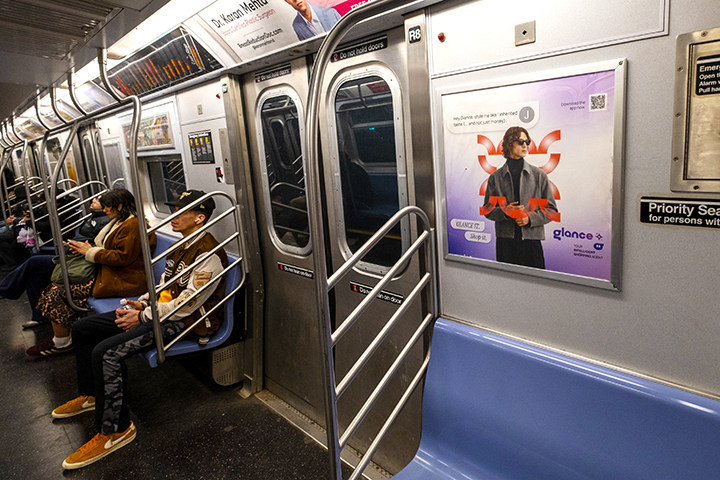
San Francisco’s transit advertising landscape is smaller than New York’s and structured differently, but for brands targeting Bay Area audiences — particularly the tech, startup, creative, and young professional demographics that concentrate along the BART and Muni corridors — it remains one of the most efficient ways to reach commuter audiences with repeated, high-quality exposure.
This guide covers how advertising on BART and Muni actually works, which stations and lines serve which audiences, how to integrate transit advertising with street-level guerrilla formats, and what alternatives exist for brands that want to reach the SF commuter audience without formal transit contract minimums. Our team deploys campaigns in San Francisco and across the Bay Area from our national operations center in Industry City, Brooklyn.
Understanding the differences between BART and Muni, and how each system serves different audience profiles, is essential for campaigns that want to reach the right commuter rather than just any commuter.
Understanding the Two Systems: BART vs. Muni
Brands new to San Francisco transit advertising often conflate BART and Muni. They’re distinct systems serving different geographies, audiences, and trip types, with separate advertising sales structures.
BART: Regional Connectivity
Bay Area Rapid Transit connects San Francisco to the East Bay (Oakland, Berkeley, Fremont), the South Bay (San Jose, the South Bay tech corridor), and both major Bay Area airports (SFO and Oakland). BART is the primary commuter infrastructure for the region’s tech workforce, with stations in Silicon Valley tech hubs like Mountain View, Millbrae, and the Daly City connector serving South Bay commuters who take Caltrain into San Francisco.
BART riders include a high concentration of tech industry workers, financial services professionals, and higher-income commuters using the system for longer regional trips. In-system advertising reaches both San Francisco-based audiences and the East Bay commuter population that represents a significant portion of the Bay Area’s consumer market.
Muni: San Francisco Neighborhoods
San Francisco Municipal Railway (Muni) operates the city’s internal surface and underground transit, including the Muni Metro light rail lines that run underground through downtown and surface through neighborhoods including the Castro, the Sunset, and the Richmond. Muni serves the full economic range of San Francisco residents rather than the commuter-skewed demographic of BART.
For campaigns targeting Mission District residents, Castro community audiences, or the Haight-Ashbury corridor, Muni Metro station advertising reaches audiences at neighborhood transit nodes without the regional audience dilution of BART. Neighborhood-specific targeting is more achievable through Muni than through BART’s regional system.
BART Station-by-Station Audience Profiles
Station selection on BART should follow the same logic as any OOH buy: match the station’s audience composition to the campaign’s target demographic, not just the station’s raw ridership.
Powell Street and Montgomery: Downtown Core
Powell Street and Montgomery Street stations are BART’s highest-ridership stations in San Francisco, serving the downtown Financial District and the Union Square retail corridor. The audience is a dense mix of financial services workers, retail shoppers, tourists, and commuters transferring to Muni surface lines. For broad-reach consumer brands with downtown San Francisco as a core target, these stations deliver maximum volume. For narrow-target campaigns, the audience heterogeneity requires more careful creative consideration.
Embarcadero: Financial District Premium
Embarcadero station serves the eastern Financial District, the Ferry Building, and the waterfront corridor. It carries a high concentration of financial services, legal, and executive-level professionals during commute hours. For premium consumer brands, B2B offerings, and financial products, Embarcadero provides a concentrated, higher-income audience that both Powell and Montgomery dilute with broader consumer traffic.
16th Street Mission: Creative and Arts Community
The 16th Street Mission station sits at the intersection of two of San Francisco’s most culturally active corridors. The surrounding neighborhood is home to the city’s Hispanic community, its arts and creative scene, its independent restaurant and bar culture, and a young, economically diverse population that represents the opposite of the Financial District profiles further north. For entertainment brands, food and beverage, arts and culture, and lifestyle brands targeting diverse young urban audiences, 16th Street Mission delivers a distinctly different demographic than BART’s downtown stations.
24th Street Mission: Deep Neighborhood Reach
The 24th Street station goes deeper into the Mission, away from the Arts Corridor and into a more residential, community-rooted neighborhood. This is appropriate for brands genuinely relevant to Mission District residents, with Spanish-language creative consideration for maximum audience relevance.
Muni Metro Station Advertising
Muni Metro underground stations at Castro, Church Street, Forest Hill, and West Portal serve the residential neighborhoods of central and western San Francisco. These stations carry the city’s resident population for neighborhood daily trips rather than cross-bay commutes.
Castro Station: LGBTQ+ Community and Visitors
Castro/Market station serves the Castro District, one of the country’s most concentrated LGBTQ+ communities and a neighborhood with significant destination traffic from visitors and other San Francisco residents. For brands relevant to LGBTQ+ audiences, pride-adjacent campaigns, and categories with strong cultural resonance in the Castro, this station offers targeted neighborhood reach that no citywide transit buy can replicate.
Civic Center: Government and Arts
Civic Center station at the intersection of Market Street and Van Ness Avenue serves City Hall, the main library, the Civic Center performing arts complex (Davies Symphony Hall, War Memorial Opera House), and several major social services facilities. The audience is heterogeneous but includes a high concentration of government workers, arts audiences, and social services users that creates specific targeting opportunities for relevant brands.
Integrating Transit Advertising with Street-Level Formats
Transit placements reach commuters in the system. Street-level formats reach them as they move through the neighborhood. The combination creates a multi-touch campaign that no single format achieves alone.
Poster Campaigns Around Station Exits
Station-adjacent poster placements on building surfaces within one block of target station exits capture commuters in the neighborhood after they’ve potentially encountered transit advertising inside the system. This reinforcement pattern builds message frequency across the full commute-to-destination journey in a way that either channel alone cannot achieve.
Brand Ambassador Deployments at Station Entrances
BART station entrance deployments during morning commute windows (7:30-9:30am) and evening reverse commute windows (5:00-7:00pm) reach high concentrations of target audience in predictable daily patterns. A professional brand ambassador team deployed at a target station entrance during peak commute can generate thousands of direct interactions in a two-hour window at a cost-per-engagement that often compares favorably with formal transit rates.
Sidewalk Stencils on Commuter Routes
Sidewalk stencils on the pedestrian paths between residential areas and station entrances reach commuters in the morning walk to transit before they reach the paid-access environment. Properly permitted stencil campaigns in San Francisco’s denser neighborhoods — the Mission, Hayes Valley, SoMa — create repeated daily exposure on the exact routes that target commuters walk every weekday.
LED Mobile Units for Event-Adjacent Transit Campaigns
During major events at venues served by BART — Chase Center for Warriors games, Oracle Park for Giants games, Moscone Center for major conferences — LED billboard truck deployments on routes between station exits and venues reach concentrated, event-attending audiences that represent specific demographic profiles. This format is particularly effective for brands targeting the tech conference community around Moscone Center or the sports entertainment audience around Chase Center.
Frequently Asked Questions About Subway Advertising in San Francisco
What transit systems serve San Francisco for advertising?
The two primary transit systems for San Francisco advertising are BART (Bay Area Rapid Transit), which connects San Francisco to Oakland, Berkeley, the East Bay, and the South Bay including SFO, and Muni Metro, the city’s surface and underground light rail system serving neighborhoods within San Francisco proper. Each system serves distinct geographies and audience profiles.
How much does BART advertising cost?
BART advertising rates vary by format and station. Platform posters in San Francisco stations typically run $400-$900 per card per four-week period. Station takeovers and digital placements carry higher minimums. In-car advertising contracts are priced by car count and duration. Our team can provide current rate context and help you compare formal transit placements against guerrilla street formats that reach the same commuter audiences.
Which BART stations are best for advertising?
Powell Street and Montgomery Street are the highest-ridership BART stations in San Francisco, serving the downtown Financial District and Union Square. Embarcadero serves a concentrated financial services and professional audience. 16th Street Mission and 24th Street Mission serve the Mission District’s Latino community and arts/creative scene. Best station depends on your audience, not just ridership volume.
Can you run guerrilla marketing campaigns around BART stations?
Yes. Poster placements on adjacent building surfaces, brand ambassador deployments at station entrances during peak commute windows, and sidewalk stencils near station exits are all effective formats for reaching the BART commuter audience without formal transit advertising contracts. These formats often deliver better cost-per-engagement for targeted campaigns.
What neighborhoods are best for street marketing in San Francisco?
The Mission District (16th and 24th Street stations), SoMa/South of Market, Hayes Valley, the Castro, and the Haight-Ashbury are the neighborhoods with the strongest foot traffic and cultural density for street-level campaigns in San Francisco. Neighborhood selection should match campaign audience and category.
How does transit advertising in San Francisco compare to New York?
San Francisco’s BART and Muni systems have significantly lower total ridership than the NYC subway, which means narrower reach but in some cases more concentrated audience access in specific neighborhoods. Transit advertising in SF is generally less expensive than equivalent placements in New York, with lower minimum spends and shorter contract minimums. The SF tech and startup audience concentration along specific BART corridors also creates specific targeting opportunities not available in other markets.
Frequently Asked Questions
What is subway advertising san francisco?
American Guerrilla Marketing provides subway advertising san francisco services across 50+ U.S. markets. Every campaign is planned, scouted, executed, and GPS-documented by our field teams. We work with regional brands and Fortune 500 companies on campaigns that require real street-level execution and documented proof of performance.
How does AGM approach san francisco?
Our process starts with a market consultation to understand your goals, target audience, and budget. We then scout locations, handle any required permissions or permits, coordinate production and installation with our local crews, and provide a full GPS-tagged photo report after the campaign runs.
What markets does American Guerrilla Marketing cover for san francisco?
We operate in 50+ U.S. markets including New York, Los Angeles, Chicago, Miami, Houston, Atlanta, Seattle, Denver, Boston, and dozens of secondary markets. Contact us to confirm availability and pricing for your specific market.
How much does a san francisco campaign cost?
Campaign pricing depends on market, format, quantity, and duration. We work with budgets ranging from targeted single-market runs to national rollouts across multiple cities. Use our RFP Builder or contact us directly for a custom quote based on your specific campaign requirements.
How do I get started with san francisco through AGM?
The fastest way to get started is to submit your campaign details through our RFP Builder at americanguerrillamarketing.com, or contact us directly at [email protected] or (646) 776-2770. Our team typically responds within one business day with availability and initial pricing.