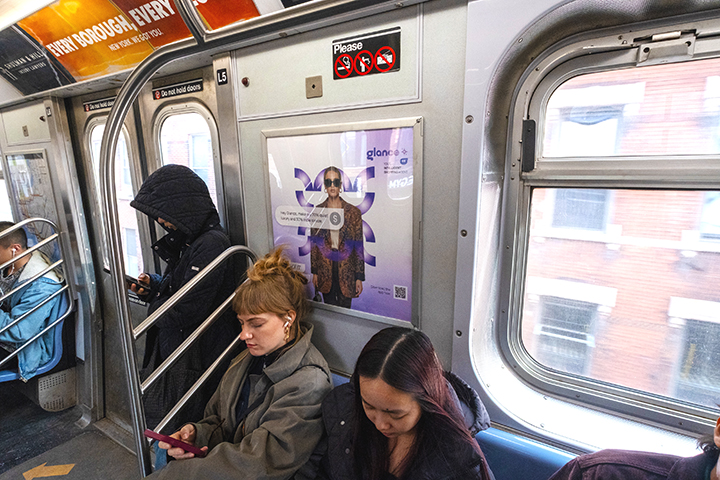
New York City’s subway system is one of the most valuable advertising environments in the country. With daily ridership consistently above 3 million and a captive audience that spends 10-40 minutes per trip in close proximity to advertising surfaces, the MTA system offers reach and frequency that most other urban markets can’t match. It’s also one of the most complicated media environments to navigate effectively.
This guide covers how subway advertising in NYC actually works — formats, line-by-line audience differences, station selection logic, and how to integrate transit advertising with guerrilla street-level formats that extend reach beyond the turnstile. We deploy campaigns across the five boroughs and the surrounding metro area from our base in Industry City, Brooklyn. The perspective here is operational, not theoretical.
Whether you’re evaluating a formal MTA buy, planning a campaign around the transit environment, or figuring out how to reach commuters without a formal transit contract, the frameworks below apply.
How the NYC Subway Advertising System Works
MTA advertising is sold through an exclusive contract with Outfront Media, which manages the physical and digital advertising inventory across the subway system. All formal MTA advertising placements — platform posters, car cards, station dominations, digital screens — are contracted through Outfront’s sales process.
This centralized system has both advantages and constraints. On the advantage side, a single relationship opens access to the full inventory across all lines and boroughs. On the constraint side, minimum spends, standard contract terms, and production requirements create barriers that rule out many smaller campaigns.
Understanding the Inventory Categories
MTA subway advertising breaks into three broad inventory categories. Platform advertising includes the poster-format placements on station walls and platforms — two-sheet (28×42″), four-sheet (48×69″), and larger format placements that face riders waiting on platforms. Interior car advertising includes the panels above windows and along car ceilings that commuters read during rides. Station dominations are the premium product: a single brand purchasing all advertising surfaces in a target station for a defined period, creating an immersive brand environment for every rider who passes through.
Digital screens at select stations offer the flexibility of copy rotation and time-of-day targeting. Availability is concentrated in higher-traffic stations on the main lines, and demand is strong from large-format advertisers.
Line-by-Line Audience Profile
The MTA system carries dramatically different audience compositions by line. Treating the subway as a single homogeneous audience misses the targeting opportunity that line selection provides.
The L Train: Brooklyn’s Creative Corridor
The L train connecting Manhattan to Williamsburg, Bushwick, and Canarsie carries one of the most demographically specific audiences in the system. Williamsburg and Bushwick riders are disproportionately young, creative-class, entertainment industry, and early-adopter consumer profiles. For brands in fashion, entertainment, music, tech, and food and beverage categories, the L train delivers a concentrated target audience that general market campaigns reach only incidentally.
The 4/5/6: Financial and Business District Reach
The Lexington Avenue lines running through Grand Central, Wall Street, and Midtown corridors carry a heavy financial services, legal, and business professional audience during commute hours. For B2B brands, financial products, premium consumer goods, and professional services, these lines offer a cost-effective way to reach high-income professionals at scale.
The A/C/E and 1/2/3: Broad Manhattan Coverage
The Eighth Avenue (A/C/E) and Broadway-Seventh Avenue (1/2/3) lines together cover a broad swath of Manhattan from downtown to the Upper West Side, serving mixed demographic audiences with relatively high tourist composition near key interchange stations. These lines are appropriate for broad consumer brands with wide demographic appeal rather than narrow-target campaigns.
The G Train: Brooklyn and Queens Without Manhattan
The G train is the only subway line that doesn’t enter Manhattan. It connects Long Island City and Greenpoint to Brooklyn neighborhoods including Williamsburg, Park Slope, and Carroll Gardens. The G serves a young, Brooklyn-based audience with high residential concentration in some of the city’s fastest-growing neighborhoods. For brands targeting Brooklyn residents specifically, the G is an underrated targeting vehicle.
Station Selection: High Traffic vs. High Relevance
The instinct to select the highest-ridership stations is understandable but often produces suboptimal campaigns. Times Square-42nd Street has extraordinary raw ridership, but the audience is a complex mix of tourists, commuters, and service workers that doesn’t serve most narrow-target campaigns well. A campaign targeting young Brooklyn professionals might perform better at Bedford Avenue (L) or DeKalb Avenue (B/Q/R) despite significantly lower absolute ridership.
Analyzing Dwell Time by Station Type
Station type affects advertising exposure time significantly. Transfer stations — where riders exit one platform to access another line — create extended dwell periods that increase advertising exposure. End-of-line stations where riders wait for trains that originate at the terminal also create longer dwell periods than through-station placements where trains run frequently. Advertising exposure time varies from under 60 seconds at a frequent-service through station to 5+ minutes at a transfer hub with complex connection paths.
Neighborhood Context Around Station Exits
Subway advertising doesn’t exist in isolation from the street environment. The retail environment, pedestrian traffic patterns, and neighborhood character around each station exit affects how subway advertising fits into the overall brand experience. A campaign where the transit creative is reinforced by poster placements on the adjacent streets, sidewalk stencils creating a path from the subway exit toward a retail location, or brand ambassadors stationed at exit points during morning commute windows creates a multi-touch experience that isolated transit advertising cannot produce.
Combining MTA Advertising with Guerrilla Formats
The transit environment and the street environment around subway stations are natural integration points for multi-format campaigns. We regularly build campaigns that use formal transit placements for high-frequency commuter exposure and street-level formats to capture audiences as they exit the station and move into the neighborhood.
Station-Adjacent Poster Campaigns
Building surfaces within one block of high-traffic subway exits are among the most valuable poster placement locations in urban environments. Riders exiting the station are in motion, attentive, and often oriented toward a destination in the surrounding neighborhood. A poster campaign positioned to greet exiting commuters, reinforcing the message they encountered on the platform or in the car, builds frequency and brand recall across the full commute-to-destination journey.
Morning Commute Street Team Deployments
Station entrances during morning commute windows (7-10am on weekdays) are among the highest-volume public interaction points in the city. A well-positioned brand ambassador team at a target station entrance during peak commute can interact with thousands of relevant audience members in a two-to-three hour window, at a cost-per-impression that often competes favorably with formal transit advertising rates. The interaction quality — direct, face-to-face, material distribution or sample in hand — exceeds passive poster exposure by any reasonable measure of brand impact.
LED Billboard Truck Deployments Near Stations
During high-traffic commute windows, LED billboard trucks positioned on streets adjacent to major subway stations capture both the station entry flow and the adjacent pedestrian and vehicular traffic. Route planning that circles a campaign target area during morning and evening commute windows creates high-frequency exposure among a concentrated audience.
Alternatives to Formal MTA Buys
For brands that want to reach commuter audiences without the minimum spends and contract requirements of the MTA system, guerrilla formats around the transit environment offer effective alternatives.
Transit Shelter Placements
Bus shelters at street level near subway station exits and on major surface transit routes offer transit-adjacent advertising at lower minimum spends than MTA subway inventory. Transit shelter visibility is particularly strong in outer borough neighborhoods where bus ridership is higher relative to subway ridership.
Outdoor Poster Placements on Transit Corridors
Major commercial streets that connect residential neighborhoods to subway stations — Atlantic Avenue in Brooklyn, Broadway in the Bronx, Junction Boulevard in Queens — carry consistent pedestrian traffic from commuters walking to and from stations. Poster placements on these corridors reach commuter audiences in their neighborhood context rather than in the paid-access transit environment.
Frequently Asked Questions About Subway Advertising in NYC
How much does subway advertising in NYC cost?
MTA subway advertising rates vary by format and placement. Station platform posters typically run $300-$800 per card per four-week period in standard stations. Station dominations, where a brand takes over all ad surfaces in a single station, can run $50,000-$150,000+ for four weeks. In-car advertising contracts vary by line, car count, and duration. Contact our team for current market rate guidance and guerrilla format alternatives that can deliver transit-adjacent reach at lower minimum spends.
Which NYC subway lines have the highest ridership?
The busiest lines by ridership are the 4/5/6 (Lexington Avenue), the A/C/E (Eighth Avenue), the 1/2/3 (Broadway-Seventh Avenue), and the N/Q/R/W (Broadway). Grand Central-42nd Street, Times Square-42nd Street, and 34th Street-Penn Station are consistently among the highest-ridership stations. However, high ridership doesn’t always mean high target audience concentration — line selection should follow audience analysis, not raw traffic numbers.
What formats are available for NYC subway advertising?
Available formats include platform posters (two-sheet, four-sheet, and larger), car cards (interior panels), station dominations, digital screens, transit shelter displays at station entrances, and full platform takeovers at select stations. Format availability varies by station and line. All formal MTA advertising is contracted through Outfront Media.
Can you combine subway advertising with guerrilla marketing?
Yes, and the combination consistently outperforms either channel alone. Poster placements on streets near subway exits, brand ambassador deployments at station entrances during peak commute windows, and sidewalk stencils creating a path from street to station are all effective integration strategies that our team executes regularly in the New York market.
How do I choose which subway stations to advertise in?
Station selection should follow audience analysis: which lines serve your target demographic’s residential and work neighborhoods, which transfer stations see the highest dwell time, and which station areas have retail or venue density that correlates with your target audience’s behavior. High ridership does not always mean high target audience concentration.
What are the alternatives to formal MTA advertising buys?
Brands can reach commuter audiences through guerrilla formats around subway stations: poster placements on adjacent building surfaces, brand ambassadors at station entrances during commute windows, sidewalk stencils on paths from residential areas to station entrances, and transit shelter placements at nearby bus stops. These formats often reach the same commuter audiences at significantly lower minimum investments than formal transit contracts.
Frequently Asked Questions
What is subway advertising nyc?
American Guerrilla Marketing provides subway advertising nyc services across 50+ U.S. markets. Every campaign is planned, scouted, executed, and GPS-documented by our field teams. We work with regional brands and Fortune 500 companies on campaigns that require real street-level execution and documented proof of performance.
How does AGM approach advertising nyc?
Our process starts with a market consultation to understand your goals, target audience, and budget. We then scout locations, handle any required permissions or permits, coordinate production and installation with our local crews, and provide a full GPS-tagged photo report after the campaign runs.
What markets does American Guerrilla Marketing cover for advertising nyc?
We operate in 50+ U.S. markets including New York, Los Angeles, Chicago, Miami, Houston, Atlanta, Seattle, Denver, Boston, and dozens of secondary markets. Contact us to confirm availability and pricing for your specific market.
How much does a advertising nyc campaign cost?
Campaign pricing depends on market, format, quantity, and duration. We work with budgets ranging from targeted single-market runs to national rollouts across multiple cities. Use our RFP Builder or contact us directly for a custom quote based on your specific campaign requirements.
How do I get started with advertising nyc through AGM?
The fastest way to get started is to submit your campaign details through our RFP Builder at americanguerrillamarketing.com, or contact us directly at [email protected] or (646) 776-2770. Our team typically responds within one business day with availability and initial pricing.