Sports audiences are among the most concentrated, loyal, and commercially engaged audiences available to any brand. They show up in specific places at specific times with documented passion for the subject matter and a tendency to associate brands they encounter in the fan context with positive emotional states they already have. That is the sports marketing opportunity. The challenge is reaching those audiences in ways that match the energy and authenticity of the sports environment rather than interrupting it.
American Guerrilla Marketing operates as a sports marketing agency through field-level brand activation: street teams in venue districts, tailgate activations in stadium parking lots, sampling programs targeting fan audiences, physical poster and print campaigns in fan corridors, and LED billboard trucks working approach routes during peak arrival and departure windows. We do this work at major venues across the country, including NFL stadiums, NBA arenas, MLB parks, college football programs, and major live event venues that attract sports-adjacent audiences.
This guide covers how sports marketing works from the field perspective: the operational knowledge that determines whether a brand shows up effectively in the sports fan environment or just spends money on presence without impact. We cover venue geography by sport, campaign formats by objective, staffing standards, and how results get measured when there is no media buying receipt to point to as proof.
Why Sports Marketing Works at Field Level
Traditional sports marketing is dominated by media buying: stadium signage, broadcast spots, in-game activations purchased through official sponsorship packages. Those formats have reach and legitimacy. They also have price points that exclude most brands and audience attention levels that have been declining as in-venue and broadcast distraction options multiply. Field-level sports marketing operates in a different category. It reaches the fan in the physical geography they occupy before and after the event, when they are engaged, socially active, and not divided between ten screens.
The fan arriving at a major NFL game two hours before kickoff is in a state of heightened social engagement. They are with their group. They are talking about the game. They are eating, drinking, and moving through the venue geography in a way that is unhurried and anticipatory. A brand that shows up in that context with something genuine to offer is not a media interruption. It is a participant in the fan experience. That is a fundamentally different relationship than what a billboard on the highway achieves.
NFL Stadium Activations: The Full Pre-Game Window
NFL game days are the premier sports marketing environment for field-level brand activation. The pre-game window is long, two to five hours before kickoff depending on stadium culture and the game’s significance. The audience is physically accessible in outdoor parking areas, pedestrian approach corridors, and the surrounding commercial zone. The social dynamics of NFL fandom, tailgating, group arrivals, shared consumption, favor brand experiences that can participate in the group context rather than targeting individuals in isolation.
The Venue District Approach
The first layer of an NFL game-day activation is the venue district itself: the blocks of commercial and pedestrian activity surrounding the stadium that become saturated with fans in the pre-game window. Street teams in this geography intercept fans moving toward the stadium from transit, parking, and the surrounding neighborhood. The venue district position is particularly effective because it reaches fans before they commit to the specific tailgate group or stadium section experience that will dominate their attention for the next several hours.
Tailgate Zone Activations
Inside the stadium parking geography, tailgate zone activations reach a different profile: fans who have committed significant time and planning to the pre-game experience. They arrive early, they set up, and they occupy specific positions in the lot for hours. A brand that shows up in the tailgate zone with sampling, games, or branded giveaways enters an established social micro-environment and needs to offer genuine value to be welcome in it. We build tailgate activations around what the audience is already doing, not around what the brand wants to do to the audience.
NBA Arena Activations: Urban Venue Geography
NBA arenas are typically embedded in urban commercial districts rather than the large parking lot complexes that define NFL venues. The pre-game window is shorter, typically 90 minutes to two hours, and the audience arrives by transit, rideshare, and foot from the surrounding neighborhood as much as by car. The activation geography is pedestrian-dominant: the streets surrounding the arena, the transit exits that funnel fan traffic toward the venue, and the commercial blocks that fans populate before the game.
Transit-Dominant Approaches
In transit-heavy markets like New York, Chicago, and Boston, the subway or commuter rail exits nearest the arena are the highest-value positions for NBA game-day activation. Fan traffic concentrates in predictable corridors from these exits to the arena, and street teams positioned on those corridors intercept the majority of arriving fans in a tight geographic zone. We know the specific exit locations and pedestrian routes at Madison Square Garden, United Center, TD Garden, and the Barclays Center from repeated activations.
MLB Park Activations: The Long Pre-Game Window
Major league baseball offers a different game-day rhythm than football or basketball. Games are daily or near-daily over a long season, the pre-game window can extend two to three hours for casual fans arriving in advance, and the surrounding park districts in cities like Chicago, Boston, and San Francisco have developed into destination social environments that draw people who may not have tickets to the game. The activation potential in the surrounding district is as significant as the in-venue-approach activation for many MLB markets.
Wrigleyville, Fenway Park District, and Oracle Park
The commercial districts around Wrigley Field in Chicago, Fenway Park in Boston, and Oracle Park in San Francisco are among the most developed sports-fan commercial zones in the country. The bars, restaurants, and street-level commercial activity in these zones are active for hours before game time and continue after the final out. Brands that activate in these districts reach a fan-dominant audience in a social environment with extended dwell time and high commercial engagement.
College Football: Game Day at Major Programs
College football game days at major programs including Michigan, Alabama, LSU, Ohio State, and USC generate some of the highest-density fan activation opportunities available. The student and alumni fan base, the extended tailgate culture, and the community character of major college football programs create a different social dynamic than professional sports: the brand is entering a tradition-laden community experience, not just a sporting event. Activation in this context needs to reflect cultural awareness of the specific program and its fan community.
Our college football activation experience spans multiple Power Five programs and includes both on-campus and surrounding district activations. The college marketing frameworks we apply to student-targeted campaigns translate directly to the alumni and broader fan community activations that college football game days require.
Physical Advertising in Fan Corridors
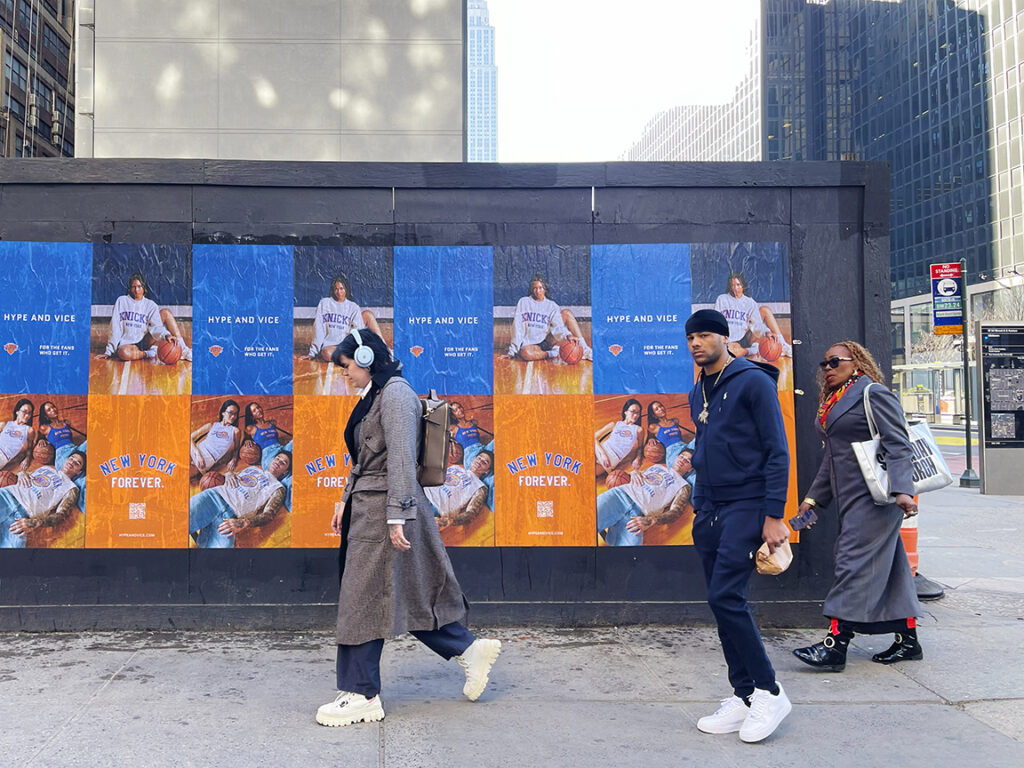
Beyond field crews, physical advertising formats play a significant role in comprehensive sports marketing campaigns. LED billboard trucks working approach routes during peak arrival windows reach the vehicle-borne audience that street teams cannot intercept. Wheatpasting and poster campaigns in the venue district streets create lasting physical presence that continues to generate impressions between game days. Sidewalk stencils on high-traffic pedestrian corridors around arenas and stadiums create unavoidable ground-level brand presence during both game-day and non-game-day foot traffic.
The combination of field crew activation and physical advertising in the same geographic zone creates a layered sports marketing presence that feels like the brand belongs in the fan environment, not just showed up for the day.
Fan Zone and Festival Activations
Many major sports events include official fan zones, pregame festivals, and street closures that create outdoor activation environments adjacent to the game-day experience. Major sporting events like Super Bowl week, the NBA All-Star weekend, and major golf tournaments include extensive fan zone programming that represents significant activation opportunities for brands that navigate the access and logistics correctly.
We plan fan zone activations around the specific geography and programming of each event, building crew deployment models, sampling logistics, and branded presence elements that work within the fan zone environment. Events with major outdoor fan zones require advance coordination for positioning and materials staging that is different from standard game-day street team logistics.
Staffing Sports Marketing Activations
The crew for a sports marketing activation needs to understand the fan culture it is entering. Generic event staff who do not know the sport, do not understand the specific fan community dynamics, and cannot speak naturally about the game-day context are less effective than crew members who are genuine sports fans in the markets they are activating. We recruit sports marketing crews from the event and entertainment labor pool in each market, prioritizing candidates with real experience attending and participating in the sports culture we are activating around.
Crew Briefing for Sports Events
Sports marketing crew briefings cover the same elements as any activation briefing, plus sport-specific and event-specific context. What is the significance of today’s game? What is the fan sentiment going into it? What are the fan culture touch points that the crew can use to build authentic engagement with the audience? These questions matter because fan audiences are highly tuned to authenticity. A crew member who can engage an arriving fan about the team’s recent performance is more effective than one who can only deliver a product pitch.
Measuring Sports Marketing Results
Sports marketing campaign results are measured through the same frameworks as other field-level activations: materials distributed, engagements logged, samples delivered, GPS-documented positions, and photo documentation across the deployment window. For campaigns running across multiple games in a season, we build comparative data that shows how performance varies by opponent, weather, game significance, and crew positioning across the season.
The most valuable measurement for sports marketing campaigns is often the qualitative field observation data that comes from experienced crew supervisors who can describe how fans responded to the brand activation in specific moments of the game-day experience. That data does not appear in a media buying report. It is field intelligence that informs better campaigns.
Brand Categories That Perform Best in Sports Marketing
Sports marketing is not equally effective for every brand category. The brands that generate the strongest results from sports fan engagement are those with genuine relevance to the sports lifestyle, the fan experience, or the practical needs of the game-day occasion. Understanding which categories have the clearest path to meaningful sports audience engagement shapes how a campaign should be built and what expectations are realistic.
Food, Beverage, and CPG
Food and beverage brands have the most direct path to sports fan engagement because the game-day experience is inherently a consumption occasion. Fans eat and drink before, during, and after events. A brand that inserts itself into that consumption occasion through sampling or give-away activation creates a direct trial moment with strong emotional context. CPG brands with sports-adjacent positioning, energy products, performance nutrition, and better-for-you snack categories, have natural sports fan relevance that makes the activation feel organic rather than commercial.
Apparel and Lifestyle
Apparel and lifestyle brands with sports adjacency reach their target consumer in their natural element in the sports venue district. The fan who wears athletic and casual lifestyle apparel to games is the exact target for many lifestyle brands, and the sports venue environment creates opportunities for authentic engagement that retail and digital formats cannot replicate. Limited-edition items, exclusive give-aways, and experiential try-on or customization activations work well in the sports fan context for lifestyle and apparel brands.
Financial Services and Tech
Financial services and technology brands require a different engagement format in sports environments because their product is not physically distributable or immediately demonstrable in the same way as food and consumer goods. These categories benefit most from experiential activations that create a brand experience with genuine utility: a tech product demo, a financial service offer with immediate fan relevance, or a branded experience that connects the brand to the positive emotional state of the fan environment. The key is creating a reason for engagement that goes beyond brand signage.
Sports Marketing in Secondary and Emerging Markets
Major sports marketing programs often focus on the largest markets: New York, Los Angeles, Chicago, Dallas. The secondary markets, mid-size cities with significant sports cultures and less saturated sports marketing environments, frequently offer stronger activation opportunities at lower cost. A brand activation in the venue district surrounding a sold-out NBA game in a secondary market city can generate comparable engagement at a fraction of the cost of the same format in a primary market, with less competitive noise from other brand activations in the same geography.
Our guerrilla marketing services across 50+ U.S. markets include extensive secondary market coverage. Secondary market sports activations also reach fan communities that are often more intensely local in their identification with the team and more positively responsive to brands that show up and participate in that local sports culture. The fan in a secondary market often has a stronger sense that their team is specifically their team, not a nationally famous franchise, and brands that demonstrate awareness of that local sports identity generate particularly strong reception.
Hospitality Zone Activation Adjacent to Sports Venues
Premium hospitality zones that many major sports venues operate for corporate and VIP guests create a secondary activation environment adjacent to the general game-day geography. While access to official premium hospitality zones requires official venue coordination or corporate sponsorship, the pedestrian approaches to these zones, and the luxury hotel and restaurant geography that premium attendees move through before and after events, are accessible for field marketing without official authorization.
Brands targeting a higher-income demographic within the sports audience benefit from positioning activations in the premium hospitality approach zone rather than in the general fan pedestrian corridors. The give-away items, sampling products, and engagement format need to match the premium attendee profile: higher-quality promotional materials, products that communicate brand quality rather than broad accessibility, and engagement approaches that match the social style of a professional, high-income audience attending corporate hospitality events rather than general admission seating. The premium sports hospitality approach zone is an underused activation geography for luxury and premium brand categories.
Sports Marketing Agency Selection Criteria
Evaluating a sports marketing agency requires looking at several dimensions that go beyond general event marketing capability. Venue-specific knowledge matters: an agency that has activated at the specific venues on your target list brings operational intelligence that a first-time activation cannot replicate. Documentation quality and reporting standards should be reviewed before engagement: the GPS photo reports, engagement logs, and field notes that a professional agency delivers are the tangible evidence that the campaign ran as planned and performed at the level the brief specified. Field crew quality standards and recruiting practices should be understood: the crew is the campaign, and an agency whose recruiting practices are rigorous produces better field performance than one whose crew selection is casual.
Operational scalability matters for brands targeting multiple markets or a full season of activation. An agency with established field networks in every target market can run consistent programs without the lead time and logistics challenges of building market-by-market capability from scratch for each campaign. Ask about existing crew relationships in each target market, existing venue knowledge for each target venue, and prior campaign reporting samples to evaluate whether the agency’s operational standards match what the campaign requires.
Frequently Asked Questions
What does a sports marketing agency do?
A sports marketing agency executes brand activations in and around sports venues and events. This includes game-day street team deployments, tailgate marketing in stadium parking areas, fan zone activations, product sampling programs targeting sports audiences, and physical advertising campaigns in the venue district geography.
How is sports marketing different from general event marketing?
Sports audiences are concentrated, passionate, and highly loyal to brands that show up authentically in their fan context. The venue geography, arrival patterns, tailgate culture, and fan zone behaviors are specific to sports events and require operational knowledge that general event marketing agencies often lack.
Which sports work best for street-level brand activation?
NFL football produces the longest pre-game window and the most developed tailgate culture. College football at major programs offers similar conditions. NBA playoff games in urban venues with walkable approach geographies work well for street team formats. Each sport requires a different deployment model.
Can a sports marketing agency work without an official team sponsorship?
Yes. Much of the most effective sports marketing happens outside the venue in the public streets, pedestrian corridors, and surrounding commercial zones. These areas do not require official team or league authorization.
How do you reach sports fans without buying a stadium sponsorship?
Sports fans congregate in predictable patterns around venues before and after events. Street teams, sampling activations, poster campaigns, LED billboard trucks on approach routes, and sidewalk stencils in fan corridors all reach sports audiences in the wild without requiring official venue access.
What does a sports marketing campaign cost?
Single-game street team deployments start at $1,500 to $4,000. Multi-format game-day activations with sampling, street teams, and physical advertising run $8,000 to $25,000. Season-long programs with recurring activations command custom pricing.