Standard Size Posters: Every Format Your Campaign Might Need
Standard size posters are the industry’s agreed-upon formats. They exist because the printing and marketing network has converged around specific dimensions over decades of practical use. Print equipment is configured for them. Display hardware is built for them. Pricing is optimized around them. Working within standard size posters saves money, time, and avoids the friction that custom sizes introduce into production workflows.
The question is more than what the standard sizes are. The question is which standard size works for your specific campaign in your specific market on your specific surfaces. That is where field experience matters more than a spec sheet.
At American Guerrilla Marketing, we spec and install posters across the United States in every format, on every surface, for every type of campaign. This guide reflects what we have learned about standard size posters in the real world, more than in theory.
These are the standard sizes the US industry recognizes and builds its workflows around:
8.5 x 11 Inches
The smallest standard. Also called letter size or mini poster. Used for counter cards, bulletin board flyers, and handout materials. It prints on any office or consumer printer. It is the most economical format per unit and works best at close viewing distances of one to five feet. Not suitable for outdoor campaigns where the audience is more than ten feet away from the installation surface.
11 x 17 Inches
The tabloid standard. The most common format for high-volume street saturation campaigns. It prints on standard commercial digital presses at very low cost per unit. Our crews can blanket a neighborhood with 11 x 17 posters efficiently. The format fits bulletin boards, utility poles, small fences, and interior windows. For close-range viewing audiences, it is the best value in the standard size spectrum.
18 x 24 Inches
The outdoor entry standard. At one and a half by two feet, this format crosses the visibility threshold for meaningful outdoor impact. It reads from 15 to 20 feet in good conditions with appropriate typography. The 18 x 24 is the standard size for yard signs, A-frame sidewalk displays, transit-adjacent wall placements, and retail window campaigns where the audience includes people on the sidewalk outside.
24 x 36 Inches
The primary standard. The format most clients mean when they say “poster” without specification. Two feet by three feet. Readable from 30 to 35 feet with bold design. Fits most urban installation surfaces. Prints at moderate cost in quantities from 50 to 1,000 units. This is the size our crews install most frequently across all campaign types.
27 x 40 Inches
The one-sheet. The theatrical cinema standard for decades. Slightly larger and differently proportioned than the 24 x 36. Used primarily in entertainment marketing, cinema lobbies, and music industry applications. The aspect ratio is distinctive and does not scale directly from 24 x 36 designs.
36 x 48 Inches
Large format standard. Three by four feet. Twice the area of a 24 x 36. Used for high-impact single-location outdoor installations on major walls, construction fencing, and scaffolding. Requires specialty printing equipment and two-person installation. The visual presence it creates is substantially stronger than the 24 x 36 at the same location.
48 x 72 Inches
The oversized standard. Four by six feet. Used for premium outdoor statement installations at high-traffic locations. This is the largest single-sheet format our field teams routinely work with. It commands visual space in a way that smaller standard formats simply cannot. Use it when the location quality justifies the cost.
Standard Size Decision: If you are planning your first street poster campaign, start with 24 x 36 for wall placements and 11 x 17 for poles and smaller surfaces. This two-format approach covers the most surface types at the best cost balance.
Standard Size Poster Reference Table
Size
Dimensions (in)
Metric (cm)
Best For
Letter / Mini
8.5 x 11
21.6 x 27.9
Counter cards, handouts, bulletin boards
Tabloid / Small
11 x 17
27.9 x 43.2
High-volume campaigns, poles, campus
Medium Poster
12 x 18
30.5 x 45.7
Indoor retail, point-of-sale display
Standard Outdoor
18 x 24
45.7 x 61
Yard signs, outdoor retail, transit
Primary Standard
24 x 36
61 x 91.4
Street campaigns, events, retail, home
One-Sheet
27 x 40
68.6 x 101.6
Cinema, entertainment industry
Large Format
36 x 48
91.4 x 121.9
Major outdoor walls, construction sites
Oversized
48 x 72
121.9 x 182.9
Premium outdoor statement locations
Standard Size Posters in Street Marketing Campaigns
Street marketing campaigns involve specific conditions that affect which standard size performs best. The environment is uncontrolled. Weather, competing visuals, surface quality, and audience movement speed all vary. The standard size that handles these variables best is the one worth using.
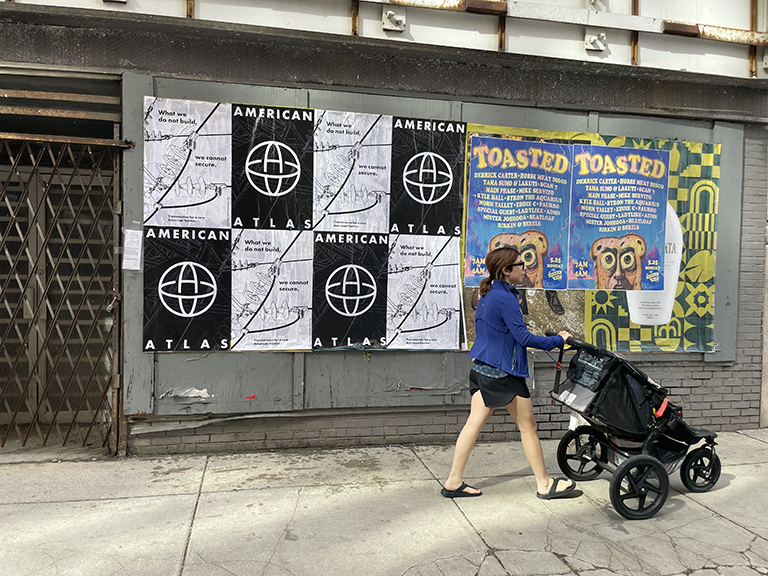
Our field teams run campaigns in neighborhoods where poster surfaces compete with street art, existing signage, building color, and other marketing. In these environments, visibility and boldness matter above all else. A standard 24 x 36 poster with a strong design and high contrast stands out in this environment. A standard 11 x 17 with the same design gets buried.
The reverse is also true. In a residential or quieter commercial neighborhood where foot traffic is close and ambient visual competition is low, an 11 x 17 in the right location is completely adequate. The neighborhood context determines the appropriate standard size as much as the design does.
Dense urban areas with heavy pedestrian traffic and high visual noise: 24 x 36 minimum. Quieter neighborhoods with close foot traffic and lower competition: 11 x 17 is effective. Suburban or highway-adjacent locations with vehicle traffic: 36 x 48 or larger.
Standard Size Posters for Retail Campaigns
Retail environments have different requirements from street campaigns. The audience is inside, viewing at shorter distances, in a controlled environment. Standard sizes that work in retail reflect these conditions.
Point-of-sale counter displays use 8.5 x 11 and 11 x 17. These fit standard counter card holders and acrylic display systems. The audience stands close to these displays, often waiting in line. Detail and information density can be higher at this scale.
Retail window campaigns use 11 x 17 for small windows, 18 x 24 for medium windows, and 24 x 36 for large windows. The choice depends on the window dimension and how much of the window the poster is intended to fill. Filling 30 to 50 percent of the window creates a clean display. Filling the entire window with a poster can reduce natural light and make the interior feel closed off.
Interior promotional signage uses 18 x 24 and 24 x 36. Hanging banners from ceiling tracks use wider environment formats. Floor standing displays use 24 x 36 and larger. Every format serves a specific function in the retail environment network.
Standard Size Posters for Event Campaigns
Events have a defined timeline. The posters go up, the event happens, the posters come down or fade. This timeline affects how much to invest in any single poster placement and which standard size makes sense for the campaign’s production timeline and budget.
For event promotion leading up to the event date, 24 x 36 is the go-to standard size. The format carries the essential event information (name, date, venue, performer or brand) at readable scale for street-level audiences. Installation begins two to four weeks before the event and builds anticipation over the campaign period.
On the day of or the day before the event, 11 x 17 posters in high density around the venue serve as directional reinforcement. They remind people about the event and create a sense of scale and momentum. The saturation effect from dense 11 x 17 coverage around a venue entrance communicates that something significant is happening here.
For high-profile events with premium budgets, 36 x 48 or 48 x 72 posters at anchor locations near the venue create a statement that smaller standard sizes cannot match. A single 48 x 72 on a corner building across from a major event venue functions as a visual beacon for everyone approaching from multiple directions.
Event Campaign Formula: 24 x 36 for two-to-four week advance coverage in the target neighborhood. 11 x 17 for saturation in the week before the event. 36 x 48 or 48 x 72 for anchor placements near the venue, installed one week out and refreshed if needed.
Standard Size Posters and Design Best Practices
The design requirements change with the standard size. What works at 24 x 36 may need significant adjustment for effective communication at 11 x 17 or 48 x 72. Here is how design principles shift across standard sizes:
11 x 17: Bold, simple, high contrast. One strong headline. One key visual element. No body text for outdoor applications. The format demands economy of design because the viewing window is short and the competition for attention is high.
24 x 36: Headline plus two to three supporting information lines. A clear visual hierarchy. A web address or social handle is acceptable as a secondary design element. The extra surface area gives designers room to establish brand character alongside the core message.
36 x 48 and 48 x 72: Pure impact design. One headline, maximum. One dominant visual element. The message needs to land in under a second at viewing distances of 30 to 75 feet. At this scale, the image is the message. Text is secondary.
Printing Standard Size Posters: Key Specifications
Every standard size poster requires specific file preparation. Here are the key technical specifications for each size:
8.5 x 11: File at 8.75 x 11.25. 300 DPI. CMYK.
11 x 17: File at 11.25 x 17.25. 300 DPI. CMYK.
12 x 18: File at 12.25 x 18.25. 300 DPI. CMYK.
18 x 24: File at 18.25 x 24.25. 300 DPI. CMYK.
24 x 36: File at 24.25 x 36.25. 300 DPI. CMYK.
27 x 40: File at 27.25 x 40.25. 300 DPI. CMYK.
36 x 48: File at 36.25 x 48.25. 150 DPI. CMYK.
48 x 72: File at 48.25 x 72.25. 100-150 DPI. CMYK. Confirm with vendor.
All files with 0.125 inch bleed per side as shown above. Keep essential content 0.25 inches inside the trim line (0.375 inches from artboard edge). Embed fonts. Flatten transparency before PDF export.
Standard Size Posters in Specific City Markets
The right standard size for a campaign depends partly on the market. Here’s how standard size selection shifts by city.
New York City
Manhattan’s density means available wall sections are smaller and more competed. We use 18 x 24 as the primary standard for most Manhattan campaigns, with 24 x 36 reserved for key locations on wider walls in SoHo, the Meatpacking District, and select Midtown corridors. In Brooklyn, 24 x 36 is more viable as the primary standard because larger wall faces are more available in neighborhoods like Bushwick, Crown Heights, and Red Hook. Utility pole saturation across the borough uses 11 x 17.
Los Angeles
LA’s low-rise commercial buildings and wider streets make 24 x 36 the natural primary standard for most street campaigns. The viewing distances from sidewalk to building face are often greater than in New York, which makes larger standard sizes more effective. We frequently use 36 x 48 for anchor placements on the best walls in the Arts District, Silver Lake, and Melrose, where the visual real estate justifies the larger format.
Chicago
Chicago’s flat grid and well-defined commercial corridors make standard size decisions more straightforward than in denser markets. We use 24 x 36 as the primary standard throughout. The building stock along Milwaukee Avenue in Wicker Park, Cermak Road in Pilsen, and North Broadway in Uptown has consistent wall faces that accommodate this size cleanly. Weather considerations in winter push us toward more weather-resistant substrates regardless of standard size.
Mixing Standard Sizes for Maximum Campaign Coverage
Most effective campaigns use more than one standard size. The sizes work together to cover different surface types, viewing distances, and audience conditions that no single size handles perfectly on its own.
A well-planned street campaign typically involves at least two standard sizes. The primary size does the heavy lifting at the highest-quality wall placements in the target neighborhood. The secondary size handles the volume game, covering poles, fences, smaller windows, and surfaces where the primary size would be wasted or wouldn’t fit.
In practice, this often looks like 24 x 36 at key walls combined with 11 x 17 in high-volume pole and fence coverage throughout the same zone. The 24 x 36 creates the impression that the campaign belongs in this neighborhood. The 11 x 17 makes the campaign feel everywhere. Together they do things neither size accomplishes alone.
When adding an anchor location to the mix, the 36 x 48 or 48 x 72 at a single high-visibility corner adds a presence that the other standard sizes can’t generate. One large format anchor combined with a solid 24 x 36 and 11 x 17 saturation program creates a layered visual campaign that commands the neighborhood.
Plan your standard size mix before you order anything. The quantities, the design adaptations, and the installation logistics all follow from the size strategy. Get that right first.
Frequently Asked Questions
What is the standard size poster most commonly ordered?
The 24 x 36 inch poster is the most commonly ordered standard size in the US for street marketing and commercial display. For campus and community campaigns, 11 x 17 is most commonly ordered. Both are standard in their respective contexts.
Can I order standard size posters in different finishes?
Yes. Standard size posters are available in gloss, matte, and satin finishes from most commercial print vendors. Gloss finishes produce more vibrant colors and are better for designs with photography. Matte finishes reduce glare and are better for high-ambient-light outdoor installations. Satin is a middle ground that works well in most applications.
How long do standard size posters last outdoors?
Standard paper posters in outdoor applications typically last three to seven days in good weather before they begin showing weathering effects. In rain or high humidity, paper posters can degrade within 24 to 48 hours. Waterproof coated stock extends outdoor life to two to three weeks. Vinyl-printed posters last significantly longer. For campaigns with short timelines, standard paper is cost-effec
What paper weight should I use for standard size outdoor posters?
For outdoor street campaigns, 80 lb cover is the standard minimum weight. Heavier stocks at 100 lb cover offer better durability and adhesion in variable weather. For indoor applications, 60 to 70 lb cover is adequate and lowers cost per unit. Heavier paper costs more but reduces reprinting and reinstallation needs.
What is the minimum standard size poster for a street campaign?
For street campaigns where outdoor visibility matters, the minimum effective standard size is 18 x 24 inches. The 11 x 17 is widely used but requires very close viewing distances to be effective. For any campaign targeting people on moving sidewalks at typical street distances, 18 x 24 is the practical minimum standard size.
Transit advertising uses some unique standard sizes. New York City subway car cards run 28 x 11 inches. Platform poster sizes vary by system and contract. On street-adjacent transit environments like bus shelters, the 24 x 36 and 36 x 48 formats are commonly used because those surfaces accommodate standard sizes.
Do standard size posters need different designs for portrait vs. environment orientation?
Yes. Portrait and environment orientations have different visual hierarchies and design conventions. Most standard poster sizes are used in portrait orientation (taller than wide). Using a standard size in environment requires a redesign of the layout, more than rotating the file. Type that reads comfortably in portrait will need repositioning for environment to maintain proper hierarchy and balan