Pop Up Commercial: How Pop-Up Events Work as Live Brand Advertising | American Guerrilla Marketing
Pop-up commercial programs combine the engagement depth of experiential marketing with the revenue reality of direct sales. Here is how to build one that delivers on both counts.
A pop-up commercial activation is a temporary brand presence that creates both brand engagement and direct sales opportunity. It occupies the space between a purely experiential brand activation, designed to create consumer engagement without a commercial transaction, and a permanent retail location, which provides ongoing commercial access but requires long-term commitment. The pop-up commercial format is temporary, flexible, and portable, but it is also rigorously commercial: it has inventory, a point-of-sale system, trained sales staff, and a defined revenue objective alongside its brand engagement goals.
For direct-to-consumer brands building a consumer base, brands entering new markets, and established brands creating new commercial touchpoints outside their permanent retail footprint, pop-up commercial programs offer a format that addresses both sides of the brand equation: building the consumer relationship and generating the revenue that justifies the investment.
A fundamental tension runs through all experiential marketing investment: the investment creates consumer relationships and brand equity that have genuine commercial value, but that value is often indirect and difficult to measure in the short term. Pop-up commercial programs address this tension directly by incorporating a commercial transaction into the consumer encounter itself. The brand relationship is built through the quality of the experience, but it is also immediately tested through the consumer’s willingness to purchase.
This immediacy of commercial testing is one of the most valuable aspects of pop-up commercial programs beyond the direct revenue they generate. A consumer who has a positive brand experience and chooses to purchase provides the most unambiguous possible validation of the brand value proposition. A consumer who has a positive experience and does not purchase provides important information about the gap between brand engagement and purchase conversion that can inform pricing, product, and messaging decisions.
The commercial orientation of pop-up programs also changes the investment calculus. A purely experiential activation is justified by the consumer relationships it creates, which is a legitimate but somewhat abstract return. A pop-up commercial program generates direct revenue that can be compared against program costs, producing a more concrete and immediately defensible ROI case. For brands that need to justify marketing investment with hard commercial metrics, the pop-up commercial format provides a clearer path to positive ROI than purely experiential formats can.
What Makes a Pop-Up Commercial Program Work
Pop-up commercial programs that deliver strong commercial results share several characteristics that distinguish them from those that generate modest revenue and brand consumer contacts without meaningful commercial traction.
Right Consumer Context
The consumer who encounters a pop-up commercial program needs to be in a context where purchasing is natural rather than unusual. A consumer browsing a weekend specialty market is already in a discovery and purchasing mindset. A consumer walking past a pop-up on their lunch break in a commercial district may be receptive but is managing time pressure. A consumer at a festival or outdoor event is in a social and spending mood that makes purchasing feel celebratory rather than transactional.
The right consumer context is not just about demographics; it is about behavioral state. The consumer’s mindset, receptiveness to new brand encounters, willingness to spend time engaged with a brand, and openness to purchasing without prior research, all vary by context in ways that significantly affect conversion rates.
Product-Market Fit for the Pop-Up Format
Some products are well suited to pop-up commercial purchase decisions; others are not. Products that can be sampled or experienced in a brief encounter, that have accessible price points for impulse or low-risk purchases, that have clear and immediately apparent differentiation from alternatives, and that benefit from direct staff education or demonstration perform well in pop-up commercial programs. Products that require extended research, high-trust decision processes, complex configuration, or comparison shopping before purchase do not convert well in pop-up contexts.
Food, beverage, beauty, personal care, artisan goods, and accessible fashion are among the most pop-up-commercial-friendly product categories. High-ticket electronics, complex services, and products with extended purchase cycles are among the least suitable.
Retail-Quality Execution
Pop-up commercial programs that generate strong commercial results are executed with retail-quality discipline: attractive product display, accurate inventory management, fast and reliable transaction processing, staff who can close sales without pressure, and an overall consumer experience that conveys brand confidence and product quality. Pop-up programs that look improvised or that have operational problems in the commercial components, slow POS systems, out-of-stock items, confused staff, create consumer hesitation that undermines conversion.
The consumer who arrives at a pop-up commercial program with purchase intent needs to have that intent confirmed and facilitated by a frictionless commercial experience. Anything that introduces friction into the purchase transaction, waiting in line, unclear pricing, payment system failures, reduces conversion from the intent level to the actual purchase level.
Treat the pop-up commercial program as a retail operation first. The brand engagement and the consumer experience are important, but if the commercial mechanics do not work smoothly, the brand engagement does not convert into revenue. Commercial rigor is not in conflict with brand experience; it is the enabling infrastructure for it.
Location Strategy for Pop-Up Commercial Programs
The highest-revenue pop-up commercial programs are those placed in locations where the concentration of the target consumer is high, where consumers are already in a purchasing mindset, and where the brand’s presence feels natural and appropriate to the cultural context of the location.
Specialty Markets and Weekly Markets
Specialty food markets, artisan markets, and weekly neighborhood markets attract consumers who are specifically in a discovery and purchasing mode. They have come to the market to find interesting products to buy. A pop-up commercial program in a well-regarded specialty market is meeting consumers at the exact moment they are looking for brands to discover. Revenue performance at premium specialty markets consistently outperforms other location types for most consumer product categories.
Neighborhood Commercial Streets
Busy neighborhood commercial streets with a strong concentration of the target consumer and a walkable, discovery-oriented retail culture can provide strong pop-up commercial performance. The consumer on a neighborhood commercial street on a Saturday afternoon is in a leisurely retail mode. They are available for discovery. They are willing to stop. They are predisposed to purchase if the encounter is compelling.
Event Adjacency
Events draw concentrated audiences with specific consumer profiles, and the event context creates a social and spending mood that benefits pop-up commercial programs. A pop-up commercial program at a well-chosen event can generate revenue significantly above its typical neighborhood performance because the event-driven consumer is in a heightened state of openness to new experiences and spending.
Location Type
Typical Daily Revenue Range
Consumer Mindset
Best For
Premium specialty market
$1,000 – $4,000
Discovery and purchase
Premium, artisan, specialty brands
Neighborhood commercial street
$600 – $2,500
Leisure retail
Lifestyle, apparel, food brands
Fitness or wellness event
$800 – $3,500
Health-focused, achievement
Nutrition, wellness, performance brands
Music or cultural festival
$1,500 – $7,000
Social, celebratory, spending
Beverage, lifestyle, youth brands
Corporate or office campus
$400 – $1,500
Convenience purchase, functional
Subscription, convenience, productivity
Staffing Pop-Up Commercial Programs
Staff for pop-up commercial programs need to combine the brand knowledge and consumer engagement ability of a brand ambassador with the sales competence of a retail associate. The consumer-facing staff member at a pop-up commercial program is simultaneously the brand’s representative and the brand’s sales force. These two roles require somewhat different skill sets, and the best pop-up commercial staff are those who can integrate them naturally rather than switching between a brand mode and a sales mode in a way that consumers find disjointed.
Sales training for pop-up commercial staff should cover: product knowledge and the key consumer benefits of each SKU, the consultation approach that helps consumers find the right product for their needs, the natural and non-pushy close that converts consumer interest into purchase, transaction handling including the POS system and any payment edge cases, and the return and exchange protocol for consumers who have questions after purchase.
Field management for multi-day or multi-location pop-up commercial programs needs to address inventory replenishment, staff performance monitoring, and any pricing or product issues that emerge from consumer feedback. Field managers should have daily communication with brand and agency management to flag issues and share observations that are relevant to the program’s commercial and brand performance.
Integrating Pop-Up Commercial with E-Commerce
For DTC brands with e-commerce operations, pop-up commercial programs create natural integration opportunities. Consumers who purchase from the pop-up can be enrolled in the brand’s loyalty or subscription program at the point of sale. Consumers who engage but do not purchase can be provided with a QR code or offer that drives e-commerce conversion after the encounter. Post-program email sequences to pop-up purchasers can drive second purchases and subscription upgrades.
The customer data captured through pop-up commercial purchase records is among the most valuable data asset the program generates. These are not just consumer contacts or social media followers; they are paying customers with demonstrated purchase behavior. Building the CRM infrastructure to capture this data at the point of sale, and to use it in post-program marketing sequences, multiplies the commercial return on the pop-up investment significantly beyond the direct program revenue.
Multi-City Pop-Up Commercial Tours
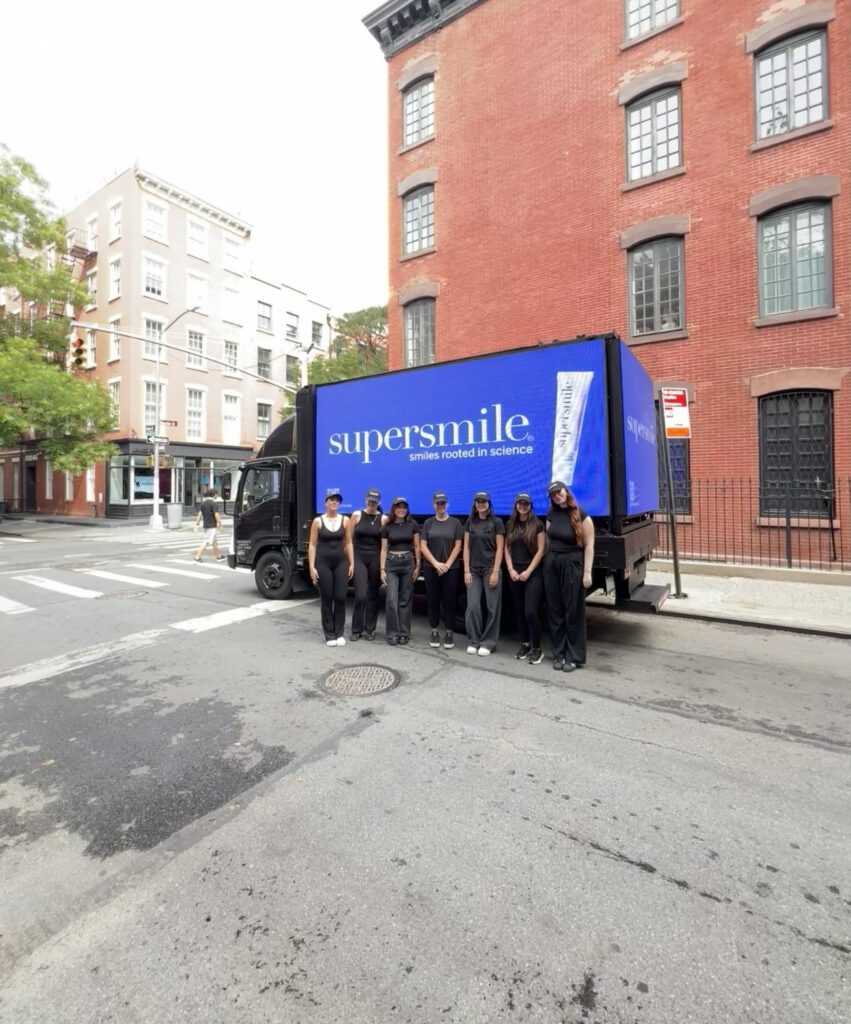
For brands that want to build direct commercial presence across multiple markets, a mobile pop-up commercial tour using a branded vehicle as the retail platform creates market-by-market commercial traction without the cost and commitment of permanent retail. The tour vehicle carries the commercial infrastructure, the POS system, the inventory, the display equipment, and the staff, to each market on the tour route.
Tour planning for a multi-city commercial program requires the same disciplines as any multi-city mobile tour, with the additional commercial layer of inventory management, revenue tracking, and sales performance analysis across markets. AGM has executed mobile pop-up commercial tours for brands across consumer categories and manages the operational complexity from vehicle logistics to market-by-market inventory management to consolidated financial reporting across all tour markets.
Category-Specific Approaches to Pop-Up Commercial Programs
Different product categories have developed pop-up commercial approaches that reflect the specific consumer decision dynamics of each category. Understanding these category norms helps brands calibrate their programs rather than building from scratch.
Food and Beverage
Food and beverage pop-up commercial programs are built around the sample-to-purchase pathway. The consumer tries the product, likes it, and buys it. The shorter the path from trial to available purchase, the higher the conversion rate. Programs that require the consumer to find the product somewhere else after trying it from the pop-up lose a significant proportion of conversions in the distance between trial and availability. The most effective food and beverage pop-up commercial programs have the product immediately available for purchase at the exact location and moment where the trial occurs.
Cold chain management is a practical constraint for many food and beverage pop-up commercial programs. Products that need to be kept cold require cold storage capacity in the vehicle or structure, ice management throughout the activation day, and monitoring protocols that ensure product quality from first sale to last. Brands that do not plan this rigorously risk serving sub-optimal product at the end of the day, which creates negative brand consumer contacts at exactly the point where the consumer is considering whether to make a repeat purchase.
Beauty and Personal Care
Beauty pop-up commercial programs combine product demonstration with guided purchase recommendation. The consumer receives a demonstration or consultation that identifies which products are right for their specific needs, creating a personalized purchase recommendation that is far more compelling than self-navigation through a product range. Staff need a higher level of product training for beauty pop-up commercial programs than for most other categories, but the conversion rates from guided consultation to purchase justify the staff investment significantly.
For premium beauty brands, the pop-up commercial environment needs to convey the quality and prestige associated with the price point. A premium skincare brand that runs a pop-up from a basic folding table sends a conflicting quality signal. The environment should be consistent with the product’s positioning, using high-quality display materials, appropriate lighting, and a visual aesthetic that reinforces rather than undermines the premium positioning.
Fashion and Apparel
Fashion pop-up commercial programs need to make the full browsing and buying experience available in a temporary format. Adequate product display for the entire curated range, fitting capability for consumers who want to try garments before purchasing, and staff who can guide consumers through the collection and offer sizing and styling advice are all necessary for effective fashion pop-up commercial programs.
Fashion pop-up programs also need to consider the time investment required for a consumer to browse, try, and purchase garments. The activation location and format need to create enough consumer dwell time for this process. A pop-up at a weekend market where consumers are browsing leisurely provides better conditions for fashion pop-up commercial success than a high-traffic weekday commuter location where consumers are moving with purpose and limited time.
Financial Analysis of Pop-Up Commercial Programs
Building a financial case for pop-up commercial investment requires modeling the multiple value streams the program generates, not just the direct revenue from activation-day sales. Brands that evaluate pop-up commercial programs purely on day-of revenue consistently undervalue the investment relative to its actual total return.
Direct revenue is the most visible value stream: what the program sold during activation days. This should be compared against total program costs to assess direct commercial ROI. For many well-executed programs in productive locations, direct sales revenue covers a significant proportion of program costs, sometimes making the program cash-flow positive even before other value streams are considered.
Customer acquisition value is the second major stream. Each new customer acquired through a pop-up commercial program has a lifetime value that extends well beyond the first purchase. If a new customer acquired through a pop-up commercial program goes on to make four purchases over twelve months at an average of $35 per purchase, the lifetime value of that customer is $140. If the program cost $12,000 and generated 200 new customers, the customer acquisition cost is $60 per customer against a $140 lifetime value. That unit economics model is strongly positive and justifies the program investment even if direct revenue alone did not break even.
Retail sell-through lift in activated markets is the third stream. For brands with retail distribution, pop-up commercial programs in a market consistently drive post-program lift in retail sell-through in that market. Consumers who purchased from the pop-up or who encountered the brand at the program continue to seek the brand at retail. Consumers who tried the product but did not purchase from the pop-up are more likely to purchase at retail subsequently. This lift, if measurable through syndicated sales data or retailer-provided scan data, adds directly to the program’s commercial return.
Building Repeat Pop-Up Commercial Programs
The operational and strategic value of pop-up commercial programs compounds with repetition. A brand that runs the same program in the same market two or three seasons in a row develops consumer awareness that reduces the marketing effort needed to drive visitation, vendor relationships that provide better access and placement at markets and events, staff relationships that allow for faster deployment of higher-quality teams, and location knowledge that allows each successive program to be placed in more productive spots than the previous one.
Brands that commit to pop-up commercial programs as an ongoing channel rather than a periodic experiment build these advantages systematically. The first season is the most operationally intensive and the least commercially efficient. By the third or fourth season, the same investment produces significantly better commercial results because the accumulated market knowledge, consumer familiarity, and operational efficiency of the preceding seasons have been built into the program infrastructure.
Common Pop-Up Commercial Mistakes
The most common pop-up commercial mistake is over-investing in environment design and under-investing in commercial infrastructure. A beautiful display with a slow POS system, unclear pricing, or staff who cannot confidently close a sale will generate revenue far below its potential. The commercial mechanics, the POS system, the inventory management, the sales training, need the same level of investment and attention as the brand environment.
Choosing locations based on aesthetics rather than commercial viability is the second common mistake. A visually interesting location that does not draw the target consumer in sufficient numbers will not generate adequate sales volume to justify the investment. Location selection for pop-up commercial programs must be driven by consumer concentration and purchasing mindset, not by what looks good in photos.
Running out of inventory at high-performing stops is a costly operational error that is entirely preventable with adequate planning. Brands that underestimate demand at specific locations miss sales volume that cannot be recovered after the activation day. Inventory planning should use conservative sell-through estimates and build in contingency stock for locations that overperform.
Failing to capture customer data at the point of purchase means losing the most valuable long-term asset the program generates. Every purchaser at a pop-up commercial program is a high-quality potential repeat customer. Building a frictionless opt-in into the purchase transaction and using that data in post-program marketing sequences multiplies the program’s commercial return significantly.
When Pop-Up Commercial Investment Makes Sense
Pop-up commercial programs make the strongest financial case for brands with products that generate repeat purchase behavior, in categories where direct trial is a primary driver of first purchase, and in markets where the consumer base is concentrated and accessible in the kinds of outdoor markets, events, and neighborhood retail environments that support pop-up commercial programs.
They make a weaker case for brands with very long purchase cycles, products that require extended consideration, or consumer targets that are not concentrated in geographically accessible outdoor consumer environments. For brands in these situations, the capital and management investment required by a pop-up commercial program may be better deployed in channels that are more suited to the consumer’s purchase behavior.
AGM helps brands evaluate whether pop-up commercial investment is appropriate for their specific situation. If the answer is yes, we build the program. If the answer is no, we say so and help identify the formats that are more appropriate. Honest assessment is more valuable to a client relationship than selling a program that is not the right fit.
Frequently Asked Questions
What is a pop-up commercial activation?
A pop-up commercial activation combines a temporary brand environment with direct sales capability. Unlike purely experiential activations that focus on brand engagement without a commercial transaction, pop-up commercial activations are configured for both brand experience and product sales, with point-of-sale systems, curated product inventory, and retail-trained staff.
What is the difference between a pop-up commercial and a pop-up shop?
The distinction is primarily conceptual. Both formats involve temporary retail with direct sales. Pop-up shop typically refers to a more store-like format with product browsing and purchase as the primary consumer action. Pop-up commercial can also include programs where the commercial transaction is part of a broader brand experience that includes sampling, education, or entertainment elements alongside the product sale.
What types of businesses benefit most from pop-up commercial programs?
Direct-to-consumer brands without permanent retail locations benefit significantly from pop-up commercial programs by creating direct sales and customer acquisition opportunities. Brands entering new markets use them to build consumer trial before retail distribution. E-commerce brands use them to create in-person discovery moments. Seasonal businesses and limited-edition product brands use them to create urgency-driven commercial moments.
How do you measure the success of a pop-up commercial program?
Primary metrics are direct sales revenue, units sold, conversion rate from consumer engagement to purchase, and average transaction value. Secondary metrics include customer records captured through purchase or opt-in, new customer acquisition cost relative to lifetime value, and retail sell-through in activated markets after the program. A complete ROI analysis includes all of these streams.
What operational support does AGM provide for pop-up commercial programs?
AGM manages the full operational scope for pop-up commercial programs: location and venue sourcing, production coordination, staff recruitment and retail sales training, POS system setup and support, inventory logistics, field management during execution, documentation, and post-program reporting with commercial data analysis.