In-Person Brand Activation | American Guerrilla Marketing
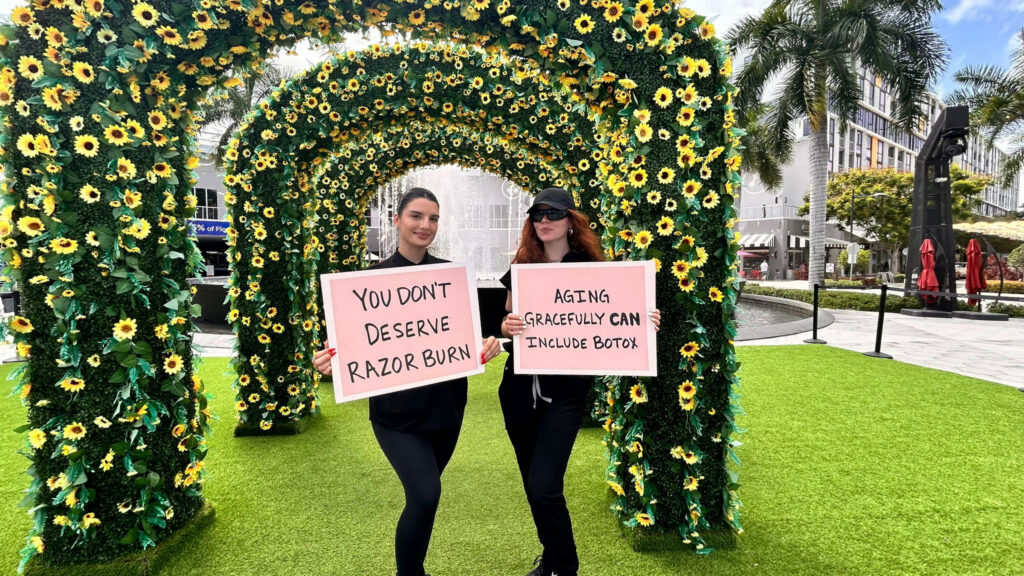
In-person brand activation puts your brand in front of consumers as a real, physical presence they can see, touch, taste, and remember. No algorithm filters it. No skip button dismisses it. The consumer encounters it directly.
Every significant study on consumer brand relationships reaches the same conclusion: physical brand encounters create stronger, more durable brand memory than digital ones. This is not a sentiment. It is how human memory works. Experiences that involve multiple senses, real human interaction, and physical context are encoded more deeply and retained longer than information consumed on a screen.
In-person brand activation is the deliberate creation of those physical brand encounters. It is the discipline that gives a brand a physical presence in the consumer’s real world — at the places they go, the events they attend, the neighborhoods they live in. When done well, it creates brand relationships that digital marketing channels cannot replicate, because digital channels cannot replicate the physical experience of being in the presence of a brand that has earned its way into your environment.
In-person brand activation encompasses any live, physical brand experience designed for direct consumer engagement. The category is broad: a sampling station at a farmer’s market, a product launch pop-up in a retail district, a branded lounge at a music festival, a service experience at a sporting event, a mobile tour vehicle deployed across 12 cities. The format varies. The defining characteristic is physical presence and direct consumer interaction.
In-person activation is distinguished from branded events (which typically invite a pre-qualified audience) and from ambient advertising (which is passive and one-directional). In-person activation is two-way: the consumer encounters the brand and the brand encounters the consumer, in real time, with a human interface. That mutuality is what creates the consumer relationship depth that other formats cannot achieve.
Why In-Person Activation Cannot Be Replaced by Digital
Digital marketing has expanded reach and reduced cost per contact dramatically. For awareness and consideration objectives, digital channels often have better economics than in-person activation. This is a genuine advantage, and no serious brand marketer ignores it.
But digital channels have specific limitations that matter for brand relationship building:
No physical trial: Digital channels can describe a product’s taste, texture, scent, or feel. They cannot deliver that experience. For products where physical trial is the primary conversion mechanism — food, beverage, beauty, personal care, materials — digital advertising is structurally unable to generate the trial experience that converts awareness into preference.
Human connection is not replicable: A brand ambassador who genuinely knows and loves the product, who can tell the brand’s story with personal conviction, who makes the consumer feel seen and well-served — this is a connection quality that no digital ad can replicate. Human interaction creates relationship. Screen interaction creates awareness.
Memory formation is different: Digital advertising creates brand recall at the level of recent exposure — you saw the ad, you remember the brand for some period. A genuinely memorable in-person brand experience creates brand recall at the level of episodic memory — you were there, the context was real, the sensory details are attached to the memory. The durability difference is significant.
The brands that have built the most durable consumer relationships in consumer goods categories consistently have strong in-person activation programs alongside their digital presence. Digital scales reach. In-person activation creates the depth of consumer relationship that makes reach meaningful. Neither replaces the other. The most effective brand marketing programs treat them as complementary channels with different functional roles.
In-Person Activation Format Selection
Selecting the right in-person activation format depends on the campaign objective, the target consumer, the available locations, and the production budget. These are the primary format options and when each is most appropriate:
Street and Outdoor Activations
Street-level activations in urban environments generate high consumer volume in contexts where the brand can reach its target consumer during their regular daily routines. They work best for brands targeting working professionals, urban consumers, college students, or any demographic that spends significant time in specific urban corridors. The outdoor context creates a different consumer emotional state than in-store or event environments — more spontaneous, more open to unexpected discovery.
Pop-Up Experiences
Pop-up experiences create a temporary, contained brand environment that gives the consumer a complete brand encounter rather than a brief transaction. Pop-ups work best when the brand has a story complex enough to benefit from a 5 to 15 minute consumer dwell time, or when the brand wants to create a launch moment, a community gathering, or a premium brand impression that a street sampling station cannot achieve.
Event Activations
Event activations place the brand within an existing consumer event — music festivals, sporting events, cultural gatherings, community markets. The event provides the consumer draw and the emotional context. The activation creates the brand encounter within that context. Event activations work best when the brand’s target consumer is concentrated at the specific event type, and when the activation concept is genuinely congruent with the event’s culture.
Mobile Tour
Mobile tour activations use a vehicle as the brand environment and deploy it across multiple markets. They are the right format for brands that need to generate consumer reach in multiple cities over a defined campaign period, particularly for product launches, seasonal programs, or national awareness campaigns.
In-Store Activations
In-store activations operate within retail environments and are the right format when the objective is point-of-purchase conversion. The retail context creates natural buying intent that other formats lack. The activation converts that intent toward the brand’s specific product.
Building an Effective In-Person Activation Brief
The brief is the foundation of every effective in-person activation program. A complete brief covers:
Primary objective: What specific consumer action should this activation produce? Product trial, purchase, social documentation, loyalty enrollment, brand preference formation?
Target consumer: Who specifically needs to be reached? Not “millennials” — which specific consumer, in which life stage, with which purchase context?
Markets and locations: Where does the consumer need to be reached? Which cities, which neighborhoods, which venue types?
Campaign window: When does the activation need to run? What are the date constraints?
Budget range: What is the total program budget? What is the production vs. operations split preference?
Brand standards: What visual and messaging standards does the activation need to comply with? What cannot be compromised?
Brand equity — the commercial value that derives from consumer perception of a brand beyond its functional product characteristics — is built over time through the accumulation of consumer brand experiences. Advertising builds awareness and shapes expectations. Products build functional satisfaction or dissatisfaction. Experiential marketing builds the direct emotional relationship between the consumer and the brand that is the foundation of true brand equity.
The consumer who has a memorable, positive brand experience at an activation has a different quality of relationship with that brand than the consumer who merely recognizes it from advertising. The experiential consumer has a personal reference point — a specific memory of encountering the brand as a physical, human presence that provided genuine value. That personal reference point is more durable, more emotionally anchored, and more resistant to competitive messaging than awareness alone.
Brand equity built through experiential programs compounds over time. A consumer who has positive direct brand experiences across three years of festival activations, sampling programs, and retail activations has a brand relationship that is qualitatively different from a consumer who has seen three years of digital advertising. The experiential consumer has more reasons to be loyal, more personal evidence for why the brand is worth choosing, and more social motivation to recommend the brand to others.
Case Framework: How a Product Launch Uses Experiential Marketing
A new consumer product brand launching in the US market has a specific experiential marketing challenge: it needs to generate awareness and trial among its target consumer simultaneously in multiple markets, at a scale sufficient to support retail distribution, within a budget that does not overwhelm the brand’s early revenue. That is not a trivial set of constraints.
The launch experiential program typically runs in parallel with the brand’s initial retail distribution rollout. The markets selected for activation are the same markets where the product is becoming available at retail — generating trial at the moment retail availability exists to convert trial into purchase. Activation locations within each market are selected for high concentration of the target consumer — specialty grocery adjacencies, fitness corridors, farmers markets for health-positioned products.
The activation format is usually a sampling station combined with a light brand presence — not a heavy fabrication build, because the launch budget does not support high production cost per market. A well-designed mobile sampling kit with strong brand identity, deployed by trained brand ambassadors, at 8 to 10 markets over 6 weeks produces the consumer trial base that the brand needs to establish distribution velocity with retail buyers.
Documentation from the launch campaign produces the brand’s first substantial visual content library. Launch brands often begin their marketing investment with limited existing creative assets. The documentation from a well-executed launch activation program produces the photography and video that populates the brand’s social channels, website, and investor presentations for the first 6 to 12 months of the brand’s public existence.
Experiential Marketing for Category Entry vs. Market Expansion
The experiential marketing strategy for a brand entering a category for the first time differs significantly from the strategy for a brand expanding into new markets within a category it already occupies. Category entry programs prioritize trial and consumer education — getting the product into people’s hands and explaining why it exists and what it does better than what they currently use. Market expansion programs can assume a level of category awareness and instead prioritize trial among consumers who have not yet encountered this specific brand.
Category entry activations need more time per consumer interaction. The brand representative needs to explain what the product category is, why it matters, and why this brand’s version is worth choosing. 90-second interactions are often too short for genuinely new categories. The activation format needs to support 2 to 4 minute interactions that allow for real consumer education, which means the activation needs to be designed for lower throughput and higher quality per interaction than a standard sampling program.
Market expansion activations can operate at higher throughput with shorter interactions because the consumer already understands the category. The question is not “what is this?” but “why should I choose this brand over the one I currently use?” A compelling product sample, a brief differentiating brand message, and a strong product quality experience can make that case in 60 to 90 seconds — the standard sampling activation window.
Budgeting for Quality vs. Scale
The tension between activation quality and activation scale is one of the most common strategic debates in experiential marketing program planning. With a fixed budget, a brand can run fewer activations with higher quality, or more activations with lower quality. Neither extreme is optimal. The right balance depends on the brand’s specific objectives and consumer profile.
High-quality, lower-scale activations are more effective when the brand’s objective is consumer relationship depth — building the kind of strong, memorable brand connection that drives loyalty and advocacy. A premium brand that runs 20 high-quality activations reaching 50,000 consumers with a genuinely excellent experience produces different long-term results than the same premium brand running 100 activations reaching 250,000 consumers with a mediocre experience.
Higher-scale, more efficient activations are more effective when the brand’s objective is broad trial generation for a product where the quality speaks for itself. A beverage brand with an excellent product that simply needs to get into as many mouths as possible benefits from maximum trial volume. The per-consumer interaction quality matters less when the product is the primary brand communicator.
Consumer Psychology and Brand Activation Design
Understanding a few fundamental principles of consumer psychology produces meaningfully better experiential activation designs. These principles are not academic abstractions — they predict how real consumers will behave in real activation environments and therefore directly inform the design decisions that determine campaign performance.
The peak-end rule describes how people remember experiences: not as an average of the full experience but primarily as the peak moment and the final moment. An activation that creates a genuinely excellent moment somewhere within the consumer interaction — a surprisingly delicious product sample, an unusually warm human connection, a visually stunning element that produces delight — and ends the interaction on a positive note will be remembered more favorably than an activation that was consistently good throughout but had no peak. Designing for the peak moment, and designing the interaction exit thoughtfully, produces better brand memory formation than designing for consistent average quality throughout.
Cognitive load affects consumer willingness to engage. An activation that requires the consumer to figure out what is happening, read a lot of text, make multiple decisions, or navigate a complex interaction before receiving any value will lose most potential consumers before the engagement begins. Minimizing cognitive load — making what the consumer receives immediately obvious, making the first step of engagement effortless, reducing the decisions required before value is delivered — consistently increases engagement rate. Simple is not unsophisticated. Simple is consumer-centric.
Social facilitation affects behavior in observed situations. People behave differently when they know others are watching. In an activation context, this means that consumers are more likely to engage enthusiastically when they see other consumers engaging enthusiastically. The visible presence of positive consumer interactions becomes social proof that encourages additional engagement. Managing the activation environment to make positive consumer interactions visible — not hiding them in corners, not processing consumers so quickly that interactions are invisible — amplifies the social facilitation effect that draws additional consumers in.
Activation Brand Equity vs. Advertising Brand Equity: The Long View
A decade of investing in brand advertising builds one type of brand equity: broad recognition, positive general associations, and consideration within the competitive set. A decade of investing in genuine consumer brand activations builds a different type: direct personal relationships with a subset of consumers who are your most loyal advocates, and a cultural presence within the communities that matter most to your brand’s positioning.
Neither type of brand equity is inherently superior to the other. They serve different functions in the marketing system. Advertising equity is broader but shallower. Activation equity is narrower but deeper. The brands with the most durable market positions typically have both — they use advertising to maintain broad market awareness while using experiential to cultivate the deep consumer relationships that advertising alone cannot create.
The implication for budget allocation is that experiential marketing investment should not be evaluated primarily against advertising metrics. Comparing cost-per-contact of a street sampling program against the cost-per-view of a digital video ad misses the point. The correct comparison is cost-per-quality-consumer-relationship. On that metric, well-executed experiential programs routinely outperform advertising because the quality and durability of the consumer relationship created is fundamentally different.
Program Iteration: How Strong Activation Programs Improve Over Time
The experiential marketing programs that generate the strongest returns over multiple years are not the ones that run the same activation template repeatedly. They are the ones that build a learning cycle into each program — capturing what worked, what did not, and what the consumer response data reveals about opportunities to improve — and apply those learnings to each successive campaign iteration.
Iteration requires honest evaluation. Post-campaign debriefs that focus only on what went well produce no learning. The most useful debriefs identify the specific elements that underperformed expectations, the specific consumer feedback that revealed a gap between what the activation was designed to communicate and what consumers actually experienced, and the operational challenges that created friction and could be prevented in the next program with better planning.
Consumer observation data — what staff observed consumers doing and saying at the activation — is often more useful for program iteration than quantitative metrics alone. A high consumer interaction count paired with staff observations that most interactions were transactional rather than engaged suggests a different optimization path than the same count with observations that most interactions generated genuine consumer interest. The numbers tell you the scale. The qualitative observations tell you the quality.
Over time, brands that run systematic learning cycles on their experiential programs develop a proprietary understanding of what works for their specific brand, consumer, and market context that no external knowledge source can provide. This proprietary knowledge compounds in value as it accumulates — the brand that has run 20 activation programs across 8 markets with honest evaluation after each one knows something about how to activate its specific consumer that a brand running its first program cannot access from any agency or research source.
The fundamental insight that experienced activation professionals share is this: the work is done in the field, by people, in real-time. Every other element of the program — the creative concept, the production quality, the location strategy — creates conditions for that human work to succeed or fail. Investing in the conditions is necessary but not sufficient. Investing in the people who do the work, and in the management systems that enable them to do it consistently well, is what separates programs that deliver from programs that merely run.
The programs that consistently deliver strong results share a common quality: they are built by people who care about the consumer experience at least as much as they care about the brand’s marketing objectives. Consumer-first thinking, executed with operational precision, within a budget that is allocated honestly against the activities that actually produce outcomes — this is the formula for experiential marketing that justifies repeated investment and generates brand relationships that last well beyond the campaign period.
Brand marketing that reaches people in the real world — at the places they go, the events they attend, the moments when they are most open to discovery — creates the kind of consumer relationship that every brand wants and that only a relatively small number build consistently. The investment in doing experiential marketing well is always justified by the quality of consumer relationships it creates when the work is genuine.
Frequently Asked Questions
What is in-person brand activation?
In-person brand activation is any live, physical brand experience designed to create direct consumer engagement with a brand. It includes pop-ups, street activations, sampling programs, product launches, event presence, and retail activations — any format where the consumer encounters the brand through a real, physical interaction.
Why is in-person activation more effective than digital for certain objectives?
In-person activation creates multisensory brand experiences, enables physical product trial, and generates the kind of human connection that screen-based interactions cannot replicate. For objectives involving product trial, brand preference change, and community building, in-person activation consistently outperforms digital equivalents.
How do you plan an in-person brand activation?
Start with a clear objective: what specific consumer action should this activation produce? Then choose the format that best achieves that objective in the physical environment where the target consumer is accessible. Then design the experience, select locations, plan staffing, handle permits, and develop the documentation approach.
What does in-person brand activation cost?
Costs range from $8,000 for a single-day simple sampling activation to $150,000+ for a multi-week multi-city custom-built program. The main cost drivers are production complexity, number of markets, campaign duration, and staffing requirements. Contact AGM for a specific estimate based on your brief.