Standard Size of Posters in Inches: Complete Guide
We’ve measured walls, ordered print runs, and directed crews in cities across the US. Here’s every standard poster size in inches, grounded in real campaign work.
What is the standard size of posters in inches? In the United States, the answer depends entirely on what the poster is for and where it’s going. There isn’t one single standard. There are half a dozen, each running for a specific context.
We run poster campaigns across New York, Los Angeles, Chicago, Miami, Nashville, Austin, and dozens of other US markets. Our crews handle print specs, wall measurements, and placement logistics on every job. We know these numbers the way a carpenter knows lumber dimensions.
Street campaigns, construction walls, outdoor advertising
International One-Sheet
27 x 39
1,053
International theatrical display
US Movie One-Sheet
27 x 40
1,080
Theater lobby display cases
Large Format / Research
36 x 48
1,728
Academic conferences, large displays
Two-Sheet / Transit
40 x 60
2,400
Bus shelter, subway platform advertising
The Three Core Standard Sizes in Inches for Campaign Work
While the table above covers many formats, day-to-day campaign work centers on three sizes. These are the ones that solve 90 percent of the placement challenges we face.
11×17 Inches: The Interior Standard
11×17 is our smallest campaign format. At 11 inches wide by 17 inches tall, it fits the largest sheet most standard office printers handle, which matters when clients need last-minute additions or reprints in the field.
We use 11×17 for interior placements: windows at coffee shops on Bedford Avenue in Williamsburg, bulletin boards in record shops on the Lower East Side, bar walls on 6th Street in Austin. The format is close-range; it works when the viewer is within 6 feet. At longer distances, the type becomes unreadable even at large sizes.
For a campaign covering 50 interior venues across a neighborhood, 11×17 is the economical choice. You can print 1,000 sheets for a fraction of the cost of 24×36, and the interior viewer’s proximity makes the smaller format entirely adequate.
The 11×17 format also stacks easily. Our crews carry rolls or flat stacks into venues without attracting attention. On a Saturday afternoon in Midtown Manhattan, carrying a stack of 11×17 sheets looks like someone going to a meeting. That’s an operational advantage you don’t think about until you’re on the street.
Printing 11×17 is fast. A typical short run of 500 copies comes off a digital press in under an hour. That speed matters when a campaign has a tight launch window, like the 48 hours before a new product hits shelves in SoHo retail locations.
18×24 Inches: The Mid-Size Standard
18×24 is the mid-point. Wide enough to register in a room, small enough to be placed by hand in tight spaces. Three square feet of printable surface.
Concert venues on the Sunset Strip in Los Angeles, clubs on Frenchmen Street in New Orleans, and performance spaces in Wicker Park in Chicago all use 18×24 as their standard interior poster format. The size fits the bulletin board areas typical of venue hallways and fits neatly in the standard framing hardware most venues already have installed.
18×24 also scales efficiently to 24×36: the aspect ratio (3:4 vs. 2:3) is different but close enough that most artwork can be adapted between the two with minor adjustments. We often use 18×24 and 24×36 together in the same campaign, 18×24 for interior venue walls and 24×36 for outdoor street posting nearby.
One practical note: 18×24 is easy to carry two at a time without a tube or flat box. Our installation crews in Brooklyn and Chicago have this down to a system. Two posters rolled together fit in a standard backpack without looking out of place. For high-volume installation days, that matters.
18×24 also prints efficiently on a 24-inch roll. The sheet leaves no width waste, just a 6-inch length cut. That roll efficiency keeps per-unit costs down on mid-size runs of 200 to 500 pieces.
24×36 Inches: The Outdoor Standard
24×36 is the outdoor standard. It’s the size that owns a wall. At two feet wide and three feet tall, it’s visible from 15 to 20 feet on a typical city street with well-sized headline type.
The economics favor 24×36 over smaller sizes for outdoor use. A single 24×36 creates 6 square feet of visual impact. Matching that impact with 11×17 pieces would require about 4.6 pieces per location, which costs more in labor and paste, more than paper. One 24×36 does more visual work per installation than multiple small pieces.
We print 24×36 on 80 lb or 100 lb satin stock for most outdoor campaigns. The satin finish resists moisture better than uncoated stock, which matters for campaigns that need to survive rain during their display window.
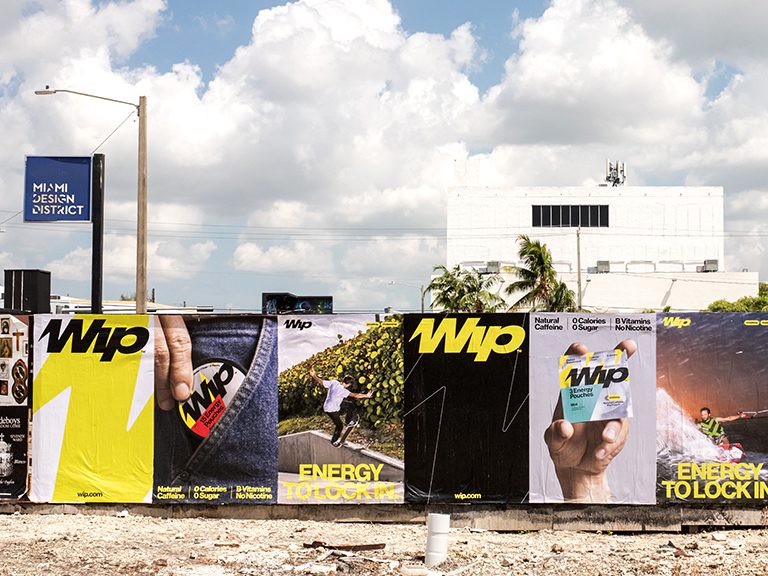
On a construction hoarding wall in Williamsburg or a plywood-covered storefront on Melrose Avenue, a run of 24×36 posters creates what we call saturation coverage. Five pieces across a 12-foot-wide wall with 2-inch gaps between them reads as a unified campaign, not individual posters. That density is what makes pedestrians stop and look.
Bleed setup is critical at 24×36. Add 0.125 inches on all four sides. On a 24×36 final piece, that means your file should be 24.25 x 36.25 inches. Miss the bleed and the print shop either rejects the file or ships your poster with white edges on any side where the cutter drifts even slightly.
Campaign Size Logic: 11×17 for interiors. 18×24 for venues and mid-size walls. 24×36 for streets and outdoor surfaces. That’s the framework we apply to every campaign we plan. Most campaigns use at least two of these three sizes to cover different placement environments within the same campaign footprint.
Standard Sizes in Inches for Specialty Applications
Beyond the three core sizes, specialty applications have their own standards.
Movie and Theater: 27×40 Inches
The US movie one-sheet at 27×40 inches is a fixed standard tied to theater display hardware. It’s 2.25 feet wide by 3.33 feet tall. The extra height compared to a 24×36 gives the format a dramatically tall, vertical quality that’s iconic in entertainment marketing.
For campaigns that don’t involve theater lobby display cases, 27×40 is rarely the best choice. The 3-inch width difference over a 24×36 adds paper cost and print time without a meaningful visual advantage on a wall. Save 27×40 for applications that specifically need it: theater lobbies, entertainment display hardware, and collector’s market posters.
Movie poster design has its own conventions at this size. The title block sits at the lower third. Actor names run above the image. Credits block appears at the bottom in 4-6 point type. These conventions exist because the 27×40 format trained audience eyes over decades to look for information in specific places. If you’re using 27×40 for a non-film application, you can break those conventions. But know they exist.
Academic and Research: 36×48 Inches
Academic conference posters are most often 36 inches by 48 inches (3 feet x 4 feet), in environment orientation. This large format accommodates the dense information typical of a research poster: abstract, methods, results, discussion, references, and supporting charts.
36×48 in environment (wider than tall) is a non-standard orientation for advertising posters, which are almost always portrait. For academic production, the environment orientation works because conference display boards are wider than they are tall.
For advertising uses at this scale, 36×48 in portrait gives you 12 square feet of surface. That’s substantial. We’ve used 36×48 portrait posters on the interior walls of music festivals and trade show spaces where the extra scale justifies the print cost. At a festival like South by Southwest in Austin, where booth walls run 8 to 10 feet tall, a 36×48 poster anchors the display in a way that smaller formats can’t.
Transit and Bus Shelter: 40×60 Inches
Transit advertising uses 40×60 as a common standard for bus shelter panels. At 40 inches wide by 60 inches tall (3.33 feet x 5 feet), a transit panel has 16.67 square feet of visual surface. It’s visible from the street and from moving vehicles.
40×60 requires heavy-duty substrate, typically vinyl or synthetic paper rated for outdoor weather exposure. Paper posters at this scale don’t survive rain, wind, or direct sun exposure for the multi-week display periods that transit advertising contracts require.
New York MTA bus shelter advertising uses 40×60 panel inserts. Chicago Transit Authority shelters use the same standard. In Los Angeles, Metro bus shelters run on the 40×60 footprint. It’s as close to a universal transit standard as US outdoor advertising gets. The hardware manufacturers built around this format, and the format calcified around the hardware.
How Standard Sizes in Inches Relate to Print Roll Widths
The standard poster sizes in inches didn’t arise by accident. They align with common print roll widths:
17-inch roll: produces 11×17 with no width waste
24-inch roll: produces 24×36 with no width waste; also 18×24 with a 6-inch offcut (sometimes used for 6-inch wide banner strips)
36-inch roll: produces 36×48 in environment with no waste; also 27×40 movie posters with a 9-inch offcut
44-inch roll: produces 40×60 transit panels with a 4-inch offcut
60-inch roll: produces 40×60 in environment with no width waste
Every inch outside a roll width boundary adds waste and cost. When a client asks for a non-standard size like 22×34 or 25×37, the printer has to use a wider roll than necessary, generating paper waste that drives up the per-unit cost. This is why sticking to the standard sizes in inches is economically smart for any campaign run of 100 or more pieces.
Print shops pass waste costs directly to you. A non-standard size that generates 20 percent paper waste means your effective print cost is 20 percent higher per usable piece. Over a 500-piece run of 24×36 posters, that difference can add up to hundreds of dollars. Standard sizes eliminate that waste entirely.
Choosing the Right Standard Poster Size in Inches for Your Campaign
Picking the right size isn’t just about the wall. It’s about the viewer, the distance, and the budget.
Start with viewing distance. How far away will most people be when they first see the poster? That single question drives the size decision more than anything else.
Under 4 feet: 8×10 or 11×14 is enough. Countertop displays, window ledges, tabletops.
4 to 8 feet: 11×17 works well. Bulletin boards, interior walls, narrow hallways.
8 to 15 feet: 18×24 is the minimum. Venue walls, bar interiors, event spaces.
15 to 30 feet: 24×36 is the outdoor standard. City walls, construction hoardings, storefront windows visible from the sidewalk.
Over 30 feet: 36×48 or 40×60. Transit shelter panels, large event environments, building facades.
Budget is the second filter. A 24×36 at a print shop runs roughly 3 to 5 times the cost of an 11×17 per piece. If your campaign covers 200 locations and each location gets one piece, the size choice multiplies across your entire spend. We’ve helped clients save significant production budget by identifying that 18×24 at a specific venue type delivers the same impression at lower cost than the 24×36 they assumed they needed.
The third filter is logistics. Large posters are harder to transport and install. A crew carrying 100 pieces of 24×36 needs a van. A crew carrying 100 pieces of 11×17 might need only backpacks. In dense urban environments like Lower Manhattan or the Wicker Park neighborhood in Chicago, smaller formats mean easier movement and faster placement.
Standard Poster Sizes in Inches vs. Metric Equivalents
The US operates on an inch-based system. Most of the rest of the world uses ISO metric paper sizes. If you’re coordinating campaigns across US and international markets, you need to know how these systems align.
US Size (inches)
Closest ISO Size
ISO Dimensions (mm)
Difference
11 x 17 in
A3
297 x 420 mm (11.7 x 16.5 in)
A3 is slightly larger
18 x 24 in
A2
420 x 594 mm (16.5 x 23.4 in)
US 18×24 is slightly larger
24 x 36 in
A1
594 x 841 mm (23.4 x 33.1 in)
US 24×36 is noticeably larger
40 x 60 in
A0
841 x 1189 mm (33.1 x 46.8 in)
US 40×60 is larger
These differences matter when you’re ordering artwork from a European designer or sending files to a print shop in Canada or the UK. A UK-based designer will likely set up files at A-series dimensions. Before they start, confirm you need the US inch-based sizes. Getting the file dimensions wrong at the start means reprints or awkward cropping after the fact.
When we run international campaigns for US brands entering markets in Europe or Australia, we rebuild the files from scratch at the correct metric dimensions rather than scaling US files. Scaling introduces unpredictable rounding in bleed and margin dimensions. Starting fresh takes an extra hour of design time and prevents weeks of print-vendor headaches.
Print Substrates by Standard Poster Size in Inches
Size and substrate go together. The right paper for an 11×17 interior poster is wrong for a 24×36 outdoor piece. Here’s how we match substrate to size.
11×17: Uncoated or Gloss Text Weight
For interior 11×17 campaigns, we typically use 60 lb or 80 lb uncoated text or gloss text stock. It folds without cracking, pins to bulletin boards cleanly, and doesn’t fight window static cling applications. In cost-sensitive campaigns with large quantities, uncoated stock is the economical default.
Heavier stocks at 11×17 cost more without meaningful visual benefit at interior viewing distances. Save the heavy cover stocks for brochures and signage, not high-volume interior campaign pieces.
18×24: 80 lb Gloss Cover or Matte Cover
18×24 posters in venues benefit from heavier stock. A cover-weight sheet at 18×24 has enough stiffness to stay flat against a wall without warping. In humid environments like clubs on Bourbon Street in New Orleans or bars near the river in Chicago, a heavier coated sheet resists moisture curl better than text-weight paper.
Matte cover works well in art spaces and gallery environments where the finish reads as intentional and upscale. Gloss cover works better in retail and commercial environments where color pop matters more than texture.
24×36: 80-100 lb Satin or Synthetic
Outdoor 24×36 posters need substrate that tolerates weather. We use 80 lb satin for campaigns with 2-week display windows in mild weather. For longer campaigns or markets with heavy rain or humidity, we move to 100 lb satin or synthetic paper stock. Synthetic (polypropylene-based) posters don’t tear in rain and hold their color significantly better than paper in direct sun.
The cost difference between 80 lb paper and synthetic is roughly 40 to 60 percent per sheet at standard print volumes. For a 500-piece run where each piece costs $1.50 on paper stock and $2.25 on synthetic, the total difference is $375. For a campaign where outdoor durability matters, that’s money well spent.
File Setup for Standard Poster Sizes in Inches
When setting up design files for standard poster sizes in inches, use these specifications:
Poster Size
Min DPI
File Pixels at Min DPI
Color Mode
11 x 17 in
150 DPI
1,650 x 2,550 px
CMYK
18 x 24 in
150 DPI
2,700 x 3,600 px
CMYK
24 x 36 in
150 DPI
3,600 x 5,400 px
CMYK
27 x 40 in
150 DPI
4,050 x 6,000 px
CMYK
36 x 48 in
100 DPI
3,600 x 4,800 px
CMYK
40 x 60 in
72 DPI
2,880 x 4,320 px
CMYK
Note: DPI requirements decrease as poster size increases because larger formats are viewed from greater distances. The eye cannot perceive pixel grain at viewing distances above 10 to 15 feet even at 72 DPI.
Always set up files in CMYK, not RGB. Screen displays use RGB light mixing. Commercial printers use CMYK ink. The difference in color rendering between RGB and CMYK is significant, especially for saturated colors like neon green, electric blue, and deep red. A neon yellow that pops on screen can print muddy in CMYK if the values aren’t calibrated for print output. Check with your print vendor for their specific color profiles before finalizing the file.
Bleed is non-negotiable. Add 0.125 inches of bleed on all four edges. For a 24×36 poster, your file document size should be 24.25 x 36.25 inches. Artwork that bleeds to the edge must extend fully into the bleed zone. Text and logos must stay at least 0.25 inches inside the trim edge, inside what designers call the safe zone. Print shops cutter-tolerance is real. Protect your important elements.
Where AGM Uses Each Standard Poster Size in Inches
We don’t theorize about these sizes. We run campaigns with them every week. Here’s where each size actually shows up in our work across US markets.
11×17: Record shops and independent retailers in Williamsburg and the East Village. Coffee shop windows along Milwaukee Avenue in Chicago. Bar bulletin boards in Nashville’s Gulch neighborhood. Restaurant back hallways in Silver Lake, Los Angeles.
18×24: Music venue interior walls from Brooklyn Steel to the Riviera Theatre in Chicago. Pop-up shop interior signage at markets like Brooklyn Flea. Boutique retail environments on Valencia Street in San Francisco’s Mission District.
24×36: Construction hoarding on active development blocks in Hudson Yards and Long Island City, NY. Plywood-panel storefronts on Melrose Avenue during renovation periods. Telephone and utility poles on high-foot-traffic blocks in Wicker Park and Bucktown. Legal posting boards near venue entrances in Miami’s Wynwood Arts District.
27×40: Theater lobby and entertainment venue display hardware in Los Angeles and New York for film and streaming campaign support.
40×60: Bus shelter inserts in the MTA system and in Chicago’s CTA network. Station platform posters in subway tunnels along the L train corridor in Brooklyn.
Frequently Asked Questions
What is the standard size of a poster in inches?
The standard outdoor advertising poster is 24×36 inches. The standard movie theater poster is 27×40 inches. The standard school poster board is 22×28 inches. Each context has its own standard.
What is the most widely printed poster size in inches?
24×36 inches is the most widely printed poster size in the US for commercial campaigns and art prints. 11×17 is the most printed size for event flyers and interior placement campaigns.
What standard poster sizes in inches can I print at home?
Most home printers handle 8×10 and 11×17 (if you have a tabloid-capable printer). For anything larger, you need a large-format printer at a professional print shop or online service. The minimum standard for home printing in the US is typically 8.5×11 or 11×17.
What standard size in inches is used for a concert poster?
18×24 inches is the standard concert poster size for interior venue use. 24×36 is standard for outdoor campaign posting near venues and on surrounding streets.
Is 22×28 a standard poster size in inches?
Yes. 22×28 is the standard poster board size sold at US office supply and craft stores. It’s used for school projects, office signage, and retail display applications. It’s not a standard for professionally printed advertising posters, which typically use 24×36 for comparable outdoor applications.
What poster size in inches fits a standard frame?
The standard poster sizes with widely available frames at retail are: 8×10, 11×14, 18×24, and 24×36. You can find these frame sizes at IKEA, Target, and Michael’s. Other sizes typically require custom framing.
How do standard poster sizes in inches compare to European sizes?
US sizes are inch-based. European sizes use the ISO metric system. A1 (23.4×33.1 in) is the closest European equivalent to the US 24×36. A2 (16.5×23.4 in) is close to US 18×24. A3 (11.7×16.5 in) is close to US 11×17. They’re similar but not identical.