Stadium marketing operates across two very different geographic domains. Inside the venue, official sponsors control the advertising environment through rights agreements, and access to that environment comes with a substantial price tag. Outside the venue, in the public spaces where fans spend significant time before, during, and after games, the field is wide open. The approach corridors, parking areas, surrounding neighborhoods, and public plazas around major sports venues are the most concentrated fan audiences available in any urban market, and reaching them requires expertise in exterior deployment, not sponsorship negotiation.
American Guerrilla Marketing, headquartered at Industry City in Brooklyn, specializes in exterior stadium marketing: campaigns that operate in the approach corridors, tailgate zones, surrounding neighborhoods, and public plazas around major sports venues. We deploy LED billboard trucks, run poster campaigns in sports neighborhoods, place sidewalk stencils on fan approach routes, and manage brand ambassador programs that engage fans as they arrive. Every deployment is documented with geo-tagged photography, placement logs, and crew reports. This guide covers the full exterior stadium marketing environment and how to build campaigns that deliver real results in the fan environment.
The Exterior Stadium Marketing Environment
Every major sports stadium sits within a complex outdoor environment that creates layered marketing opportunities. Understanding that environment in detail, from the macro geography of fan arrival patterns down to the specific sidewalks and intersections where fans slow down and gather, is the foundation of effective stadium marketing strategy. We study each venue we work with before deploying a single asset, and that study shapes everything from poster placement to LED truck routes.
The Immediate Approach Zone
The streets, sidewalks, and plazas in the closest blocks surrounding the venue see the highest fan concentration on game days and offer the most valuable placement opportunities. This zone is where fans arrive at the event in the fullest sense: where the crowd energy peaks, where the pre-game excitement is at its most visible, and where brand encounters carry the most emotional weight. Our LED truck routes, ambassador deployment areas, and sidewalk stencil placements prioritize this zone above all other geographic areas in the stadium environment.
We map the immediate approach zone for each venue we work with, identifying the primary pedestrian corridors, the key intersection points where fan flows converge, and the surfaces and positions that get the most eyes at the right moments. That map is a living document that gets updated based on what we observe during actual deployments, so it becomes more precise with each event we cover.
Transit Corridors
Transit corridors between nearby subway stations, bus stops, or rail platforms and the stadium carry high fan volumes over extended periods before games. Fans walking from transit to the venue are on a known route for a predictable amount of time, creating a dependable audience for advertising placements along that path. Posters at eye level along transit corridors, LED trucks parked at key intersections where walkers slow down, and ambassadors working the walking path all benefit from this predictability.
In New York markets specifically, transit corridor planning requires detailed knowledge of which subway lines feed which fan demographics, which exits drop fans at which points in their walk to the venue, and how weather and game time affect which routes fans prefer. That granularity matters because it determines where our assets are positioned and how they are oriented relative to foot traffic direction.
Tailgate Zones and Parking Areas
Tailgate areas in parking lots and designated tailgate zones represent the highest dwell-time environment in the stadium marketing environment. Fans spending two to four hours in a tailgate setting are available for extended brand encounters that no approach corridor activation can match. The quality of fan engagement in tailgate environments is typically higher than in any other pre-game setting because fans are relaxed, stationary, and open to interaction in a way they are not during the focused walk to the gates.
Our brand ambassador programs in tailgate zones are designed for this extended engagement context, with product sampling, conversation-based outreach, and content collection built into the ambassador brief. Ambassadors in tailgate settings do not just hand out product; they become part of the pre-game experience for the fans they interact with. That depth of engagement produces stronger brand recall than any single impression-based format.
The Surrounding Sports Neighborhood
The bars, restaurants, and sports retail that draw the fan community before and after games extend the stadium marketing geography into the surrounding neighborhood. Brands present in these spaces are part of the daily fan community experience, not just the game day experience, which builds year-round familiarity that reinforces game day campaigns. Poster placements on approved surfaces in sports bars and along the commercial corridors associated with the team’s fan community create environmental presence that fans encounter on non-game days as well as game days.
For season-long programs, this neighborhood presence compounds over time. Fans who see the brand at their regular sports bar, then see it on the walk to the venue, then encounter a brand ambassador near the gates, experience a multi-touchpoint process that no single-placement campaign can replicate. That process is what converts casual awareness into genuine familiarity.
LED Billboard Trucks in the Stadium Approach Zone
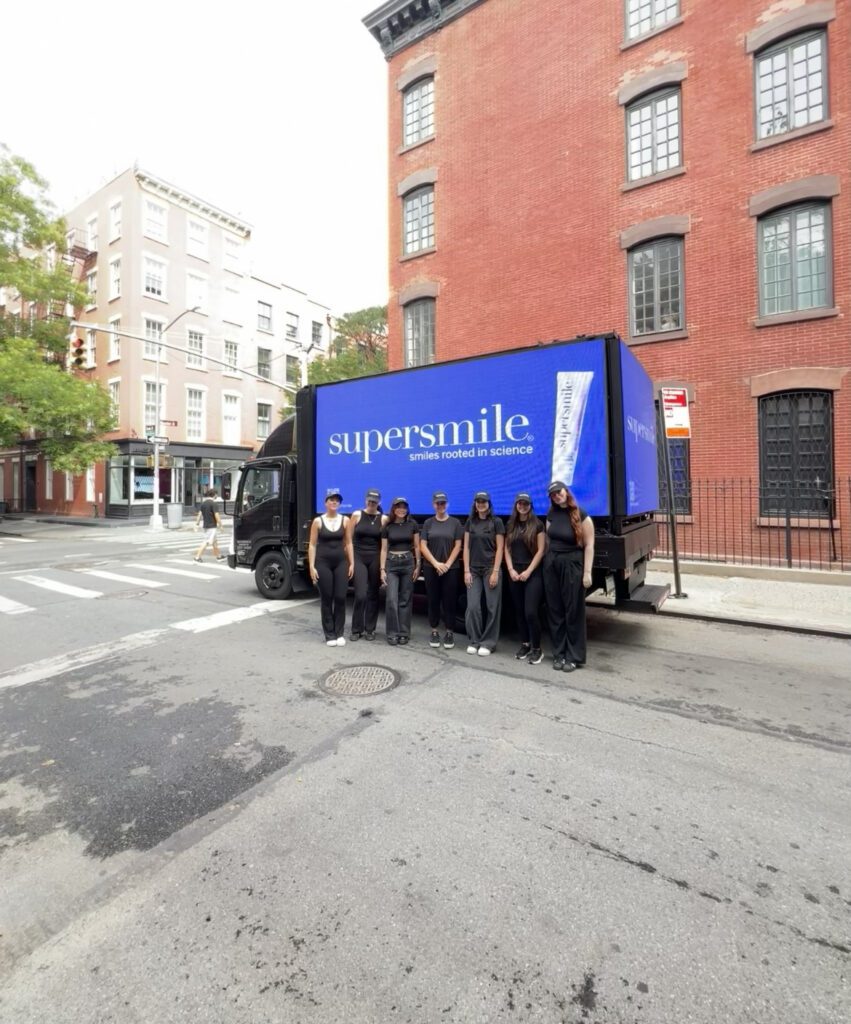
LED trucks are the highest-visibility format for stadium approach zone marketing. Their visual impact in the concentrated fan environment is immediate and hard to ignore, and their mobility allows a single truck to cover multiple high-traffic positions in a single game day deployment. A truck that begins at the main transit exit, moves to the stadium entrance, covers the tailgate perimeter, and parks at the main gate during peak arrival captures a substantial share of the total game day audience in a matter of hours.
We position LED trucks based on venue-specific route plans that we develop before the first deployment and refine through the season. Each route plan specifies arrival time at each position, dwell time at each stop, movement timing relative to the fan arrival curve, and photo documentation requirements. After each deployment, we reconcile the actual route against the plan and note any adjustments that produced better results, building a progressively more efficient route for subsequent events.
Route Planning and Fan Arrival Curves
Fan arrival patterns at sporting events follow predictable curves based on sport, event type, time slot, and venue geography. An evening basketball game at an urban arena draws a different arrival pattern than a Sunday afternoon football game at a suburban stadium. We study these patterns for each venue and sport we cover, building arrival curve models that inform where the LED truck should be positioned at each point in the pre-game window.
In practical terms, this means positioning the truck at transit exits during the first wave of early-arriving fans, moving to the approach corridor as the main arrival wave builds, and holding near the entrance gates during the peak fifteen to twenty minutes before tip-off or kickoff. That sequenced positioning maximizes total fan exposures across the full arrival window rather than concentrating coverage in a single position that only captures part of the crowd.
Game Day Photography and Placement Logs
Every LED truck deployment is documented with timestamped, geo-tagged photographs from each position on the route. Those photos, combined with driver logs showing actual route timing, are compiled into a post-event deployment report. Clients receive that report within forty-eight hours of each game and can verify coverage against the planned route. For QR codes displayed on the truck, scan data is included in the report to show audience interaction beyond visual impression.
Wheatpaste Poster Campaigns in Stadium Neighborhoods
Poster campaigns on approved posting surfaces in the neighborhoods surrounding sports stadiums build brand presence in the community fabric of the sports fan environment. These are not temporary placements installed the morning of a game; they are neighborhood-level advertising that fans encounter in their daily routine, building familiarity with the brand before game day arrives and reinforcing that familiarity in the approach zone on game day itself.
We identify approved posting surfaces in sports neighborhoods through direct location scouting, prioritizing surfaces with high pedestrian traffic, good visibility from the street, and proximity to the sports bars, transit stations, and commercial corridors that the fan community uses most. Placements are mapped before the paste crew deploys, and each placement is photographed at installation with location data attached. Clients receive a full placement map with photos for every campaign run on their behalf.
Pre-Event Build Campaigns
For major sporting events, including playoffs, championship matchups, and special events that draw larger than typical crowds, poster campaigns in the surrounding neighborhood signal the significance of the event and build community excitement in the days before game day. A well-timed pre-event poster build creates visible evidence that something significant is happening, which drives organic conversation and social sharing on top of the direct brand impression from the posters themselves.
We time pre-event poster builds based on the event date and the decision timeline for the target audience. For a playoff game where tickets are still available, the build goes up early enough to influence the purchase decision. For a sold-out championship event where the goal is brand association rather than ticket sales, the build goes up closer to game day to maximize its presence during peak fan attention.
Brand Ambassadors at Stadium Events
Brand ambassador programs deployed around sports venues are one of the highest-return tactics in stadium marketing because they create direct human interactions between the brand and fans at the moments of highest engagement. An ambassador who approaches a fan in the tailgate zone or hands them a product sample on the approach path creates a brand encounter that is remembered in a way that passive advertising is not.
Our ambassador teams are selected and briefed specifically for stadium and sports event deployments. Each ambassador receives a venue-specific orientation that covers the geography of their assigned zone, the product or message they are representing, the brand voice they should use in conversations with fans, and the documentation requirements for their shift. Interaction logs, sample counts, and photographic documentation of ambassador activities are submitted at the end of each shift and incorporated into the campaign report.
For multi-event programs, we build standing ambassador rosters for each venue that include team members familiar with the specific geography, the fan culture, and the documentation standards for that location. That familiarity pays off in smoother deployments and higher-quality fan interactions as the season progresses.
Sidewalk Stencils on Fan Approach Routes
Sidewalk stencils on fan approach routes turn the ground that fans walk on into brand media. A well-placed stencil on the primary walking path from the transit exit to the venue entrance is seen by every fan who walks that route, at eye level, at the moment of highest pre-game engagement. The placement efficiency of sidewalk stencils in high-foot-traffic sports environments is among the best of any format we deploy.
We site sidewalk stencils through the same approach zone geography analysis that informs LED truck routes and ambassador placement. The highest-value positions are the intersections, crosswalks, and plaza entry points where fans slow down, stop, or change direction, because those are the moments when they look down. A stencil placed correctly in those positions gets multiple exposures from the same fan during a single approach walk.
Stencil placements are photographed before and after each event, with location data attached to each image. The placement log includes the specific address or intersection of each stencil, the date and time of installation, and the crew member responsible for that position. Post-event photos document condition and continued visibility for placements that remain in position across multiple game days.
Season-Long Stadium Marketing Programs
The compounding value of consistent presence across a full sports season is one of the strongest arguments for season-long stadium marketing programs over event-specific campaigns. Fans who encounter a brand at every home game over an eighty-game season build an association between that brand and the positive experience of attending games that no single-event campaign can create. That association is the foundation of sports marketing ROI: the brand that is always there when fans are having a great time is the brand they remember and choose.
Our season-long programs build production and logistics infrastructure before the season begins, establishing standing deployment systems for each home game that can be executed efficiently without full re-planning for every event. The first game establishes the playbook for every format: LED truck route, ambassador zone assignments, poster placement map, and stencil positions. Each subsequent game executes that playbook and refines it based on what we observe in the field.
By mid-season, a well-run season-long program operates with a fraction of the planning time required for a one-off event, because most decisions have been made and the crew is familiar with the venue and its specific game day dynamics. That efficiency reduces per-event costs and frees up budget for escalated deployments at high-priority matchups like rivalries, playoffs, and nationally televised games where fan attention and media exposure are highest.
Stadium Marketing Without Official Sponsorship
One of the most common questions we receive is whether effective stadium marketing campaigns require official team or league relationships. The answer is no. The public spaces around stadiums, including surrounding streets, sidewalks, parking lot perimeters, and public parks and plazas, are available to any brand’s advertising activity without official agreements.
Brands that take this approach can reach the same fan audience as official sponsors in the approach zone and surrounding neighborhood at a fraction of the official sponsorship cost. The trade-off is the absence of official team branding association, which some campaigns require and others do not. For brands whose goal is reaching the sports fan demographic rather than official team affiliation, exterior stadium marketing delivers the audience without the sponsorship premium.
This approach also allows brands to target multiple teams and sports simultaneously without separate sponsorship negotiations for each relationship. A brand running an exterior stadium marketing program across baseball, basketball, and football venues in the same city can reach the full sports fan audience in that market through a single coordinated campaign rather than through three separate sponsorship arrangements.
Campaign Documentation and Proof of Performance
Every stadium marketing campaign we run is documented from crew deployment through final breakdown. Our field teams submit geo-tagged photographs from each placement location and each deployment position at the start and end of every shift. Those images are organized by format, location, and timestamp, then compiled into a structured post-event report that gives clients full visibility into what was executed.
Placement logs for poster campaigns include the specific address and surface description of every installation, the crew member who performed the installation, the date and time, and a before and after photograph. LED truck deployment logs include the planned and actual route, timestamps at each position, and photographs from each stop. Ambassador logs include zone assignments, shift times, interaction counts where tracked, and sample distribution quantities.
For clients running QR-enabled campaigns, scan data from the event window is included in the report, showing the distribution of fan interactions with the printed materials across the deployment geography. That data allows us to identify which placement positions and which ambassador zones generated the most direct response, informing resource allocation for subsequent events.
This documentation standard exists because accountability is not optional in any marketing program. Clients who invest in stadium marketing need to know what was deployed, where it was deployed, and how it performed. Our reporting infrastructure answers those questions for every event we cover, building a campaign performance archive that gets more valuable with each event we add to it.
Frequently Asked Questions
What is stadium marketing?
Stadium marketing refers to advertising and promotional campaigns conducted in and around stadium venues to reach sports fans attending events. It encompasses exterior out-of-home advertising, mobile billboard advertising, brand ambassador programs, product sampling, and experiential activations in the fan environment surrounding the stadium.
What is the geographic scope of exterior stadium marketing?
Exterior stadium marketing can cover the immediate plaza and entrance areas, the parking lots and tailgate zones, the walking corridors from transit stations to the venue, and the surrounding sports neighborhood including bars, restaurants, and sports retail that serve the fan community on game days and throughout the season.
What advertising formats are most effective around stadiums?
LED billboard trucks on fan approach routes and near entrance zones, wheatpasted poster campaigns in sports neighborhoods, sidewalk stencils on fan approach routes, and brand ambassador programs in tailgate and plaza areas are the most effective exterior stadium marketing formats. The right mix depends on campaign objective, budget, and the specific geography of the target venue.
Can non-sponsor brands run stadium marketing campaigns?
Yes. The public spaces around stadiums are open to brands without official sponsorship agreements. Non-sponsor brands can run effective stadium marketing campaigns in these public zones at a fraction of the cost of official in-venue sponsorship, reaching the same fan audience in the approach corridor and surrounding neighborhood.
How do you build a season-long stadium marketing program?
A season-long program starts with an audit of the venue’s fan approach geography and a game schedule review to identify high-priority matchups. We then build the production and logistics infrastructure that allows consistent deployment across all home games, with escalating resources for playoff games, national broadcasts, and rivalry matchups. After the first game establishes the playbook, each subsequent game executes and refines it.
Does AGM handle stadium marketing for multiple venues in the same city?
Yes. Cities with multiple major sports venues offer year-round stadium marketing opportunities across sports seasons. We manage programs across multiple venues in the same city under a unified campaign framework, coordinating production and shared logistics infrastructure to reduce per-event costs for multi-venue clients.
How does stadium marketing reach fans before they arrive?
Pre-game stadium marketing reaches fans in the neighborhoods and transit corridors they travel through on their way to the game. Poster campaigns and targeted placements in these areas build brand awareness in the hours and days before fans arrive at the venue approach zone, where LED trucks and ambassadors capture them at the moment of highest engagement.