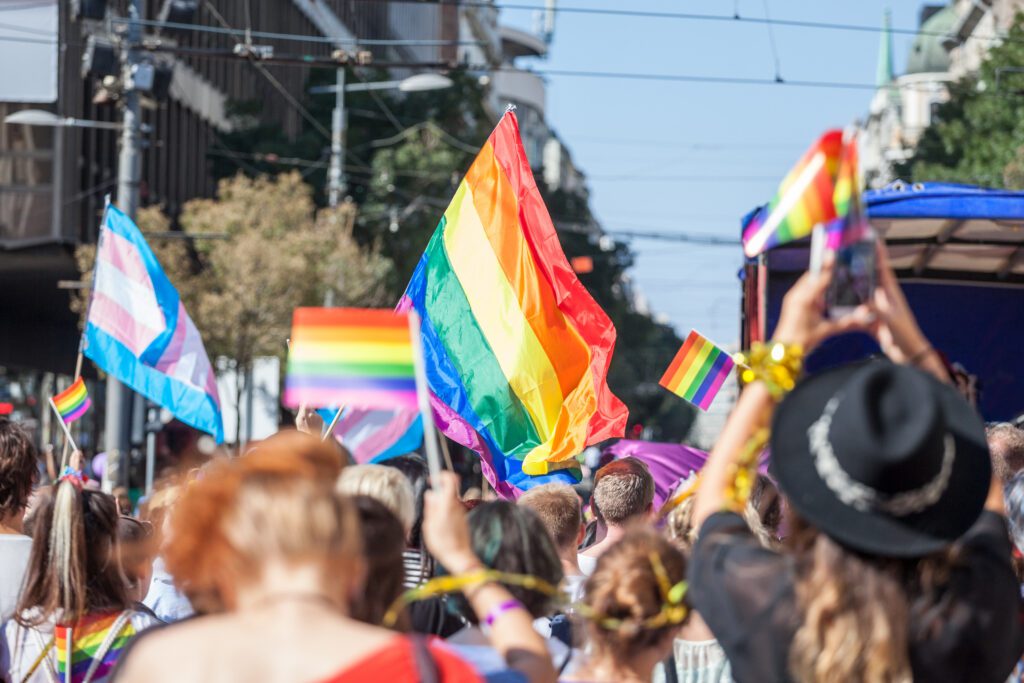
Pride festival sponsorship has evolved far beyond the days of slapping a rainbow logo on a banner and calling it a day. The LGBTQ+ community is savvy, vocal, and quick to recognize the difference between a brand that genuinely shows up and one that simply rents visibility for a weekend. The brands that earn lasting loyalty are the ones that put real people, real creativity, and real presence into the streets, not just a check to get their name in the program.
At American Guerrilla Marketing, based out of Industry City, Brooklyn, our team has built street-level pride activations for brands ranging from emerging consumer goods companies to national names looking to deepen their community relationships. We know what it takes to show up in a way that the community actually appreciates, and we know the tactical ground game that turns a sponsorship investment into genuine brand equity.
This guide covers everything from understanding what modern pride festival sponsorship looks like on the ground, to the specific tactics our team deploys to make campaigns resonate and perform.
Why Pride Festival Sponsorship Demands a Street-Level Strategy
The argument for investing in pride festival marketing is straightforward: Pride events draw tens of thousands to hundreds of thousands of attendees, many of them deeply brand-aware and likely to spend with companies that support their community. New York City Pride draws over two million people to its parade route alone. LA Pride, Chicago Pride, SF Pride, and dozens of regional events collectively represent one of the largest concentrations of enthusiastic, engaged consumers in the marketing calendar.
But simply having your logo in the official program or on a stage banner does very little. Attendees are there to celebrate, connect, and be moved. The activations that cut through are the ones that meet people where they are, literally on the street, in their hands, and in conversation.
Street-level pride festival sponsorship means your brand is part of the celebration, not an advertisement on top of it. That is the standard our team holds every campaign to.
What a Full Pride Festival Sponsorship Activation Looks Like
A well-built pride activation is multi-layered. It starts weeks before the event and extends beyond the festival footprint into the surrounding neighborhoods where attendees actually live, eat, and gather. Here is what a complete campaign looks like when our team builds it from the ground up:
Pre-Event Neighborhood Presence: The weeks leading up to Pride are when the energy builds in the community. Our team deploys wheatpasting installations across the neighborhoods closest to the festival. High-traffic corners, coffee shop windows, bar and venue walls, and transit corridors near the parade route all become canvas space. This builds brand awareness before the event even begins, so attendees arrive already familiar with the campaign imagery.
LED Billboard Trucks on Parade Routes: Our LED billboard trucks drive alongside or parallel to parade routes, turning a brand message into a moving, visible spectacle. In a crowd of hundreds of thousands, a 14-foot-tall rolling billboard is one of the few advertising formats that genuinely commands attention. We route trucks strategically to maximize time in view of the densest audience concentrations.
Brand Ambassador Street Teams: Nothing replaces a human being who can look someone in the eye, hand them something useful, and have a real conversation about a brand. Our brand ambassadors are selected for genuine enthusiasm and, where possible, authentic community connection. They work the crowd, distribute branded materials, collect opt-ins, and create the kind of one-on-one brand moments that no digital impression can replicate.
Sidewalk and Intersection Installations: Sidewalk stencils placed at high-traffic intersections near the festival footprint extend the brand’s visual presence without requiring permanent fixtures. These ground-level exposures catch eyes naturally as crowds walk and gather.
Sampling and Product Distribution: For consumer product brands, pride festivals are one of the highest-value product sampling opportunities of the year. We build sampling stations and mobile distribution routes that put product directly into the hands of attendees who are in a celebratory, receptive mindset.
The Case for Year-Round Investment, Not Just June
One of the most common mistakes brands make with pride festival sponsorship is treating it as a seasonal tactic. Showing up only in June, and only with rainbow-branded versions of existing assets, is the definition of performative marketing. The LGBTQ+ community notices this pattern and responds to it with skepticism.
The brands that earn authentic community trust invest year-round. This does not mean running rainbow campaigns in January. It means supporting LGBTQ+ causes through philanthropic partnerships, hiring and promoting LGBTQ+ employees, featuring authentic community representation in brand creative, and showing up at non-Pride community events throughout the year.
When brands that have done this consistent work then activate at Pride, the reception is completely different. The community recognizes them as genuine allies rather than seasonal visitors. Our team advises clients on how to build this longer-term relationship alongside any specific festival activation strategy.
Choosing the Right Pride Events for Your Brand
The United States has hundreds of Pride events ranging from the massive flagship parades in major cities to smaller regional and college-town celebrations. Choosing the right ones depends on your brand’s target audience, geographic footprint, and budget.
National consumer brands often want to be present at the flagship events: NYC, LA, San Francisco, Chicago, and Washington D.C. These draw the largest crowds and generate the most media coverage. But they also come with higher costs for site approvals, ambassador staffing, and truck routing through dense urban environments.
Regional Pride events often offer exceptional engagement per dollar. Smaller cities have Pride celebrations where brands can have outsized presence without competing with dozens of other sponsors. For brands with regional distribution or geographic target markets, these events frequently outperform the flagship in terms of conversion and relationship building.
Our team helps brands map the right event portfolio based on their specific goals. We handle all logistics city by city so the activation quality is consistent regardless of market size.
Creative Strategy That Respects the Community
Creative work for pride festival sponsorship deserves serious attention. The worst pride campaigns are those that simply take an existing asset and add a rainbow filter. The best ones reflect genuine understanding of and respect for LGBTQ+ culture, history, and values.
This means working with LGBTQ+ creatives and community members in the development process. It means understanding that Pride is not just a party but a commemoration of a civil rights movement with deep historical roots. It means creative that celebrates authentically rather than simply adopting aesthetics without understanding.
Our team works with clients to develop creative briefs that honor these considerations. We can connect brands with LGBTQ+ creative talent and community advisors who help ensure the campaign imagery and messaging lands with genuine respect and resonance.
The result is creative that gets photographed, shared, and talked about, not because it is provocative, but because it is genuinely beautiful and meaningful to the people who encounter it.
site-approval planning, Logistics, and the Ground Game
Pride festival sponsorship activations in major cities require careful site-approval planning and logistics management. Parade route adjacency, vendor positioning, vehicle routing, and wheatpasting placement all involve coordination with local authorities and festival organizers.
Our team manages all of this. We have established processes for site approval research and application in every major U.S. city where we operate. We coordinate with festival organizers for any official sponsorship deliverables while simultaneously managing our independent street-level components. We handle crew scheduling, materials production, vehicle logistics, and post-activation cleanup.
For brands that do not have an in-house events team capable of managing this complexity, we function as a complete activation partner from concept through execution and reporting. For brands that do have internal teams, we integrate as a specialist execution partner for the street-level components.
Measuring the Value of Pride Festival Sponsorship
Pride activations generate multiple layers of measurable impact. Here is how our team tracks and reports on campaign performance:
exposures: LED truck routes and wheatpaste placements generate trackable impression counts based on traffic data and placement duration. We estimate exposures conservatively using verified methodology.
Distribution Volume: Ambassador crews track items distributed, opt-ins collected, and meaningful interactions logged. This gives a direct measure of how many people received brand touchpoints.
Social Amplification: When activations are visually compelling, attendees photograph and share them organically. We track hashtag and geotag mentions that reference campaign elements to quantify this earned media layer.
Brand Lift Surveys: For clients who want deeper measurement, we can coordinate pre- and post-campaign brand awareness surveys with target demographic panels to measure shifts in awareness and sentiment.
Our post-campaign reports give clients a clear picture of what the investment delivered, and what we would adjust in future activations to improve performance.
Integrating Pride Festival Sponsorship with Broader Campaign Strategies
The most effective pride sponsorship campaigns do not exist in isolation. They connect to digital campaigns, influencer partnerships, retail activations, and ongoing community investment. Our team helps brands think through these connections so that the street-level activation amplifies and is amplified by everything else the brand is doing around Pride.
For example, a wheatpaste campaign that uses creative developed in partnership with a well-known LGBTQ+ artist becomes a story that the artist shares with their audience, generating press coverage and social reach far beyond what the posters themselves would generate. An ambassador crew that collects opt-ins feeds a digital retargeting audience. An LED truck that drives a QR code pointing to a Pride-specific landing page connects offline visibility to measurable online traffic.
These integration points are where pride festival sponsorship goes from being a feel-good expenditure to a genuinely measurable brand investment. Our team builds these connections into every campaign we manage.
Common Mistakes in Pride Festival Sponsorship
After years of planning and executing these campaigns, our team has seen the patterns that separate successful activations from forgettable ones. Here are the mistakes we help brands avoid:
Rainbow-washing without substance: Changing your logo colors for June while having no record of LGBTQ+ support or inclusive practices is immediately visible to the community. It generates backlash rather than loyalty. Authentic sponsorship requires authentic commitment.
Staffing with non-community members without preparation: Ambassador crews who are unfamiliar with LGBTQ+ history, culture, and community norms can inadvertently cause offense or simply fail to connect. We recruit and train crews with genuine cultural competency, including preference for LGBTQ+ community members on Pride activations.
Ignoring the neighborhood context: Pride festivals happen in neighborhoods with existing culture and community. Treating the activation as a pure logistics exercise without understanding the local community can result in creative that feels tone-deaf to the people who live there year-round.
Focusing only on the event day: The days before and after Pride are often when the most memorable brand moments happen. Pre-event wheatpasting builds anticipation. Post-event follow-through reinforces the relationship. Brands that only show up on the parade day miss most of the opportunity.
No measurement plan: Without a clear measurement framework, it is impossible to evaluate ROI or improve future campaigns. Every activation we run includes a measurement plan agreed upon before the campaign launches.
What does pride festival sponsorship include beyond logo placement?
Beyond logo placement, effective pride festival sponsorship includes street teams distributing branded materials, wheatpasted poster installations in surrounding neighborhoods, LED billboard trucks circulating along parade routes, product sampling stations, and brand ambassador crews who engage attendees in genuine conversation. The physical, human presence is what drives real community connection.
How far in advance should we plan a pride festival sponsorship campaign?
We recommend starting planning 10 to 14 weeks before the event date. This gives our team time to secure site approvals, produce creative assets, hire and train brand ambassadors, and schedule any LED truck or wheatpasting placements in the surrounding area. Major events in cities like New York or Los Angeles may require even longer lead times for certain site approval categories.
Which Pride events does American Guerrilla Marketing support?
Our team has activated at Pride events across New York City, Los Angeles, Chicago, San Francisco, Miami, Washington D.C., Philadelphia, and dozens of regional festivals. We coordinate logistics city by city so the activation matches local community culture and scales appropriately to the event size.
How do you measure results from a pride sponsorship activation?
We track items distributed, exposures generated by truck routes and poster placements, ambassador interaction counts, and social amplification when attendees photograph and post the activation. We provide a post-campaign report with all recorded metrics and recommendations for future campaigns.
Can a mid-size brand afford a meaningful pride festival sponsorship activation?
Yes. Street-level activations are budget-flexible. A brand can start with a focused wheatpasting campaign in the festival neighborhood and a small ambassador crew, then scale up with truck routes and larger sampling budgets as confidence grows. We design campaigns that deliver real impact at a range of budget levels.
What makes a pride sponsorship feel authentic rather than performative?
Authenticity comes from year-round investment, thoughtful creative that reflects the community rather than just rainbow-washing a standard ad, and hiring ambassadors who are genuine members or allies of the LGBTQ+ community. Brands that show up only in June with a generic logo drop rarely earn lasting goodwill. The community rewards consistency and genuine care.
Does AGM handle site-approval planning for pride street activations?
Our team manages the site approval research and application process for wheatpasting, sidewalk activations, and vehicle routes. Requirements vary by city, and we coordinate with local authorities well in advance to keep the activation fully aligned with site rules. We handle this as part of our full-service campaign management.
Campaign Architect – American Guerrilla Marketing
Frequently Asked Questions
What does pride festival sponsorship include beyond logo placement?
Beyond logo placement, effective pride festival sponsorship includes street teams distributing branded materials, wheatpasted poster installations in surrounding neighborhoods, LED billboard trucks circulating along parade routes, product sampling stations, and brand ambassador crews who engage attendees in genuine conversation. The physical, human presence is what drives real community connection.
How far in advance should we plan a pride festival sponsorship campaign?
We recommend starting planning 10 to 14 weeks before the event date. This gives our team time to secure site approvals, produce creative assets, hire and train brand ambassadors, and schedule any LED truck or wheatpasting placements in the surrounding area. Major events in cities like New York or Los Angeles may require even longer lead times for certain site approval categories.
Which Pride events does American Guerrilla Marketing support?
Our team has activated at Pride events across New York City, Los Angeles, Chicago, San Francisco, Miami, Washington D.C., Philadelphia, and dozens of regional festivals. We coordinate logistics city by city so the activation matches local community culture and scales appropriately to the event size.
How do you measure results from a pride sponsorship activation?
We track items distributed, exposures generated by truck routes and poster placements, ambassador interaction counts, and social amplification when attendees photograph and post the activation. We provide a post-campaign report with all recorded metrics and recommendations for future campaigns.
Can a mid-size brand afford a meaningful pride festival sponsorship activation?
Yes. Street-level activations are budget-flexible. A brand can start with a focused wheatpasting campaign in the festival neighborhood and a small ambassador crew, then scale up with truck routes and larger sampling budgets as confidence grows. We design campaigns that deliver real impact at a range of budget levels.
What makes a pride sponsorship feel authentic rather than performative?
Authenticity comes from year-round investment, thoughtful creative that reflects the community rather than just rainbow-washing a standard ad, and hiring ambassadors who are genuine members or allies of the LGBTQ+ community. Brands that show up only in June with a generic logo drop rarely earn lasting goodwill. The community rewards consistency and genuine care.
Does AGM handle site-approval planning for pride street activations?
Our team manages the site approval research and application process for wheatpasting, sidewalk activations, and vehicle routes. Requirements vary by city, and we coordinate with local authorities well in advance to keep the activation fully aligned with site rules. We handle this as part of our full-service campaign management.
How early should a brand start planning?
For most campaigns, the smart move is to start planning at least two to four weeks before the launch window so production, routing, staffing, and reporting are all lined up.
What makes one market perform better than another?
Market fit depends on audience density, neighborhood behavior, route efficiency, and whether the creative belongs in that setting. The busiest city is not always the best city.
Can AGM bundle this with other services?
Yes. AGM often combines this work with supporting formats so the campaign has stronger repetition and cleaner reporting across the whole run.
How does AGM quote pages like this?
We quote from official rate cards where they apply, then scope the remaining production, staffing, and routing details to the actual job.