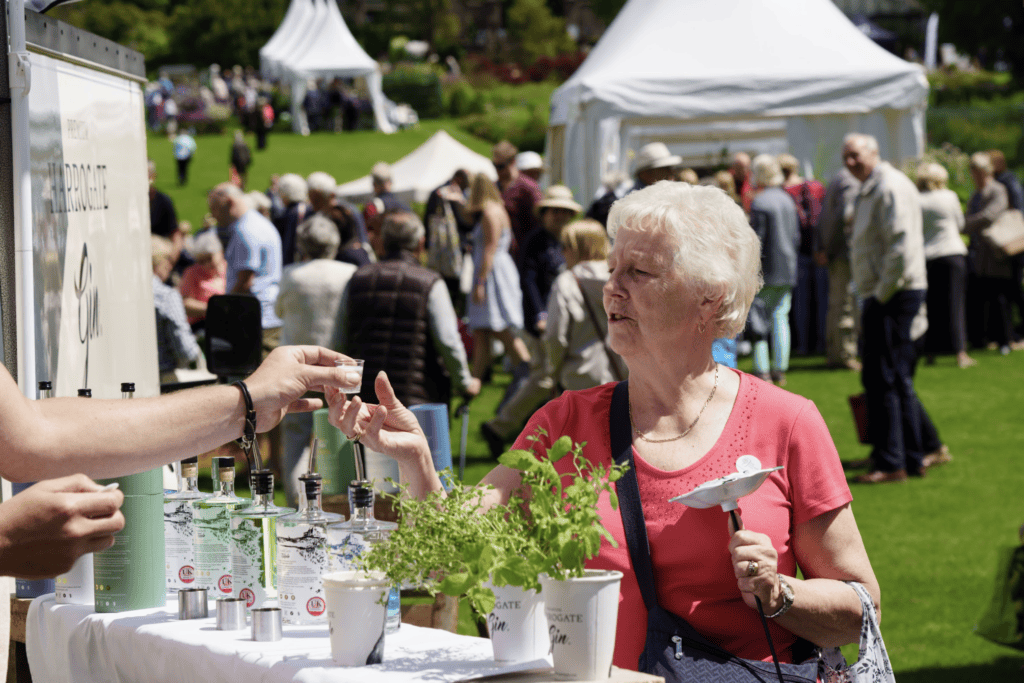
Product demonstration is the oldest and most effective form of trial marketing. When a consumer experiences a product directly — tastes it, feels it, sees it work in real conditions — the conversion rate from trial to purchase exceeds what any advertisement, however compelling, can achieve. A well-executed product demonstration program puts the product in the consumer’s hands at the moment and place where the purchase decision is most accessible. Our team staffs, trains, and deploys professional demonstration programs across 50+ U.S. markets for food and beverage brands, consumer packaged goods, personal care products, and emerging consumer technology.
This guide covers what separates professional product demonstration from generic sampling programs, how demonstration staff are recruited and trained, what the operational architecture of a demonstration campaign looks like in different environments, how performance is measured, and what budget ranges to expect at different campaign scales.
What Separates a Professional Product Demonstration Agency
The core difference between a professional demonstration program and a generic sampling initiative is staff capability. A person handing out samples without product knowledge, without a defined engagement approach, and without the ability to handle consumer questions or objections creates a trial moment that may or may not lead anywhere. A trained demonstration specialist who understands the product’s key benefits, knows who the target consumer is, can identify them in a crowd, and can initiate and complete a genuine product conversation creates a trial moment that drives purchase decisions.
The logistics infrastructure behind professional demonstration is also substantively different. Professional programs have supply chains that ensure product is available at the right temperature, in the right format, in the right quantities, at the right time and location. They have supervision structures that maintain staff accountability, real-time problem-solving capability, and quality standards throughout the campaign. They have documentation systems that capture the data clients need to evaluate performance and make future program decisions.
Generic sampling programs save money at the staffing stage and lose it at the performance stage. Undertrained staff create poor brand impressions. Inadequate supervision produces inconsistent execution. Poor documentation leaves the client without evidence that the program ran as intended or any data for future campaign decisions. Professional demonstration agencies cost more per staff hour and deliver substantially more per dollar invested.
Staff Recruitment and Qualification for Product Demonstration
Our brand ambassador agency recruits product demonstration staff through a multi-stage process that identifies candidates with the specific combination of product knowledge aptitude, social fluency, and professional reliability that demonstration programs require. We do not source from general labor pools. Our demonstration staff are drawn from established ambassador rosters in each market — people who have been evaluated in live field conditions and documented as effective consumer contacts.
For product categories with regulatory requirements — food handling certification, alcohol service certification, cannabis handling training — we maintain market-specific rosters of staff who hold the relevant certifications. A brand running a food and beverage demonstration program in multiple markets cannot use staff who are not food-handling certified in markets where certification is required. We manage certification requirements by market so clients do not have to track them independently.
Brand-specific product fit also matters in staff selection. A premium skincare brand benefits from demonstration staff who present as beauty-engaged and can speak fluently about skincare routines. A craft beverage brand benefits from staff who can discuss ingredients, sourcing, and production with the vocabulary the target consumer uses. We match staff profiles to product categories in our program assignments, not just to geography and availability.
Training and Pre-Campaign Certification
Every product demonstration program we execute begins with a structured training process. The training covers: the product’s key features and benefits in consumer language (not technical specifications); the target consumer profile and how to identify them in a demonstration environment; an opening approach — the verbal and behavioral technique for initiating a demonstration encounter with a stranger in a retail or public environment; a sample presentation protocol; a response framework for common consumer questions and objections; supply management, hygiene protocols, and equipment operation; and documentation procedures for reporting contacts, responses, and incidents.
Training is conducted both through written materials and through supervised practice exercises before the first live deployment. We do not send untested staff into live demonstration environments. Staff who are not meeting proficiency standards after training receive additional coaching or are replaced. A demonstration program’s performance ceiling is set by its lowest-performing staff member — we work to eliminate that ceiling through rigorous pre-deployment preparation.
For complex products — consumer electronics, medical devices, technical ingredients — we conduct additional product knowledge training with the client’s technical team before the broader staff training. Demonstration specialists need to be able to answer consumer questions with authority; that authority comes from genuine product knowledge, not scripted talking points that fall apart under the first real question.
Retail Demonstration Programs
Retail demonstrations occur within or adjacent to retail locations where the product is available for purchase. The consumer is already in a purchasing context, which creates the most direct path from demonstration to purchase decision. The primary measurement metric is trial-to-purchase conversion at the demonstration location — how many consumers who sample the product buy it during the same visit.
Effective retail demonstration programs are positioned at the highest-traffic point in the product’s section, not just at whatever location the retailer assigns by default. We work with clients and retail partners to negotiate demonstration positioning that maximizes consumer contact rates. A demonstration table positioned at the section entry, facing the main traffic aisle, creates three to five times more consumer contacts per hour than a table positioned at the back of the section facing the wall.
For retail programs that run across multiple locations in a market, we coordinate deployment schedules to ensure consistent execution quality across all locations. A single supervisor covering four to six retail locations in a market maintains real-time communication with all demonstration staff and can address supply issues, staffing gaps, or retailer relations problems without escalating to the client.
Street-Level and Event Demonstration Programs
Street-level and event demonstration programs operate in public spaces — transit hubs, street corners, festival environments, event approaches — where the consumer is not necessarily in a purchasing context. The primary objective shifts from immediate purchase conversion to brand trial and first-impression creation. The measurement metrics shift to contacts per hour, consumer response quality, and brand recall indicators.
Event demonstrations are among the most effective formats for reaching highly profiled consumer audiences. A food and beverage brand demonstrating at a music festival reaches a defined age, income, and lifestyle audience in a social, receptive state. A personal care brand at a fitness expo reaches a health-and-wellness-oriented consumer who is specifically interested in the product category. A consumer electronics brand at a tech conference reaches an early-adopter audience that influences broader product adoption.
For event demonstrations, our team coordinates with event organizers for sampling rights, zone assignments, and access logistics well in advance of the event date. Event sampling rights need to be secured independently of the product demonstration staffing — some events sell sampling rights as a package with booth space, others manage them separately. We navigate these logistics as part of our program management process, not as an add-on service.
Multi-Market Demonstration Programs
National brands running demonstration programs across multiple markets face the same coordination challenges as any multi-city campaign: creative and message consistency, crew quality parity across markets, product supply chain management, and unified reporting. We address all of these through the same centralized operations infrastructure we use for our broader guerrilla marketing programs.
For multi-market demonstration programs, we designate regional supervisors who manage day-to-day execution in their geographic zones, reporting to our central operations team in Industry City, Brooklyn, New York. All supervisors are trained on the client’s product, the campaign brief, and the documentation requirements before any market goes live. Execution standards are consistent across all markets because the training foundation is consistent.
Product supply logistics for national demonstration programs are planned in advance with the client’s distribution team. Demonstration product needs to arrive at each market location before the campaign launches — ideally 24 to 48 hours before the first demonstration date for perishables, longer for shelf-stable products. We coordinate delivery schedules, storage arrangements (including cold chain requirements for temperature-sensitive products), and restock logistics as part of the program management process.
Cannabis and CBD Demonstration Programs
Cannabis and CBD product demonstration requires market-specific regulatory knowledge that general-purpose demonstration agencies often lack. State and local regulations governing sampling, public consumption, and product representation vary significantly across markets. We maintain current regulatory knowledge in each market where we execute cannabis and CBD demonstration programs and structure all programs to comply with applicable state and local law.
In markets where compliant cannabis sampling is permitted, our demonstration teams are trained on the specific product knowledge, dosage communication, and consumer education approach that cannabis brand clients require. For CBD products, we work with clients to ensure all product claims in the demonstration environment comply with applicable FTC and FDA guidelines.
Measurement and Reporting for Product Demonstration
All product demonstration programs are documented with hourly contact counts by location and staff member, product distribution totals, consumer response notes categorized as positive, neutral, or negative, notable consumer interactions or feedback captured in field notes, and geographic distribution data by zone and time block.
For programs with a retail component, we coordinate with clients to obtain point-of-sale data from demonstration locations during and around the campaign period. Comparing sales velocity before, during, and after demonstration dates at specific retail locations provides the most direct available measure of program impact. We structure program scheduling to make this before-during-after comparison as clean as possible, concentrating demonstration dates in defined windows rather than spreading them continuously.
Post-campaign reports are delivered within 48 to 72 hours of program completion and are organized by market with a consolidated national summary. The summary includes total contacts, total samples distributed, aggregate consumer response ratings, and any notable field observations that have implications for future program decisions.
Budget Ranges for Product Demonstration Programs
Single-day, single-location product demonstration programs with professional staffing, training, and reporting start around $2,500 to $4,000. Multi-day programs at a single location (three to five days) with consistent staffing run $7,000 to $15,000. Multi-location, multi-day programs in a single market run $15,000 to $40,000 depending on location count and team size.
National programs covering five to ten markets with simultaneous or rolling deployments run $50,000 to $150,000 for a week-long program window. Product supply and sampling materials are typically provided by the client; we manage logistics and storage but do not source the product itself. We provide detailed line-item proposals within 48 hours of receiving a brief that specifies market list, product category, and program objectives.
On-Premise Demonstrations vs. Off-Premise Street Programs
The distinction between on-premise and off-premise demonstration environments shapes every element of program design. On-premise demonstrations — inside or immediately adjacent to a retail location where the product is stocked — operate in a purchase-primed environment where the consumer has already made a decision to shop. The primary objective is converting a shopping visit into a first trial. Success metrics are trial-to-purchase conversion rates at the demonstrated product’s shelf position during and after the demonstration period.
Off-premise street-level demonstrations operate without the retail context. The consumer has not made a shopping decision and the brand’s product is not available for immediate purchase at the location. The objectives shift to brand awareness, product education, first sensory trial, and intent-to-purchase generation that converts at a later retail visit or online purchase. Street demonstration teams need to accomplish more with less because they are working without the purchase-proximate context that on-premise retail provides.
The best demonstration programs combine both. A street-level sampling program in the high-foot-traffic neighborhoods adjacent to key retail accounts creates first-trial and awareness that drives shelf velocity in those accounts during the demonstration period. Consumers who have already sampled the product at a neighborhood demonstration are significantly more likely to recognize it at shelf, pick it up, and purchase it during their next grocery or specialty retail visit. That downstream retail effect is measurable through velocity comparison at demonstration-adjacent retail accounts versus control accounts where the street program did not run.
Quality Control During Live Demonstration Programs
Professional demonstration program quality is not established at the training stage and then assumed to continue automatically in the field. It is maintained through active supervision throughout every deployment day. Our field supervisors observe demonstration staff in live conditions, provide real-time coaching when engagement approaches need adjustment, rotate staff between deployment zones when attention fatigue affects performance, and address supply, equipment, or location issues before they become campaign-affecting problems.
The difference between a supervised demonstration program and an unsupervised one is visible within the first two hours of a deployment day. Unsupervised teams drift from the scripted engagement approach, become less proactive in initiating consumer contacts, and make product claims that have not been approved. Supervised teams maintain consistent performance throughout the deployment window because accountability is present and feedback is immediate. That consistency is what makes the difference between a demonstration program that produces reliable results and one that is effective only when conditions are ideal.
Integrating Product Demonstration with Brand Marketing Programs
Product demonstration programs perform at their highest level when they are integrated components of broader brand marketing campaigns rather than isolated tactics. A product launch that pairs a street-level wheatpaste campaign in the target neighborhood with a demonstration team at the neighborhood’s key anchor retail location creates a two-touch brand sequence: the consumer encounters the brand visually in the street, then has the opportunity for a physical product trial at the nearby retail demonstration. That sequence — awareness, then trial — is the fundamental conversion architecture of consumer brand marketing, and demonstration programs are the most direct implementation of the trial component.
For food and beverage brands with wheatpaste campaigns running in a market, positioning demonstration teams at the grocery or specialty retail locations serving the same neighborhood creates geographic coherence that reinforces both programs. The consumer who sees the brand on a poster walking to the store and then encounters a demonstration team inside the store has had two brand touchpoints in a single shopping trip, which significantly increases the probability of a first-purchase decision during that visit.
Our operations team coordinates demonstration programs with complementary campaign formats through a unified campaign brief that specifies the timeline, geographic overlap zones, and message consistency requirements across all formats. A brand does not need to manage the coordination between its demonstration program and its street-level campaign separately — we handle the scheduling synchronization as part of our program management process.
Frequently Asked Questions
What does a product demonstration agency do?
A product demonstration agency recruits, trains, and deploys staff who introduce consumers to products through direct sampling, live demonstrations, and interactive experiences at retail locations, events, and street-level environments. The agency handles staffing, training, supply logistics, deployment scheduling, and performance documentation.
What types of products work best for demonstration campaigns?
Food and beverage products, personal care and beauty products, consumer electronics, cannabis and CBD products (in compliant markets), fitness supplements, and innovative household products all perform well. Products that benefit from direct sensory experience — taste, texture, scent, tactile quality — see the highest conversion rates from demonstration to purchase.
How are product demonstration staff trained?
Professional demonstration staff receive brand-specific training covering product features and benefits, target consumer profiles, conversation frameworks, objection handling, sample management protocols, and documentation procedures. We do not send untested staff into live environments — all staff complete supervised practice before the first deployment.
What is the difference between retail demonstration and street-level demonstration?
Retail demonstrations occur within or adjacent to a retail store where the consumer is already in a purchasing mindset, with purchase conversion as the primary objective. Street-level demonstrations occur in public spaces where the objective is brand awareness and first-trial, not immediate purchase. Both require different staffing approaches, training emphases, and success metrics.
How much does a product demonstration campaign cost?
Single-day, single-location programs start around $2,500 to $4,000. Multi-day, multi-location programs in a single market run $8,000 to $25,000. National programs covering 10 or more markets typically run $50,000 to $200,000 depending on team size, demonstration duration, and market count.
What markets does AGM cover for product demonstration campaigns?
We cover 50+ U.S. markets including all major metro areas. National programs are coordinated from our operations hub in Industry City, Brooklyn, NY, with regional supervisors managing execution in each market.
How is a product demonstration campaign measured?
For more on this topic, see our guide to Display Board Advertising.
For more on this topic, see our guide to Impactia Metairie LA: Street-Level Marketing in the New….
For more on this topic, see our guide to college marketing campaigns.
For more on this topic, see our guide to national billboard advertising.
Standard measurement includes total samples distributed, estimated consumer contacts per hour by location, consumer response notes (positive, neutral, negative), and geographic distribution data by zone and time block. For campaigns with a retail tie-in, we coordinate with clients’ sales data to compare velocity before, during, and after demonstration periods.