
November 5, 2026
Print Flyers and Posters: How It Actually Works
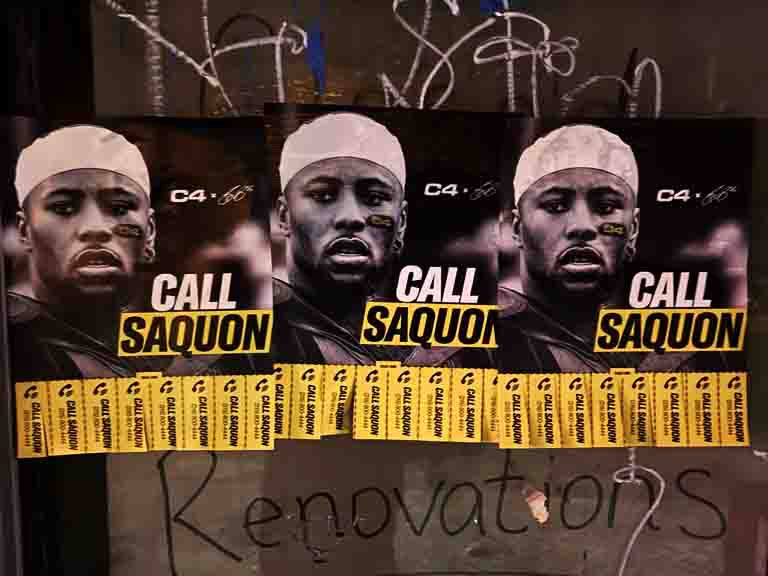
Most print problems are discovered on a wet sidewalk at two in the morning, which is far too late.
The file looked perfect on a monitor. The proof looked fine under office lighting. Then the sheet goes onto a wall, the paste soaks through, the ink shifts, the headline that read beautifully at arm’s length is illegible from across the street, and the whole run of posters you paid to produce is now a lesson.
I have stood at that wall. So this page is about getting print right for outdoor street use specifically, which is a completely different discipline from printing something that will be handed to a person or pinned to a noticeboard.
The buyer problem is that print is usually treated as a procurement step at the end rather than a design constraint at the beginning. Somebody designs, somebody approves, somebody orders, and nobody asks what the paper has to survive.
Flyers and posters are not one product. They have different jobs, different substrates, different failure modes and different reasons to exist. Let us separate them properly.
Flyers and posters do opposite jobs
A flyer is handed to a person or left somewhere to be picked up. It is portable, it survives being folded into a pocket, it can carry detail, and its success depends on someone choosing to keep it. The interaction is one to one.
A poster is fixed to a surface and read at distance by people who did not choose to engage. It cannot carry detail, it cannot be taken away, and its success depends on being seen repeatedly by the same people over time.
Those are different instruments. The classic mistake is designing one and printing the other: a poster with flyer copy on it, dense with information nobody will stand still to read, or a flyer with poster copy on it, so sparse that the person who kept it has no idea what to do next.
Decide which job you need before anyone opens a design file.
If the objective is saturation and memory in a defined area, you want posters, in quantity, in a tight radius. If the objective is detail transfer to someone who has already engaged, you want flyers, and far fewer than you think.
Substrate, which is where most runs are ruined
This is the single most common print failure in street work, and it is entirely avoidable.
Posters for paste work need uncoated stock. Paste has to soak into the paper. Uncoated paper absorbs, relaxes slightly, conforms to the surface and bonds.
Coated stock does not absorb. It will not bond properly. It bubbles, traps air, lifts at the corners and comes off the wall in sheets, sometimes within hours. A glossy poster looks more expensive in a sample and performs dramatically worse outdoors. We refuse coated stock for paste work and that is not negotiable.
Weight matters in both directions. Paper that is too light tears while being handled wet, and a torn sheet at 2am is a sheet you cannot use. Paper that is too heavy resists conforming to any surface texture and fights the paste.
Flyers are the opposite case. They are handled dry by individuals, they need to survive a pocket, and a coated or heavier stock is perfectly appropriate. Different job, different paper.
Decals are not paper at all. Sidewalk work uses cast vinyl with a textured anti-slip laminate, and that laminate is the functional part, not a finishing touch. It provides the grip underfoot and the abrasion resistance. Without it you have a slippery sticker that will be scuffed to illegibility quickly.
Getting substrate wrong does not usually reveal itself in the proof. It reveals itself on night two when half the run is on the pavement.
Design rules for a surface read at distance
A poster on a street is read in about two seconds, often at an angle, sometimes in poor light, sometimes partly obscured by a parked vehicle.
One idea. Not a headline plus a subhead plus three bullets plus a URL plus a logo lockup plus a sponsor row.
Type far larger than feels comfortable. The test is not whether it reads on your screen. The test is whether it reads from across the street. Print a section at full size and walk away from it. Most designers are shocked the first time.
Maximum contrast. Light on dark or dark on light. Mid-tone on mid-tone collapses outdoors in a way it never does indoors, especially under sodium or mixed street lighting at night.
No subtle gradients in dark areas. Inexpensive stock on a damp wall turns a gradient into mud. The smooth transition you approved becomes a grey smear.
No fine detail and no thin strokes. Hairlines vanish. Delicate serifs vanish. Small type vanishes.
Short memorable text instead of long strings. Nobody transcribes a long URL from a wall. A short brand term that someone can search later outperforms a precise address they will never type.
QR codes with realistic expectations. At eye level in a walkable district where people stop, they can work. Six feet up, at night, on a street where nobody pauses, they will not produce the data you are hoping for. Use one if it suits the placement, but do not build your entire measurement plan on scans.
Design for the bleed and for overlap. Posters often go up in blocks of several sheets. Artwork that works as a repeated tile, or as a set of variants, looks far stronger in a run than a single image repeated identically.
Sizes and formats that actually get used
Street poster work tends to settle around a few familiar sheet sizes because they suit both the printing process and the physical act of pasting. A single person has to carry a stack, align a sheet against a wall in wind, and smooth it out before the paste grabs.
Very large single sheets are difficult to handle alone and catch wind badly. The common solution is a multi-sheet format: a large image split across several panels, pasted in sequence to build one big piece. That gives you scale without the handling problem, and it is why so much street work appears in grids.
Smaller formats belong to Snipe Advertising, which uses poles, scaffold legs and awkward verticals rather than large flat walls. Those are faster to install, easier to carry in quantity and give a campaign its texture between the bigger pieces.
Flyers follow completely different logic, sized for a hand and a pocket.
For sidewalk decals, size is governed by the walking surface and by sightline. People look down in short glances, so a decal has to resolve at close range and in a hurry.
Quantity, and the density argument
This is where I will be blunt, because it is the most expensive mistake available.
Forty posters spread across a metro will not register with anyone. The same forty, concentrated into a few blocks, start to work. Four hundred inside a tight radius is a campaign.
The mechanism is repetition inside a tight geography. The same person passes the same message several times between the station and the office, several days running. That is how street media builds memory, and a thin wide spread defeats it completely.
So when the quantity is fixed, shrink the geography until the density is high. I would rather dominate eight blocks than sprinkle a city.
Order for attrition too. Posters come down. Weather, pressure washing, another crew posting over you, a site contact who changed their mind. A run that exactly matches the number of planned surfaces has no maintenance stock, which means the campaign degrades from day three with no way to fix it.
Flyers invert this. Over-ordering flyers is the standard error. Work backwards from honest throughput: how many people one staffer can genuinely reach in an hour, how many staff, how many real peak hours. Most flyer orders imply a distribution rate no human achieves, and the surplus goes in a cupboard.
Proofing, and what to check before you commit
Proof on the actual stock. A proof on different paper tells you about colour and nothing about behaviour.
Check it at distance. Pin it up and walk back to the real viewing distance. This catches more problems than any other single step.
Check it in bad light. Look at it in dim conditions, not just on a bright desk. Street lighting at night is nothing like office lighting.
Check the dark areas. Where detail disappears into shadow on paper, it disappears entirely on a wall.
Check the trim. Anything important sitting close to the edge is at risk, and on a pasted sheet the edges take the most abuse.
Order the test before the run. A small quantity tested on a real surface, outdoors, overnight, answers questions that no proof can. This step costs a few days and saves whole campaigns.
How the print gets used on the street
Context matters, because it explains the constraints.
Posters go up between roughly 10pm and 5am. Not for secrecy. Empty sidewalks, no parked cars pressed against the wall, nobody walking through wet paste, and a cooler surface that holds moisture long enough for the bond to set. Peak productivity is midnight to four.
A standard crew is two people per van. One pastes, one spots and carries. A clean sheet on good plywood hoarding takes under two minutes. The same sheet on broken brick can take six and will not last as long.
Surface behaviour decides lifespan more than paper does. Clean plywood hoarding in mild weather is the best case and holds well beyond the point you need it, with the practical limit being another crew rather than the weather. Painted smooth concrete and block are close behind. Rough red brick is mediocre, because the paper only touches the high points and wind gets underneath. Metal roll gates and utility cabinets are poor for paste, with nothing porous to bond into. Glass is a no. Freshly painted anything is a no, because the paint comes off with the poster.
Cold is the main enemy of paste. Below roughly forty degrees it sets slowly and badly, and below freezing it is not worth starting. Rain during install is fatal for paper, although light rain a couple of hours later is harmless. Extreme heat causes paste to flash off a baked wall before the sheet is smoothed, leaving air pockets that tear in the first wind.
Decals need a clean dry surface above roughly fifty degrees to bond, take better to broom-finished concrete than polished stone, and degrade quickly on pivot points and anywhere salted in winter.
Lead time, and the schedule that keeps getting compressed
Print is almost always the step that absorbs other people’s delays, and it is the step with the least give in it.
The realistic sequence runs like this. Survey the target area and establish how many surfaces there actually are, because that number sets the quantity and nobody can order sensibly before it exists. Design to the surface sizes the survey found. Proof on the real stock. Run a small physical test outdoors overnight. Correct whatever the test exposed. Then print the full run, allow for delivery, and have the material in the right city before the first install night.
Every one of those steps is short. Together they are not, and they are usually compressed from the back because design approval ran over.
What gets cut first is the physical test, which is exactly the wrong thing to cut. It is the only step that tells you how the paper behaves on a real wall in real weather, and it is the step that catches substrate errors while they are still cheap to fix.
What gets cut second is the survey, which means the quantity becomes a guess and the sheet sizes become assumptions. Then a crew arrives with four hundred sheets for a district that had two hundred usable surfaces, or with a sheet size that does not suit the hoarding that is actually there.
Seasonal pressure is real too. Printing capacity tightens in the busiest commercial periods of the year, and those are frequently the same weeks everyone wants to be on the street. Booking print early for a seasonal campaign is unglamorous and it removes an entire category of problem.
If the timeline is genuinely tight, say so early and let the plan be built around it. A compressed schedule handled deliberately is fine. A compressed schedule discovered at the end is how a run ends up on the wrong paper.
Permission and removal, framed honestly
Printing is the easy part. Where the paper goes is the part that needs care.
Rules on posting to exterior surfaces vary by municipality, and enforcement varies even more, sometimes block by block within one city. It is a grey area, not a settled yes or no, and nobody honest will give you a national answer.
What materially reduces exposure is ownership and documentation: agreement from the property owner, the site manager or the hoarding contractor, a removal date agreed in writing, and a record kept. A private surface with documented permission is a different situation from unowned public infrastructure.
We do not give legal advice, we will not cite ordinance numbers we have not verified, and we will not tell you a placement is permitted.
Removal is part of the print decision too. Paper that bonds well comes off with effort and leaves a clean surface. The commitment to return and take it down on the agreed date is what keeps a wall available to you next year.
What we talk clients out of
Glossy coated stock for paste work. Firm no. It will not bond.
Posters carrying flyer copy. If it needs more than two seconds, it is not street copy. We will ask you to cut it, repeatedly.
Thin coverage across a wide area. Shrink the geography, raise the density.
Ordering exactly the number of planned surfaces. No maintenance stock means the campaign decays with no remedy.
Over-ordering flyers. Work from honest throughput, not optimism.
Skipping the physical test. A small outdoor test overnight answers what no proof can.
QR codes as the whole measurement plan. Add a short memorable term as well.
Freshly painted surfaces. The paint comes off with the poster and that ends a property relationship permanently.
A print run with no removal plan. If takedown is not funded, we will not plan the install.
The natural next step
If you are printing posters for street use, the format that pairs with them most usefully is sidewalk decals and stencils.
The reason is coverage of a different glance. Posters work vertically, at distance, catching people as they move through a corridor. Decals work horizontally, at close range, catching people who are looking down in a crowd. They handle the last fifty feet, pointing at a door, a venue entrance or a pop-up, which a poster across the street cannot do.
Together they cover both sightlines in the same blocks, which is why a district with both feels considerably more saturated than one with twice as many posters alone.
Frequently asked questions
What paper should posters be printed on for street use?
Uncoated stock for anything being pasted. Paste needs to soak into the paper so the sheet conforms and bonds. Coated and glossy stock does not absorb, so it bubbles, traps air and lifts off the wall, sometimes within hours. Weight matters too, since very light paper tears when handled wet and very heavy paper resists conforming to surface texture.
How many posters do I actually need?
More than you think, in a smaller area than you planned. Repetition inside a tight radius is the mechanism, so the same person passes your message several times between the station and the office. Spread thin across a metro the same quantity registers with nobody. Also order maintenance stock, because attrition from weather and other crews is normal.
What is the difference between a flyer and a poster?
Different jobs. A flyer is handed over, portable, can carry detail and depends on someone choosing to keep it. A poster is fixed to a surface, read at distance by people who did not choose to engage, carries almost no detail and depends on repeated exposure over time. Designing one and printing the other is the classic failure.
How should I design artwork so it reads on the street?
One idea, type far larger than feels comfortable, maximum contrast of light on dark or dark on light, no fine detail or thin strokes, and no subtle gradients in dark areas because cheap stock on a damp wall turns them to mud. Print a section at full size and walk back to the real viewing distance before approving anything.
How long do pasted posters last outdoors?
It depends on surface and weather rather than any fixed number. Clean plywood hoarding in mild conditions holds longest, often weeks, with the practical limit being another crew posting over you. Rough brick holds poorly because paper only contacts high points. Metal and glass are not paste surfaces. We plan maintenance passes rather than promising a lifespan.
Is putting up posters on street surfaces allowed?
It is a grey area that varies by municipality, with enforcement that is inconsistent even inside one city. There is no national answer. What reduces exposure is working on private surfaces with documented owner permission, agreeing a removal date up front and keeping records. We do not give legal advice and will not tell you a specific placement is permitted.
Request a campaign quote
Tell us the market, the dates, the audience and what the campaign has to achieve. We will come back with a substrate and format recommendation, a quantity based on real surface density rather than a round number, a crew and night schedule, a permission approach, and a maintenance and removal commitment.
If your artwork will not survive the street as drawn, we will tell you before it goes to print rather than after.
Request a campaign quote.

Ready to Run Your Campaign?
Call us or email us. We’ll tell you exactly what we can do in your market and what it costs.
Related Service
Explore similar advertising solutions offered by American Guerrilla Marketing.
American Guerrilla Marketing — Los Angeles
Street-level campaigns in Los Angeles and nationwide. Wheatpasting, LED trucks, street teams, and more.
(646) 776-2770
Related Articles
-
What Size Are Trends Posters: A Crew Field Guide
November 5, 2026
-
Wheatpasting & Poster Campaigns in Durham, NC
November 5, 2026
-
Wheatpasting & Poster Campaigns in Columbus, Ohio
November 5, 2026
-
Bus Posters: How It Actually Works
November 5, 2026
-
Wheat paste for posters: How It Actually Works
November 5, 2026