
November 5, 2026
Snipe Advertising for Spokane Brands
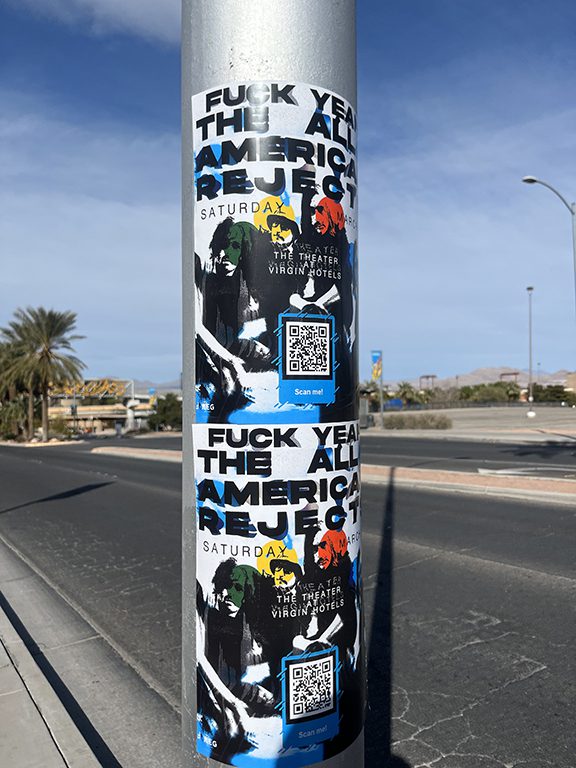
Snipe work is the format buyers ask for when they want to feel everywhere at once. Small format, high placement count, poles and temporary structures and the odd piece of construction hoarding, spread across a city until the brand feels ambient rather than placed.
That instinct runs into two Spokane-specific walls, and I would rather you hit them on this page than after the print run.
The first is geography. Spokane is not a continuous dense grid where a crew can walk for two hours and keep finding placement. It is a compact downtown surrounded by a ring of small, distinct commercial strips that sit a drive apart. Snipe density works where the pedestrian is already walking a long continuous line. In Spokane those lines are short, and they are separated by car travel.
The second is honesty about what I know. Snipe placements lean harder on street furniture and temporary structures than any other format we run, and that is exactly the category where I could not establish Spokane’s enforcement posture in research. I am not going to invent one for you.
So this page does two things. It tells you where snipe-style density genuinely works in Spokane and why, and it tells you plainly where the unknowns are and how we handle them.
Why Spokane rewards tight clusters over citywide spread
The standard snipe brief says blanket the city. In Spokane that brief produces a thin, expensive mess, and here is the mechanical reason.
The city’s walking happens in pockets. Downtown Spokane wraps around Riverfront Park and the Spokane River and is genuinely compact and walkable. Kendall Yards sits on the north bank just west of downtown and has grown into one of the strongest food, drink and small-retail corridors in the city. The Garland District is a short dense commercial strip north of downtown, anchored by the Garland Theater and lined with galleries and antique shops. South Perry is a near-South Hill neighbourhood strip, independent food and drink led. Browne’s Addition, just west of downtown, is historic residential and holds the Northwest Museum of Arts and Culture.
Each of those is walkable within itself. None of them is walkable to another. The connective tissue between Spokane’s nodes is driven, not walked.
What that means for snipe specifically. A pedestrian in the Garland strip will pass the same stretch of frontage several times across an evening, going to the theater, to a shop, to a bar. Repetition inside a short strip is what makes small-format work land. A driver moving between Garland and South Perry is not reading pole-mounted small format at speed. So every placement you put on the connective roads is close to wasted, and every placement you concentrate inside a strip gets seen repeatedly by the same person.
My recommendation for Spokane snipe work is therefore almost the opposite of the usual brief. Pick two or three nodes. Saturate inside them properly so the format does its ambient job. Put nothing on the drive between. A buyer who wants citywide spread in Spokane is paying for road frontage nobody reads.
Kendall Yards earns its place in most Spokane plans because it is the one node you can realistically pair with downtown on the same crew shift. It sits immediately across the river. Everything else is a separate night or a separate vehicle move with real time attached.
The surfaces question, answered honestly
Here is where I have to be straight with you rather than smooth.
Snipe Advertising depends disproportionately on poles, construction hoarding and scaffolding. For Spokane, I was not able to establish the city’s specific enforcement posture toward those surfaces. That includes how removal is handled in practice and whether enforcement here tends to be complaint-driven or patrol-driven. UNVERIFIED, and I am marking it as such rather than filling the gap with a plausible-sounding paragraph.
What follows from that is a process, not a guess.
If a Spokane plan depends on pole or hoarding placement, that gets confirmed locally before anyone loads a vehicle. Not after the print run. Not after the first night. Before. I will not build you a campaign whose core assumption is something I told you I had not checked.
The broader framing I hold to everywhere. Posting is a grey area. I will not describe it to you as legal or as illegal. It varies by municipality, enforcement is inconsistent, and the answer in any particular spot turns on who owns the surface, what the local ordinance says and whether permission exists. This page is not legal advice and I am not a lawyer.
What I can say with confidence about Spokane is where the clean path runs, and it is unusually clear here.
Spokane’s clean path is owner-granted frontage, and it is also the better placement
Spokane’s high-value walking frontage is overwhelmingly privately owned small-business frontage. The Garland strip. South Perry. Kendall Yards. These are owner-operator districts with business associations and strong neighbourhood identity, and the shop owners in them know each other by name.
The practical consequence is that in this city, the permission conversation is far more often a conversation with an individual shop owner or a district association than a conversation with a municipal desk.
That is a genuinely different operating model from a big-grid city where the frontage is corporate-managed and the only route to yes runs through a leasing office. In Spokane you can walk a strip in daylight, talk to six owners, and come away with real permissions for real surfaces.
And the thing worth understanding is that owner-granted placement is not a compromise here. It is the stronger placement. The foot traffic in Garland and South Perry is standing directly in front of owner-controlled frontage. Window placements, wall placements and A-frame-adjacent positions inside those strips sit exactly where the pedestrian already is. A pole fifty feet further along is seen by fewer people, held less securely, and carries all the unverified questions above.
So when a client comes to me wanting pure pole-based snipe density in Spokane, I usually end up steering the bulk of the campaign into owner-granted frontage inside two or three strips, with any street-furniture component treated as a smaller, separately confirmed add-on rather than the backbone.
Two categories need their own treatment:
Riverfront Park and the actively programmed downtown core around it are managed public space with municipal event management attached. Anything in or facing managed park ground should be assumed to sit under event and parks permissions rather than any general street rule.
Gonzaga’s campus is private institutional property with its own posted rules and its own patrol presence. The university states its parking regulations are enforced year-round with heavier patrol during the academic year, which is a reasonable signal that the campus is actively monitored rather than passively managed. Campus ground is one proposition. Campus-adjacent commercial frontage off campus is a much softer and more sensible one. We work the off-campus side and leave campus ground to the university.
What a Spokane winter does to low-mounted small format
Snipe placements sit low. That is the format. Eye level or below, on poles and panels and temporary structures, which in Spokane puts them squarely in the zone that takes the worst of the winter.
Spokane runs a humid continental climate with very cold, snowy, mostly cloudy winters. Temperatures across the year typically run from about 26 °F to 88 °F, with December lows near 22 °F. Snow, plough spray and de-icing residue load the lower metre of any street-level surface through that season.
Three consequences, all of which change what we print and where we put it:
Abrasion and salt on anything low. A placement at knee or waist height on a ploughed corridor should be assumed to get sprayed, salted and scuffed. Paper goes first. If a winter campaign has to sit low in a ploughed corridor, that is a vinyl or laminated conversation, not a paper one.
Adhesive failure in the cold. Anything relying on a water-based bond will not cure properly through a sustained freeze. The bond skins over, takes on water, and lifts at the edges on the first thaw. Sustained sub-freezing weeks are not a paper-and-paste window in this city. Mechanical fixing or pressure-sensitive vinyl rated for cold application is the honest answer for deep winter.
Access to the placement itself. In a snowy, repeatedly freezing city, night access to unploughed side streets is reduced and ploughing after a snowfall changes which streets are workable on the night. A route planned in October does not survive contact with February without adjustment.
The inverse season is friendlier than people expect. Spokane summers are short, warm, dry and mostly clear, and annual precipitation is low overall with much of it arriving as winter snow. A small-format placement that goes up clean in June is not fighting constant rain. What it is fighting is sun. Mostly clear summer skies mean high cumulative UV, and on uncoated stock the ink fades visibly well before the substrate fails. South and west aspects go first. If a summer flight needs to hold colour into August, specify UV-stable inks or a laminate and stop hoping.
Timing a Spokane snipe campaign around the street calendar
Spokane’s calendar is unusually decisive for a format that depends on pedestrians, because the city’s biggest event literally occupies the street grid.
Hoopfest is an outdoor 3-on-3 basketball tournament held in the final week of June. It spreads roughly 450 courts across around 45 downtown city blocks. That is the single largest street-level event of the Spokane year and it takes over the grid rather than sitting inside a venue.
For snipe work that produces a sharp split. Hoopfest week is the best downtown pedestrian week in the city and the worst downtown vehicle-access week in the city, simultaneously. Vehicle access across those roughly 45 blocks is not reliable, so a van-based install route through the core will not run to schedule.
The answer is simple and people still get it wrong. Install before the courts go in. Let the event walk past work that is already standing. Never plan a vehicle-dependent downtown install during that week.
Bloomsday is the other mass-participation event, a major annual spring road race drawing a very large participant and spectator field through the city. Same discipline. Placement set before the route fills, not during.
Pig Out in the Park is a multi-day food and free-concert festival in Riverfront Park. Sources disagree on its timing, one placing it on Labor Day weekend and another in late July or early August, so treat it as a late summer window and confirm the current year’s dates directly rather than trusting a date from me. The Fourth of July celebration is also a Riverfront Park draw.
Then the counter-cycle, which is the thing most out-of-town planners miss. Spokane’s festival density runs spring through fall. Winter’s reliable draws are indoor and arena-based rather than street-based. Gonzaga basketball pulls recurring winter evening crowds to the campus area through the season, anchored by the McCarthey Athletic Center at 801 N Cincinnati St.
Put those two facts together and you get the hardest truth about winter snipe work in Spokane. The season when the audience is most reliably gathered is also the season when street-level small format is least reliable and the crowd is indoors. That is not a format you can brute-force. It is a format you substitute.
Crew reality: what a Spokane snipe shift actually looks like
Two people and a vehicle is the working unit. One places, one carries and watches, and both move at the pace of the strip rather than the pace of the map.
Night windows here are more generous than in bigger markets. Spokane’s downtown and its neighbourhood strips are small-business districts that go quiet early outside event nights, which makes late-evening work low-friction for most of the year. You are not waiting for a bar crowd to clear at two in the morning on a Garland shift.
The route shape I keep coming back to is park once per district, work the strip on foot, move the vehicle, repeat. A realistic build is downtown core plus Kendall Yards on one shift because they are across the river from each other, then Garland on a second, then South Perry and the Gonzaga-adjacent commercial frontage on a third.
Access details that cost time if nobody checked:
Gonzaga’s campus parking is regulated and patrolled year-round, so campus-adjacent work runs off off-campus street parking. Plan that into the walk distance.
Downtown metered-parking hours and overnight parking rules in Spokane I have not confirmed. UNVERIFIED. Current rules get checked locally before a vehicle-dependent downtown shift rather than assumed from another city’s pattern.
Winter adds ploughing to every route decision. We build winter routes assuming side-street access is not guaranteed and that the usable streets on the night may differ from the ones on the plan.
What goes wrong, and where I push back
The citywide blanket. Covered above and worth repeating because it is the most common Spokane ask. Spreading small format thinly across a multi-node car-dependent city produces placements nobody walks past. I will push you toward saturating two or three strips instead, every time.
Pole-dependent plans built on assumption. I cannot verify Spokane’s enforcement posture on poles and hoarding, so I will not build a backbone out of them without local confirmation first. Some buyers read that as timidity. It is the difference between a campaign that stays up and one that disappears in week one with no record of why.
Winter paper. Low placements, plough spray, salt and a bond that will not cure. If you want small format standing through a Spokane February, it is vinyl or mechanical fixing, or it is a different format.
Looking for the arts district. Clients wanting an arts audience ask which strip to blanket. Spokane does not have a single formally branded arts district. The activity is distributed, with the Jundt Art Museum at Gonzaga, the Northwest Museum of Arts and Culture in Browne’s Addition, gallery frontage in Garland and Spokane Arts programming around the Kendall Yards market. That audience is reached with a multi-node route, not one saturated strip.
Volume as the only metric. Snipe briefs often arrive specified as a placement count and nothing else. In a city built of short strips, placement count is the wrong unit. The useful unit is placements per walkable strip, because that is what controls whether a pedestrian sees the brand once or five times in an evening.
Pairing snipe with a format that holds when the street empties
The natural companion to snipe work in Spokane is wheatpasting and Poster Campaigns, and the reason is about scale rather than seasonality.
Snipe gives you repetition. Posters give you a single surface big enough to carry an actual message. In a strip like Garland or South Perry, the strongest build we do is a handful of owner-granted large-format placements that anchor the strip, with small-format repetition filling the walk between them. The pedestrian gets the message once at size and the brand five more times at glance. That combination is what makes a short strip feel saturated without turning it into clutter.
In deep winter, when neither format is behaving and the audience has moved indoors toward the arena, the conversation shifts to vehicle-based formats that do not care whether the substrate is frozen.
Scope on any of this is driven by the same variables. How many strips, how many placements inside each, how many nights, how hard the access is in that season, what the surface mix looks like and what removal involves at the end. Spokane’s multi-node layout pushes hardest on the district count and the night count, because each additional strip is a separate drive and a separate walk.
Frequently asked questions
Is snipe advertising allowed in Spokane?
It is a grey area and I will not call it legal or illegal. It depends on surface ownership, local ordinance and permission, and enforcement is inconsistent. For Spokane specifically I could not verify the city’s enforcement posture toward poles, hoarding and scaffolding, so any plan leaning on those surfaces gets confirmed locally before we start.
Which Spokane districts suit snipe-style density best?
Downtown around Riverfront Park, Kendall Yards on the north bank with its recurring night market crowd, the Garland District around the Garland Theater, and South Perry. Each is walkable internally and separated from the others by driving distance, so saturating two or three of them beats spreading placements thinly across the whole city.
Should we run snipe placements in Spokane during winter?
Rarely in paper form. Low placements take plough spray, salt and abrasion through a snowy winter, and water-based bonds will not cure properly through a sustained freeze. If you need winter presence, that means vinyl or mechanical fixing, or moving the push to a vehicle-based format while the street audience is indoors.
How does Hoopfest change snipe campaign timing?
Hoopfest runs the final week of June across roughly 450 courts and around 45 downtown blocks. It delivers the year’s best downtown pedestrian volume and simultaneously makes downtown vehicle access unreliable. Install the week before so the crowd walks past work already standing, and never schedule a vehicle-dependent downtown install during the tournament.
How many placements do we need for Spokane?
The wrong question in this market. Because Spokane’s walking happens in short separated strips, the useful measure is placements per strip rather than a citywide total. Enough density inside Garland or South Perry that one pedestrian passes the brand several times in an evening beats a larger number scattered across roads people only drive.
How do you reduce risk on a Spokane snipe campaign?
We seek permission from property owners, favour private surfaces, document what went up and where, and commit to removal. In Spokane that is easier than most markets because the best frontage is owner-operator small-business frontage, so the conversation is usually with a shop owner or a district association directly.
Request a campaign quote
Tell me which Spokane strips matter to your audience, what season you are aiming at and whether you need large-format anchors alongside the small-format repetition. If your plan depends on poles or hoarding, say so early, because that is the piece we confirm locally before anything else moves.
We will give you a route built around how Spokane actually walks, with permission sought from property owners, placements documented and removal committed to from the start.
Request a campaign quote and we will scope it strip by strip.

Ready to Run Your Campaign?
Call us or email us. We’ll tell you exactly what we can do in your market and what it costs.
Related Service
Explore similar advertising solutions offered by American Guerrilla Marketing.
American Guerrilla Marketing — Los Angeles
Street-level campaigns in Los Angeles and nationwide. Wheatpasting, LED trucks, street teams, and more.
(646) 776-2770
Related Articles
-
Snipe Advertising for New Orleans Brands
November 5, 2026
-
Scaffolding Advertising Banners: How They Actually Work
November 5, 2026
-
Snipe Advertising for Grand Rapids Brands
November 4, 2026
-
Snipe Advertising for San Francisco Brands
November 3, 2026
-
Snipe Advertising for Philadelphia Brands
November 3, 2026