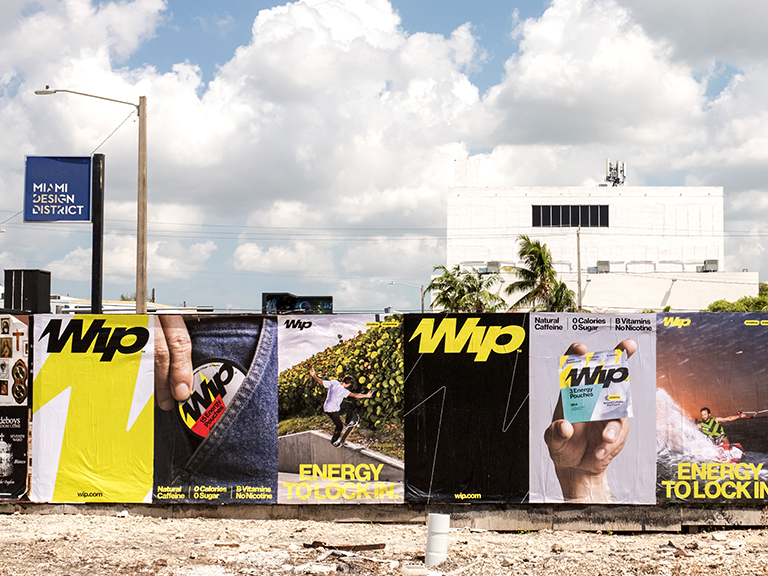
Posters on the Street | American Guerrilla Marketing
Posters on the street are impossible to scroll past, impossible to block, and impossible to skip. They live in the physical world where your audience actually spends their time. Here is how to use them effectively.
Walk through any culturally active neighborhood in any major American city and you will see posters. On construction fences along major pedestrian routes. On the blank walls of commercial buildings. On utility poles and plywood sheeting covering vacant lots. These posters are advertising concerts, product launches, art shows, film releases, restaurant openings, and brand campaigns. They have been doing this for generations.
The persistence of posters on the street in the era of digital advertising is not an accident or a failure of brands to find better options. It is a response to a fundamental limitation of digital media: digital advertising lives inside devices that people can put down, turn off, or block. Posters on the street live in the physical environment that people move through every day whether they want to or not. The street does not have an ad blocker. It does not have an algorithm deciding who gets to see which message. It does not require a platform subscription or a device charge.
At American Guerrilla Marketing, we run poster campaigns on the streets of New York City, Los Angeles, Chicago, Miami, and other major markets. We place posters on the walls that our clients’ audiences actually walk past. We design campaigns around the specific neighborhoods, the specific corridors, and the specific cultural contexts where each brand’s message will land with the most force. This guide explains everything about how street poster campaigns work and why they remain one of the most effective tools in the physical marketing toolkit.
What Are Posters on the Street and How Do They Work?
Street posters are large-format printed sheets placed on public-facing surfaces in urban environments. The placement method most commonly associated with professional street poster campaigns is wheatpasting, where a paste adhesive is used to bond the poster to the wall surface. Other methods include stapling to utility poles and wooden surfaces, inserting into street-facing commercial frames, and taping in sheltered locations where tape adhesion is practical.
The fundamental mechanism is simple. A poster on a wall is a visual message in a physical location. Every person who passes that location sees it. The message registers. Over repeated passes, familiarity builds. Brands that appear consistently in the physical environment of a neighborhood become part of that neighborhood’s visual environment, which means they become part of the mental furniture of the people who live and move through there.
How Physical Presence Builds Brand Memory
A physical poster on a wall creates a fundamentally different kind of brand contact than a digital ad delivered to a screen. The poster exists in three-dimensional space. It occupies physical territory in a specific location. It is subject to light, weather, and the eyes of everyone who passes it. That physical reality encodes the brand experience differently in the viewer’s memory than a momentary digital encounter does.
Research on out-of-home media consistently shows that street-level physical media generates stronger brand recall per exposure than most digital formats. A person who walks past a well-designed poster on their daily commute for two weeks retains the brand more durably than someone exposed to the same brand through repeated digital encounters over the same period. Physical reality creates physical memory in a way that digital stimuli rarely match. The street creates context. Context creates recall.
The Science Behind Why Street Posters Work
The effectiveness of posters on the street connects to measurable truths about how human attention and memory function in physical versus digital environments.
Environmental Context Encoding
Human memory encodes information more durably when it is associated with physical environmental context. When you see a poster on the same corner every day on your commute, your memory of that poster is encoded with the context of your daily physical experience of that corner. That contextual encoding produces stronger, more durable brand recall than the contextually floating encounters generated by digital advertising that appears in feeds and apps disconnected from specific physical locations. The corner becomes a mnemonic for the brand. The brand becomes inseparable from the neighborhood.
The Physical Presence Effect
Physical objects command attention differently than digital stimuli. Research in attention science suggests that physical objects in the immediate environment engage what researchers call “ambient attention,” a form of broad, non-directed awareness that catches physical presences in the field of vision even when we are not actively looking. Digital stimuli only receive attention when a person is actively engaged with a device. Physical stimuli can receive ambient attention at any time, which means a well-placed street poster reaches viewers even when they are not in an advertising-receptive mindset.
Frequency Through Geography
Neighborhood-level repetition creates the kind of advertising frequency that builds genuine brand recognition. A brand that appears on multiple walls within a six-block radius of a consumer’s daily route achieves daily contact without requiring any action from the viewer. That kind of organic repeat exposure builds genuine brand memory in a way that requires significant ad spend to replicate in digital channels. Street poster campaigns create frequency as a natural product of geographic concentration, at a fraction of the cost of achieving equivalent contact through digital formats.
AGM Field Note: The neighborhood saturation principle. A concentrated street poster campaign in a single neighborhood generates higher average contact frequency among neighborhood residents than a dispersed campaign across an entire city generates for any subset of that city’s population. Concentration beats spread when the goal is brand recall among a specific audience in a specific place.
Best Locations for Street Posters in Major Markets
Location selection is the highest-use decision in a street poster campaign. Not all surfaces are equal. Not all neighborhoods deliver the same audience. The right location produces thousands of daily contacts from the exact audience you want to reach. The wrong location produces nothing but wasted print and installation budget.
New York City Street Poster Zones
New York City’s strongest street poster zones are concentrated in Brooklyn and lower Manhattan, with secondary strength in Queens neighborhoods like Long Island City and Astoria. In Brooklyn, the Williamsburg corridor along Bedford Avenue between Metropolitan and North 7th, the Bushwick arts zone around Jefferson Street and Troutman Street, and the Crown Heights corridor along Franklin Avenue consistently deliver for campaigns targeting culturally engaged young adults.
In Manhattan, the Lower East Side corridor around Orchard and Ludlow Streets, the SoHo zone along West Broadway and Wooster Street, and the construction fence lines along Midtown’s major pedestrian routes on 8th and 9th Avenues all produce strong engagement for the right campaign types. The blocks approaching major subway station entrances function as captive attention zones where pedestrians naturally slow, wait, and take in their surroundings.
Los Angeles Street Poster Zones
Los Angeles street poster placement concentrates in the Arts District around Traction Avenue and Mateo Street, the Melrose-Fairfax corridor between La Brea and Fairfax Avenue, the Silver Lake zone along Sunset Boulevard between Virgil and Alvarado, and the Venice corridor along Abbot Kinney Boulevard and its side streets. Each of these zones has distinct audience profiles that make them appropriate for different campaign types.
The dry LA climate is a significant advantage for poster longevity. Properly installed posters in Los Angeles regularly remain in good condition for four to six weeks, compared to two to three weeks in wetter coastal markets. That extended active period increases the cumulative brand contact per placement substantially.
Chicago Street Poster Zones
Chicago’s strongest street poster zones are in the neighborhoods on the near north and near west sides. Wicker Park’s Milwaukee Avenue between North and Damen, Logan Square’s Milwaukee Avenue approach to the Logan Square Blue Line stop, Pilsen’s 18th Street corridor, and the Fulton Market District along Randolph Street all produce strong results for campaigns targeting Chicago’s creative and professional communities.
City
Top Street Poster Zone
Audience Profile
Best Campaign Type
New York City
Williamsburg, Bedford Ave corridor
18-35, creative, music/fashion-engaged
Music, fashion, entertainment
New York City
Bushwick, Jefferson-Troutman zone
20-35, arts community, visual culture
Art, design, brand awareness
Los Angeles
Arts District, Traction Ave
25-40, creative professionals
Fashion, food/bev, luxury goods
Los Angeles
Melrose-Fairfax corridor
18-30, streetwear, music, culture
Streetwear, sneakers, music
Chicago
Wicker Park, Milwaukee Ave
22-35, urban professional
Entertainment, food, brand launch
Miami
Wynwood, NW 2nd Ave
20-40, design, arts, multicultural
Art, fashion, hospitality
Designing Street Posters That Actually Get Noticed
The physical format of a street poster creates specific design requirements that differ from screen-based formats. Understanding these requirements is essential for anyone planning a street poster campaign.
Scale and Visual Weight
Street posters compete with everything else in the urban visual environment. Buildings, signage, other posters, murals, and architectural elements all compete for the same visual attention. A poster that does not have sufficient visual weight at street scale simply blends into the background. Visual weight comes from contrast, scale, boldness of graphic elements, and confidence in the design composition. Timid designs disappear. Bold designs get noticed.
Message Reduction
The most effective street posters communicate one thing. Not a paragraph of information. Not a list of features. One thing: a brand name, an event, a feeling, a product. The discipline required to reduce a brand message to a single statement is exactly what distinguishes street poster design from other print design disciplines. Every element that is not necessary is a distraction from the primary message. Remove it. The campaigns that earn attention on city walls are the ones that have the confidence to say one thing clearly rather than five things quietly.
Typographic Hierarchy
Typography on street posters needs to be readable from the expected viewing distance. For pedestrian-focused placements, that means a primary headline that is readable from 15 to 20 feet. For vehicle-traffic-focused placements, 30 to 50 feet. These requirements produce font sizes that look enormous in the design file but are correct for the medium. Designers who have not worked with street-scale poster production consistently underestimate the minimum type sizes needed for outdoor legibility. We review every design against distance-legibility standards before approving it for print.
AGM Field Note: The thumbnail test. Reduce your street poster design to the size of a postage stamp on your screen. If the primary message is still readable at that scale, the design will probably work at street scale. If it disappears at thumbnail size, the typography and hierarchy need to be simplified before printing.
Format Hierarchy: Matching Poster Size to Street Context
The format you choose for a street poster campaign should match the specific visual environment and viewing distances of your target locations. Choosing the wrong format for a location is one of the most common campaign mistakes we see. A 24×36 poster on a large open wall visible from 50 feet is too small. A 48×72 poster in a tight pedestrian corridor creates an overwhelming experience at close range.
Standard 24×36: The Workhorse
The 24×36 inch format is the most common street poster size for a reason. It occupies enough visual territory to be readable from 10 to 20 feet, which covers most pedestrian corridor viewing distances. It fits a wide range of wall surfaces without requiring custom trimming or complex alignment. It prints efficiently and ships without special handling. For most neighborhood saturation campaigns in urban pedestrian environments, 24×36 is the right starting point.
Large Format 36×48 and 48×72: For Visual Authority
In competitive visual environments where multiple posters are vying for attention on the same wall or corridor, going larger gives your campaign visual authority that smaller formats cannot achieve. A 36×48 or 48×72 poster on a prominent wall establishes visual dominance in that location and commands attention from a greater distance. These formats work best on walls with enough clean space to let the poster read without visual interference from adjacent materials.
Multi-Sheet Tiled Murals: Maximum Impact
For campaigns that need to create a genuine landmark moment, tiled multi-sheet installations covering an entire building face or large wall section produce an impact that no single-sheet format can match. These installations require careful planning, more installation time, and surfaces that can accommodate very large coverage areas. When executed correctly, they generate photography and social sharing that extend the campaign’s reach far beyond the immediate physical location.
Integrating Street Posters Into a Multi-Channel Campaign
Street posters work most effectively as part of a multi-channel campaign that creates presence in both physical and digital environments at the same time. Here is how we think about integration.
Physical + Digital Geofencing
Running digital advertising targeted at the specific geographic areas where your street poster campaign is running creates a compounding brand exposure effect. Someone who sees your poster on Orchard Street and then receives a digital ad for the same campaign while in that neighborhood has had two brand contacts in a single environment. That combination produces dramatically higher recall and response rates than either format alone. We often design campaigns with the geofencing layer built in from the start rather than added as an afterthought.
Physical + Social Media
Street poster campaigns in culturally active neighborhoods often generate organic social media content when people photograph and share visually interesting posters. For brands whose campaign creative is genuinely strong, this organic amplification can extend the campaign’s reach significantly beyond the neighborhoods where physical placements are installed. Designing for social shareability without compromising the core design effectiveness at street level is a balance we help clients think through carefully.
Physical + Event
Street poster campaigns timed to coincide with physical brand events, pop-up moments, or experiential activations in the same neighborhoods create a unified physical presence that makes the brand feel like a genuine part of the neighborhood’s cultural life for the duration of the campaign period. This integration is particularly effective for brands doing local launches, event promotions, and neighborhood-specific activations. The poster primes the audience. The event delivers the experience.
Campaign Documentation: What You Receive After Every Campaign
Every campaign we run is documented with photographs taken immediately after each poster is installed. This documentation serves several practical purposes that go beyond simple accountability.
The photo report shows each poster in its installed location with surrounding environmental context. This gives clients a visual record of exactly where their brand appeared, on which walls, in which neighborhoods, and in what visual condition. For internal reporting, these photos provide concrete evidence of campaign delivery that satisfies decision-maker questions about where physical marketing spend went.
The documentation package also includes placement address data and neighborhood summaries. Some campaigns include geo-tagged placement maps showing the complete geographic footprint of the installation. These maps are particularly useful for campaigns that need to demonstrate neighborhood concentration or geographic coverage across multiple cities.
Beyond accountability, the photo documentation is a marketing asset in its own right. Well-photographed street poster installations often become part of a brand’s content library, used in presentations, social media posts, and campaign case studies. A strong poster installation in a visually compelling street context can produce photography that communicates the brand’s street-level presence to audiences far beyond the physical location.
AGM Field Note: We photograph every placement on every campaign. This is not an optional add-on. It is how we run our business. Clients should never have to wonder whether their posters went up. They should be able to open a photo report and see exactly what happened, where, and when.
Measuring the Impact of a Street Poster Campaign
Street poster campaigns are not tracked the way digital campaigns are, but their impact is absolutely measurable with the right tools and methods.
QR Code Tracking
Including a QR code linked to a campaign-specific landing page lets you measure how many people scanned directly from the street. This is not a complete picture of the campaign’s reach, since many people who see the poster will not scan. But it gives you a direct data point on engagement. Campaigns where the QR code action delivers genuine value, such as a discount, a content enable, or a contest entry, generate meaningful scan volumes that allow direct response calculation.
Branded Search Volume Lift
Run a branded search volume baseline before your campaign launches. Track branded search volume during and after the campaign in the cities or neighborhoods where you placed posters. A lift in searches for your brand name in markets where the campaign is running, compared to markets where it is not, is a strong signal that the campaign is generating awareness that converts to search intent. This approach requires a few weeks of data to be meaningful but produces clean, attributable results.
Geofenced Digital Follow-Up
Geofenced digital advertising targeting the same areas where your physical campaign is running gives you a comparison metric. Track engagement rates among people inside the geofenced zone during the campaign and compare them to baseline engagement rates in those areas before the campaign started. The lift in digital engagement attributable to physical presence is measurable and typically significant.
Social Mention Monitoring
Set up social listening for your brand name and campaign hashtags during the poster campaign period. Organic social mentions from people who photographed your posters in their street locations represent genuine earned reach extending beyond the physical placement. When someone posts a photo of your poster on Bedford Avenue with your brand tagged, that content reaches their entire follower network from a single street placement at no additional campaign cost.
Frequently Asked Questions About Posters on the Street
Ready to Put Your Brand on the Street?
Posters on the street are not a relic of pre-digital marketing. They are a format that solves a specific, persistent problem: how do you reach an audience in a physical space in a way that no digital platform can replicate? The answer has been the same for centuries. You put your message on the wall.
American Guerrilla Marketing does that with the precision, quality, and strategic intelligence that modern campaigns demand. We know the walls. We know the neighborhoods. We know how to build a street poster campaign that earns real attention from your real audience. Every campaign we deliver comes with full photo documentation, placement maps, and the field expertise that comes from years of running these campaigns in the markets where they matter most.
Call us at (646) 776-2770 or email [email protected]. Tell us what you are trying to accomplish. We will tell you how to get there with posters on the street.
Written by the team at American Guerrilla Marketing. AGM runs street poster campaigns in New York City, Los Angeles, Chicago, Miami, and major markets nationwide.
Frequently Asked Questions
How much does a street poster campaign cost?
Poster campaigns are priced by package and market. Standard poster campaigns (24×36) start at $4,500 for 100 posters (two-week run) and $5,500 for 200 posters. Large format (48×72) campaigns start at $10,500 for 100 posters and $13,500 for 200. An optional two-week maintenance extension is $3,500. Contact AGM at (646) 776-2770 for a custom quote based on your market and objectives.
How long do street posters last before they need to be replaced?
Properly installed wheatpaste posters on stable surfaces typically last two to six weeks. The specific lifespan depends on climate, surface condition, and the competitive poster density in the placement zone. Dry climates like Los Angeles produce longer lifespans. Wet climates like Seattle or Portland produce shorter ones. We advise on expected lifespans for each specific market when building campaign timelines.
Can we choose which specific walls our posters go on?
Yes. We provide a location proposal with photographs of every proposed placement wall before installation. You can review, approve, request alternatives, or decline specific locations. Client approval of the location plan is a standard part of our campaign process. We never install on locations that the client has not reviewed and approved.
The optimal size depends on the specific walls and viewing distances in your campaign’s location plan. For most urban pedestrian campaigns, 24×36 is the standard workhorse format. For premium or high-competition locations, 36×48 or 48×72 produces better visual authority. We make format recommendations based on the specific locations in each campaign’s plan.
Do you photograph the installed posters?
Yes. Every campaign includes photo documentation of each placement. Clients receive a complete photo report showing every poster in its installed position with address or intersection data. This is a standard deliverable on all campaigns, not an optional extra.
Can street poster campaigns work for small local businesses?
Yes. Local businesses with a defined geographic target and a clear audience profile are often ideal candidates for concentrated neighborhood poster campaigns. A restaurant opening in a specific neighborhood, a boutique launching a seasonal sale, or a local event needing neighborhood-level awareness are all strong use cases for a focused, small-scale street poster campaign that covers the right blocks without requiring a citywide budget.
What types of brands see the best results from street poster campaigns?
Brands in music, entertainment, fashion, food and beverage, consumer goods, and creative services consistently see strong results from street poster campaigns. The common factor is an audience that concentrates in urban neighborhoods with active pedestrian culture and a high receptivity to visual street-level communication. Brands targeting very broad general audiences or primarily suburban demographics tend to see less efficient results from this format.
How do we get started with a street poster campaign?
Contact us with a brief that describes your brand, your audience, your target market or markets, your message, and your timeline. We will respond with an assessment of the opportunity and a preliminary campaign recommendation. From there, we move quickly through location scouting, design review, print production, and installation. Most campaigns are operational within one to two weeks of initial contact.