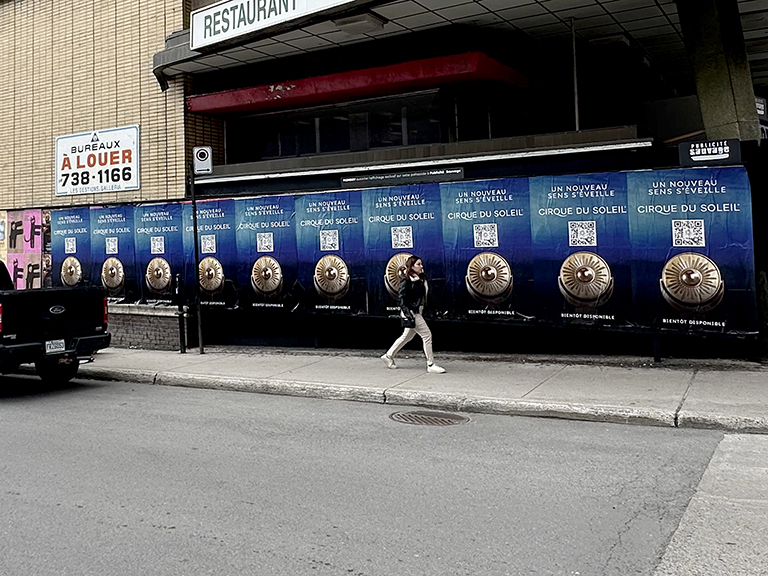
Poster Boards: Sizes, Materials, and Campaign Applications
We build campaigns that live in the physical world, on walls, sidewalks, transit corridors, event floors, and retail windows. Poster boards are one of the tools we reach for most often, and not because they are the most glamorous part of a campaign. We use them because they are fast to produce, flexible enough to serve dozens of different installation contexts, and affordable enough to deploy at the scale that makes city-wide campaigns possible.
But “poster boards” as a category is broader than most people realize. The term covers everything from a school art supply that costs two dollars to a precision-cut 4×8 foot PVC foam panel that anchors the main stage backdrop at a brand activation. Knowing the differences, by material, by size, by intended use, is what determines whether your campaign pieces perform in the field or fail before the event is half over.
This is our field guide to poster boards. We cover every material type, every standard size with both inch and centimeter measurements, print production specs, and the specific campaign uses where each format earns its keep.
Posters“>What Are Poster Boards and How Do They Differ from Paper Posters?
A paper poster is a flat, flexible print piece that adheres to a wall, pole, or surface as part of the installation process. Its structure comes from the surface it is mounted on, not from itself. A poster board is a rigid or semi-rigid display piece that holds its shape independently, it can stand in a frame, lean against a surface, be held by a person, or be mounted with minimal backing support.
The distinction matters because the two formats serve completely different roles in a campaign. Paper posters are high-quantity, high-frequency, surface-dependent. Poster boards are lower quantity, higher per-unit presence, self-supporting. In a well-planned campaign, both often appear together: paper posters handle the street-level saturation, and poster boards create the focal points, at the event entrance, in the retail window, at the brand ambassador station, on the trade show floor.
Understanding this distinction up front keeps campaigns from producing the wrong format for a given placement and from under-investing in the display infrastructure that makes an event or activation look finished rather than improvised.
Standard Poster Board Sizes: Full Reference with Measurements
These are the sizes we work with most frequently. All measurements given in inches first, centimeters second. Aspect ratios are noted because they determine how design files transfer between sizes.
We return to the 18×24 (45.7 x 61.0 cm) format repeatedly because it occupies the best intersection of visibility, portability, and cost. At three:four aspect ratio, it is compatible with the most common street poster format, which means design files scale between the two without layout reconstruction. In foam core at 3/16 inch thickness, an 18×24 board weighs under two pounds and can be held by one person for hours without fatigue, essential for any street team or brand ambassador application. In corrugated plastic, the same footprint becomes a durable outdoor directional that can be staked into the ground at an event perimeter.
The 22×28: The Retail System Workhorse
Retail display fixture systems in the United States have been built around the 22×28 inch (55.9 x 71.1 cm) format for decades. Walk into any grocery chain, pharmacy, or sporting goods store and the floor stands, snap frames, and point-of-purchase displays are overwhelmingly sized for a 22×28 insert. When we run brand campaigns that need to integrate with existing retail fixtures at partner locations, we confirm the frame size before designing. If it is a national chain, the answer is almost always 22×28.
The 30×40 and 36×48: Trade Show and Event Scale
At 30×40 inches (76.2 x 101.6 cm) and 36×48 inches (91.4 x 121.9 cm), poster boards cross into the territory of serious event infrastructure. These formats are too large to hold by hand but read beautifully from twenty feet across a trade show floor or event space. We print them on 6mm PVC foam board or Gatorboard, mount them in lightweight aluminum frame systems, and position them as the primary brand statement points in the space. At this size, the print needs to be planned for distance viewing: large type, simple hierarchy, brand color backgrounds that read from across the room.
Poster Board Materials: A Practitioner’s Breakdown
The material determines almost everything else about how a poster board performs: its weight, its weather resistance, its print quality, its cost, and how long it will last in the application you are putting it into. Here is our breakdown of every major material we work with.
Card Stock (Paper Posterboard)
Card stock is the entry-level posterboard material. It is thick paper, typically 65 lb to 110 lb weight, or 14 pt to 24 pt in the board-measurement system, and is available in white, black, and a range of colors. Most art supply stores carry it in 22×28 sheets in white or a color assortment.
For campaign use, card stock posterboard is appropriate for: short-duration interior events (one to two days), budget-constrained campaigns where material cost is more important than durability, hand-lettered or painted signs where the print will be applied by hand rather than by a press, and any application where the board will be mounted in a frame or behind glass.
The limitations are real and worth stating plainly: card stock buckles in humidity, warps in heat, and goes limp in rain within minutes. For anything outdoor or multi-day, it is not the right material. For a one-night event in a climate-controlled venue, it is perfectly adequate and significantly cheaper than the alternatives.
Foam Core
Foam core is the mid-grade workhorse of the poster board world. It consists of two paper or clay-coated paper faces bonded to a rigid foam center, usually polystyrene or polyethylene, at standard thicknesses of 3/16 inch (4.8 mm) and 1/2 inch (12.7 mm). The result is a board that is rigid, flat, lightweight, and takes printed graphics beautifully when a print is mounted onto it or direct-UV-printed onto its face.
We use foam core for the majority of our interior event and retail display work. A 24×36 piece of 3/16 inch foam core is rigid enough to stand in a floor-standing easel or frame without sagging, smooth enough to accept a high-quality laminated print, and light enough to carry by hand or move easily during event setup. It cuts cleanly with a sharp utility knife, which means we can produce custom shapes and sizes on-site if needed.
The critical limitation of foam core: it is not weatherproof. Moisture softens the foam core, and the paper faces separate from the foam in sustained humidity or rain. For outdoor event applications, foam core works only in sheltered or tent-covered settings. The moment it is exposed to rain, it is compromised.
Corrugated Plastic (Coroplast)
If foam core is the interior standard, corrugated plastic is the outdoor standard. Made from twin-wall polypropylene with internal fluted ribs running between the two face sheets, it is water-resistant, UV-stable, and durable enough to survive multi-day outdoor installations in variable weather. It bends slightly under pressure but returns to its original shape. It does not absorb moisture, and it holds adhesive vinyl graphics securely when the surface is clean.
Standard thicknesses for campaign use: 4mm (about 5/32 inch) for typical outdoor event directionals and A-frame inserts, and 6mm (about 1/4 inch) for larger panels or installations that need more structural rigidity. A 24×36 sheet of 4mm corrugated plastic weighs approximately one pound, which is light enough for a person to carry comfortably but substantial enough to resist moderate wind when properly secured or staked.
For street campaigns, corrugated plastic poster boards serve as: outdoor directional arrows on H-stakes at event perimeters, A-frame sidewalk sign inserts that face direct sun and rain, temporary fence-mounted signage that needs to survive a full weekend outdoor event, and any application where the client wants to use the board again at a future event rather than discarding it after one use.
PVC Foam Board
PVC foam board, sold under the Sintra and Komatex brand names, among others, is a premium rigid-sheet substrate that offers the smooth printable face of foam core with significantly better durability and weather resistance. It is a solid expanded PVC sheet (not a sandwich or composite) available in thicknesses from 1mm for thin display graphics up to 19mm (3/4 inch) for structural applications. For campaign display use, 3mm and 6mm are the most common specifications.
A 24×36 sheet of 6mm PVC foam board is rigid enough to stand in a lightweight frame with no flex, will not warp in outdoor humidity, and accepts both direct UV printing and applied vinyl graphics with a result that looks premium and retail-grade rather than event-temporary. It is more expensive than corrugated plastic but significantly more presentable for front-of-store, lobby, or any application where the board is a direct reflection of the brand’s quality standards.
Gatorboard
Gatorboard is the highest-grade standard posterboard material in the display print industry. It replaces foam core’s paper faces with rigid fiberglass or rigid polystyrene faces, producing a board that is harder on the surface, more resistant to dents and dings, moisture-resistant to a meaningful degree, and suitable for multi-use applications across multiple events. It is significantly heavier than standard foam core but maintains its flat, pristine surface appearance even after handling, travel, and re-use that would destroy a foam core piece.
We specify Gatorboard for: ambassador boards that will be carried at multiple events over a campaign period, high-end lobby displays at corporate events and premium brand activations, photographic print mounts where the surface needs to remain flawless over an extended period, and any display piece where the client has budgeted for quality and needs the piece to represent that quality through its entire lifespan.
Matching Poster Board Size to Campaign Context
The right size is always determined by the context in which the board will be used. Here is a breakdown of the most common campaign contexts we encounter and the poster board size specifications that work best in each.
Street Team and Brand Ambassador Campaigns
Street teams holding poster boards create a mobile, human out-of-home impression. The ideal board size for this application is 18×24 inches (45.7 x 61.0 cm) in 3/16 inch foam core. At this size and weight, one person can hold the board comfortably for a four-hour shift, the board is large enough to read from fifteen to twenty feet, and it is rigid enough to stay flat even when the person is walking or standing in wind. Design for held boards must be simpler than fixed-location display: five words or fewer in the headline, one dominant visual, one clear brand identity element.
Outdoor Events and Festivals
Event directional systems at outdoor gatherings require boards that survive a full day or weekend of outdoor conditions. We spec 4mm corrugated plastic in 18×24 for directional arrow boards, 24×36 for anchor information boards at key decision points (parking lot entrances, stage approach points, food vendor areas), and custom-sized full-sheet 4×8 foot corrugated plastic for the primary brand statement boards at the main entry. All are printed with UV-cured inks and assembled on H-stakes or cable-mounted depending on the terrain and the event infrastructure available.
Trade Show Displays
Trade show displays operate in a controlled indoor environment, which opens up the full range of substrate options. We typically use 6mm PVC foam board or Gatorboard in 24×36 or 30×40 sizes for trade show panels, because the application requires a premium surface appearance that holds up to the scrutiny of close-range inspection by other industry professionals. Panels are either frame-mounted in a modular display system or easel-mounted as standalone elements within the booth space. Print quality requirements are highest in this application: 200 DPI at final size, with lamination for durability.
Retail Point-of-Purchase Displays
Retail poster boards need to fit the fixture system at the specific store. The 22×28 inch (55.9 x 71.1 cm) format is the US retail standard because virtually all major retail fixture systems are built to hold it. We produce 22×28 inserts in 14 pt or 18 pt card stock for short-duration promotions that will be replaced frequently, and in 6mm PVC foam board for longer-duration branded signage that needs to look sharp through a full promotional period. Color-correct proofing is more important in retail than in any other context because the print will be seen immediately adjacent to the product it is promoting.
Lobby and Venue Entry Displays
Lobby displays are often the first physical brand touchpoint at an event or venue. We use 24×36 (61.0 x 91.4 cm) and 27×40 (68.6 x 101.6 cm) Gatorboard or 6mm PVC foam board panels in professional-grade floor stands or easels for this application. The viewing distance is typically five to fifteen feet, so we design at this scale: 150 DPI minimum, large type, strong photography, and brand-consistent color that reads accurately under the venue’s specific lighting (overhead fluorescent vs. warm halogen makes a significant difference in how print colors appear, we profile for the venue’s light source when we can).
Retail Window Graphics
Window-mounted poster boards are a distinct category because they face outward toward the street but are installed on the interior face of the window glass. We use foam core or PVC foam board for this application, with the print facing outward through the glass. The board is typically attached with removable adhesive strips or suction-mount clips. Size is determined by the window dimensions, we measure every installation location before specifying the print size, because storefront window sizes are far from standardized. The most common sizes we produce for window work are 18×24, 24×36, and custom cuts to match specific window panels.
Print Production Specs for Poster Boards
Getting the print specifications right before production starts is what keeps campaigns on schedule. Here are the specs we use as a baseline for poster board work.
Application
Minimum DPI at Final Size
Color Mode
Bleed
Substrate Recommendation
Counter display (under 14×22)
300 DPI
CMYK
0.125 in (3.2 mm)
14-18 pt card stock or 3/16 foam core
Retail floor stand (22×28)
200-300 DPI
CMYK
0.125 in (3.2 mm)
18 pt card stock or 3/16 foam core
Ambassador board (18×24)
200 DPI
CMYK
0.125 in (3.2 mm)
3/16 foam core (indoor), 4mm coroplast (outdoor)
Lobby display (24×36)
150-200 DPI
CMYK
0.125 in (3.2 mm)
6mm PVC foam board or Gatorboard
Outdoor event directional (24×36)
100-150 DPI
CMYK or RGB (UV)
0.25 in (6.4 mm)
4mm corrugated plastic
Trade show panel (30×40)
200 DPI
CMYK
0.125 in (3.2 mm)
6mm PVC foam board or Gatorboard
Large event backdrop (36×48+)
100 DPI
CMYK or RGB (UV)
0.5 in (12.7 mm)
6mm corrugated plastic or PVC foam board
How We Design for Poster Boards: Practitioner Principles
Designing for poster boards is not the same as designing for digital screens or paper print collateral. The physical context, how the board will be encountered, at what distance, under what lighting, and by what audience, should govern every design decision.
Design for the Viewing Distance First
An 18×24 board held by an ambassador on a city sidewalk is encountered by pedestrians at a moving distance of five to twenty feet. The headline needs to register at twenty feet, the brand identity at ten feet, and the supporting detail at five feet. We think about these three viewing zones explicitly in every design we produce for held signage. For fixed lobby displays at 24×36, the primary view is from ten to fifteen feet across a reception area. For trade show panels at 30×40 in a booth, the first encounter is from twenty to thirty feet across the show floor. The farther the first encounter distance, the bigger the primary type needs to be and the simpler the composition has to be.
High-Contrast Color for Moving Environments
When a poster board is being carried by a moving person or is competing with an active street environment for attention, high contrast between the background and the foreground text is mandatory. A light gray headline on a white background that looks elegant on a desktop monitor disappears entirely on a sunny sidewalk. We use black on yellow, white on deep blue, white on red, or similar maximum-contrast combinations for street and event poster boards. The color palette should be chosen for outdoor daylight visibility first and aesthetic refinement second.
Keep the Message Short
Every word on a poster board has to earn its place. In a street or event environment, the audience has seconds, not minutes, to encounter and process the message. We apply a strict word-count discipline to poster board copy: the headline should be five words or fewer, the supporting line eight to twelve words maximum, and the call to action one line. Everything beyond that gets cut. If it is not registering in five seconds at reading distance, it is not working.
Poster Boards in Multi-Touchpoint Campaign Architecture
Poster boards rarely work in isolation. The campaigns that deliver the best results use poster boards as one element in a layered system of print and out-of-home touchpoints.
A typical multi-touchpoint campaign we build might include: paper poster street placement (18×24 or 24×36) building brand awareness across the city in the weeks before an event, foam core ambassador boards (18×24) carried by street teams in the event week building local awareness near the venue, corrugated plastic outdoor directionals (18×24 and 24×36) guiding people to the event on the day, and premium Gatorboard lobby panels (24×36 and 30×40) creating the brand immersion experience at the event itself.
Each format does a different job, and together they create a presence that no single medium can match. The paper posters do reach. The street team boards do frequency. The directionals do conversion. The lobby panels do experience.
Frequently Asked Questions
What is the standard size for poster boards?
The most common standard sizes for poster boards are 18×24 inches (45.7 x 61.0 cm), 22×28 inches (55.9 x 71.1 cm), and 24×36 inches (61.0 x 91.4 cm). The 22×28 is the retail standard that fits most US point-of-purchase display fixtures. The 18×24 is the street marketing and event standard for held signage and directionals. The 24×36 is the lobby and premium event display standard.
What material is best for outdoor poster boards?
Corrugated plastic (Coroplast) in 4mm or 6mm thickness is the best material for outdoor poster boards in conditions where rain, humidity, and UV exposure are factors. It is water-resistant, UV-stable, and durable enough for multi-day outdoor events. PVC foam board at 6mm is a good alternative when a smoother print surface is needed and the outdoor exposure will be limited. Foam core and card stock
How are poster boards printed?
Card stock poster boards are printed on offset or digital offset presses for high quantities, or wide-format inkjet for smaller runs. Foam core and Gatorboard are typically printed by mounting a wide-format inkjet print onto the board face. Corrugated plastic and PVC foam board can receive direct UV inkjet printing or have adhesive vinyl graphics applied. Most professional sign shops offer all of
Can poster boards be reused?
Yes, with the right substrate. Corrugated plastic and PVC foam board poster boards can be reused across multiple events or campaign periods. Corrugated plastic is particularly good for this because it cleans easily, does not scratch badly under normal handling, and resists the moisture that would ruin a paper-faced board. Gatorboard is the best choice for repeated-use ambassador boards and display
How do I attach a print to a foam core poster board?
The three most common methods are: spray adhesive (fast, repositionable variants available, but can bubble if not applied evenly), dry mount press (uses heat and a bonding tissue to create a flat, permanent bond, requires professional equipment), and pressure-sensitive adhesive boards (foam core pre-coated with a peel-and-stick adhesive face, the easiest method for clean results without specialist
What size poster board fits a standard A-frame sign?
Most A-frame sidewalk signs are sized for either a 22×28 inch (55.9 x 71.1 cm) or a 24×36 inch (61.0 x 91.4 cm) insert, though the specific dimensions vary by A-frame model. Some A-frames use a chalkboard face rather than a replaceable insert. When purchasing inserts for existing A-frames, measure the frame interior opening before ordering, do not assume a standard size without measuring, as there
What is the difference between a poster board and a foam board?
The terms are often used interchangeably, but strictly speaking, “poster board” can refer to any rigid display substrate including card stock, foam board (foam core), corrugated plastic, or PVC foam board. “Foam board” or “foam core” specifically describes the composite material with paper faces and a foam center. In practice, the distinction only matters when you are ordering from a printer or si